How to Measure for a Cat Harness: 3 Vet-Approved Tips

In this article
Before buying or ordering online, you should measure your cat for a harness very carefully to ensure a proper fit. If the harness is too big, your cat might escape, and the harness can rub and irritate your cat’s skin. Sometimes, bald spots, injuries, or sores may even pop up. If the harness is too small, it can change your cat’s stride and lead to soreness or even difficulty breathing. Either way, your cat isn’t going to have a good time.
Sadly, measuring a finicky cat isn’t always the easiest. You need rather accurate measurements for this, though many harnesses are adjustable to some extent. Measuring your feline is often more challenging than it may seem.
It helps to have two sets of hands when measuring your cat for a harness. Once you have a friend to help you, you can try out the steps below for an accurate measurement.

Finding the Right Harness
With so many different variations and styles on the market, finding one right for your cat can be tough. The first thing you'll want to confirm is if it is, in fact, a cat harness. Although dog harnesses are often marketed towards cats, there are simply different needs between the two species. Other factors might include materials, durability, reflectivity, and more. Learn about the top cat harnesses here.

The 3 Tips for the Purrfect Fit

1. Measure the Chest
First, measure around your cat’s chest. Most companies use this measurement. Aim for the area right behind your cat’s shoulder blades, but not on their shoulder blades. Sometimes, you may need to measure around their neck and/or their chest. In this case, you don’t want to measure where the collar goes. Instead, you want to measure their breastbone and up to their shoulder blades.
Be sure the measuring tape is tight, especially if your cat is on the fluffy side. You want the measuring tape to be snug—though don’t squeeze your cat too much. If your cat isn’t taking to the measuring tape, try distracting them with a high-quality treat. Give your feline something they don’t normally get to distract them.
2. Compare to the Manufacturer’s Chart
Once you’ve measured around your cat’s chest, it’s time to compare those measurements against the harness company’s guidelines. Each company is different, so don’t assume that your feline will always be one size. You should check each harness before you order to ensure that you’re purchasing the correct option.
Many harnesses are adjustable. Therefore, sizing is often a range. You don’t have to get the exact number, because you’ll be able to adjust it to fit as needed.
Before ordering, we do recommend reading reviews for the harness. Sometimes, harnesses run large or small. The reviews should let you know about this discrepancy, allowing you to choose a size bigger or smaller if you need to. Of course, if companies seem to be all over the place with their sizing, you may decide not to purchase their harness after all.
If you took both measurements, you might see both listed in certain sizes. If the ranges don’t match up, then you’ll have a hard decision to make. Sometimes, the reviews will give you the clues you need to choose a size. Other times, you may want to order two sizes to see which one fits best. Just make sure you can return the one that doesn't fit.
3. Potential Complications
There are many times when measuring is less than straightforward. Very fluffy cats are harder to measure, as you have to compress their fur with the measuring tape. Otherwise, the cat’s harness will be far too large. Still, because of all that fur mass, these cats often need a larger size than shorthaired cats. Always measure to be sure, though.
Obese cats are also complicated to measure. Sometimes, the cat’s neck area doesn’t hold a lot of fat, while their chest does. Therefore, it can be challenging to determine which size to get.
Cats can also vary in size at different parts of their life. If your cat is overweight, you may be interested in a harness to help increase their daily activity and exercise. Of course, you’ll need a harness that can fit your cat now, but they may quickly become too small for that harness if they lose a bunch of weight. Sadly, there isn’t an easy way to counteract this. Sometimes, you just have to purchase multiple sizes.
Younger cats often gain weight as they age. Sometimes, you get lucky and have a cat that’s at the low end of a harness’s size range, allowing you to just adjust it larger as they grow. Sadly, this isn’t always possible. Sometimes, you end up needing to purchase two different sizes.

Important Considerations
You will need to carefully measure your cat to figure out the right harness size. When you purchase a harness for your cat, it is very important to make sure it is not too tight. The ideal fit is secure but has enough space for you to put two fingers underneath. This helps to ensure that the harness is not so tight that it would hurt your cat but also not so loose that your cat can slip out.
Taking Measurements on a Fearful Cat
Some cats also hate being measured. Some may be fearful of the measuring tape and turn into a ball of fury whenever you try to wrap it around them. We recommend first attempting to introduce the cat to the measuring tape in a positive way using treats. However, completely familiarizing a scared cat with a measuring tape can take months, and you probably want to order the harness right away.
In this case, we recommend taking something your cat is already familiar with, like the string on a cat wand or a piece of ribbon, and using that as a measuring tool. Simply wrap the string around your cat’s body like you normally would, marking where the ends meet. Then, measure the string to that point to get an estimate of your cat’s size.
Luckily, sizing doesn’t have to be precise. Therefore, if your cat rolls around and makes it hard to measure them, just get as close as you can. If you have a hard time, be sure to purchase a harness that has some adjustability.


Conclusion
Measuring a cat is often easier said than done. The process is pretty simple—you need your cat’s chest measurement from right behind their armpits, as well as their lower neck measurement. Simply wrapping a tape measure around your cat will provide you with these measurements, allowing you to pick a perfectly sized harness.
However, many cats won’t just lay there while you measure them. Instead, you’ll need to wrestle and potentially distract your cat with treats. Luckily, most cats aren’t scared of tape measures, as they just look like ribbons. Fearful cats will be much harder to measure, though. Often, you’ll have to use a different material to wrap around your cat and then measure that material with a tape measure.
Having two pairs of hands is helpful in any case. You may need one person to distract your cat while the other does the measuring. Don’t attempt to hold the cat while measuring, though, as this can lead to your cat becoming scared.
See also: Types of Cat Harnesses (With Pictures)
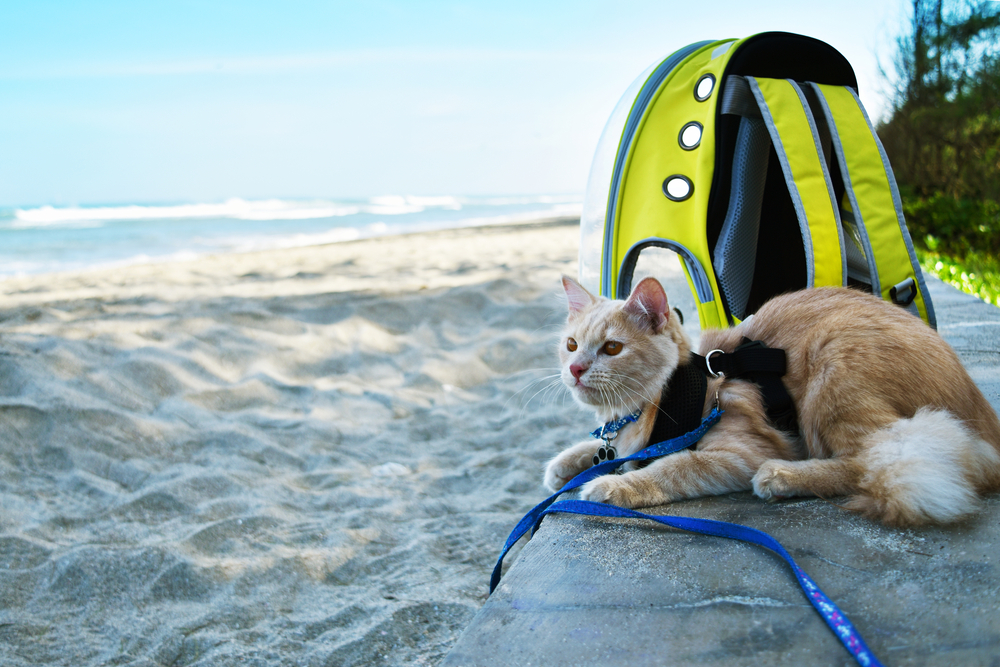
Featured Image Credit: sofirinaja, Shutterstock

Expert cat care, straight to your inbox
Vet-reviewed advice, behavior tips, and the best of Catster. Free, and you can unsubscribe anytime.
By signing up, you agree to our Terms & Conditions and Privacy & Cookies Policy.
Kristin is passionate about helping pet parents create a fulfilling life with their pets by informing them on the latest scientific research and helping them choose the best products for their pets. She currently resides in Tennessee with four dogs, three cats, two fish, and a lizard, though she has dreams of owning chickens one-day!
Join the conversation
Ask a question, share your story, or send private feedback.