“Pspsps!” Why Cats Find This Sound Irresistible


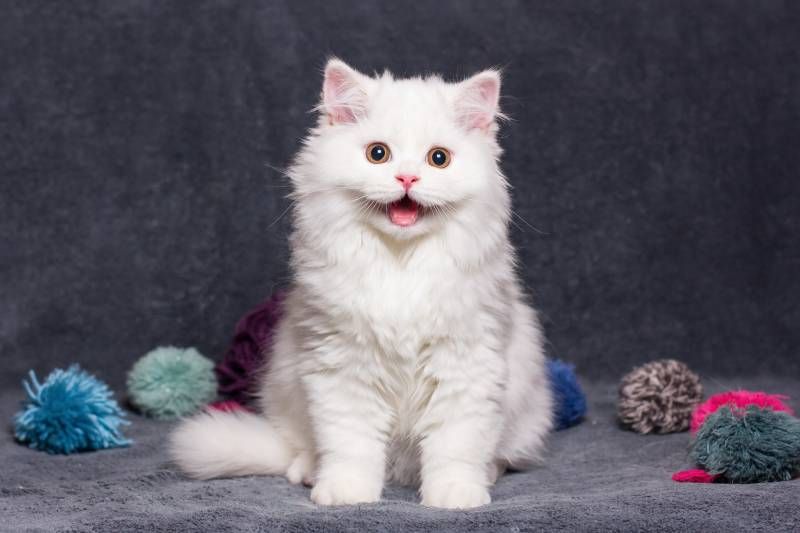
There are a few things that will capture the undivided attention of virtually any nearby feline: the sound of a can of tuna being opened, the irresistible motion of a laser across a wall, and the undeniable attraction of a quiet “pspsps.”
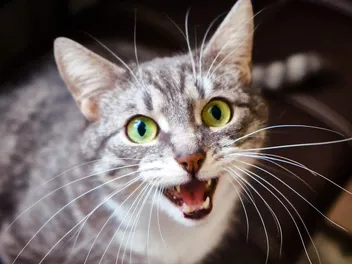
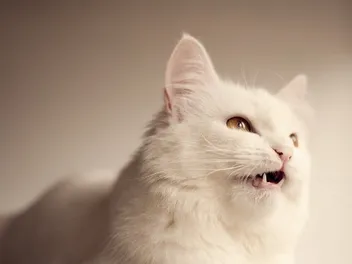
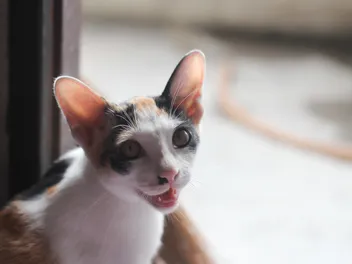
Make that sound around a cat, and there is a good chance those ears will perk up, a head will turn, or a sleepy feline will suddenly decide that whatever is happening deserves investigation. Not every cat reacts, but for many, the sound seems to have a special ability to grab attention.
The reason may have less to do with the word itself (if we can call it a word!) and more to do with what cats hear, what the sound resembles, and what they have learned to associate with it.
Highly Mobile and Muscular Ears
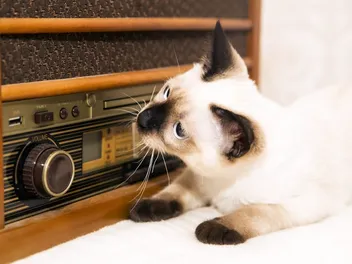
Cats have an extraordinary sense of hearing. They can hear many of the same frequencies as humans, but their hearing extends into much higher ranges, allowing them to detect the subtle sounds made by tiny animals. Their ears are also remarkably mobile, with over 20 muscles in each ear, allowing them to direct their ears toward sounds and gather information from their surroundings. Cats can distinguish pitch and tone extremely well and can locate sounds with impressive precision.
That makes a short, unusual sound like “pspsps” especially noticeable in a quiet home. A cat may hear it from farther away than a person would expect, even when it is resting or half asleep. The sound stands out, and that alone may be enough to prompt a reaction.

It May Sound a Little Like Prey
One of the more intriguing explanations is that “pspsps” may remind cats of sounds associated with the natural world.
Cats have powerful hunting instincts, and they are naturally attentive to noises and movements that could signal prey. The soft, rapid quality of “pspsps” may resemble the scurrying sounds made by mice or other small creatures. It can also echo the kinds of rustling and buzzing noises cats encounter in nature.
For cats that spend most of their time indoors, these sounds may be particularly interesting. A strange noise can break through the familiarity of the indoor environment and create a reason to investigate.
That does not necessarily mean a cat hears “pspsps” and immediately thinks: “mouse!” The sound may simply be unusual enough to trigger curiosity or a quick check of what is happening nearby.
Learned Response
Another possibility that is much less mysterious is simply that cats are quick learners.
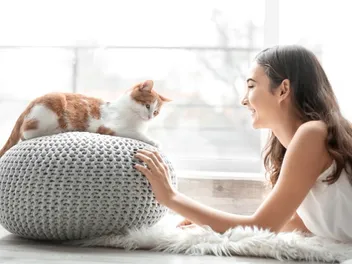
Most cats are creatures of habit and can respond well to positive reinforcement. If a cat repeatedly hears “pspsps” and the sound is followed by attention, affection, treats, or something else enjoyable, the cat can begin to associate that sound with a positive experience.
Over time, the response may become almost automatic.
This could also explain why one cat races across the room at the first “pspsps,” while another barely lifts an ear. Every cat has different sensitivities and associations with sounds. A sound that has become meaningful to one cat may be completely unremarkable to another.
The same principle can be used when teaching a cat to respond to its name. Positive reinforcement, including treats and affection, can help build an association between the cat's name and something rewarding. Training can begin with something as simple as getting the cat to look up or acknowledge the sound before gradually increasing the distance between the cat and the person calling.

There’s Something Special About the “S” Sound
The actual sounds that make up “pspsps” could also be part of the appeal.
The S, TS, and C sounds have relatively high pitches, and cats are capable of hearing pitches higher than humans can. These sounds may be somewhat similar to the high-pitched squeaks produced by rodents, potentially making them particularly interesting to feline ears.
There is also evidence in everyday cat behavior that similar sounds can get comparable reactions. “Pspsps” and “ksksksks” can both attract attention, suggesting that the combination of sharp, high-pitched sounds may matter more than the particular phrase being used.
The abrupt quality of the noise may help, too. In an indoor environment filled with familiar sounds, a sudden “pspsps” can stand out from the background and give a cat something new to focus on.
Reverse Reinforcement
As mentioned above, when cats repeatedly receive a positive response to an action, they are far more likely to repeat it. Well, the same goes for humans.
Having learned that our cats instinctively respond to the high-pitched “pspsps”, usually with curiosity, we start to use this to attract their attention. And, when the novelty of the sound wears off, we add treats into the mix, and so the cycle of positive association and reinforcement continues!

Not All Cats, But Always Cats
Despite the reputation of “pspsps” as a near-universal cat call, there is no guarantee that every feline will respond.
Cats have individual preferences, different experiences, and different associations with sounds. Some may immediately swivel their ears toward the noise, while others may glance over briefly before deciding it is not worth getting up. Others may simply ignore it altogether.
That selective response is part of what makes the sound so interesting. Cats can recognize their names, yet many will choose not to respond when called. Meanwhile, a seemingly meaningless string of sounds can sometimes get an immediate reaction.
The “pspsps” phenomenon may ultimately be a combination of feline hearing, instincts, learned associations, and natural curiosity. Like most things about cats, it’s rarely as simple as a ‘one size fits all’ explanation!
One thing’s for certain, and it’s that when it comes to feline behavior, there is always more going on under the surface!
Featured Image Credit: Sviatoslav_Shevchenko, Shutterstock
Did You Know?
- Our brand-new posts are rounded up and included in our weekly emails. Don't miss out on the latest - sign up for our newsletter below!

Expert cat care, straight to your inbox
Vet-reviewed advice, behavior tips, and the best of Catster. Free, and you can unsubscribe anytime.
By signing up, you agree to our Terms & Conditions and Privacy & Cookies Policy.
Dan has been working in the pet world for over 4 years covering cats, dogs, and all other pets in between. He loves helping pet parents keep their companions happy, healthy, and of course, totally spoiled! Originally from London, Dan now travels and works remotely, which unfortunately means no pets at home, but it gives him plenty of opportunities to fuss over other people's furry friends.
Join the conversation
Ask a question, share your story, or send private feedback.