10 Sounds Cats Love the Most & Why They Like Them (Vet-Verified)


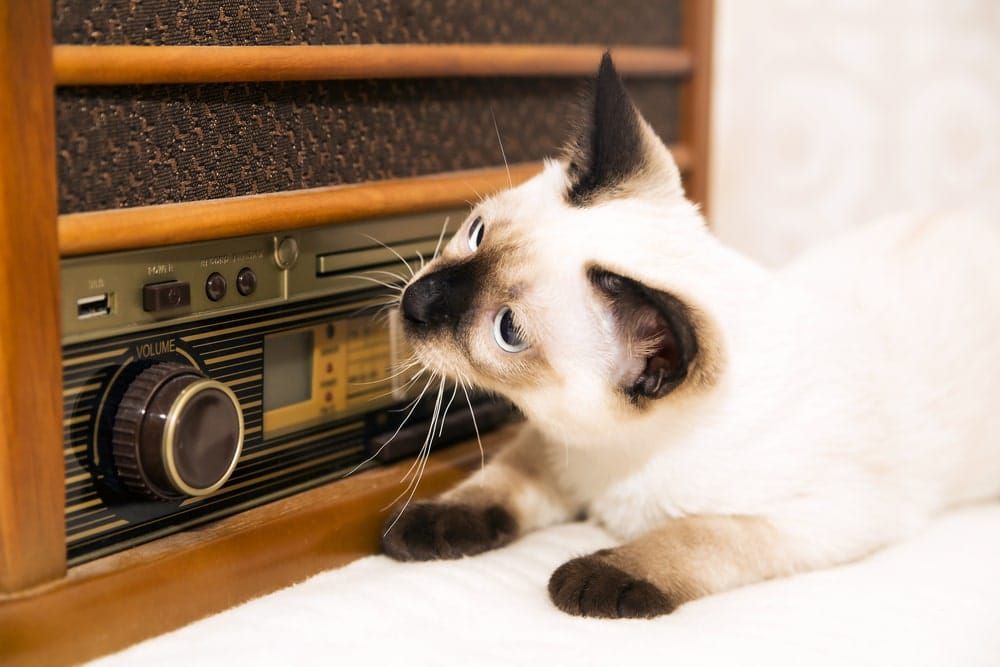
Cats are able to hear frequencies up to 85,000 Hertz (Hz), while humans can only hear frequencies between about 20 and 20,000 Hz1. No wonder there are certain noises that can send cats racing!
So then, what is music to a cat's ear? Here are 10 sounds that cats love and why!

The 10 Sounds That Cats Love
1. Vocalizations of Other Cats
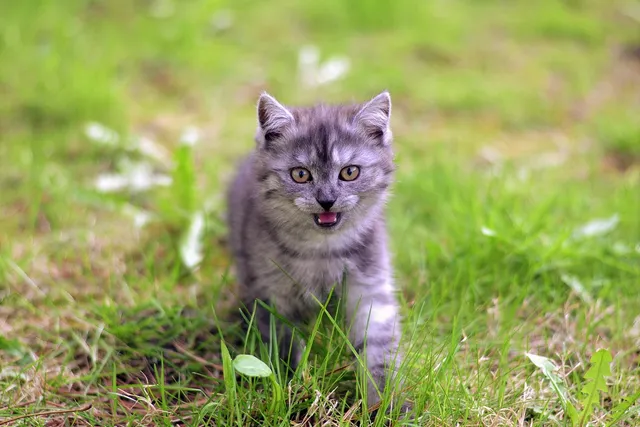
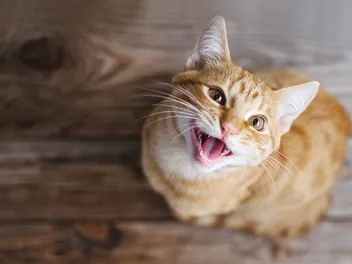
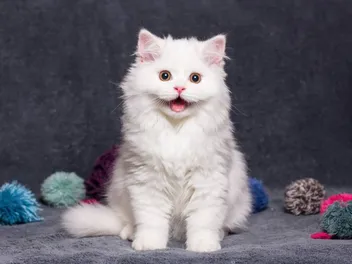
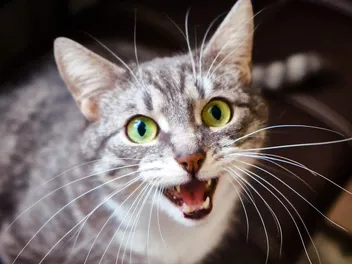
Cats vocalize to communicate with each other and express their emotions. They have a remarkable vocal repertoire of up to 21 different sounds2! But these aren't just used for positive social interactions. Indeed, some sounds are more aggressive—such as growling, hissing, or howling—and can be used to warn or scare off an opponent, while others, like chattering, are used to show frustration when they desire out-of-reach prey.
That said, there are nine types of vocalizations that cats make to express satisfaction, pleasure, excitement, etc. Here’s a quick description of each type:
- Chirp: A short, high-pitched call similar to a bird chirping. Used in a contact call or when something is desired.
- Gurgle: A short, pulsating sound like a person gargling their throat. Used to express friendly intentions.
- Meow: A rare vocalization in cat-to-cat interactions. Mainly used in cat-human interactions, during play, or in anticipation of feeding.
- Murmur: A short, soft trill or purr. Used in friendly approach and play.
- Purr: Low, continuous rhythmic sound produced during breathing. Used as a signal: "I am not a threat." Can be made when cats are happy or hungry but also when stressed, in pain, or close to death3.
- Trills: Similar to purring.
- Tweedle: Prolonged chirp or tweet, for when cats want something.
- Tweet: Soft chirps, when something is desired.
- Squeak: A hoarse, high-pitched meow-like call. Used in play and food anticipation.
2. Feline-Specific Music
Feline-specific music is created specifically to soothe and relax cats. Numerous experiments with cats listening to classical music or cat-specific music have suggested that felines respond more positively to music composed for cats than to music composed for humans4.
Interestingly, these results can be a big help when it comes to finding new enrichment ideas for felines. Auditory enrichment (i.e., sounds and music) with features perceptible to cats can affect their emotional state and soothe them.
So, what does cat-specific music sound like? In some tracks, sounds similar to chirping birds are layered over rushing flows of staccato for an energizing effect. In others, purring and sucking crescendos are designed for relaxation. All the particular sounds used in feline vocalizations are combined to create soothing and special cat-specific music.

3. A Can of Cat Food Being Opened
We say canned cat food, but it could be anything in a can. As most cats associate the typical sound of opening a tin can with mealtime, they will react positively to this noise. Whether it's tuna or their favorite wet food, they'll come running as soon as they hear that tempting sound! Of course, if you don’t feed wet cat food to your cat or use pouches instead of cans, your cat will likely not react to this noise.
4. Their Owner’s Voice
Your cat loves your voice and that fact is scientifically backed up! A researcher designed a series of experiments to test how cats reacted to recordings of their owners and strangers talking to them.5
When they heard a familiar voice, the felines reacted in subtle but distinct ways, such as wagging their tails, twirling their ears, and freezing during grooming. They showed no such response when hearing the voices of strangers.
This suggests that there is a special communication that develops between owners and their cats. The fact that they can recognize our voices and react in a distinct way shows how important we are to them beyond the fact that we feed and shelter them.

5. High-Pitched Voices
How you talk to your cat matters. Repetitive words spoken in a higher pitch (the same way that one tends to speak to a baby) have a desirable effect on cats. Babies love it too—studies show that babies learn new words and remember them better when adults use child-directed speech.
So, it's no surprise that people who consider their pets as their fur babies use this particular voice to address their beloved kitties!
6. Sounds of Their Favorite Toys
There’s no need for much explanation for this one! Whether it's a toy mouse, a bouncy ball, or a simple paper bag, cats love to hear the sound of their favorite toys!

7. Birds Chirping
Since cats have a strong hunting instinct, certain noises will strongly appeal to them. For example, the chirping of birds (or any small prey, for that matter) can excite them and stimulate their instincts. You've probably seen your kitty staring at the little birds in the garden!
8. Dripping Water
Cats are known for their fascination with running or dripping water, and the sound of it can be calming and relaxing for them.

9. Nature Sounds
Studies have shown that nature sounds can calm cats in the same way that they do humans. The reactions produced can differ depending on the cat. For example, the rustling of dead leaves can excite or frighten some kitties rather than relax them.
10. Tapping Fingers
The sound of tapping fingers can be similar to the noise of small prey moving stealthily, which can be appealing to cats. It might remind them of the mouse that once slipped under their nose!

Conclusion
Every feline companion is unique, and what one cat likes, another may not like at all. That is why it is always a good idea to observe your cat's behavior and preferences to determine which sounds they enjoy the most.
One thing is for sure: The more we learn about these elusive creatures, the more we realize how amazing they are!
Related Read: Do Cats Like the Sound of White Noise? Facts & FAQ
Featured Image Credit: Einar Muoni, Shutterstock
Expert cat care, straight to your inbox
News, insights, and useful advice, delivered to you.

No spam — unsubscribe anytime.
By signing up, you agree to our Terms & Conditions and Privacy & Cookies Policy.
How useful was this post?
Click a star to rate. You can leave written feedback afterwards. (We read all feedback.)
Genevieve is both a biologist and a science writer, driven by her deep love for capuchin monkeys, pumas, and kangaroos. Her dedication to wildlife has taken her across the globe, from Bolivia and Guatemala to Canada and Australia, working and volunteering at various rehabilitation centers. As a Canadian living in Argentina, Genevieve starts her days with horses and cows greeting her from the plains outside her home office. She is the proud parent of three rescued dogs—Lemmy, Nala, and Pochi—and an energetic kitten named Furiosa. The opportunity to share her passion and expertise in animal care brings her great satisfaction.