Get

In Your Inbox

Catster is reader-supported. When you buy via links on our site, we may earn an affiliate commission at no cost to you. Learn more.

My Cat Has a Lump on Their Back Near The Spine, Is It Dangerous? Vet Approved Advice

Share

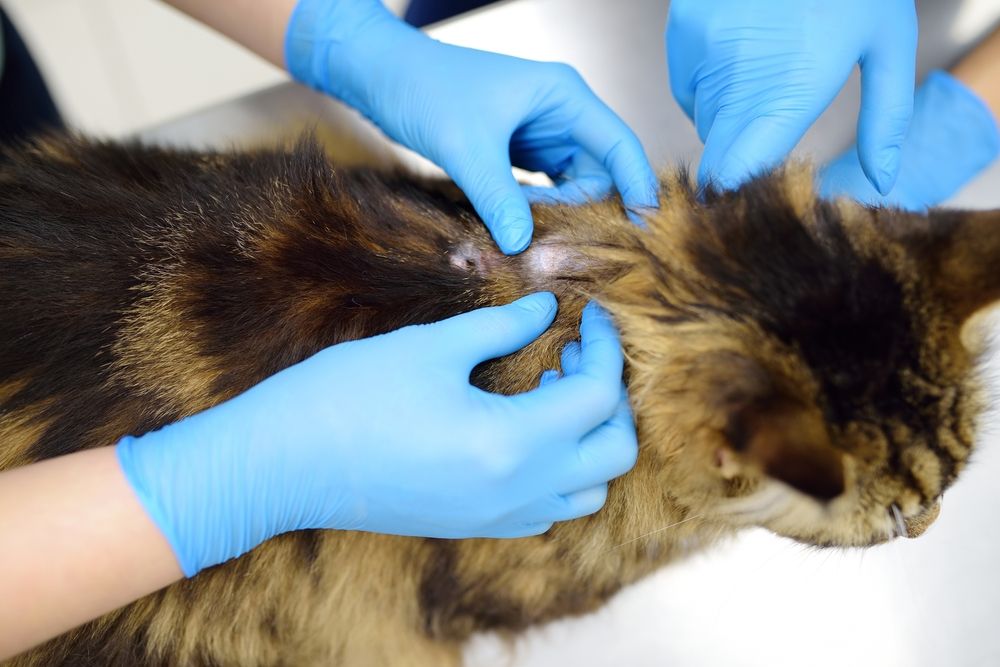
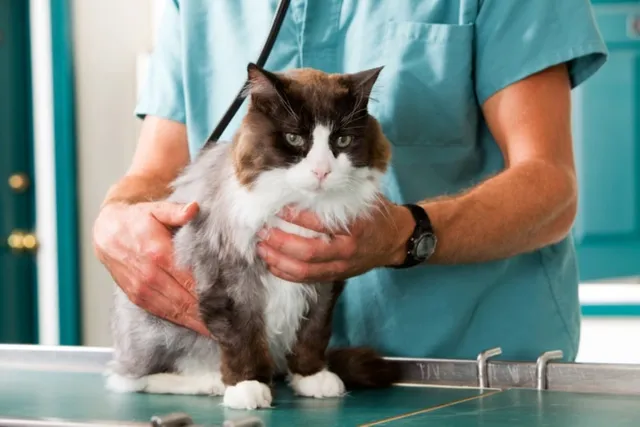
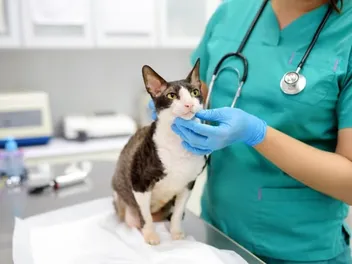
veterinarians examining a Maine Coon cat at a veterinary clinic

Every pet parent is familiar with the alarm of discovering a sudden change in their pet. It can be very scary to find a growth in their body, and our brains immediately jump to cancer since that’s a fairly common reason for new lumps. However, there can be several reasons that a cat can have a lump on it’s back near the spine, many of which are benign. You still want to get your cat checked out by a veterinarian because some conditions can have terrible consequences if you don’t deal with them quickly.

divider cats oct 2024

The 5 Causes Why Your Cat Has a Lump on Their Back Near the Spine

1. Cancerous or Non-cancerous Growth

Unfortunately, cancer is one of the most common diagnoses when your cat lumps on their back, especially if the lump is hard. However, cancer isn’t always the end. Your cat may have a positive prognosis depending on the type of cancer and how far it progressed before it was discovered.

Interestingly, 85% of cats with spinal lymphoma test positive for feline leukemia. The FeLV vaccine is designed to protect your cat against feline leukemia, and most veterinarians recommend it. Even so, the FeLV vaccine isn’t 100% effective.

Cats can also get lipomas, fatty growths near the spine or elsewhere in the body. They don’t require treatment and are unconcerning.

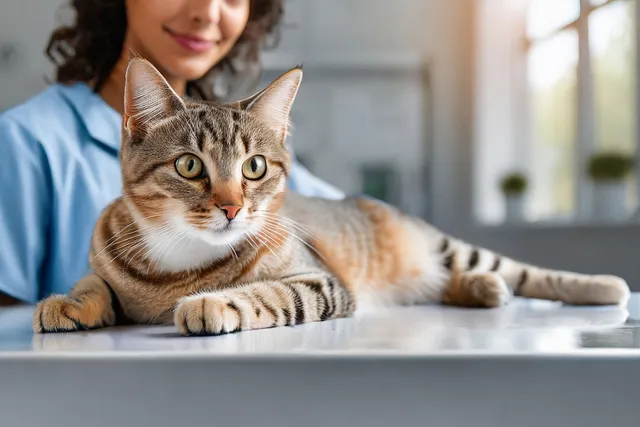
veterinarian holding the cat
Image Credit: H_Ko, Shutterstock

2. Spondylosis Deformans

Some cats develop bony growths. Spondylosis Deformans is benign and won’t cause permanent harm to your cat, but it might cause back pain.


3. Infection (Abscess)

A lump may form on an injury that hasn’t been treated properly. Your vet may prescribe antibiotics depending on the type of infection. Any injury should be treated as soon as possible to prevent infection, especially near the spinal cord since it’s closely connected to the brain.

Abyssinian cat at the reception at the vet
Image Credit: Nataly Mayak, Shutterstock

4. Injury

Your cat could have a lump on their back due to an injury, such as falling or being hit by a car. If you have an older cat, you might need to evaluate their living space to eliminate the possibility of them jumping to dangerous heights and injuring themselves, such as an inviting bookshelf leading to the precarious peak of a cabinet.


5. Congenital Disorders

Although somewhat rare, there are a range of genetic disorders that your cat may have been born with that can cause spinal issues. Signs of a congenital disorder generally appear when your cat is around 2 years old but will require a diagnosis by a veterinarian.

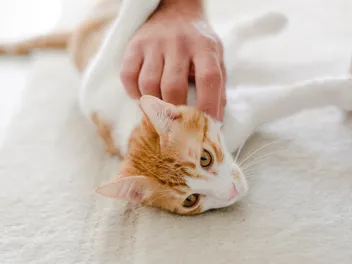
owner-petting-their-cat-on-the-back
Image Credit: Unsplash

divider 3 paws

When Should You Take Your Cat to the Vet for a Lump Near Their Spine

While you don’t know if the lump is life-threatening, you should always take your cat to the vet when you discover any issues or lumps near their spinal cord. The central nervous system is crucial to your cat’s health, and an early diagnosis lends to a more hopeful prognosis.

When you visit your vet, take all of your cat’s medical records and tell them about any other unusual symptoms your cat may have been experiencing, including other mobility issues. Your veterinarian will likely conduct extensive diagnostic testing, such as running blood tests and scans, to rule out cancer and other serious diseases.

divider cats oct 2024

Conclusion

If your cat has a lump on their back near the spine it may be caused by anything from an injury to a life-threatening illness. You should always take your cat to the vet to be evaluated as quickly as possible. The sooner they reach a diagnosis, the sooner you can put your cat on the road to recovery, or at least make them comfortable for as long as possible.

Unfortunately, cancer and FIP are common diagnoses, but there’s also a chance that your cat is having mobility issues due to an intervertebral disk disease or injury. Acting quickly can preserve their ability to walk and enjoy a greater quality of life.

See also:


Featured Image Credit: Maria Sbytova, Shutterstock

Want content like this delivered to you?

Sign Up For Our Newsletter

News, insights, expert advice, and everything cat

* By submitting, you agree to our Terms & Conditions and Privacy & Cookies Policy.


How useful was this post?

Click on a star to rate (you can leave written feedback after clicking submit)

Help us improve Catster for pet parents!

Your feedback really matters.

What did you like about this post? Also how can we improve it?

Join the conversation

4 Responses

  1. hi i think my cat fell from windows ledge inside house he fell down back of tv he now has a lump at base of his tail he's not a lively still eating n drinking his water there was a small bit of blood we washed it and put salon on it he's not crying as if he's not in pain

    1. Hi Ann. It is very worrying when your cat has an accident and develops a new lump, especially if he is less lively than usual. Any fall, even if it seems minor, can result in injuries that are not immediately obvious.
      The lump at the base of his tail, the small amount of blood, and the change in his energy level are signs that he needs immediate veterinary attention. A veterinarian needs to examine the lump to determine if it is a bruise, an abscess, or an injury to the tail or spine.

Leave a Reply

You’re very welcome to leave a comment or question. Please know that all comments must meet our community guidelines, and your email address will NOT be published. Let’s have a positive and constructive conversation.


Talk With A Vet Online

Peace of mind,
anywhere, anytime

Affordable vet advice

Do Cats Cause Schizophrenia? Scientists Find a Link – Here’s What It Means

Being a fierce advocate (and occasional recipient of) mental health support and awareness, the term ‘crazy’ is not one I like to fling...

One in 100 Cats Gets Diabetes – Here’s How to Catch It Early

One in every 100 cats develops diabetes.1 That’s not a rare, unlucky condition reserved for cats with obvious health problems. It’s common enough...

Dramatic Rescue Turns Into Dramatic Reunion

What started as a routine call for the RSPCA became a heroic, five-hour rescue featuring one trapped and traumatized cat, an emotional family...

Ask Dr. Paola – Help! How Do I Know if it’s Ear Mites! (May 4, 2026)

Welcome to our “Ask Dr. Paola” series, where every Monday we bring expert advice straight from Dr. Paola Cuevas (MVZ) to help our...

More related

Neakasa AirStep Odor-Eliminating Cat Litter Box Step Review 2026: Our Expert’s Opinion

For most cat owners, the battle against litter box odors is an endless one. It doesn’t seem to matter how good your litter...

By Road, By Air, and By Sea – The Long Journey Home for These Lions Three

We are often moved, entertained, and emotionally invested in stories of triumph and tragedy involving our domesticated feline friends. In this case, however,...

Can Cats Get Sunburn? Facts & Safety Tips (Vet Answer)

Cats are often found lounging under the sun, half asleep and basking in its warmth. It’s an image that is equal parts cute...

How to Keep Cats Off Furniture Using Vinegar: 4 Vet Approved Steps

Cats are very persistent, and it can be challenging to keep them from doing what they want. Several commercial deterrents use dangerous chemicals...

Keep reading

How to Stop Your Cat Begging for Food: 6 Ways That Work

Shadow was a young adult cat when she was rescued by her human, Nikki, from a trailer park where stray and feral cats gathered. Since kittenhood, Shadow lived in the park, scrounging for scraps from dumpsters and begging residents for...

Does Salt Kill Fleas on Cats? Vet Reviewed Effectiveness & Safety

A flea infestation can really ruin your week. Not only are fleas a nuisance for your cat, but they can also be a nightmare to get rid of in your home. There are plenty of products to treat flea infestations,...

Salt

Why Does My Cat Chirp at Birds? 3 Vet-Verified Common Reasons

Your cat may seem like a cuddly ball of fur or even a hairless wonder who loves to spend time with you under the blankets, but something changes when your feline sees a bird outside the window. Instantly, your kitty...

cat watching bird on the window

Why Does My Cat Have Bumps on Their Skin? 8 Common Reasons

It can be scary to notice a lump on your cat’s skin. Immediately, your mind rushed to the worst-case scenario—but don’t jump to conclusions yet! There are plenty of reasons that your cat may have a bump on their skin...

female veterinarian examining cat on the table

Why Does My Cat Throw Up Every Day? 10 Vet-Verified Reasons

Cats throw up occasionally, but if your cat is vomiting every day, they may have a medical condition. It’s also worrisome as a pet parent to see your pet getting sick each day. That leads to the question of why...

Cat vomiting

Is Lidocaine Safe For Cats? Our Vet Discusses Safety & Risks

Even though cats typically aren’t as vocal or outwardly expressive of their pain as canines, they do still experience pain, leading veterinarians to look for safe and effective pain management medications. One that you may be wondering about is lidocaine....

Catster_Is Lidocaine Safe for Cats

Why Is My Cat’s Nose Wet? Vet-Approved Answer

If you live in the Northern Hemisphere, the winter months bring with them cold and flu season. Red, runny noses plague humans during this time, but what does it mean when a cat has a cold, wet nose? If you’re...

nose and mouth and whisker of a cat close-up

Why Does My Cat Scratch the TV? 4 Vet Reviewed Tips to Stop This Behavior

It isn’t common for cats to paw at and damage TVs. However, it does occur. Some cats seem prone to this behavior for one reason or another. Luckily, no matter why your cat is doing it, preventing it from occurring...

Cat intently watching TV

Love Cats? So Do We! Join the Catster Community

Stay informed with expert pet care insights delivered straight to your inbox! Discover professional guidance on animal behavior, feeding tips, trusted product picks, and much more.


Sign up for the Catster Email Newsletter

Stay informed with expert pet care insights delivered straight to your inbox! Discover professional guidance on animal behavior, feeding tips, trusted product picks, and much more.