Abscesses in Cats: Causes, Signs & Care (Vet Answer)


In this article
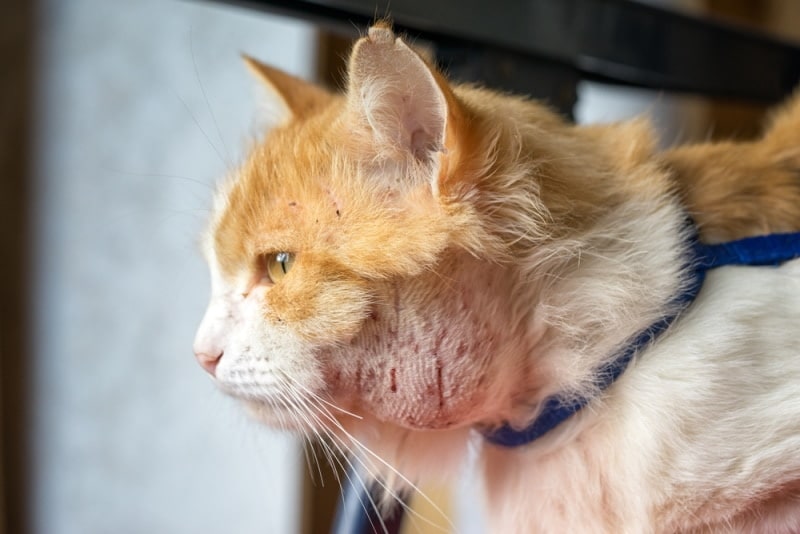
If your cat has a lump under their skin that is painful, either firm or, more often, soft to the touch, and has suddenly appeared out of nowhere, they may have an abscess. Abscesses can develop anywhere on the body, even within internal organs, such as the lungs, brain, liver, or kidneys, and these will not be noticeable. External abscesses that form under the skin may not be obvious until they rupture, producing very malodorous and blood-stained fluid, or the animal shows other clinical signs.
In cats, some abscesses, particularly ones affecting the internal organs, can lead to sepsis and other serious health complications for your pet, so they require immediate veterinary attention. You should know what to look for and how a vet will treat an abscess in your cat to keep them happy and healthy.
This article will teach you how to recognize an abscess under the skin and general signs of illness in your cat associated with an abscess. However, it's not a replacement for veterinary clinical exams and treatment, and an abscess cannot be managed at home without a vet's input. Not every swelling under the skin is an abscess, and only a vet can establish this with certainty.

What Is an Abscess?
An abscess is a painful, well-defined pus collection. They can be found all over the body and can get quite large (the size of a Ping-Pong ball or bigger) or remain small. Some will grow so large that the resulting pocket may burst, and the pus will drain out. This occurs as a result of the body's reaction to pyogenic germs (i.e., causing the formation of pus).
Pus is a foul-smelling viscous liquid of various colors (white, yellow, or greenish) that contains red and white blood cells, neutrophils, plasma, living and dead bacteria, proteins, and other organic debris.
In cats, two types of abscesses are most common:
- Skin abscess: Located under the skin, often a consequence of a cat fight2
- Dental abscess: Affecting the root of the tooth
Other than these, cats may develop a pancreatic, liver, lung, anal gland, or any organ or body cavity abscess if there is a penetrating foreign body. The infection can occur in cats of any age and breed. Outdoor cats are most prone to abscesses because they are more likely to be injured and get into a fight. Awkward falls from a great height, inhalation of foreign bodies, and competition with other cats for space, food, or mates are just some of the common causes of injury.
Cats with weak immune systems, particularly those infected with feline immunodeficiency and feline leukemia virus, are also more prone to developing abscesses.3 A weakened immune system makes the body more susceptible to infections.

What Are the Signs of an Abscess?
In cats, abscesses often look like small bumps or swelling under the skin that appear fairly quickly. Owners will commonly report that the cat was in a fight a few days ago with the neighbor's cat. When abscesses are present in the mouth, they can go unnoticed for a little bit longer. As the swelling under the skin grows and fills with pus, it leaves the impression of a lump that can resemble and be mistaken for a tumor. For this reason, many cat owners panic when they notice a bump or lump on their pet's skin. However, abscesses are more common than tumors.
If an abscess grows too much and puts the skin under a lot of pressure, it can burst, and the pus will be drained. This is called a draining tract, which means an opening will be created between the abscess and the surface of the skin/gum line/organ (depending on where the abscess is localized). In case of skin abscesses, the pus will drain to the skin's surface, leading to an unpleasant odor in the infected area.
If an abscess develops inside your cat's mouth, your pet may have bad breath, become lethargic, paw at their mouth, drool, have oral discharge, and refuse food. Internal abscesses can lead to decreased appetite, persistent fever, pain, lethargy, and signs of systemic illness, which are clinical signs that indicate an infection.
Clinical signs of abscesses in cats include:
If your cat shows these signs, take them to the vet.

What Are the Causes of Abscesses?
Abscesses develop following the inoculation of pathogenic germs under the skin or oral mucosa or from dissemination to various internal organs. They typically occur in cats that spend a lot of time outside and frequently participate in altercations with other felines or animals.
These skin abscesses usually develop on the neck and face, the back half of the body, and on the paws and abdomen. The tail is often injured, too, thus favoring the occurrence of abscesses. Other incidents that can lead to the development of abscesses include penetrating wounds.
- Escherichia coli
- Streptococcus spp.
- Pseudomonas spp.
- Mycoplasma spp.
- Pasteurella multocida
- Corynebacterium spp.
- Actinomyces spp.
- Nocardia spp.
- Bartonella spp.
- Bacteroides spp.
- Clostridium spp.
- Fusobacterium spp.
Dental abscesses are found at the tooth root. When bacteria enter the exposed root canal of an already damaged, fractured, or diseased tooth with access to the pulp, they cause inflammation and necrosis of the pulp. If the infection persists, an abscess forms. Dental abscesses are relatively common in cats, and since the clinical signs are similar to those of other diseases, owners may not realize what is actually happening to their cat.
Abscesses inside the body or those affecting internal organs are impossible to observe from the outside. They appear due to a disseminated infection originating from another location or foreign objects entering the body and penetrating body cavities. These are less common than skin abscesses but are more severe.

How Do I Care for a Cat With Abscesses?
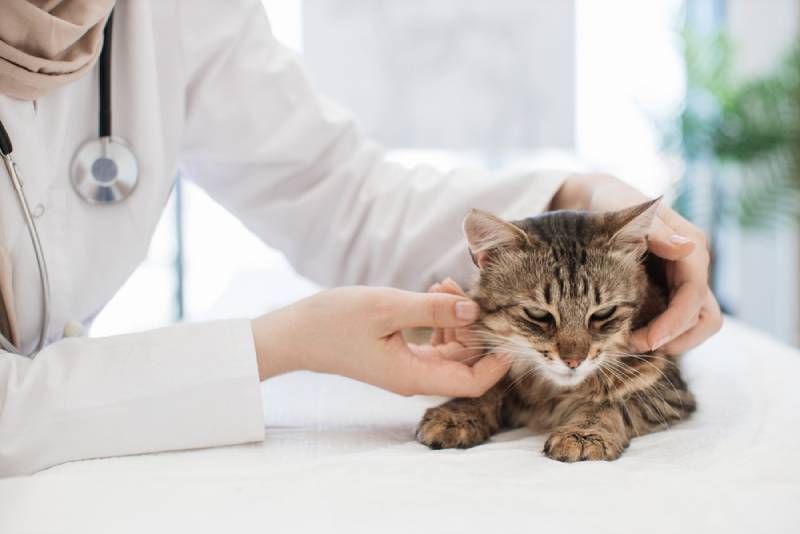
If you notice a swelling on your cat's skin, skin changes, irritation, or the presence of a very unpleasant discharge, get them checked by the vet as soon as possible. Do not try to squeeze or burst the abscess yourself, as it's uncomfortable for your cat and should be done by a professional.
If the abscess has ruptured, you can attempt to clean the area but still book your cat to see the vet. Your vet will prescribe and administer appropriate treatment for your cat, often consisting of systemic antibiotics and painkillers or anti-inflammatories.
If your cat's abscess was drained at the clinic, follow the veterinarian's recommendations as to what you need to do at home. Here is how to care for a cat with abscesses:
- Oftentimes, you may not need to do anything with the abscess site, but in some instances, your vet will ask you to clean it using a mild diluted antiseptic solution.
- Monitor the abscess site at least once daily for any further swelling, discharge, or redness.
- Make sure your cat is otherwise feeling well and eating and drinking as normal, and if not, get them re-checked by the vet.
- If the abscess site is swelling up again, you can attempt to clean it, but you will need to get your cat back to the vet again.
- Use an Elizabethan collar if your vet recommends it, and the cat can reach the wound. Excessive licking will cause further complications and healing delays.
An abscess will show signs of healing when the area is no longer red and swollen and no longer secretes exudate (usually 3–5 days after the procedure). On average, the healing process takes 7–14 days.
Frequently Asked Questions
Can Cats Heal From Abscesses on Their Own?
Some superficial and minimal skin abscesses may heal on their own after they rupture and the pus is eliminated. However, you should still take your cat to the veterinarian to prevent possible complications. In the case of dental and internal abscesses, they do not heal on their own. If they remain untreated, they can lead to severe complications.
Can a Cat Survive an Abscess?
In the case of skin abscesses that rupture externally (and the pus is eliminated on the surface of the skin), the chances of a cat dying are incredibly small. Some abscesses have the potential to cause severe complications and sepsis if the bacteria gets into the bloodstream, which can cause septicemia (generalized infection).
This may be the case with abscesses that affect internal organs or very deep abscesses under the skin that are affecting the underlying soft tissues. Septicemia can lead to death if not treated in time, but this is a far less common outcome when it comes to the usual abscesses.
Conclusion
An abscess is a pocket filled with pus that's separated from healthy tissue by a connective tissue membrane or a capsule. An abscess can develop due to an infection, such as from a fight with another cat, or due to penetrating injuries from foreign bodies. If there is an abscess in one of the internal organs or body cavities and it ruptures, the pus can get into the bloodstream, causing septicemia and shock. Sometimes, very superficial skin abscesses that rupture can initially start to heal on their own, but it is crucial to contact the vet as soon as you notice an abscess on your cat's skin.
Featured Image Credit: Elena11, Shutterstock

Expert cat care, straight to your inbox
Vet-reviewed advice, behavior tips, and the best of Catster. Free, and you can unsubscribe anytime.
By signing up, you agree to our Terms & Conditions and Privacy & Cookies Policy.
Dr. Iulia Mihai, DVM MSc (Veterinarian)
Dr. Mihai is a vet with over 13 years of experience in laboratory, pet pathology, and cancer. She studied at the University of Agronomical Sciences and Veterinary Medicine of Bucharest, Romania (EAEVE member), where she worked in the laboratory of the faculty clinic after graduation. She has a master’s degree in equine and pet pathology and studied epithelial cancer for her Ph.D. Iulia has a passion for internal medicine and parasitology and started volunteering at the faculty’s clinic in her third year of college. She has worked in a couple of veterinary clinics over the years as an internal medicine specialist. She enjoys writing and teaching people about cat disease prevention, nutrition, behavior, and treatment.
Join the conversation
Ask a question, share your story, or send private feedback.