What Are E-Collars for Cats? Vet-Reviewed Types, Pros, Cons & FAQ


In this article
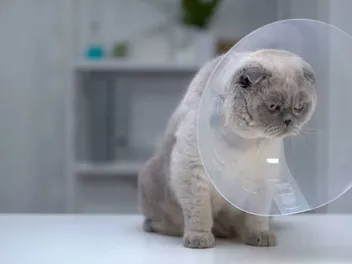
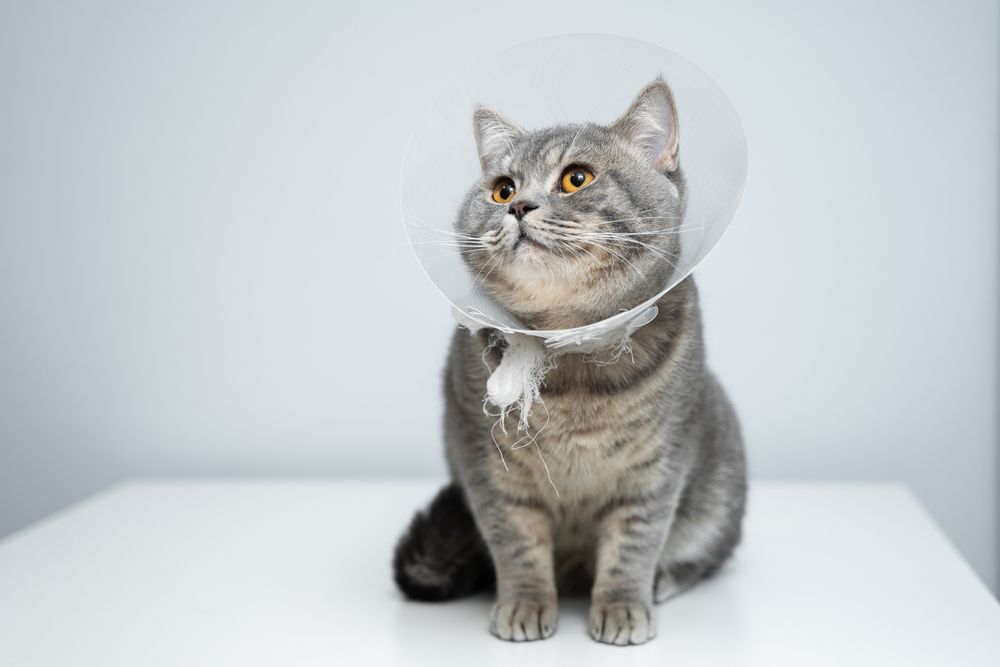
You may not immediately recognize the term “e-collar,” but you’ve definitely heard of them. You might know the e-collar by its more affectionately referred to term: the Cone of Shame. E-collars, or Elizabethan collars, as they’re more officially known, is a protective medical collar that cats or dogs wear around their necks. The purpose of the collar is to prevent the animal from scratching, biting, or licking their body while it heals after an injury or surgery.
Whether your cat has been ordered to wear an e-collar or if you’re just curious about them and their uses, we can help. So keep reading to learn everything you need to know about Elizabethan collars and their uses.

How Does It Work?
Elizabethan collars serve a fundamental purpose: keeping your pet safe from themselves. E-collars prevent animals from chewing or scratching at their body while it heals from surgery or injury.
The e-collar is typically attached to your cat’s collar with strings or tabs. The collar’s neck should be shallow enough that your pet can still eat and drink as normal. However, don’t be surprised if your finicky kitty decides to skip meals or makes a proper mess while eating while they wear their e-collar. Some cats don’t take well to them. If this is the case with your kitty, remove the collar for meals and supervise your pet the entire time.
The vet will provide a rough estimate of how long your cat will need to keep the collar on. Typically, they recommend between seven to ten days, which can feel like a lifetime for you and your pet. You must keep the collar on the entire time your cat is healing, though. Even the most well-behaved kitties can get obsessive with licking and scratching when they’re in pain or uncomfortable. Before you stop using the e-collar, touch base with the vet to ensure it is safe to do so.
It’s important to note that if your cat is wearing an e-collar, they should not be let outside, even if they are usually an outdoor cat. Get them two litter boxes, speak to all family members, and disable their cat flap, as getting out of the house with an e-collar around their neck is a recipe for disaster. Cats can get stuck while trying to sneak through bushes, or they can try to take their collar off by pawing at it, thus getting one of their front feet stuck inside the collar. This will make them panic and can lead to more serious injuries. They won’t be able to judge their environment as successfully with a collar on and may be attacked by other animals.
The 3 Different Types of E-Collars
1. Plastic
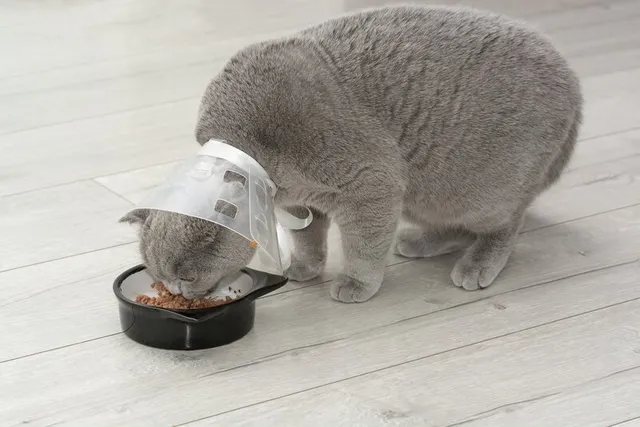
Plastic e-collars are made with a low-density polyethylene material that allows them to be somewhat firm. These are the infamous “lampshade” style collars. They can be opaque or clear. Opaque styles are outdated and not recommended as they rob the cat of their peripheral vision. The transparent type will provide some peripheral vision.
2. Soft
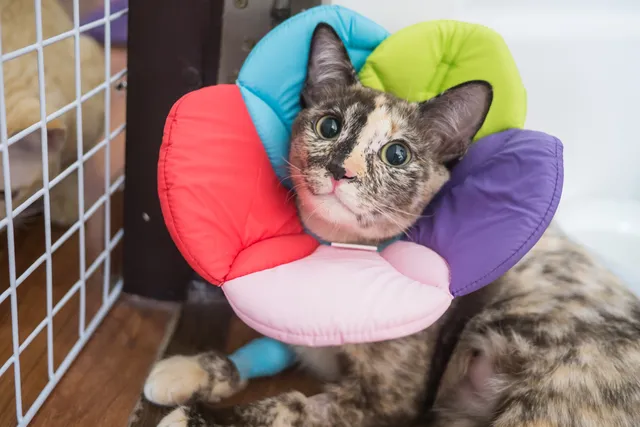
Soft e-collars are similarly shaped to the plastic style, but they’re made of a soft and flexible material. They have a lampshade shape or can be turned downward to act as a bib of sorts. Most cats take better to the soft e-collar than the plastic kind, but they affect peripheral vision more (unless turned down).
Because this style is made of a soft material, they’re obviously not as rigid. This additional flexibility gives cats a better chance at reaching the area you’re trying to protect from them.

3. Inflatable
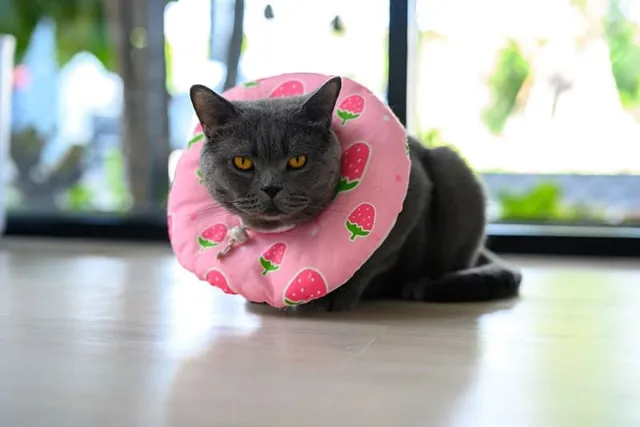
The inflatable e-collar looks almost identical to the travel pillows you see wrapped around everyone’s neck in the airport. They are made with synthetic plastic but are typically covered in a soft fabric to keep your kitty comfy. They fasten in several different ways, including with Velcro or cord. Unlike the soft-style e-collars, the inflatable kind does not impede vision.
Also, because they’re not as rigid as plastic options, they may not prevent your kitty from accessing wounds in some locations on their body.
The 3 Common Situations to Use E-Collars
1. Injuries or Surgeries
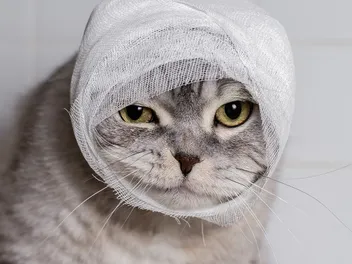
A vet may prescribe an e-collar if your cat has recently had an injury or if they’re recovering from surgery. The collar will prevent your kitty from irritating the wound further or removing stitches during a grooming session. When an animal irritates a surgery site or wound by excessively licking, it can cause further trauma and lead to secondary bacterial infections and wound breakdown, all of which will prolong the healing process. Sometimes cats will have a bandage placed by the vet that also helps to protect the wound, but if they are picking at it, they will need the e-collar as well.
2. Overgrooming and Skin Issues
Some cats develop medical, behavioral, or stress-related skin problems that trigger them to lick or chew themselves excessively. A vet might recommend using an e-collar for your cat if they are suffering from allergies or other skin conditions that are causing them to be excessively itchy. Unfortunately, this habit can lead to a host of health issues, including hair loss, skin wounds, bacterial infections, scabs, redness, and more. The e-collar can protect your kitty while you and the vet address the underlying reasons for these issues.

3. Topical Treatment
If your cat needs to receive topical treatment, such as an ointment or a cream on their skin, the collar will prevent your cat from ingesting any of the medication that may be applied, which could lead to drooling, vomiting, or other side effects, and wearing it will prevent them from causing any harm to the affected area through licking or scratching.
Pros & Cons of E-Collars
Advantages of E-Collars
The most significant advantage of using an e-collar is that it prevents further damage to an already injured area on the body by stopping and preventing licking and scratching. If your cat has free rein to their body after surgery or an injury, they could do further damage, like reopening wounds or making them bigger. This will lead to more vet visits, delayed healing, and piling up vet bills.
E-collars are affordable and can be reused if your cat needs one again in the future.
Disadvantages of E-Collars
The most significant disadvantage of e-collars is how unfamiliar and stressful they can feel for your cat. Your kitty won’t like the collar and won’t be afraid to show their disdain for it. Some sneaky kitties can wiggle their way out of the collar.
Some collar types make accessing food and water difficult. They can affect peripheral vision and cause your kitty to walk into walls or objects. Your cat should be supervised during the time they wear their collar, as even inside, they can get into all sorts of trouble, particularly in the first few days while they are getting used to wearing the collar.

Frequently Asked Questions (FAQ)
Where can I buy an e-collar?
You can buy e-collars directly from a veterinarian. They may have only some of the style options, however. Pet stores and online shops like Chewy or Amazon will also carry this product, so you can shop around online and in stores to find the best deal.
Can anything be done to help my cat feel more comfortable wearing their e-collar?
Your kitty is likely to be very unhappy when it comes home from the vet with an e-collar. However, most will get used to it in a few hours or within a day. It just takes a little bit of time and patience. You can help ease the transition by keeping your cat in a smaller space of your home where they cannot walk into walls or furniture as easily. Also, remember that e-collars can restrict your cat’s peripheral vision, so the fewer things in their way as they get used to wearing the collar, the better.

Can my cat eat and drink with their e-collar on?
A properly adjusted e-collar will allow for normal eating and drinking habits. If your kitty typically eats from a deep bowl, they may have some problems reaching their food or having a drink without spilling the water. You can try offering a shallow bowl at their next meal to see if that’s more accessible, or a more narrow water bowl so that the collar sits around it rather than in it. If you must, you can remove the e-collar during meals, but you need to remain with your cat at all times to ensure they don't try any funny business.
Can my cat sleep with their collar on?
Yes. Your cat should become accustomed to the collar within a few hours of wearing it. After that, most will find a way to position themselves so they can sleep comfortably with it on.
Conclusion
Elizabethan collars are a necessary evil in the world of pet ownership. While you’re unlikely to be your cat’s favorite person as you strap it into their collar, know that you have your pet’s best interests at heart. When your kitty cannot scratch at, lick, or bite themselves while recovering from an injury or surgery, they will heal faster and get back to normal quicker, too.
Featured Image Credit: foto_and_video, Shutterstock
Expert cat care, straight to your inbox
News, insights, and useful advice, delivered to you.

No spam — unsubscribe anytime.
By signing up, you agree to our Terms & Conditions and Privacy & Cookies Policy.
How useful was this post?
Click a star to rate. You can leave written feedback afterwards. (We read all feedback.)
For Chantelle, writing and animals are the two driving forces in her life. Growing up on the Canadian prairies surrounded by pets, she now shares her home with five cats, two guinea pigs, and a bearded dragon. Chantelle, her husband, and their child pride themselves on being dedicated pet parent, even spending a fortune on wall-mounted cat shelves to provide their cats with an indoor jungle gym. When she's not snuggling with her cats or photographing their humorous moments, Chantelle is exploring the Rocky Mountains, rewatching her favorite Netflix series, and reading up on various random subjects.