Why Does My Cat Try to Bury Her Food? 3 Vet-Reviewed Reasons for This Behavior


In this article
Domestic cats sometimes act a little strange. Whether having a five-minute case of the zoomies or refusing to come out and meet your friend who popped by to say hi, it can be hard to predict what our cats will do next.
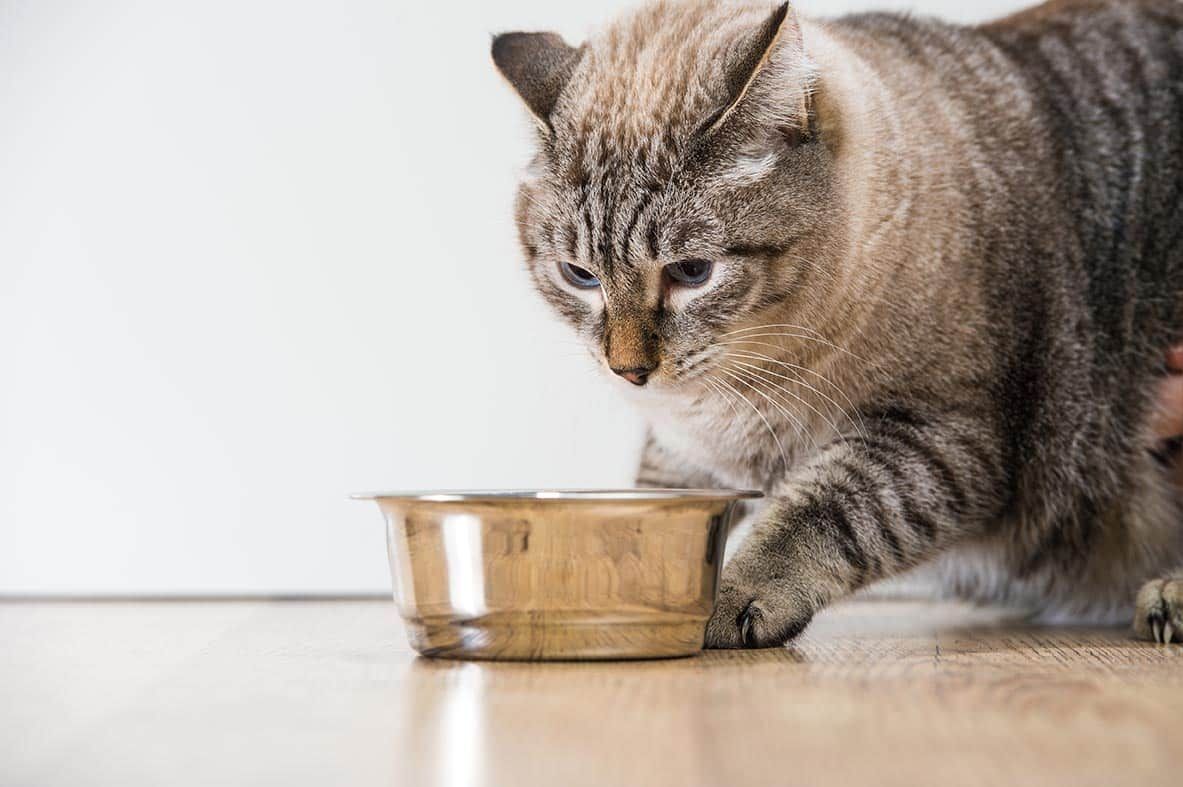
One behavior that can be particularly baffling is your cat pawing and scraping around their food in what looks like an attempt to bury it. Why do they do that? It might look odd, but there’s a good explanation for this behavior—in your cat’s mind, at least!

What Does a Cat Trying to Bury Their Food Look Like?
Before we take a deeper dive into the reasons behind this behavior, let’s consider what the behavior actually looks like. Remember that each cat is an individual, and some approach burying their food in unusual ways.
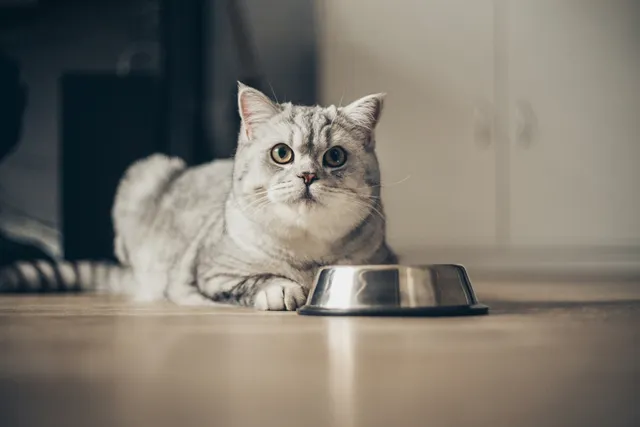
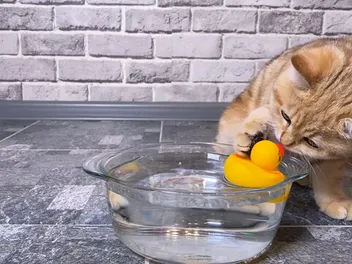
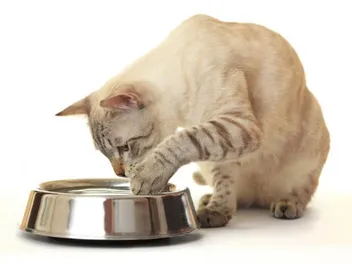
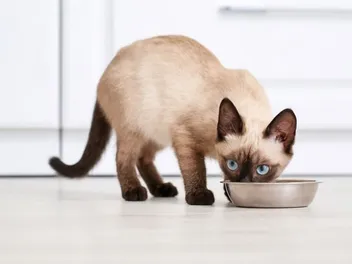
Besides digging around their food bowl, some cats paw and scratch at the bowl. This is them pretending to “bury” their food. They know that there’s no dirt nearby, but by acting as if they’re carrying out this important task, they can feel satisfied that they’ve done what they set out to do.
Other cats will lift a chunk of food out of their bowl with their paw and continue pawing at it. In that case, you need to watch out that their food doesn’t end up somewhere completely unsuitable, like in a plant pot or under the couch.
Some cats might even cover their food with a towel or napkin if there’s one nearby!

The 3 Possible Reasons Why Cats Try to Bury Their Food
You might never have seen your cat do this before, but it’s more common than you might think. The reasons for this behavior are instinctual, so your cat wasn’t taught to act this way by their mother cat; it’s ingrained into their genetic makeup.
Let’s explore some of the main reasons that cats try to bury their food.
1. They’re Hiding It for Later
Your domestic cat might be cute and fluffy on the outside, but on the inside, they retain instincts from their wild ancestors. So, when your kitty tries to bury or otherwise cover their food, they’re doing something called “caching.”
Caching is used by wild cats to protect food from other cats or scavengers, to stop it from spoiling, or to have a meal to return to later. Don’t burst your cat’s bubble and tell them they’re not a wild mountain lion, after all! They may do the same if they are not hungry, their bowl is too full, or if they have kittens as a way to preserve food for them.

2. They’re Trying to Conceal the Scent
Covering or burying food helps hide the scent from other cats or predators. This is an intelligent move for wild cats on two fronts. First, hiding the scent means another animal is less likely to discover the food and eat it.
Second, it helps disguise the scent from prey animals, which have sensitive senses of smell. If a prey animal cannot detect the food, they will be much more likely to avoid the area, and there’s less chance of a wild cat being able to make another kill.
3. They Don’t Like It!
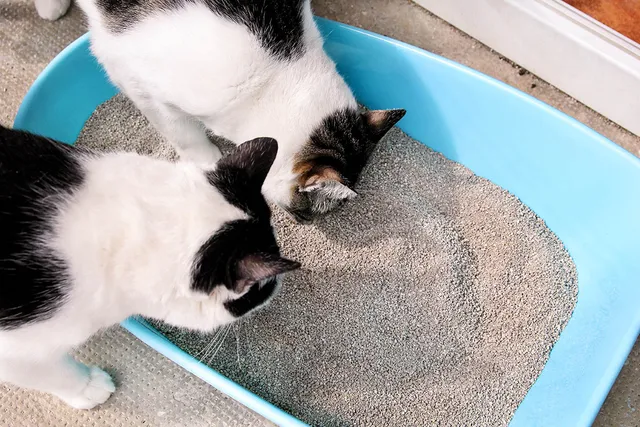
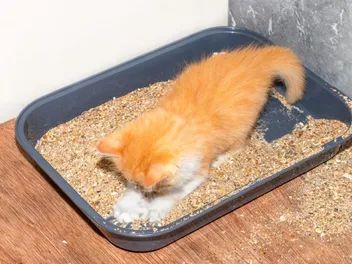
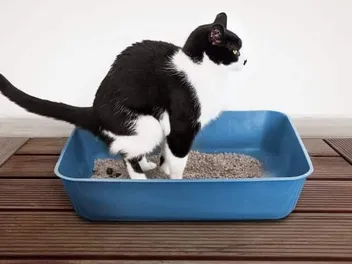
If your cat doesn’t like the new brand of food you’ve just switched to, they may decide to dispose of it by trying to bury it. This is similar to how they bury their waste to keep their living area free from unpleasant scents or smells that might attract a larger predator.
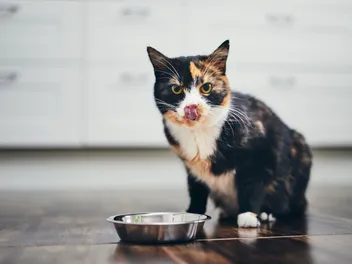
The same may happen if the food is spoiled, so ensure it has the usual smell and appearance and is well within the expiration date. Any wet food should be discarded or stored in the fridge within an hour of not being eaten.

- NO MESS - The 360° tray on this cat food and water bowl set has a raised design to catch and contain stray crumbs and drips. Protect your indoors and floors from wet and messy meals!
- WHISKER FRIENDLY - Shallow and wide metal containers with flat bottoms ensure your kitty can enjoy mealtime free from whisker fatigue!
- CHEW-SAFE MATERIALS - Kittens and cats love chewing on silicone and soft rubber - but it's a choking hazard. Our cat feeding station materials are anti-chew for a 100% safe feeding frenzy!
Feeding your cat a high-quality diet is important for keeping them healthy and happy. But it goes beyond the food you choose; the dishes they use also matter. The Hepper NomNom Cat Bowl is our favorite for its unique, five-star design that protects from whisker fatigue and promotes good posture which also aids in better digestion. As an added bonus, it’s beautifully crafted and offers a modern take on the traditional cat bowl that fits seamlessly with all home stylings. Learn more about the NomNom by clicking here.
At Catster, we’ve admired Hepper for many years and decided to take a controlling ownership interest so that we could benefit from the outstanding designs of this cool cat company!

What to Do if Your Cat’s Habit Becomes a Problem
Many cat owners are happy to leave their cats to their instinctive food-burying rituals if they’re not doing any harm. But if your cat is damaging your floors or getting chunks of wet food around the house, you might want to intervene.
Some cats may start to carry out this caching behavior regularly. It's more common in multi-cat households, where the cats might feel like they’re competing for resources. They can then get to the point where they feel the need to hide or bury their food, and they begin to get a little obsessive about it. Ensure each cat has their own food and water bowl and privacy while eating and resting.
In any of these scenarios, another solution is to supervise your cat as they eat their food and then remove their bowl when it seems like they’re finished. This removes the object of interest, and you can then distract your cat with something else. You can also feed them smaller amounts of food more frequently.
If you’re away from home, use an automatic dispenser that provides a small amount of food at a time. Your cat is less likely to have any leftovers that they decide that they need to cover.
Feed your cat in a room with easy-to-clean floors, or place a large mat down while they eat. You may want to use a slow-feeding bowl so they can't get a piece of wet food out of it and put it somewhere else. You can consult a vet or a behavioral consultant if your cat’s burying habit doesn’t seem to improve.
Conclusion
Never punish your cat for trying to bury or cover their food. Remember, the behavior is instinctive, and it's not something that they’re actively able to control. No matter how many centuries cats have been domesticated, behaviors like this remind us that we are living with tiny wild animals! Now you know some of the most common reasons why your cat may be burying their food, as well as a few tricks on how you can attempt to reduce or prevent it.
See also:
Featured Image Credit: Milles Studio, Shutterstock
Expert cat care, straight to your inbox
News, insights, and useful advice, delivered to you.

No spam — unsubscribe anytime.
By signing up, you agree to our Terms & Conditions and Privacy & Cookies Policy.
How useful was this post?
Click a star to rate. You can leave written feedback afterwards. (We read all feedback.)
Emma is a freelance writer, specializing in writing about pets, outdoor pursuits, and the environment. Originally from the UK, she has lived in Costa Rica and New Zealand before moving to a smallholding in Spain with her husband, their 4-year-old daughter, and their dogs, cats, horses, and poultry. When she's not writing, Emma can be found taking her dogs for walks in the rolling fields around their home...and usually, at least some of the cats come along, too! Emma is passionate about rescuing animals and providing them with a new life after being abandoned or abused. As well as their own four rescue dogs, she also fosters dogs for re-homing, providing them with love and training while searching for their forever homes.