How To Read a Cat's Body Language: 5 Vet-Reviewed Moods & Signals


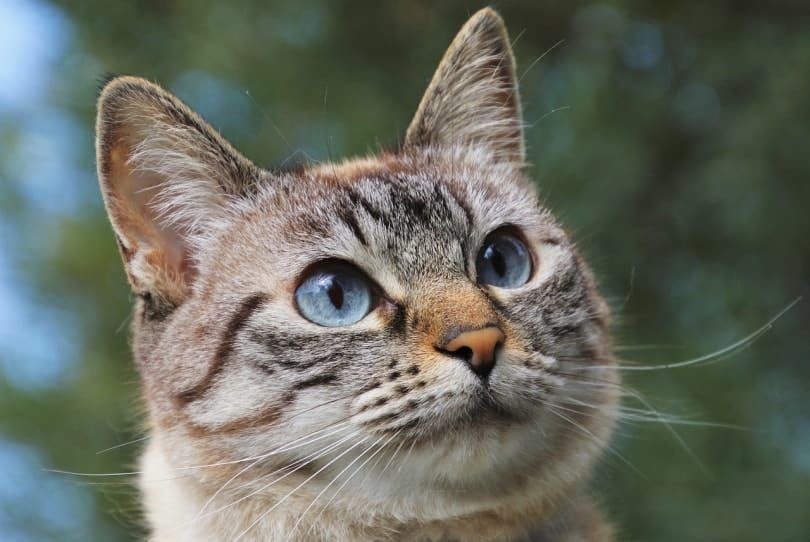
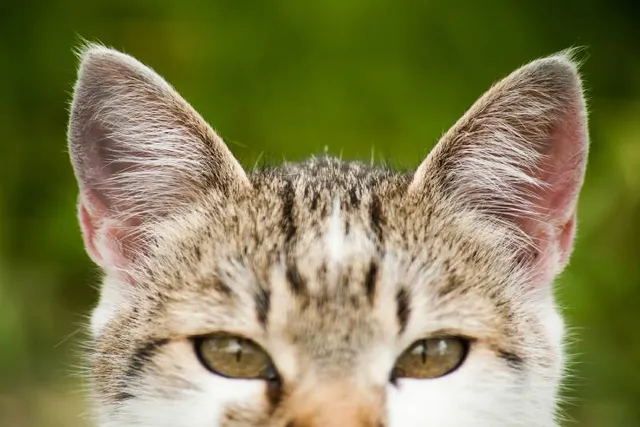
While cats can't use words to tell us how they're feeling, most are expert communicators who rely on different types of vocalization, body language, and chemical cues to tell humans and other cats how they feel. Cats use their tails, ears, and body positioning to indicate when they're happy, sad, worried, or frightened.
Context is also essential in determining what motivates a particular feline behavior, as a cat may head to their favorite cat tree because they enjoy being there or because they're anxious due to a visitor's sudden arrival.
Because a cat is relaxed doesn't necessarily mean they're open to being approached, petted, or picked up, as cats have differing levels of comfort when interacting with people.

Reading The Body Language of 5 Different Cat Moods

1. Happy Cats
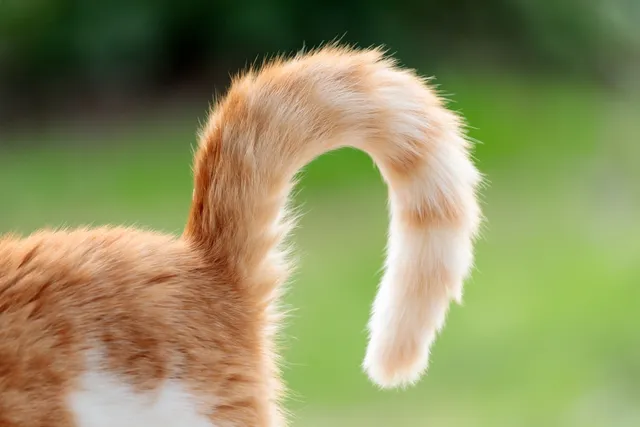
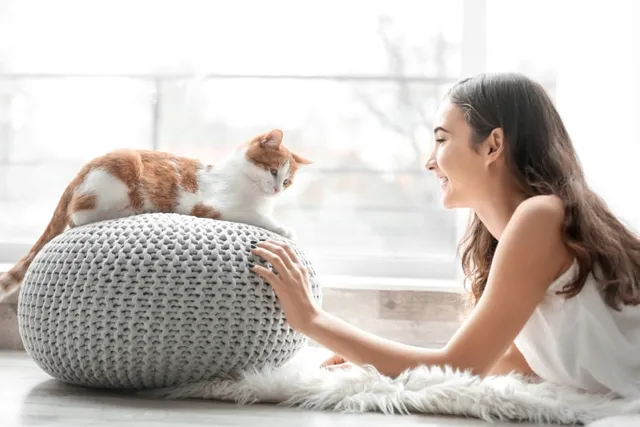
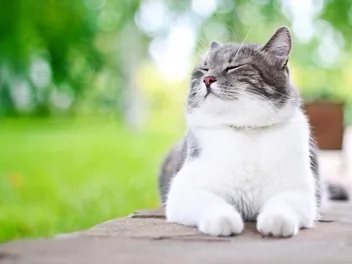
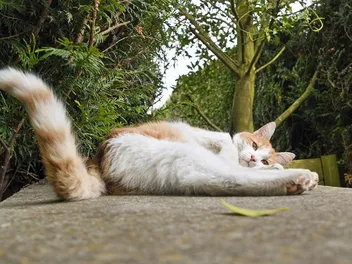
Happy cats are generally relaxed and curious about the activity around them. Cats that are happy to see their humans often meet their favorite people at the door and rub against their legs. They also typically approach with their ears and tails held high, which indicates a sense of comfort and confidence.
Some bend the tip of their tail in the direction of particularly loved people. Content kitties often lay on their sides or backs, exposing their vulnerable tummies. However, be careful not to interpret this posture as an invitation for tummy rubs since most cats prefer ear, back, and side petting. Happy cats are also inclined to spread out while relaxing.
Slow, steady blinks while holding your gaze can be considered the equivalent of a feline hug or kiss. Incredibly comfortable cats often knead while snuggling with their favorite humans. A cat that is happy, relaxed, or care-soliciting may purr, but in some situations, purring can indicate that the cat is injured or sick.
2. Scared Cats
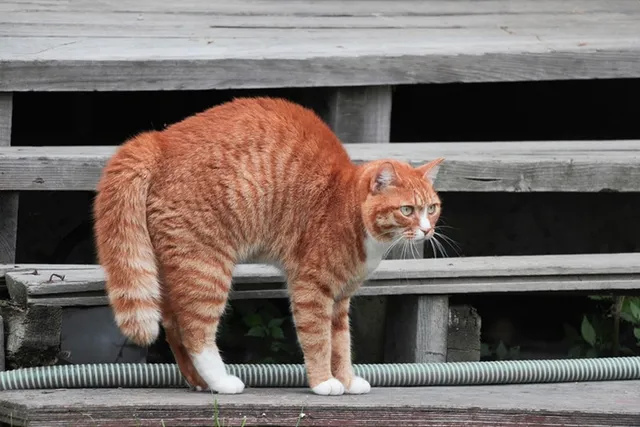
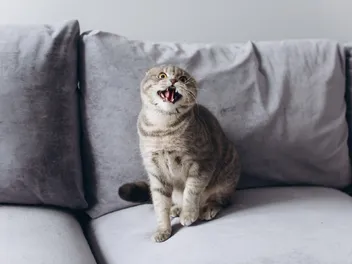
Terrified cats often stare at the triggering object or person while hissing or showing their teeth, which can sometimes indicate that a cat is on the verge of becoming aggressive out of fear. Other signs indicating a cat is scared include an arched tail and back hair standing on end.
Tail thwacking is also common. Upset cats often hold their ears back and down, almost flat on their heads or off to the side. Some keep their weight on their back paws to allow faster front paw deployment if needed. Cats' pupils also dilate when on high alert and on the verge of attacking.
When frightened, most cats need time and space to return to a comfortable baseline. To help a scared cat, remove the trigger (if possible) and allow your buddy enough room to escape to prevent them from feeling trapped, which can increase anxiety and aggression.
3. Sick Cats
Identifying sick cats can sometimes be challenging since they hide signs of illness. Cats that aren't feeling well sometimes become lethargic and exhibit behavior changes, like eating, peeing, or drinking more or less than they usually do. They'll hunch over and sit with their tails tightly wrapped around their bodies.
Other indications include head tilting, gait changes, lameness, and grooming difficulties. Pets in extreme pain sometimes yowl in pain, but older cats with cognitive problems sometimes vocalize out of distress. Older cats with osteoarthritis have trouble climbing stairs, getting on and off furniture, and sometimes have reduced interest in physical activities.
If you are concerned about the health and well-being of your pet, seek veterinary advice for the best course of action.
4. Worried Cats
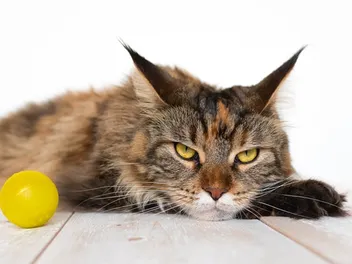
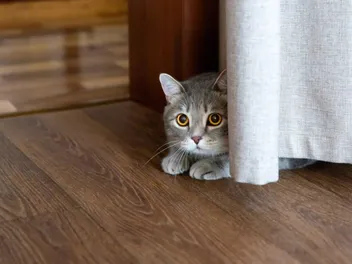
Worried cats crouch down, holding their bodies close to the ground. Some try to appear smaller by wrapping their tails around their bodies. Anxious cats often have dilated pupils, as do excited kitties that catch sight of something fun to chase.
Drawn-back whiskers are another common sign of feline anxiety and stress. Cats concerned about a situation hide in a place that allows them to watch the triggering person, pet, or event. Others retreat to high perches to safely observe and gather more information.
Because cats in the wild are predators and prey, they're most comfortable up high, where they feel safe and can monitor their surroundings.
5. Excited Cats
Excited cats exhibit several behaviors depending on what's triggering their enthusiasm. They chirp, wave their tails, and stare with dilated pupils at birds and other potential prey that grabs their attention.
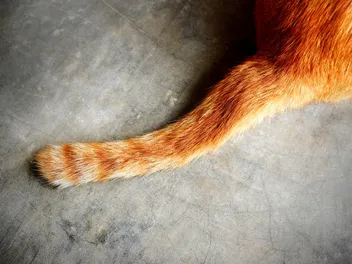
Cats that are happy to see their favorite person often show their joy with quivering tails. They crouch and wiggle their butts when preparing to "pounce" on "prey," such as their toys. Body language associated with feline excitement might be confused with signs of stress and anxiety.
Both worried and excited cats have dilated pupils, for instance, but it's relatively easy to understand the meaning of the behavior when viewed in context. Cats with dilated eyes hiding under a chair and watching a visitor are likely worried and a bit anxious, but pets staring at birds are probably excited and lost in the moment.

Conclusion
Cats use scent, sounds, and body language to express themselves. Happy cats usually appear relaxed. Most approach people they feel comfortable around and are delighted to greet with perky ears and a raised tail followed by head rubbing. Worried or concerned cats often crouch and tuck their tails around themselves to appear less threatening.
Terrified cats sometimes make themselves look bigger by arching their backs and puffing out their fur. While it's possible to read a cat's body language, remember that feline communication comprises other functions, such as their reliance on smell.
See also: Does the Full Moon Affect Cats?
Featured Image Credit: pasja1000, Pixabay
Expert cat care, straight to your inbox
News, insights, and useful advice, delivered to you.

No spam — unsubscribe anytime.
By signing up, you agree to our Terms & Conditions and Privacy & Cookies Policy.
How useful was this post?
Click a star to rate. You can leave written feedback afterwards. (We read all feedback.)
Lorre Luther is a writer who is firmly convinced that cats are smarter than humans. She left her law career in the United States and moved to the Netherlands to follow her dream of becoming a writer. Lorre currently lives in Rotterdam, she enjoys traveling and greatly appreciates the beauty of nature. Lorre has a spot for animals and admires the intelligence of cats.