Why Do Cats Twitch in Their Sleep? 3 Vet Reviewed Reasons


In this article
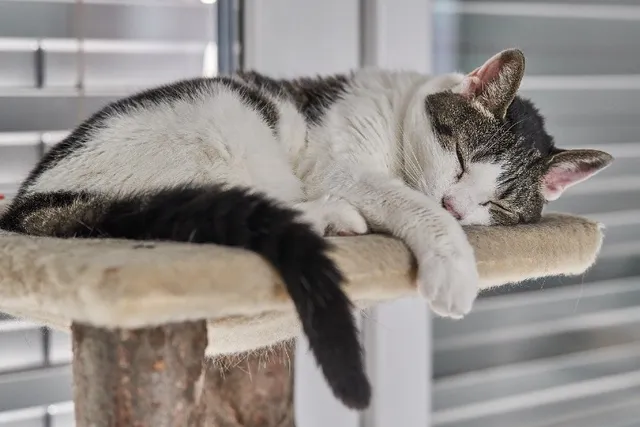
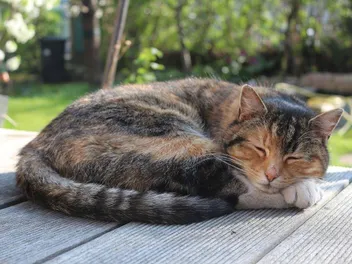
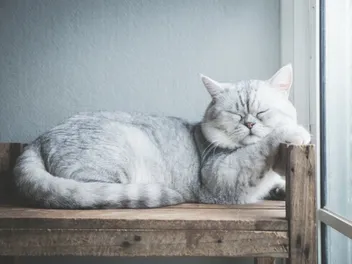
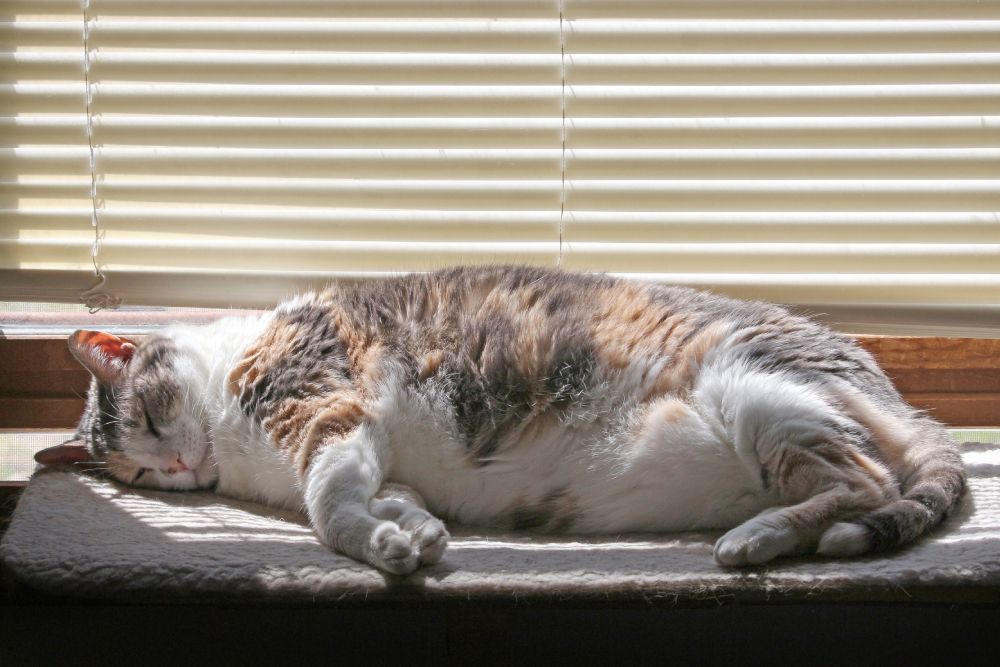
Just like people and other animals, you may notice that your feline sometimes twitches in their sleep. As you might guess, this is pretty normal behavior. Lots of cats twitch in their sleep, though some are more prone to this behavior than others.
In this article, we’ll take a look at all the reasons that your cat may twitch in its sleep. Many of these are harmless, though some may point towards underlying issues.

The 3 Vet Reviewed Reasons Why Cats Twitch in Their Sleep
1. Involuntary Muscle Spasms
Involuntary muscle spasms may cause twitching. These are involuntary muscle movements that shift back and forth from contraction to relaxation. These tremors can occur in any part of the cat’s body.
Typically, when the spasms occur while the cat is sleeping, there isn’t much to be worried about. However, tremors can occur because of an underlying condition, though they will likely occur if there is a severe condition behind them.
Genetic issues, trauma, certain medications, severe pain, and kidney failure can all cause twitching. Inflammation, hypoglycemia, and toxicity can also cause problems. However, these usually cause twitching throughout the body while the feline is awake, too.

2. REM Sleep
Just like people, cats go through REM sleep as well. This is a particular stage of sleep that is often considered “deep sleep.” When you feel well-rested, it is likely because you have gone through a lot of REM sleep. In humans, we can remember our dreams when we REM sleep.
We believe that cats can dream because we know they do enter REM sleep. Much of their sleep is REM sleep—more so than in the human sleep cycle. The average cat also sleeps more than people. Cats can sleep up to 16 hours each day. That’s far more sleep than people get!
Younger cats will likely twitch more during their sleep than their older companions because REM sleep decreases as cats get older. This is similar to human babies, who are more likely to mumble and twitch in their sleep.
3. Seizure
There is also the rare chance that your feline may be having a seizure, not just twitching in their sleep. Twitching and seizing can be challenging to tell apart, especially to the untrained eye. Many cats will also lose consciousness when they have a seizure. Therefore, unless you see your cat lose consciousness, it may appear that they are twitching in their sleep.
All sorts of things can cause seizures themselves. Diseases that affect the brain directly or indirectly can cause seizures. For instance, liver and kidney disease can cause seizures. They don’t affect the brain directly, but it does affect the blood that arrives at the brain. Anything like brain tumors can also cause seizures.
Of course, some seizures are hereditary and not caused by any specific reason.
However, if you see the cat fall asleep and then start twitching, he or she is probably not having a seizure.

Should You Be Worried About Your Cat Twitching in Their Sleep?
Usually, your cat twitching in their sleep is nothing to be worried about. Cats twitch in their sleep all the time, just like people. This is likely just a sign that they are in REM sleep and dreaming (or whatever the cat version of dreaming is). Cats experience more REM sleep than humans, so it isn’t uncommon for them to move around in their sleep quite a bit.
However, cats are pretty good at hiding their illnesses. Therefore, if your cat is sick, you may not get many signs that something is amiss. For this reason, you must take any odd behavior seriously. If your cat suddenly changes their behavior and starts twitching while asleep more, then it may be time to call your vet.
There are several diagnoses, options, and treatments for cats that are twitching because of an underlying condition. We’ll discuss some of those treatments and diagnoses below.
Involuntary Muscle Trembling
Often, involuntary muscle trembling will happen all the time. However, your cat may hide when it happens, so you may only notice it when your feline is sleeping. These tremors can occur throughout the whole body or only in one part. Localized areas usually affect the head or the hind legs.
The causes of muscle trembling are vast. Sometimes, they are the result of an underlying condition, like hypoglycemia or toxicity. However, they can also have no apparent cause at all. Treatment usually involves taking care of any underlying cause, which will cause the tremors to dissipate.
Laboratory tests are usually required to detect the reason for the tremors. The testing will depend on your pet’s other signs, as well as their history. If you know your pet ate a toxin, for instance, that is the likely cause of their tremors.
If there is no apparent reason for your cat’s tremors, treatment will likely look different. Overexercise and excitement will need to be avoided, as these can cause your feline to present more tremors than usual. Luckily, most cases of tremors in cats are treatable with the right diagnosis and treatment.

Seizures
Surprisingly, most seizures in cats occur while the feline is resting or sleeping. Phases of excitement and feeding can also signal a seizure to begin due to the increased brain activity—however, not all cats have seizures at these same times.
Many diseases can lead to seizures. Therefore, many different tests are also required before the underlying cause is determined. Usually, blood and urine tests are required, though advanced testing like X-rays or MRI scans may also be needed and require general anesthesia.
Treatment will be determined by the underlying cause of the seizures. Many of the causes of seizures are treatable, though they may require specialized care.
Even if the cause is not yet understood, many vets will treat the seizures directly. Seizures can cause brain damage over time, so it is essential to stop them before they cause any more damage. Some cases might benefit from specialized diets, but often, anticonvulsant medications are used for this purpose. The dosage often needs to be experimented with, so it may take a bit for the seizures to stop. The frequency and type of drug may need to be changed as well.
Even with treatment, it may not be possible to prevent all seizures completely. Instead, the aim's to reduce the frequency of seizures to ensure that your cat can live a good quality of life.
When giving your cat anticonvulsant medication, it is essential never to miss a dose or run out of medication. This can cause the seizures to return and be uncontrollable, which can cause severe problems for your feline. You should always maintain the correct dosage as well. Don’t change it without speaking to your vet first.
Also, be careful with any other supplements or herbs you give your cat, as these can cause problems with the medication. The most common side effect of anticonvulsant medications is tiredness, which may seem like lethargy. Usually, these lessen over time as the dosage remains the same. They may return if you need to switch the frequency or dosage of the medication.
Is It Dangerous if a Cat Is Twitching While Asleep?
No, in the vast majority of cases, a cat twitching while asleep is nothing to be worried about. While it can be an indication of an underlying problem, it usually isn’t. The only time that you should be worried is if your feline is also exhibiting sudden seizures or other behavioral changes, such as hiding, appetite changes, or lethargy.
Of course, if you’re concerned for any reason, you should contact your vet.
Help your kitty get better sleep with one of the best modern cat beds available this year!
Featured Image Credit By: Paul Hanaoka, Unsplash
Expert cat care, straight to your inbox
News, insights, and useful advice, delivered to you.

No spam — unsubscribe anytime.
By signing up, you agree to our Terms & Conditions and Privacy & Cookies Policy.
How useful was this post?
Click a star to rate. You can leave written feedback afterwards. (We read all feedback.)
Kristin is passionate about helping pet parents create a fulfilling life with their pets by informing them on the latest scientific research and helping them choose the best products for their pets. She currently resides in Tennessee with four dogs, three cats, two fish, and a lizard, though she has dreams of owning chickens one-day!