My Cat Ate a Hair Tie! Here's What to Do (Vet Answer)

In this article
Any cat parent will know that their feline friends can be mischievous and love to play. Although cats are often more sensible than dogs when it comes to eating random objects, they can get carried away while playing. So, what about one of a cat’s favorite playthings, a hair tie? What should you do if your cat ate a hair tie? Can a cat pass a hair tie? Can a cat really die from eating a hair tie? Read on to find out more.

Why Do Cats Like Hair Ties?
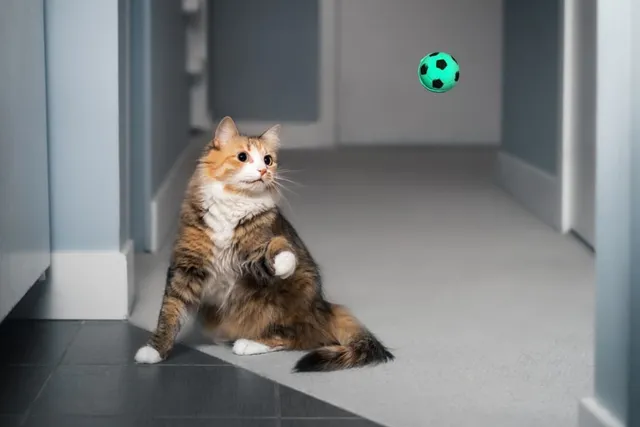
Cats love to play and will stalk and pounce on various objects during play. Once caught, they will often chew on their catch while kangaroo-kicking it with their back legs. This play-hunting is great fun to watch and great stimulation and exercise for your cat. However, it is not uncommon for cats to get carried away with their play and accidentally swallow the item they’re playing with. Hair elastics are a prime example of this since their elasticity and bouncy behavior grab your furry friend’s attention and encourage play.

Are Hair Ties Dangerous for Cats?
If your cat ate a hair tie, it can be very dangerous for multiple reasons. Firstly, it may get anchored on the teeth or the tongue as it is swallowed, which could lead to choking or wounds in the mouth or throat or on the tongue. If the cat manages to swallow a hair tie completely, it could get lodged at any point within their system, from the food pipe (esophagus) to their bottom. This blockage could cause food to build up where the hair tie is stuck and could cause vomiting as well as serious damage to the guts.
If the hair tie snaps, effectively becoming a string of elastic, it can cause even more serious complications. This is because it can cheese-wire through the wall of the gut if it gets stuck. If it gets stuck in your cat’s guts, they will often need urgent surgery to remove it before too much damage is caused.
You might not always notice right away if your cat has consumed something they shouldn't have. It is important to watch your cat’s behavior afterward to see if they are showing any symptoms of irritability or poisoning.
Seek veterinary advice if you’re concerned about your pet’s well-being.
My Cat Ate a Hair Tie! What Do I Do?
If your cat eats a hair tie, it’s important not to panic. The steps below should help you decide if or when to contact your veterinarian.
1. Check That Your Cat Is Breathing Properly
First, check that your cat isn’t choking or in any breathing distress, as this would be an emergency. If they are showing these signs, contact a veterinarian for an emergency appointment straight away.
2. Look for the Hair Tie
If their breathing is normal and they are not retching or gagging, do a thorough search for the hair tie to make sure it was definitely eaten. As a veterinarian, it’s surprisingly common to see pets that have eaten things that they shouldn’t have, only for the owner to find the offending article later when they arrive home!
3. Monitor Your Cat for Signs
If there’s no sign of the hair tie, and you’re pretty certain it’s been eaten by your cat, if your cat is well, you should continue to monitor them at home. If they continue to be well, with no vomiting, diarrhea, or other signs of illness, you may see the hair tie pass in your cat’s poop.
4. Contact Your Vet if Signs Appear
If your cat develops vomiting, diarrhea, constipation, or straining or goes off their food, you should get an appointment with the veterinarian as soon as you can. A check-over will allow your vet to determine whether the hair tie might be stuck and whether more tests or surgery is needed.

How Do I Know if My Cat Ate a Hair Tie?
If your cat has eaten a hair tie, they may show no signs at all until it comes out in their poop. You might even be unaware they have eaten it until it appears in their poop. However, if it gets stuck on its way through their guts, your cat will probably develop some signs. Even if you haven’t seen your cat eat a hair tie, if you know that they like to play with hair ties and you notice these signs, you should speak to a veterinarian.
The first sign you might notice is vomiting. The vomiting might be caused by the hair tie being lodged somewhere in the gut, causing a blockage, or it might be due to irritation that the hair tie has caused along the way. Another sign would be constipation or straining to poop if the hair tie is stuck lower down in the guts, in the colon, or rectum. You may also notice diarrhea caused by irritation of the guts, but this would often occur after the hair tie has passed through.

What Happens if a Cat Eats a Hair Tie?
If your cat eats a hair elastic and develops signs, you will need to take them to a veterinarian. The veterinarian will be able to do a full examination, including feeling their belly, to assess whether there are signs of pain or a gut blockage. They may also recommend a scan or x-ray to look for the hair tie and see where it is stuck and what problems it is causing. Once located, if it looks like the hair tie is stuck and unable to pass through the guts, the veterinarian will recommend an operation under anesthesia to remove it.
Can Cats Poop Out Hair Ties?
Cats can sometimes pass a hair tie—however, there is no way of knowing whether it is going to pass on its own or whether it is going to get stuck until symptoms develop. If your cat is lucky, the hair tie will pass through the guts with no issue, causing minimal irritation, and you will see it come out in their poop. If at any point your cat vomits, seems lethargic or depressed, goes off their food, or becomes constipated, you should contact your veterinary clinic right away.
How Long Does It Take for a Cat to Pass a Hair Tie?
Anything that your cat eats would normally pass through their system within 12 to 24 hours. If the hair tie hasn’t got stuck along the way, it shouldn’t take much longer than that to appear in their poop.

Will It Be Okay If My Cat Ate a Hair Tie?
Many cats will pass hair elastics with no issues at all. However, sometimes they will get stuck within the guts and cause a blockage. If this is the case, then a surgical operation is needed to remove the hair tie. If the signs are noticed quickly and veterinary help is sought before there is serious damage to the guts, then after a period of recovery, your cat should be fine. However, sometimes the damage is too severe, and a full recovery is not possible.
Can a Cat Die From Eating a Hair Tie?
Sadly, hair ties can cause a gut obstruction, leading to damage to the gut wall. This damage can cause the fecal matter to leak out of the guts, causing a serious infection called peritonitis. Unfortunately, even with treatment, peritonitis can be fatal for your cat. The longer a hair tie is stuck without being removed, the more likely that the gut damage will be severe and lead to peritonitis.
How Do I Get My Cat to Stop Eating Hair Ties?
The best way to avoid the worry of your cat eating hair ties is to make sure none are lying around that he or she might find. Storing them securely in a container with a lid or a closed cupboard will ensure that even the most adventurous feline can’t get hold of them.
Final Thoughts
If your cat is always playing with random objects around the house, it can be a real worry. Hair ties are one of the most popular household items for cats to play with, and sometimes they can be accidentally swallowed. If you think your cat might have eaten a hair tie, watch out for symptoms like vomiting or straining to go to the toilet, and contact your veterinarian at the first sign of a problem.
Although hair ties can sometimes be passed in your cat’s poop with no issue, serious complications from gut blockages do occur. As the saying goes, prevention is better than cure, so the best way to keep your cat safe is to try to keep your hair ties out of their reach.
Related Reads:
Featured Image Credit: Prayogi1997, Shutterstock
Expert cat care, straight to your inbox
News, insights, and useful advice, delivered to you.

No spam — unsubscribe anytime.
By signing up, you agree to our Terms & Conditions and Privacy & Cookies Policy.
How useful was this post?
Click a star to rate. You can leave written feedback afterwards. (We read all feedback.)
Dr. Joanna Woodnutt BVM BVS (Veterinarian)
Joanna is an experienced veterinarian working in the UK. She has written about pets and their health for many blogs, pet magazines and pet websites and loves to help readers understand their pets through her writing.
She has started her own freelance company so she can help more pet parents than just the one standing in front of her in a consultation room.
She enjoys teaching and educating clients, so a career in writing, public education and pet health is the perfect combination for her.