Do Cats Get Jealous of Dogs? Feline Emotions Explained (Vet-Reviewed)


In this article
Jealousy is a complex emotion that humans experience when they have feelings of insecurity or fear. While we don't typically think of our cats as having similar feelings as we do, they appear to be capable of more than we give them credit for!
Some studies indicate that animals are fully capable of experiencing complex behaviors that their owners ascribe to jealousy, so if your cat is suddenly acting out when you bring home a new dog, it's not outside of the realm of possibility that they're feeling “jealous” or acting out over this new family member they didn't ask for.
Read on to learn more about jealousy in cats, including why they may feel the green monster rear its ugly head and how to address the jealousy before it becomes a harder-to-fix problem.

Why Would Cats Get Jealous of Dogs?
Sometimes, when we become jealous, we aren't able to immediately figure out why. However, we have the cognition skills to turn inward and ask ourselves why we're feeling that way. Cats aren't necessarily capable of such complex thinking, though when they display signs of jealousy because of their canine counterpart, there are generally several reasons.
1. The Dog Is Annoying Them
Cats typically have very different personality traits than dogs, which may be why they get along much better with other cats than they do with their canine counterparts. Dogs are often very excitable, exuberant, and outgoing. They can be very confident and unafraid, which may be off-putting for cats.
If your dog is particularly fond of your cat's things, like their food bowls or litter box, it could become quite problematic for your kitty. This “annoyance” is, in essence, a stress episode for some cats. Such episodes can be accompanied by behavior changes, and in some cases, they can be accompanied by health issues too.
2. The Dog Is Invading Their Territory
Cats are territorial creatures and often aren't unafraid of letting you know exactly how they feel about newcomers entering their space. These territorial feelings may cause jealous behaviors when your dog chooses your cat's favorite blanket to sleep on or takes up space next to you in bed. This has been identified by cat owners as what they would perceive as jealousy in a pet cat.

3. The Cat Feels Neglected
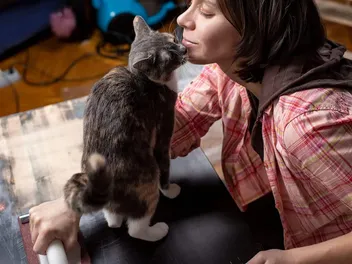
Your kitty may exhibit jealousy simply because they feel like you're not paying them enough attention. This is especially true if your cat was the only pet in your home before welcoming a dog. They know how much time you used to spend with them and might be unhappy about having to share that time with this new annoying, territory-invading dog.

What Are the Signs of Jealousy in Cats?

Before identifying the signs of jealousy in cats, it’s important to keep in mind that a cat displaying signs of jealousy is merely a conclusion we reach based on our definition of the word. In other words, methods of handling jealousy in problematic humans or children won’t necessarily work on a cat, as they don’t function on the same thinking plane as we do.
It may be obvious that our cats are feeling a particular way, so it's always a good idea to pay close attention to the little signs your kitty sends you to let you know how they're feeling.
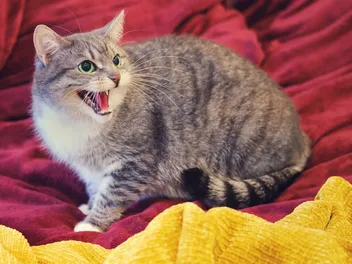
Some of the most common behavioral clues that your cat is feeling jealous of the family dog include:
How to Address Jealous Behavior
Managing your jealous cat's behaviors can be tough, but you must try. Ignoring the problem will not make it go away and can make your cat's behavioral issues worse. There are several things you can do to make living alongside your dog easier and healthier for your kitty.
Rule Out Medical Issues
Many of the signs associated with perceived jealousy in cats are also signs that may be due to an underlying health issue. As a general rule of thumb, if your cat is acting out, it’s important to have your vet assess them to rule out a medical issue. This is important because, assuming the issue is behavioral only, it can often lead to one attempting to solve an issue that doesn’t exist in the first place.
Give Lots of Attention
An anecdotal way to address jealous behavior is by ensuring you're spending time every day with your cat. If your dog likes to be part of the goings-on in your home, you'll need to set aside some one-on-one time for just you and your cat. You know your cat's personality best, so cater your time to their preferences. For example, if your kitty loves to play, set aside time to play with them. If they prefer snuggling up in your lap, make sure you're giving them time to do so uninterrupted.

Give Them a Dog-Free Zone
To address the territorial issues your kitty may be facing having to share their space with the dog, consider offering them a dog-free area of the home. Some ways to achieve this include setting up blockades like baby gates to keep your dog out or providing high shelving that only your cat can access. Installing a cat door that your pup can't fit through is another great option.
Do a Proper Introduction
Another way to prevent jealous behaviors from starting in the first place is to introduce new pets slowly and deliberately. Never allow your cat and dog to intermingle the moment you bring your pup home. For starters, both animals would ideally be kept separate for at least 2 weeks prior to a physical introduction. This is to ensure that your new addition doesn’t inadvertently pass on an illness to your cat, or vice versa.
Once the quarantine period passes, it’s then possible to proceed with an introduction. The slower and methodical you are in your approach, the higher your chances of a successful introduction of a new dog to your cat.

Call in the Professionals
If the above techniques don't address your cat's jealousy issues, you may need to call in reinforcements. Cat behaviorists and trainers specialize in cat behavior and can provide some much-needed insight and tips to help with your kitty's problem behaviors. They may make suggestions on routine changes or advice on enrichment you can add to your pet's life. They also often work closely with a veterinarian to ascertain the full extent of your cat’s issues and the amount of time, retraining, and intervention required.
Final Thoughts
We may never know for certain if cats feel jealousy the same way we do as humans. However, they have been observed to display signs one would equate to jealousy in people. So, if your kitty is acting out after you bring a new dog home, it could very well be that some jealousy issues are afoot. We hope our tips help you address the problem before it becomes more serious.
Featured Image Credit: Chendongshan, Shutterstock
Expert cat care, straight to your inbox
News, insights, and useful advice, delivered to you.

No spam — unsubscribe anytime.
By signing up, you agree to our Terms & Conditions and Privacy & Cookies Policy.
How useful was this post?
Click a star to rate. You can leave written feedback afterwards. (We read all feedback.)
For Chantelle, writing and animals are the two driving forces in her life. Growing up on the Canadian prairies surrounded by pets, she now shares her home with five cats, two guinea pigs, and a bearded dragon. Chantelle, her husband, and their child pride themselves on being dedicated pet parent, even spending a fortune on wall-mounted cat shelves to provide their cats with an indoor jungle gym. When she's not snuggling with her cats or photographing their humorous moments, Chantelle is exploring the Rocky Mountains, rewatching her favorite Netflix series, and reading up on various random subjects.