How Do Cats Communicate With Each Other? Vet-Verified Facts & Info


In this article
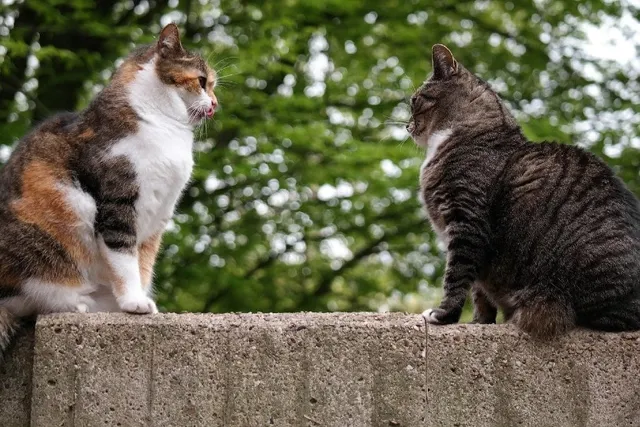
Most mammals, including cats, are able to communicate, although non-verbally. Cats have developed forms of inter-cat communication over the millennia; some are vocal, some are physical, and others are chemical. Cats do it well in whatever form of communication they use and have developed a complex "language" all their own. If you're curious about how cats communicate, read on.

Physical Forms of Communication (Body Language)
One of the main methods of communication cats use is the physical movement of different parts of their body. For example, how they walk and stand gives away many clues to other cats about how they feel. The most common physical communication cues cats give include the following:
1. Moving Their Tails
A cat's tail is one of the body parts they use the most to communicate. For example, if a cat likes another cat, the very tip of its tail will usually point forward. If your cat's tail is moving fast, it typically means they're anxious or fearful. If their tail is held high over their head and curled forward, your cat is excited, friendly, or curious to see another, but a male cat’s tail pointing straight with their rear end against a vertical surface might mean they're about to spray and leave their mark.

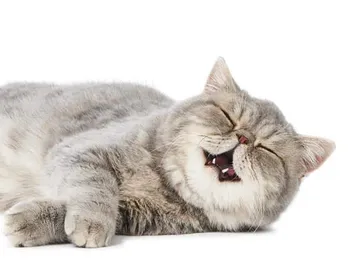
2. Rolling Over to Show Their Bellies
A cat that is very comfortable and friendly with another cat will often roll over and expose its vulnerable belly, something it would never do if it didn't feel 100% secure.
3. Blinking Their Eyes
Cats will often blink their eyes slowly while looking at another cat. This is a sign that they are willing to be approached and would love extra attention from another cat.

4. Crouching Down and Tucking Their Tails
If you see your cat crouching down and tucking its tail, it feels threatened, anxious, or unsure. If they also have their ears pulled down close to the side of their head, it is a sign that they are not happy.
5. Licking Their Lips
It seems odd, but surprisingly, when a cat licks its lips in the presence of another cat, it feels threatened or fears the other cat.

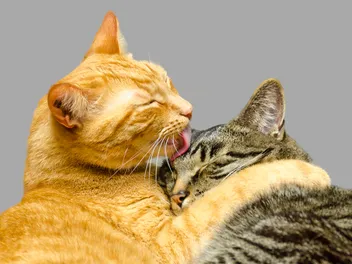
6. Rubbing Their Heads on Another Cat
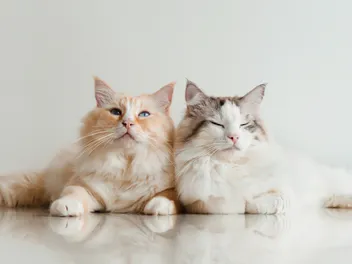
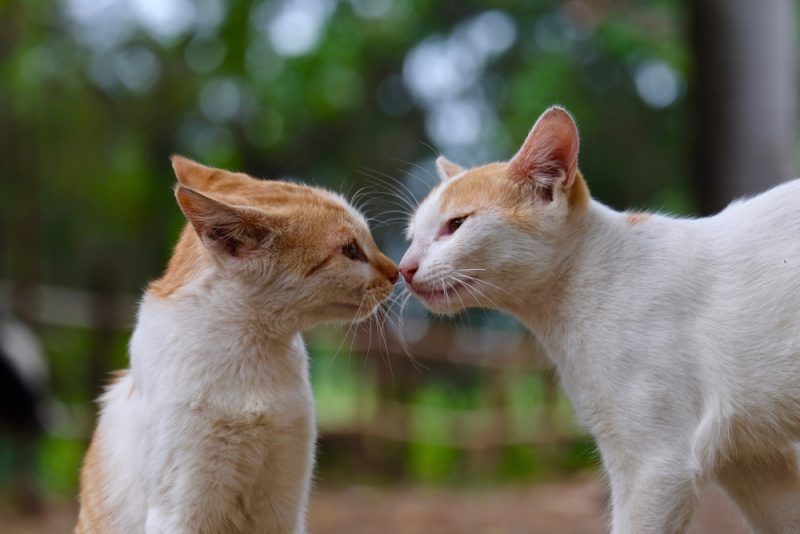
If you see a cat rubbing their head on another cat's head or part of their body, you can rest assured that both cats like each other very much and feel comfortable. This physical form of communication is like when two old friends meet and shake hands.
Vocal Communication
Another form of communication cats use is vocal. Cats vocalize a lot of their feelings and thoughts, and it's often an easier way to know that something isn't right. Vocal cat communication cues include the following:
7. Hissing and Growling
It's not difficult to know how your cat is feeling if, for whatever reason, they're hissing and growling loudly. Both are usually signs that your cat is very upset, angry, and even ready to attack. Growling usually comes first as a warning, then hissing, followed by sharp, slashing claws.

8. Purring
Cats purr around humans but also as a form of communication with other cats. Usually, a purring cat is a happy and content cat, so if yours are purring while interacting, it's probably a good sign. However, if your cat is purring more than usual and for no apparent reason, it might be that they're trying to soothe themselves because they are feeling some kind of discomfort.
9. Meowing
Here's a truly surprising fact about cats and communication; they only use meowing to communicate with their mother as kittens and adult cats use meowing exclusively with humans, not with other cats. However, even if they don't meow, cats will often trill, snarl, hiss, or growl to let other cats know how they're feeling.


Using Scent and Pheromones
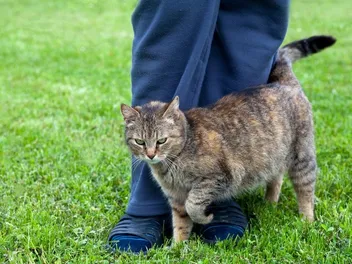
With over 200 million scent receptor cells in their nose, it is no surprise that chemical and scent communication is an important way of communication between cats. Cats rub and paw on surfaces and even on you because it is their way of leaving their scent on things in and around the home and mark their territory with urine to let other cats know it's theirs. However, cats leave a lot more scents around the places they live. When they do, whether by rubbing their cheeks, chins, body, or tail, they leave organic chemicals called pheromones behind them. These chemical messages help other cats know about them and their status or situation. The story left behind tells the cat whether the cat was male or female, their age, and if they are in "heat," among other things. Pheromones have the ability to influence and change other cats’ behaviors and are perceived with a specialized organ called the Vomeronasal or Jacobson’s Organ.
The Group Scent
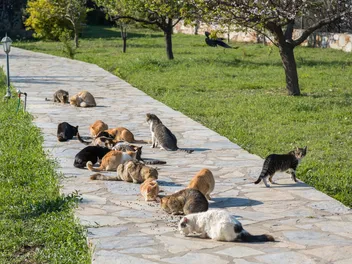
Something very interesting about cats and scent is that while they are usually solitary creatures, they are also able to live in groups or colonies. It turns out that cats in a group will not only accept each other but work towards creating a “group scent” composed of the sum of all individuals in the group. This is achieved by allogrooming, head bumping, or cheek rubbing; all considered bonding behaviors. The group scent is used to ensure the establishment of peaceful associations among the group members.
Do Cats Communicate With People as They Do With Other Cats?
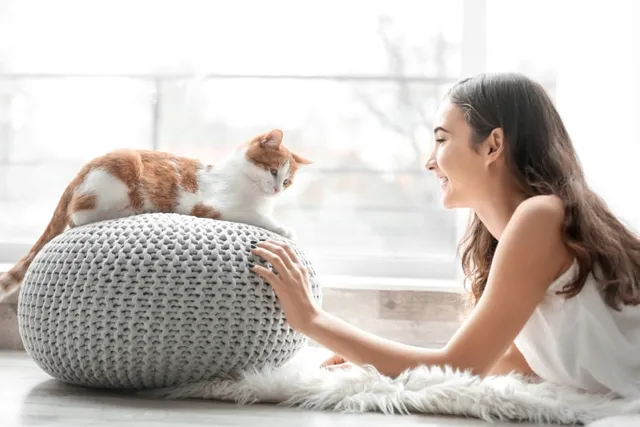
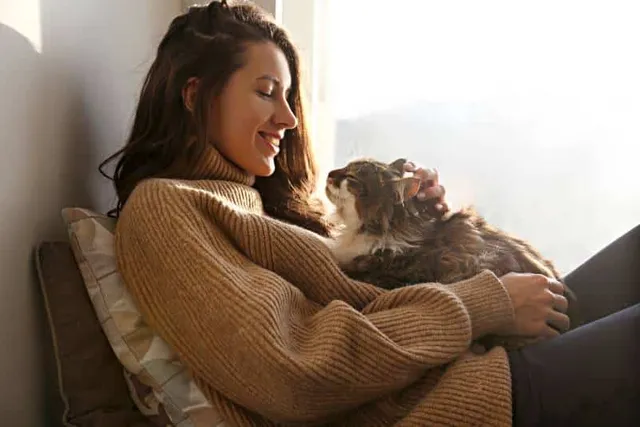
As mentioned earlier, adult cats don't normally meow as much with other cats as they do with humans. Over the years, cats have learned that humans respond best to meowing, so they use this form of communication with us the most. Yes, cats will sometimes meow to communicate with other cats, but mostly, it's what they do to get the attention of their favorite human. In other words, cats communicate with humans differently than they do with other cats.
Can Cats Communicate With Dogs?
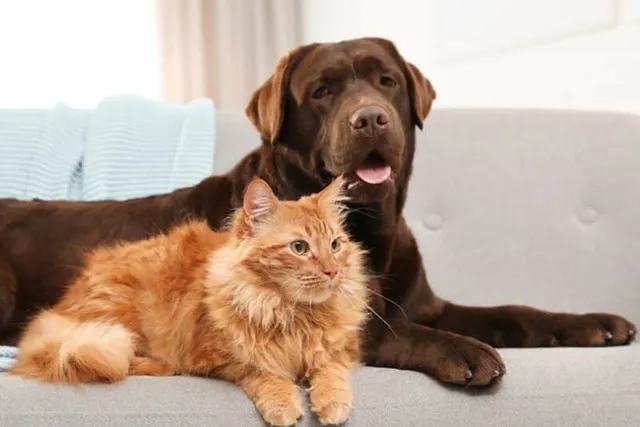
If you have cats and dogs, you might wonder if they can communicate with each other the way cats communicate with other cats and humans. The fact is that there's no real form of communication between the species, but after a dog and cat have lived together for a long enough amount of time, they will begin to understand each other and form their own method of communication.
For example, you can always tell a young, inexperienced dog from one that's been around cats. The former will rush in and usually frighten the cat. The latter will perhaps approach a cat (or cats) with more caution, knowing from experience that they don't like to be messed with and will fight back if necessary.
Final Thoughts
Cats communicate with each other in several ways. Surprisingly, they don't use meowing often, although kittens will meow to let their mommy cat know they're hungry. Most cat intercommunication we are aware of involves hissing, growling, spraying, and physical touch, plus a wide range of physical movements and positions. However, scent and chemical communication are very important among cats and very important in social interactions. While they may not communicate on the same level as us, you can rest assured that cats still communicate well with each other and with other animals.
Featured Image Credit: Sandeep Gore, Shutterstock
Expert cat care, straight to your inbox
News, insights, and useful advice, delivered to you.

No spam — unsubscribe anytime.
By signing up, you agree to our Terms & Conditions and Privacy & Cookies Policy.
How useful was this post?
Click a star to rate. You can leave written feedback afterwards. (We read all feedback.)
Gregory Iacono former chiropractor and self-taught writer. Greg has experience in a wide variety of subjects including video script. As a man of clinical experience, Greg has the ability to digest a complex subject and make it accessible to the reader. Greg enjoys traveling and spending time with his two daughters and son.