How Do Cats Greet Each Other? Feline Communication Explained

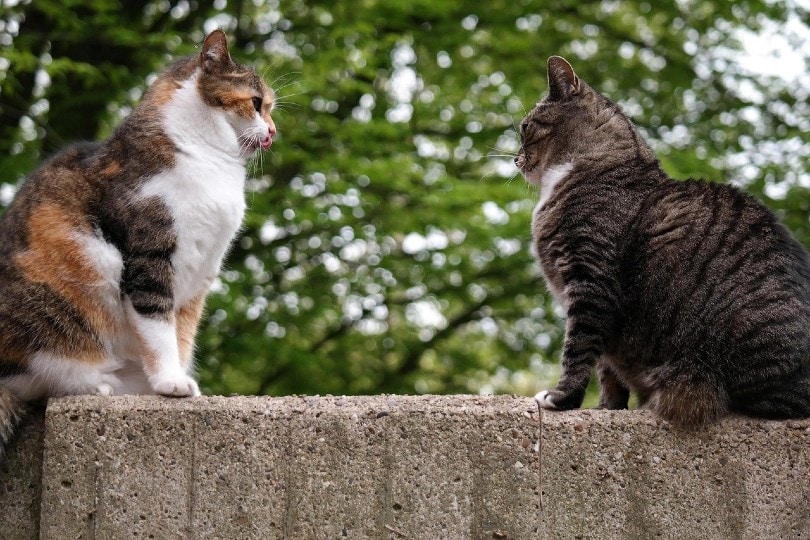
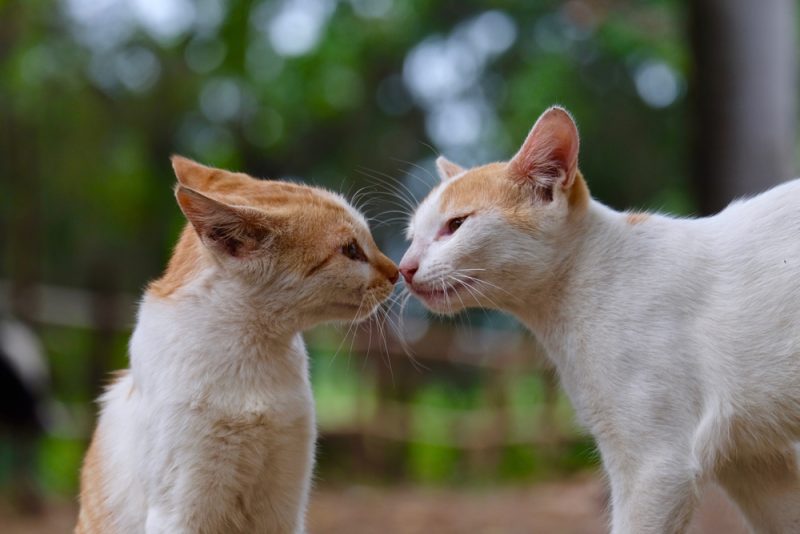
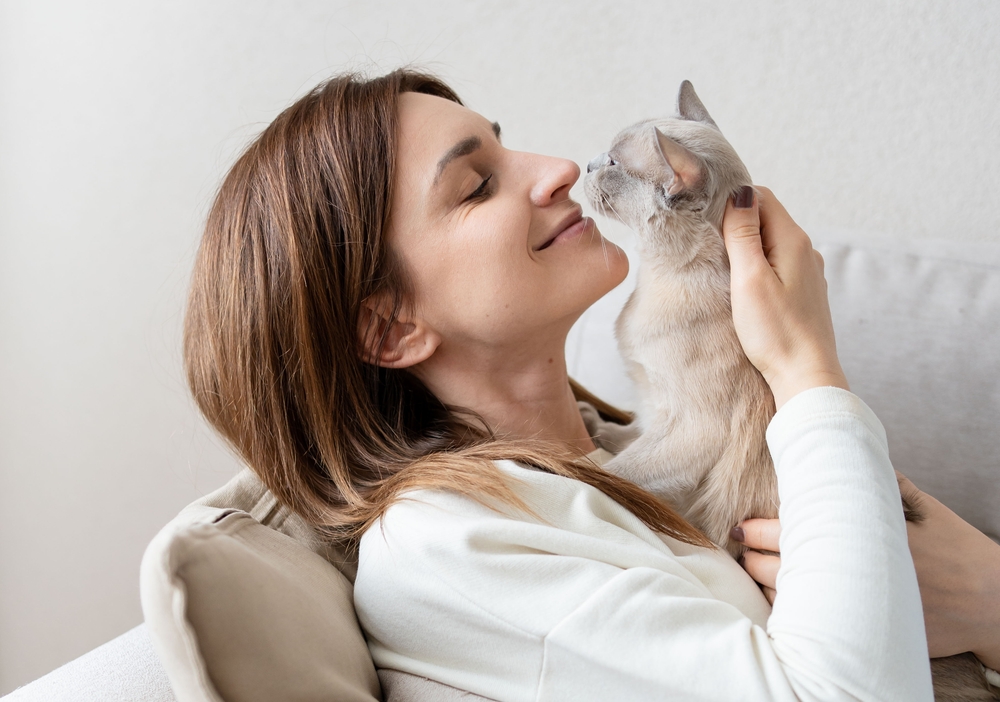
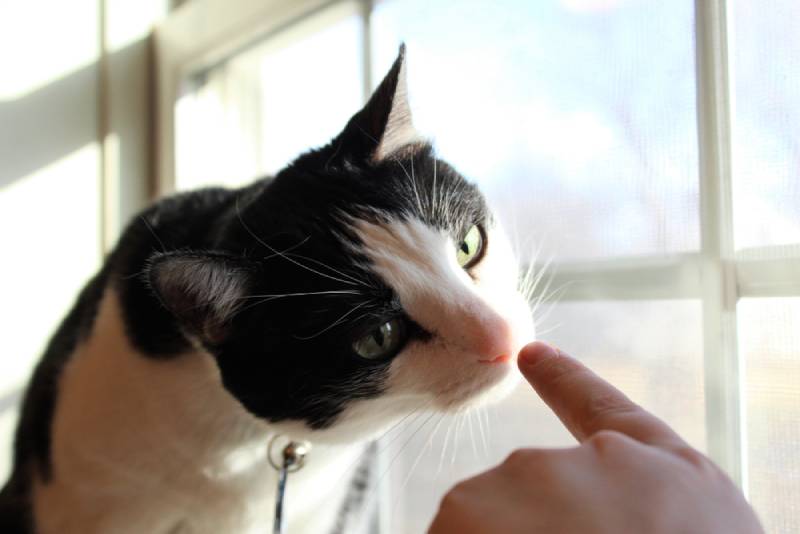
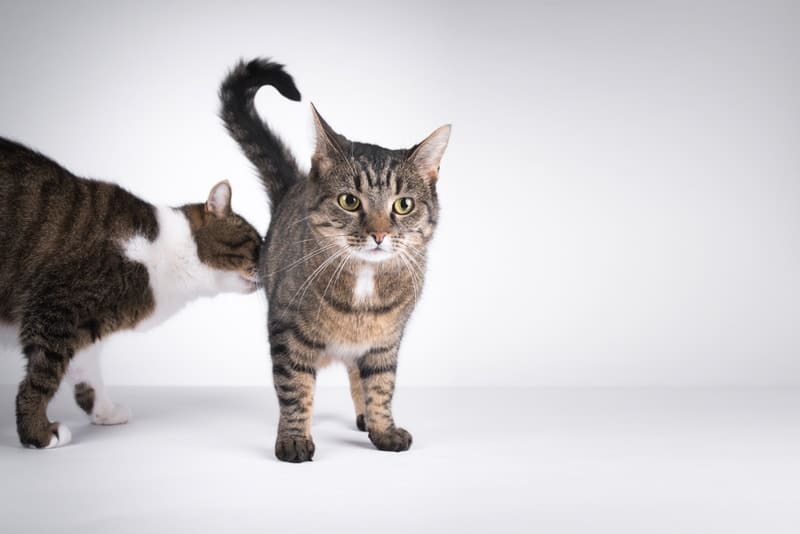
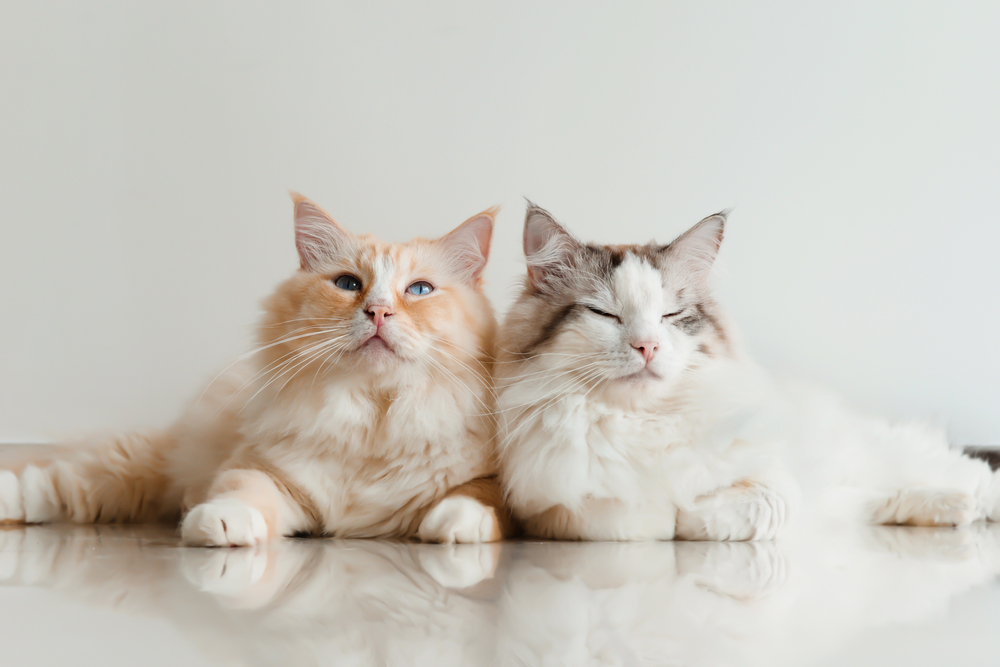
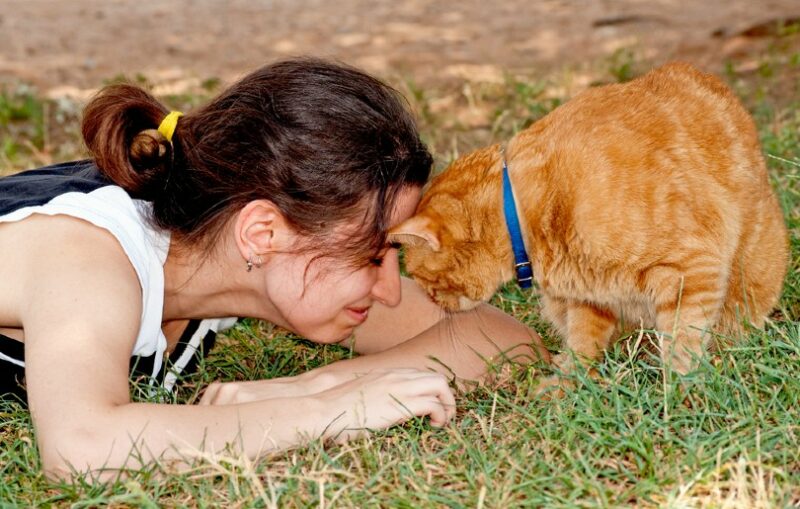
We know how cats typically say hello to us, but how do they greet each other? Cats say hello to each other by touching their noses, often followed by mutual head-rubbing and sometimes butt-sniffing. This is because cats largely rely on smell to identify each other. Some will bond by hooking their tails together, and others will cozy up against each other’s side. All of this allows them to learn how their buddy is doing in minutes and creates a sort of unified scent later used for identification.

How Do Cats Communicate With Each Other
Cats communicate using several techniques, including body language and vocalization. They also communicate through smell, with pheromones that carry information about health and reproductive status.
Body Language
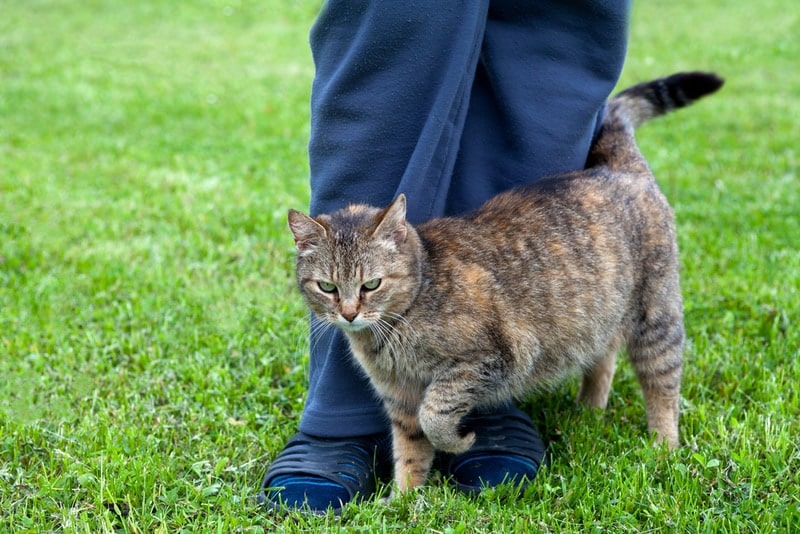
Cats have incredibly expressive bodies; their ears, tails, eyes, and whiskers give their emotions away. Cats feeling comfortable and secure often approach other cats with their tails held high and their ears pointing forward just a bit. Some cats may turn the tip of their tail toward their favorite companions.
Most only lounge on their sides (exposing their vulnerable bellies) when they’re around people or animals with whom they feel totally safe. Cats also use their eyes to communicate with other felines; a slow blink usually means they feel friendly and would be happy to hang out. Ear flattening, refusing to make eye contact, and hunching often indicate fear.
Fearful cats sometimes become aggressive if they’re not allowed to retreat somewhere they feel safe. Tail thwacking, hissing, and back arching are clear signs that a cat has had enough.

Vocalization
Cats sometimes greet each other with subtle (and truly adorable) trill-like noises. Meowing is mainly reserved for saying hello to and interacting with humans. Some information suggests that cats’ meows have adapted over time to convince humans to fork over food and treats. Kittens also meow to get their mother’s attention.
Purring is incredibly complex, as it can mean a cat is content or attempting to self-soothe. Cats purr when kneading (you or their favorite blanket) and when nursing or being groomed as kittens. Pregnant queens purr in the early stages of giving birth, which appears to help relax them.
Growling and hissing are two other common types of feline vocalization. Cats growl and hiss to make their displeasure crystal clear. It’s usually a sign that a cat is deeply afraid and wants some space. Deep howls often indicate extreme distress or pain. Kitties enthralled by prey sometimes produce tiny chirps out of sheer excitement.
Smell
Cats have scent glands located on their foreheads and around their whiskers. They also have scent glands on their chins, paw pads, and close to their butts. Pheromones are packed with information about cats, including their health. It provides information other felines can use to learn about cats they encounter, including their gender, health status, and even if they’re in a good mood.
Dominant cats tend to make the first move regarding the butt-sniffing part of getting to know another cat. But more submissive cats have a few handy tricks for fending off over-enthusiastic sniffing; they’ll often refuse to participate by taking a seat.
When cats rub against things, people, and animals, they leave a bit of their scent behind, which then serves as a source of comfort as it creates a sense of familiarity. Cats also use scent to mark their territories, which is why some cats pee indoors when feeling insecure or threatened or simply wishing to establish their “ownership” over the given area.
Scratching is another territory-marking activity, as it allows cats to distribute pheromones through the scent glands in their paws. Both male and female cats mark using urine, although it’s most often seen in intact male cats. Sprayed urine usually has a stronger smell than regular cat pee.
What Sense Do Cats Rely on the Most?
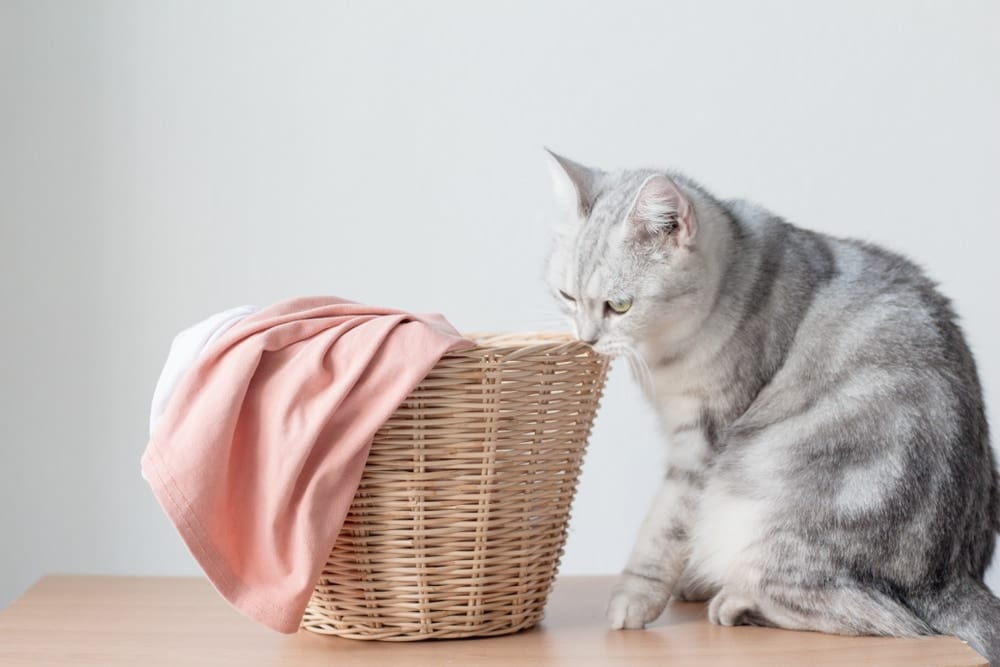
Cats rely primarily on smell to identify human and feline family members. Their noses are full of scent receptors, giving them a sense of smell more than 14 times more acute than humans. They also have vomeronasal organs that detect pheromones and transfer this information directly to their brains. Because their sense of smell is so sharp, cats rely on it for far more than humans do when navigating the world.
Humans engage with the world primarily through visual input, while cats rely more heavily on scents. They also use sound to identify owners, relying on their incredible hearing to identify familiar voices instead of facial recognition. Cats can most likely identify family members through scent recognition, although it’s most likely felt as a sense of familiarity.
Conclusion
Cats greet each other by touching their noses and rubbing against each other. They exchange scents to learn about each other and create a new familiar one through contact. Some say hello to loved companions with an understated trill, but most reserve meowing for their favorite humans.
Cats also use body language to communicate emotions, including tail and ear positioning. Cats feeling confident and comfortable walk with their tails held high and ears pointed forward. Kitties feeling comfortable often show their bellies and snuggle up to their favorite feline companions.
Sources
Featured Image Credit: Thomas B., Pixabay

Expert cat care, straight to your inbox
Vet-reviewed advice, behavior tips, and the best of Catster. Free, and you can unsubscribe anytime.
By signing up, you agree to our Terms & Conditions and Privacy & Cookies Policy.
Lorre Luther is a writer who is firmly convinced that cats are smarter than humans. She left her law career in the United States and moved to the Netherlands to follow her dream of becoming a writer. Lorre currently lives in Rotterdam, she enjoys traveling and greatly appreciates the beauty of nature. Lorre has a spot for animals and admires the intelligence of cats.
Join the conversation
Ask a question, share your story, or send private feedback.