Why Are Cats So Flexible? Vet-Verified Facts & Reasons


In this article
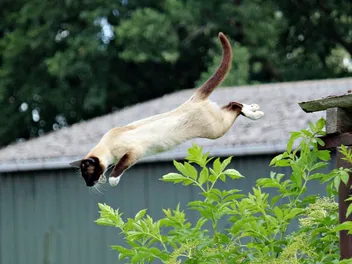
Cats are amazing creatures capable of some fantastic feats of strength and agility. For example, did you know that a cat can jump up to nine times its height from a seated position? That would be the equivalent of a 6-foot-tall person jumping over a 5-story building!
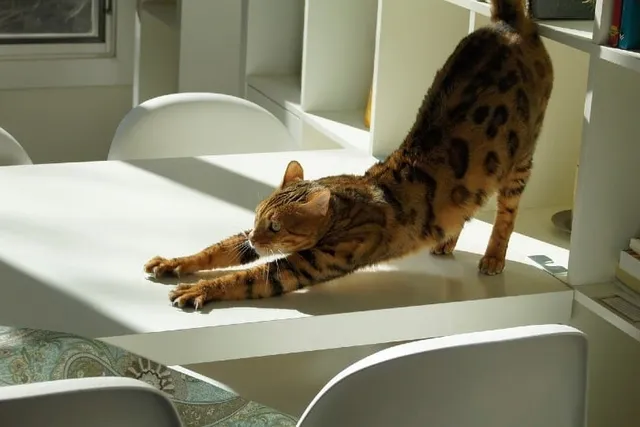
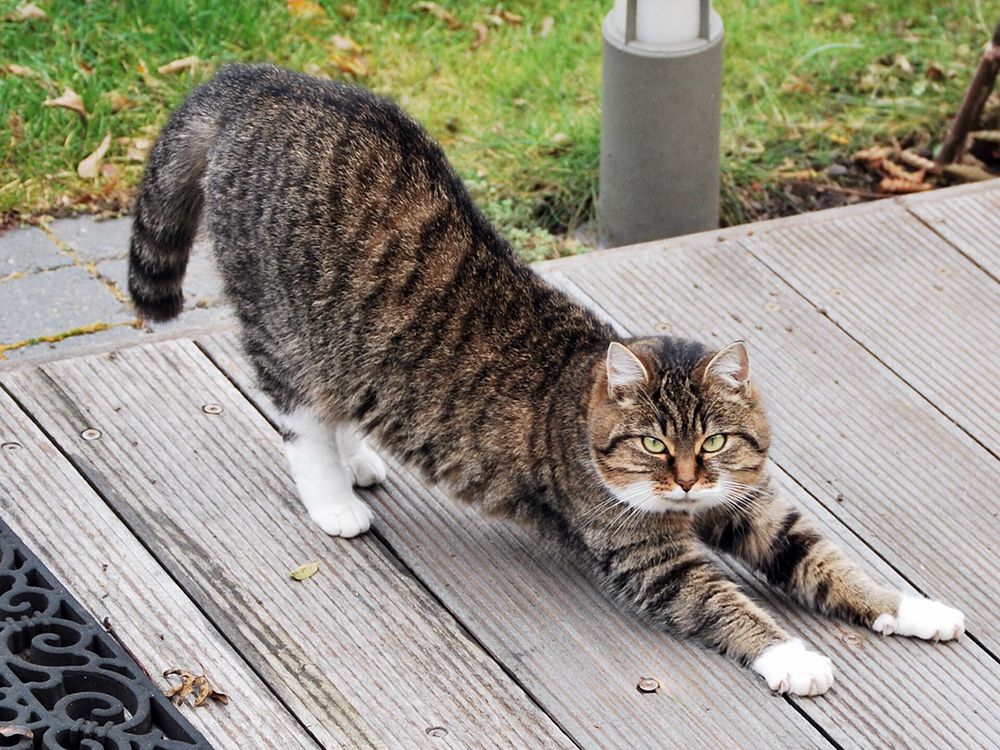
Felines also have impressive flexibility, which is off the charts compared to humans, dogs, and most other animals. Why are cats so flexible, and what does the scientific community have to say about the incredible flexibility cats possess? Simply put, cats inherited flexibility from their wild ancestors. If you're curious as a cat to find out more, read on.

How Did Cats Become So Flexible?
Before they were domesticated, house cats were much like their larger cousins, the tiger, lynx, panther, and other large felines. They lived in the wild and had to hunt for food, defend themselves from predators, and survive dangerous situations.
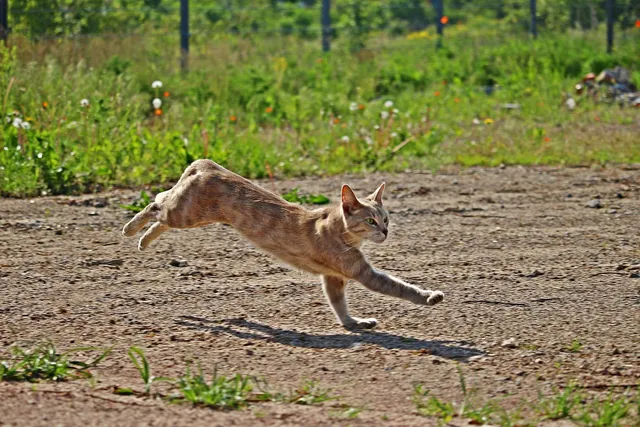
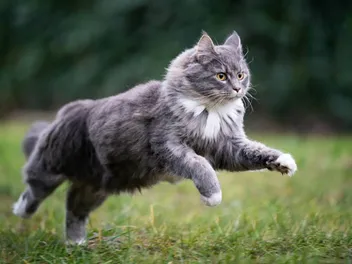
For example, cats needed to catch small, incredibly quick animals like birds, mice, rats, and rabbits to eat. Being able to move rapidly, turn, twist, and reposition themselves was an absolute must to do this. The same can be said for escaping predators like wolves, foxes, hawks, and larger felines. To escape, cats developed the ability to jump high, run fast, twist like a pretzel, and move incredibly quickly.
To do that, cats developed excellent flexibility over thousands of years. Like practically all living creatures, cats have changed and adapted over the millennia, with every new generation having increased flexibility. Even though the average house cat isn't fighting for survival, the flexibility bred into them over so many years has remained, which is why your cat can do such seemingly amazing feats.

What Makes a Cat So Flexible? 4 Main Reasons
Anatomically speaking, there are several reasons why cats are so extremely flexible. We'll take a closer look at the biggest reasons below.
1. Cats' Spines Are Very Elastic
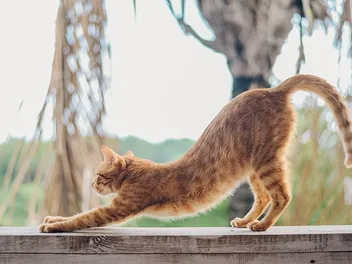
Scientists at the Cornell Feline Health Center1 have found that cats have a much more elastic spinal column than humans, dogs, and many other animals. Cats have 30 vertebrae (up to 53, including the tail) with specialized intervertebral discs, allowing them to twist their bodies much further from side to side than humans, almost 180 degrees! Humans can only rotate about 90 degrees to either side.
The intervertebral discs in a cat's spine are highly elastic, allowing cats to twist and rotate, especially when falling through the air. Not only are they elastic, but the bones in a cat's spine and the discs are much more loosely connected than other animals, giving them even higher flexibility.
There is also a difference in the number of vertebrae in the thoracic and lumbar vertebrae, with cats having 13 thoracic vertebrae and seven lumbar vertebrae versus humans having 12 and five. This increases the range of movement possible.
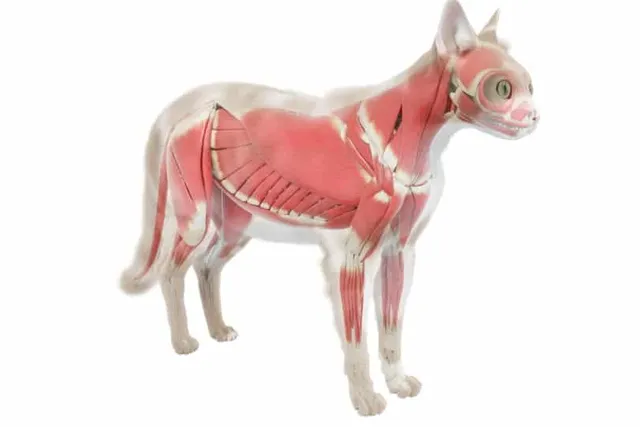
2. Cats' Shoulders Are Attached With Muscles Only
A cat's shoulders and shoulder blades are only attached to its spine and body by muscles, not bones. This allows cats to move their shoulders far more than humans can, allowing them to squeeze through openings that seem impossible for them to fit through.

3. Cats Have Tiny Clavicles (Collarbones)
Many mammals, including humans, have large collar bones that stay in position and won't allow them to flatten their chest. On the other hand, cats have two tiny collar bones that are not attached to other bones, allowing them to squeeze through spaces that look next to impossible.
4. Cats Tails Are Also Very Flexible
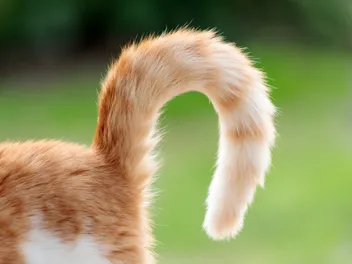
Cats have many small bones in their tails, and there is very little space between them. This gives their tails high flexibility and allows cats to use their tails for balance.

How Do Cats Always Land on Their Feet?
One of the most incredible feats of flexibility is the ability to always land on their feet when falling. This ability is dubbed the "righting reflex" and happens due to several factors. The first is that cats use their inner ear like a compass. As they fall, their inner ear instantly relays information to their brain on the position of their body, letting them know which side is up and down.
The second thing that allows cats to land feet first is their flexibility. This flexibility enables cats to respond immediately when they fall, moving their body and turning their feet down to land on them.
Lastly, cats have a very low body volume compared to their weight; their bodies are not very dense. When they fall, cats can open their body and create wind resistance that slows them down and prevents them from being injured when they land.

Why Are Cats More Flexible Than Dogs?
Evolution is the biggest reason that cats are more flexible than dogs. Dogs evolved to be pack hunters and keep their heads in a position low to the ground to use their keen sense of smell to hunt for prey. They do this thanks to a specialized ligament called the nuchal ligament that's also found in humans and horses but not present in the same way in cats.
Cats also have far more natural enemies than dogs and evolved to have lightning-fast reflexes that demand a highly flexible spine. Cats also hunt alone as opposed to dogs that hunt in packs, and for these reasons have evolved to be more flexible.
Final Thoughts
Cats are incredibly flexible, thanks to several physical advantages. Their spines, including the vertebrae (bones) and discs, are highly flexible and held together more loosely than other animals. Their shoulders are only attached to muscles, and their clavicles are tiny, allowing even more flexibility.
This flexibility allows cats to be great hunters, escape trouble, and survive in a cold, harsh world. In short, cats have evolved to be flexible to survive, and that flexibility, even though most house cats don't need it, persists to this day.
See also:
Featured Image Credit: Ben Kerckx, Pixabay
Expert cat care, straight to your inbox
News, insights, and useful advice, delivered to you.

No spam — unsubscribe anytime.
By signing up, you agree to our Terms & Conditions and Privacy & Cookies Policy.
How useful was this post?
Click a star to rate. You can leave written feedback afterwards. (We read all feedback.)
Gregory Iacono former chiropractor and self-taught writer. Greg has experience in a wide variety of subjects including video script. As a man of clinical experience, Greg has the ability to digest a complex subject and make it accessible to the reader. Greg enjoys traveling and spending time with his two daughters and son.