How Do Cats Run? The Amazingly Complex Details! (Vet-Verified)
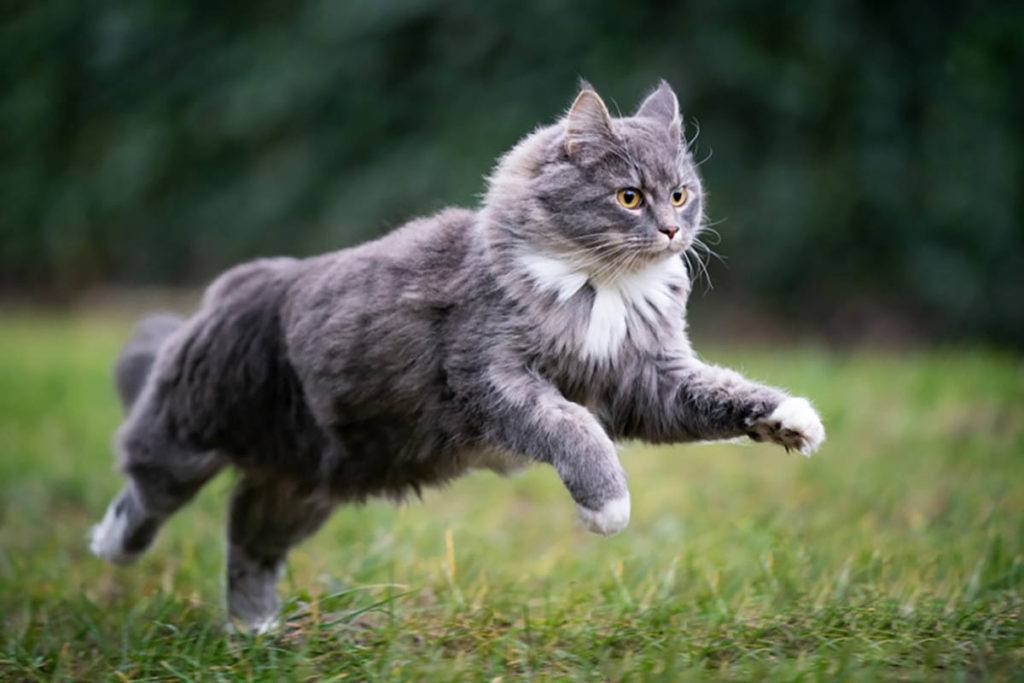
Cats are impressive in a multitude of ways, not least in how they make feats like climbing and running look easy. Cat parents will be familiar with their feline friend’s gracious movements and elegance even when running at fast speeds, but how exactly do cats run, and what is it that makes them so speedy? The answer is complex and really depends on what the cat is trying to accomplish at any given moment. Read on to get the low-down on how cats run.

How Do Cats Run?
The way cats are built and what they’re built to do (hunting out in the wild) has a lot to do with how they run and why they run the way they do. The way they run is also determined by how fast they need to go.
Walking
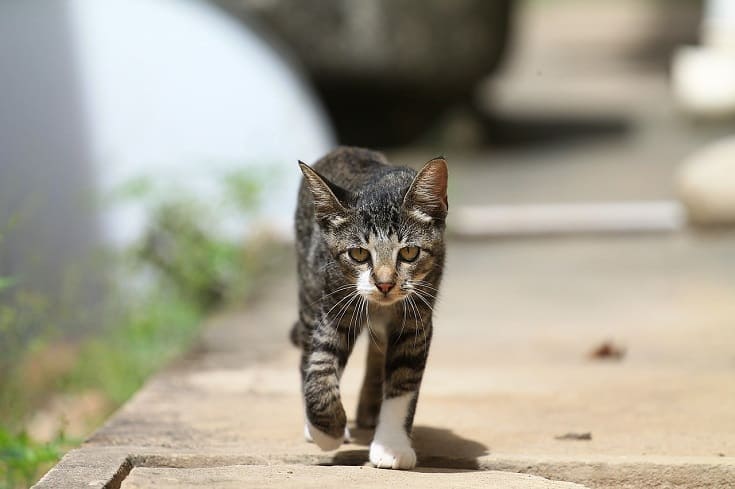
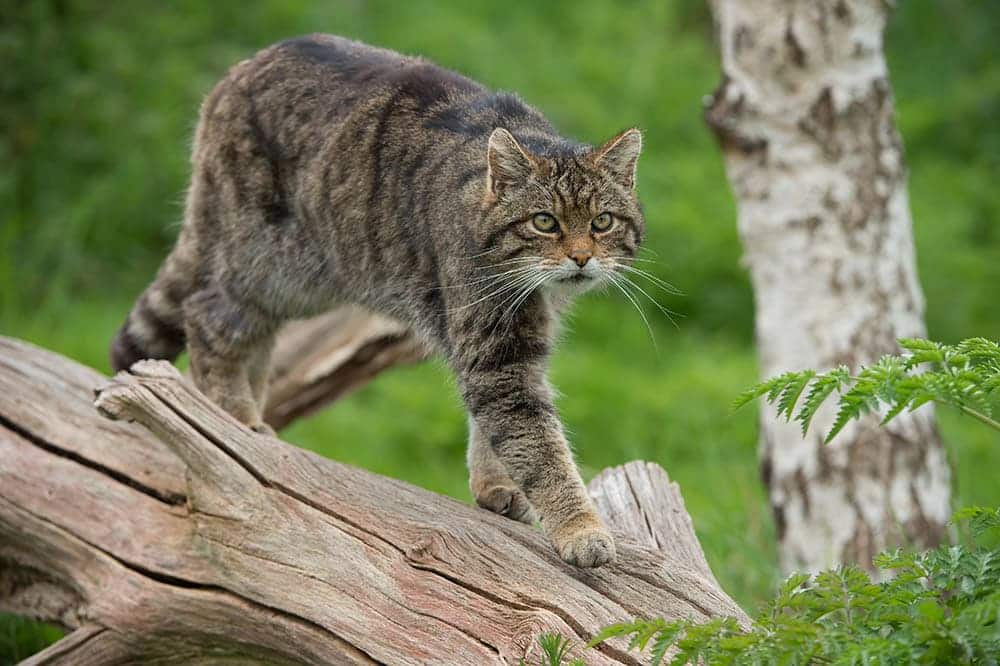
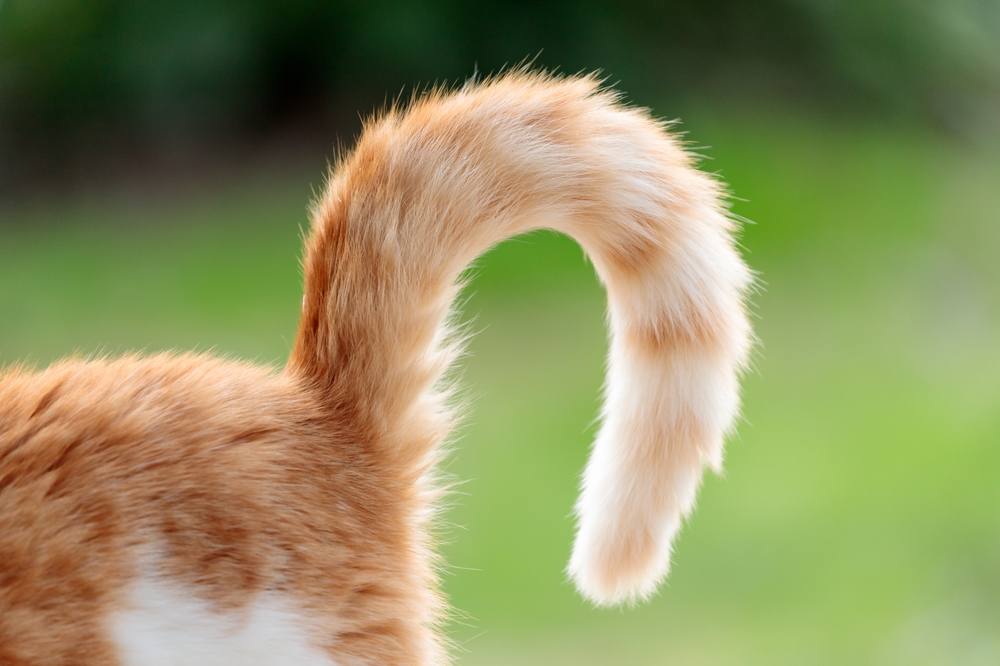
For example, a walking cat would first put forward a front leg and the hind leg opposite to it, moving forward in a diagonal motion and in a four-beat pattern of movement. The paws would not all touch the ground at the same time. Two or three feet would be touching the ground, the deciding factor for this being the speed at which the cat is moving. The tail would be positioned carried naturally, often level with or slightly below the spine.

Trotting
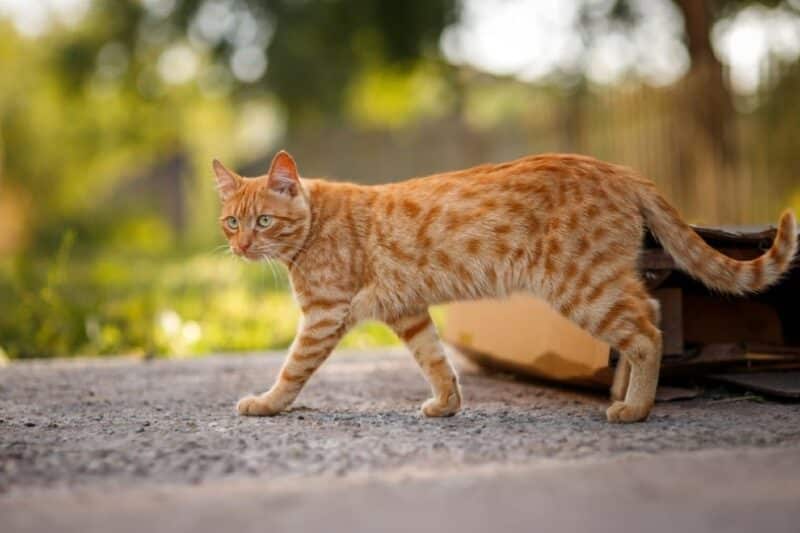
If the cat were to progress to a trot, the opposite (diagonal) paws would be touching the ground at the same time, the head may lower, and the tail would be positioned low and held in a straight-outward fashion. The cat would advance in a two-beat movement pattern.
Running (Gallop)
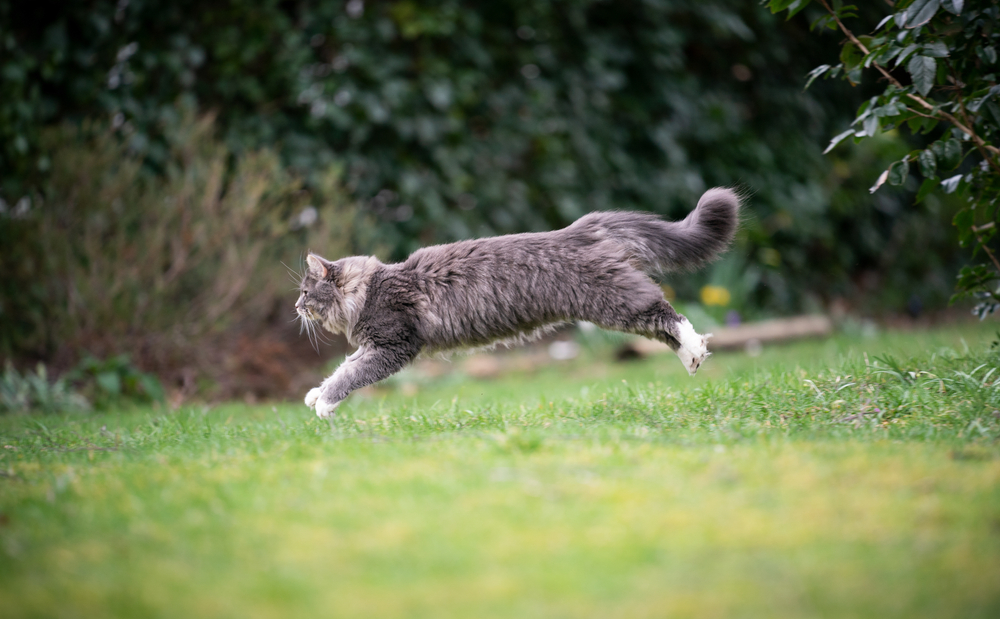
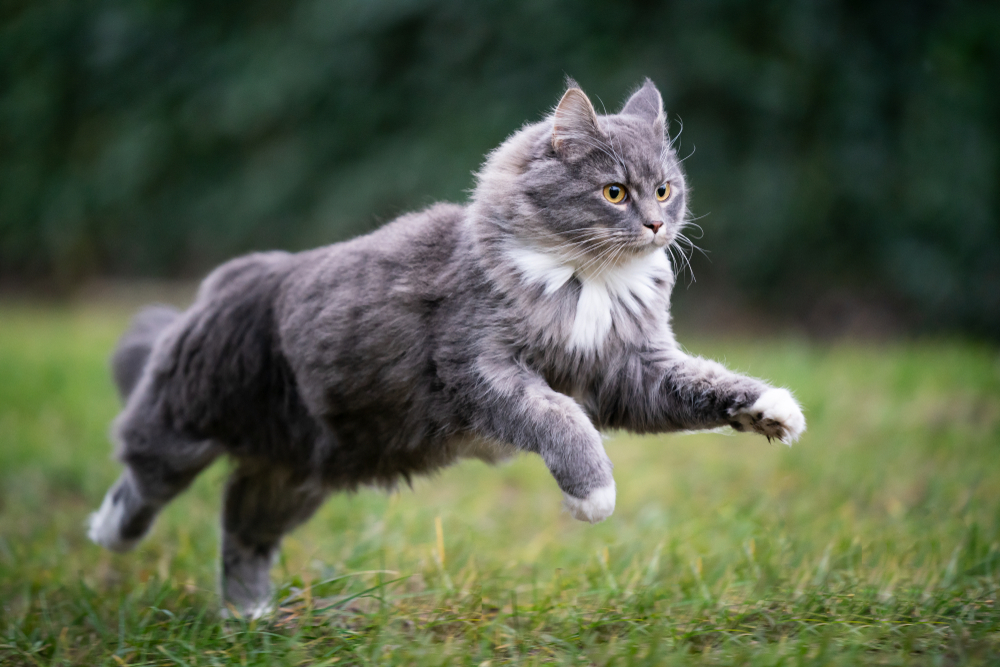
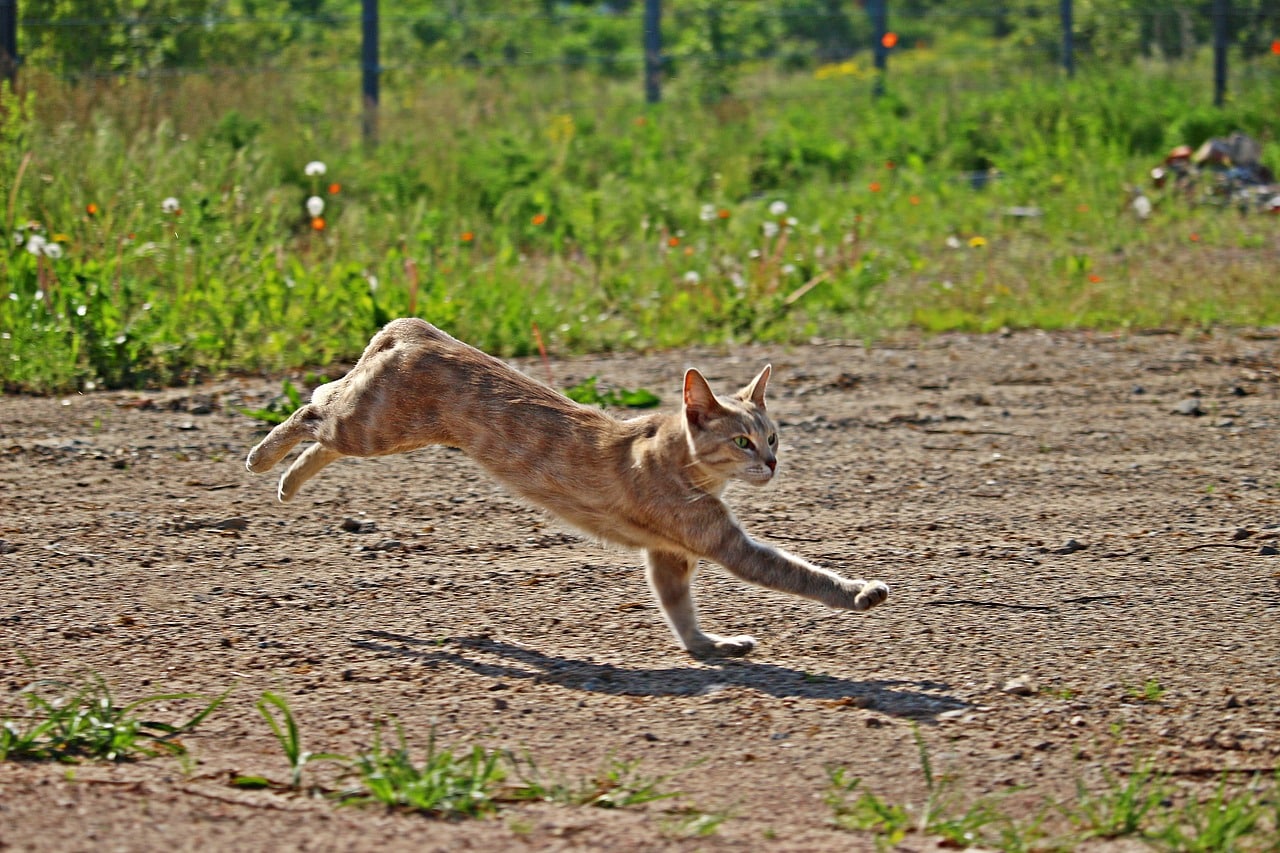
Now, if a cat runs at speed, things start to get really interesting. A cat gallops in a four-beat gait with alternating suspension phases, rather than a three-beat pattern. There may be phases where the legs don’t touch the ground at all. This is called a single or double-suspension phase. During the suspension phase, the hind legs are responsible for propelling the cat’s body in a forward motion.
One of the front legs touches down just before the other, and the rear end is drawn under the body, at which point the hind legs can land in the same way as the front legs—one a split second before the other. The hind legs come into very close proximity to the front legs when they land, creating what looks like a sort of bounding motion.

How Fast Cat Cats Run & Why?
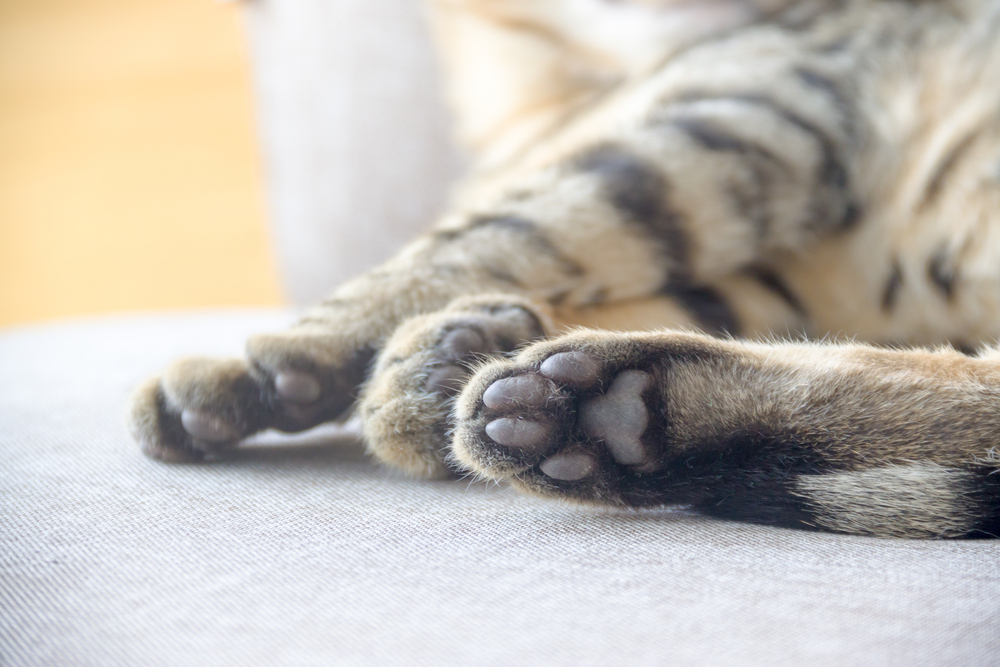
Domestic cats are capable of reaching speeds of up to 30 miles per hour (48.28 kilometers per hour). Many factors contribute to this, including the fact that cats are digitigrade, which means that they walk on their toes. This not only allows them to move more quickly, but it also makes for a stealthier predator. As digitigrades, cats are better able to keep quiet when they move.
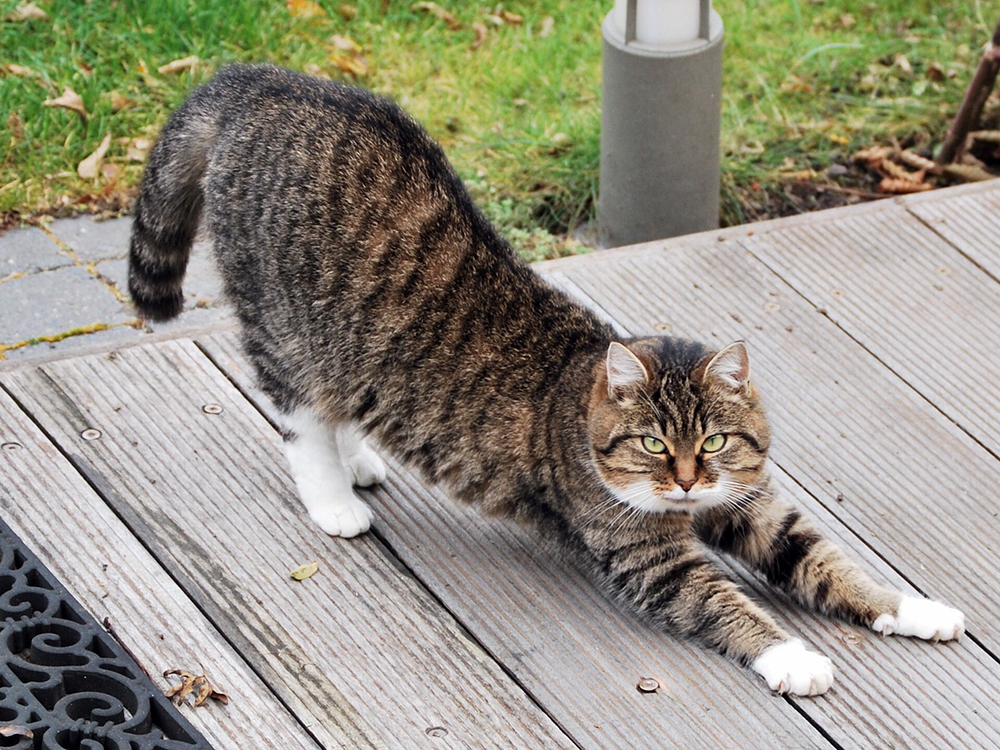
Moreover, the way a cat’s body is formed contributes greatly to how quickly they can move. For one thing, their spines are very flexible. Elastic discs sit between the spinal bones, allowing for smoother, more fluid movements. This also accounts for why cats look so graceful when they jump, climb, and run.
To add to this, bone doesn’t connect the cat’s shoulder blade to the body—muscles do. Because of this, the shoulder area isn’t hampered by a hard material and can move about more freely.
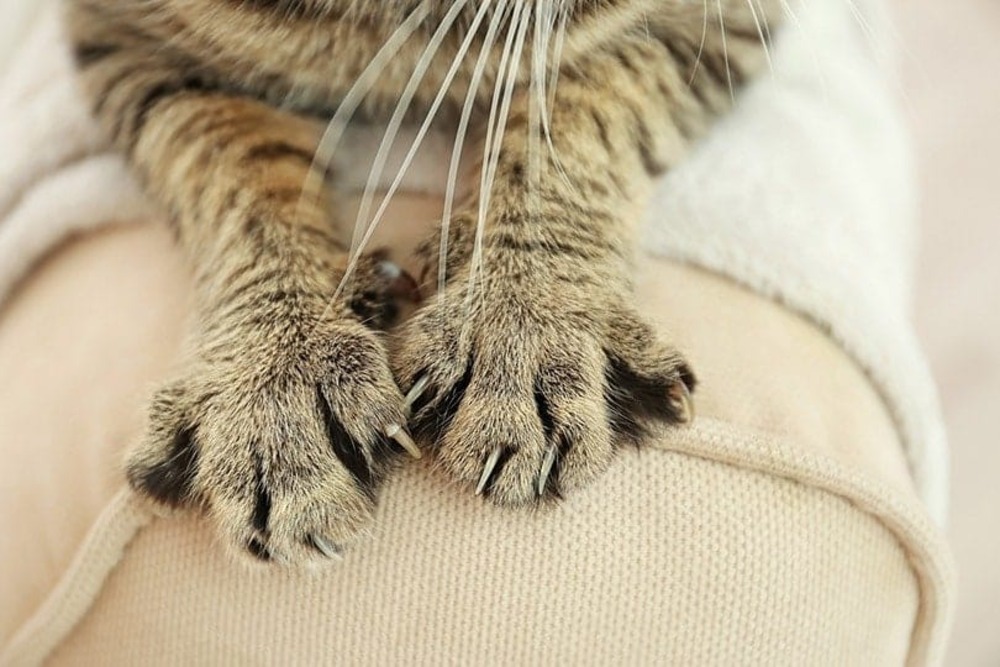
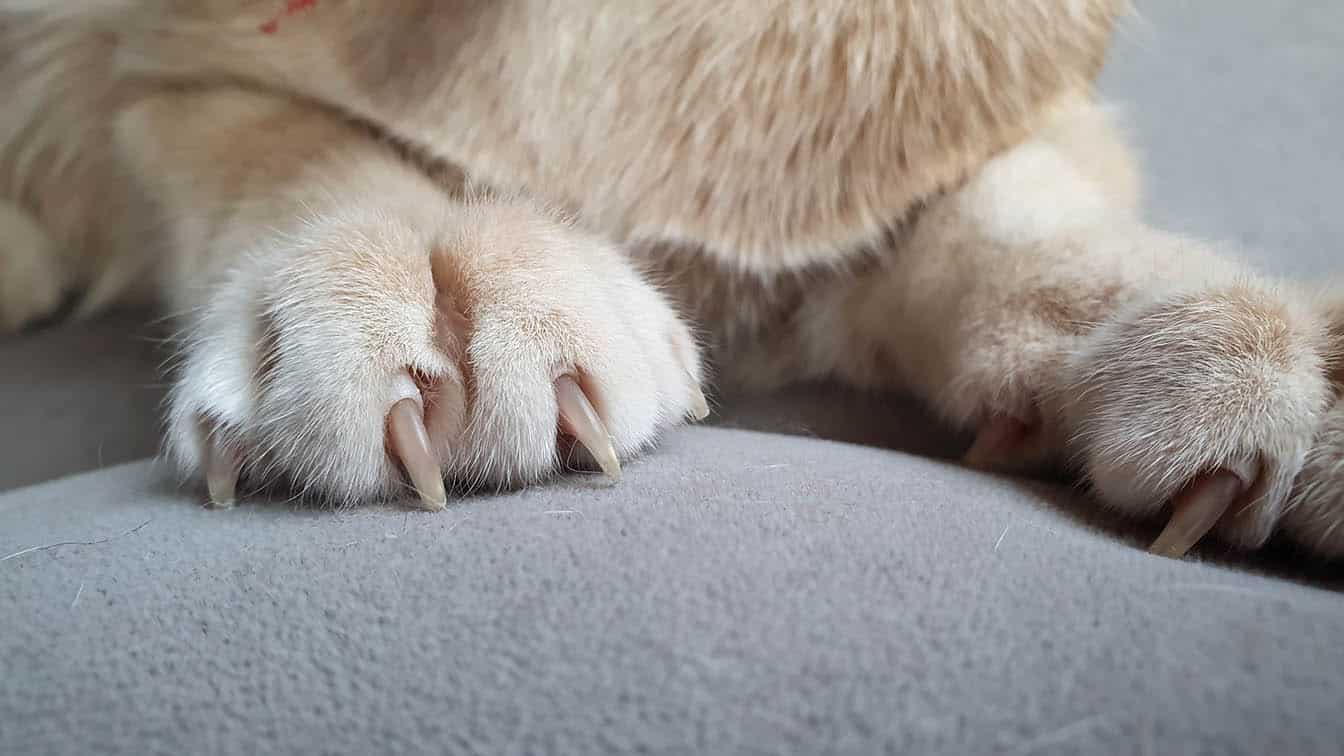
Cats can also avoid air resistance when in a suspension phase (when their feet don’t touch the ground at all) and can use their claws for extra grip when running. They also have strong, powerful hind legs and back muscles to help thrust them forward. Finally, their natural sense of balance is impeccable, which allows them to stay on course and upright as they reach their top speeds.

Final Thoughts
The way a cat runs is different from the way they walk and even trot, but what’s clear is that the feline’s incredible physiology—the fact that they are digitigrades and have excellent balance, flexibility, and power in the hind limbs—is responsible for our fluffy friends’ exquisite grace and speed.
So, even if your cat is a little on the chunky side and prefers snoozing the day away to exploring, remember that beneath that sloth-like exterior is a real powerhouse!
See also: How Many Legs Does a Cat Have? Vet Approved Facts & FAQ
Featured Image Credit: Nils Jacobi, Shutterstock

Expert cat care, straight to your inbox
Vet-reviewed advice, behavior tips, and the best of Catster. Free, and you can unsubscribe anytime.
By signing up, you agree to our Terms & Conditions and Privacy & Cookies Policy.
Kit Copson is a freelance writer and lifelong animal lover with a strong interest in animal welfare. She has parented various furry beings over the years and is currently a proud cat mom of two—one very chilled (unless hungry) Siamese and a skittish but adorable Domestic Shorthair—and dog mom of one—an adopted Bichon Poodle cross. When not writing about or spending time with animals, Kit can be found doodling in her sketchpad, reading, or more often than not, drinking tea.
Join the conversation
Ask a question, share your story, or send private feedback.