How Fast Can a House Cat Run? Record & Average Speeds (Vet-Reviewed)


In this article
Some cats spend more time napping than running, while others love to run around the house and play all day long. Whether your cat is the laidback type or has more energy than the rest of the household put together, cats are impressive athletes.
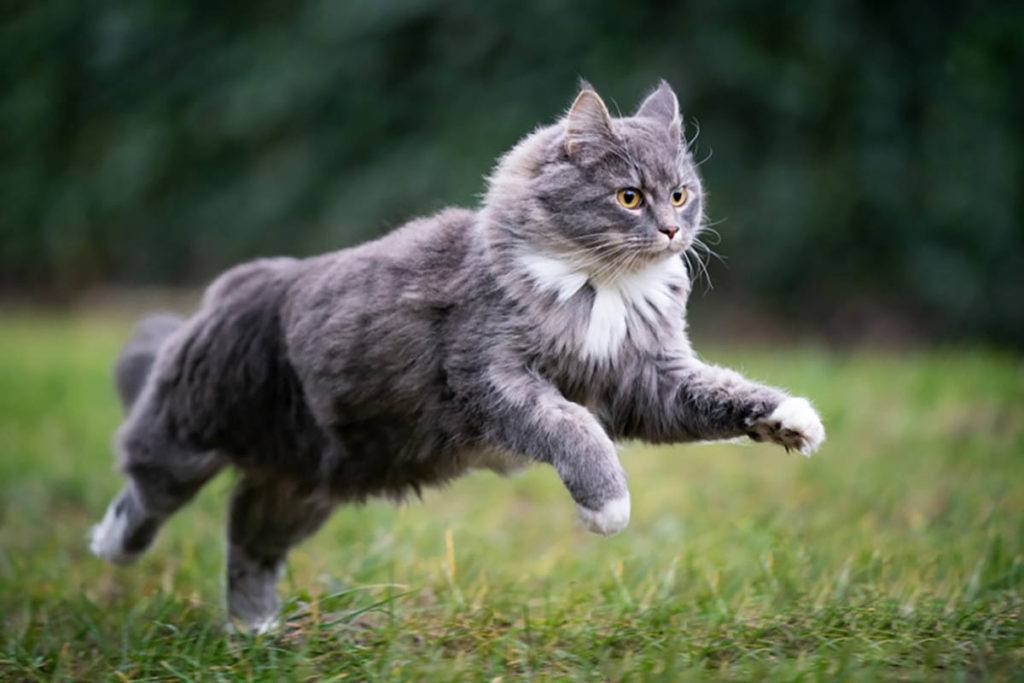
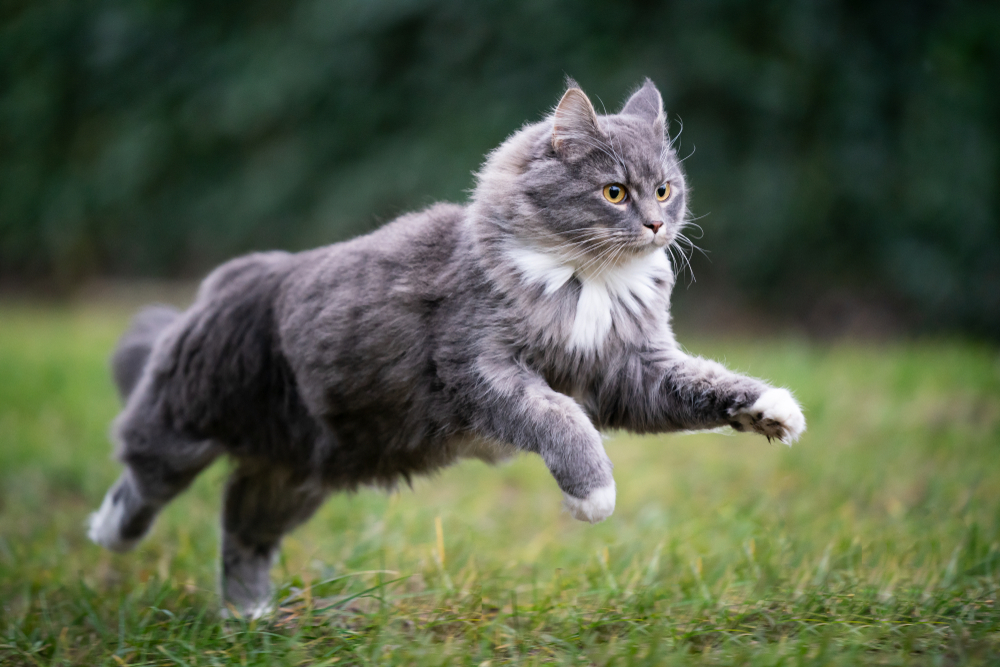
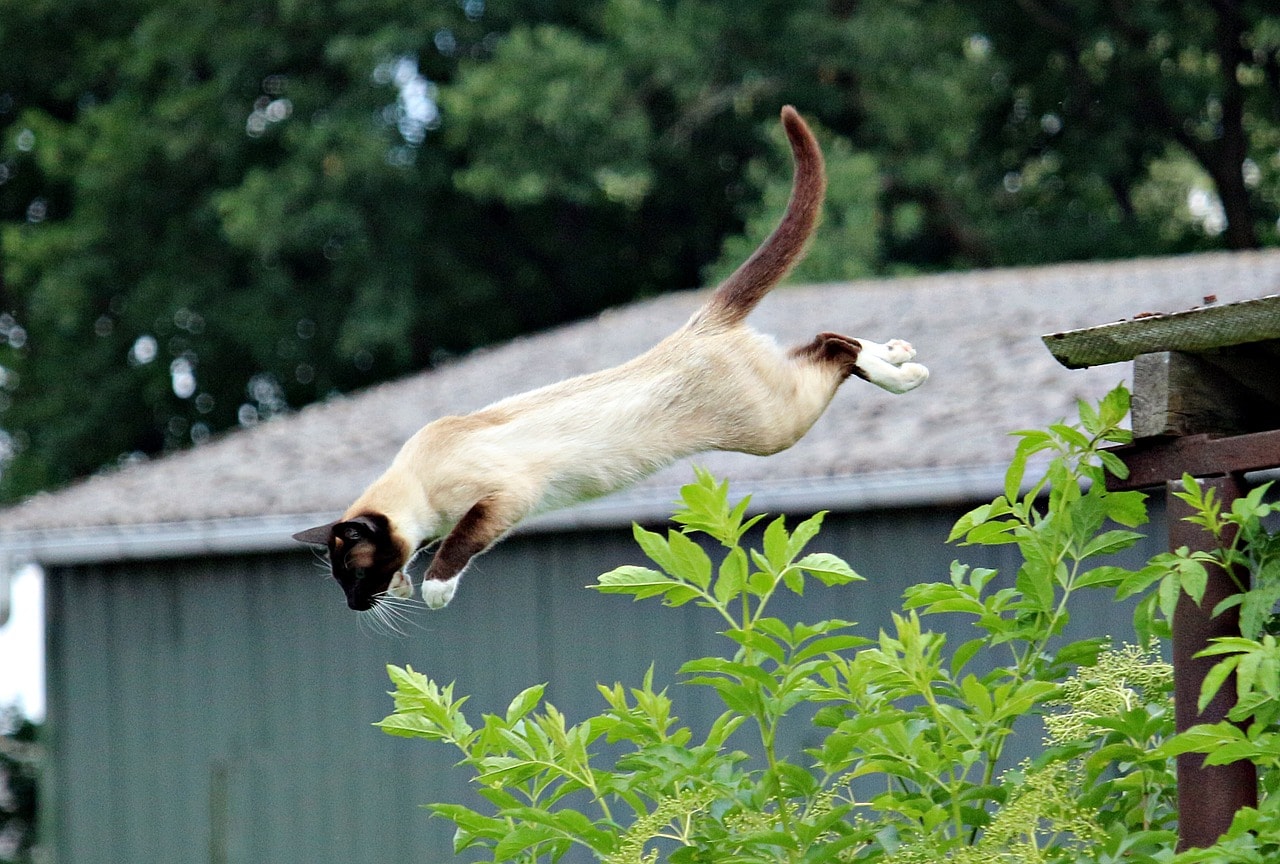
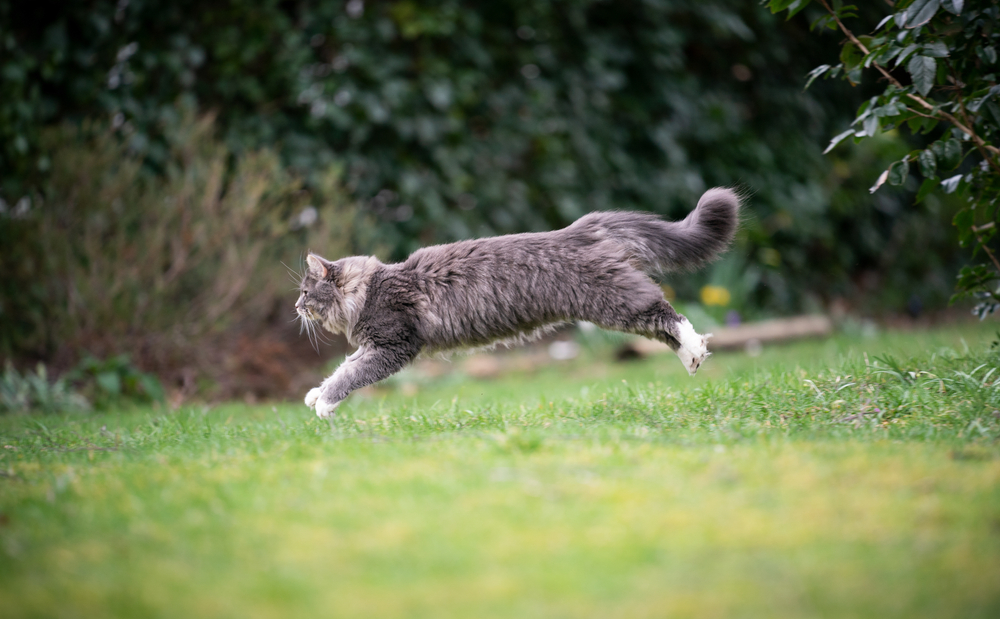
So, how fast can a house cat run? As well as being able to jump impressively high, some cats are believed to be able to reach speeds of up to about 30 miles per hour in short bursts! Let’s find out more!

Why Are Cats Able to Run Fast?
Cats are born hunters. Even though domestic cats get all their needs met by their owners, they still retain their wild instincts. If a cat can run fast, it drastically increases their ability to catch prey.
One of the reasons that cats sleep so much is to conserve energy, reflecting their natural predator activity, followed by rest cycles. Of course, house cats don’t have to catch their food anymore, but the natural cycles of rest and short bursts of high activity remain part of their instinctive behavior.

What’s the Record Speed for a House Cat?
There might not be a world record in this category, but the fastest domestic cats are believed to be able to reach up to 30 miles per hour, which is comparable to the top speed of the world-record-holding sprinter, Usain Bolt. That’s pretty fast!
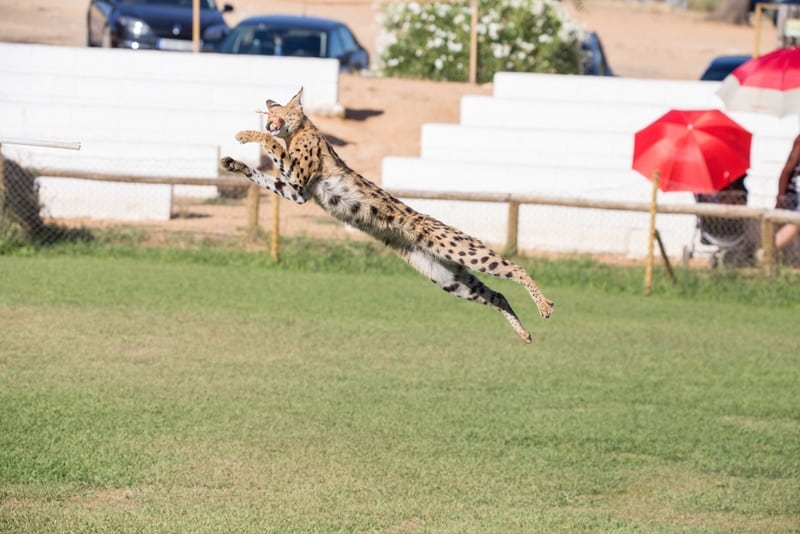
Cats can only sustain this speed over short distances. They’re made for sprinting, not endurance. House cats usually run for short bursts over relatively small distances before slowing down.
The back legs of felines are incredibly powerful and act as a spring to push them forward. You might notice that as your cat runs full speed, both their back legs hit the ground simultaneously. This maximizes the force they can use to push off for the next stride.
A cat’s spinal column can also compress as they prepare to take their next stride. This has a spring-like action to help increase their running speed even more.1 Check out this video of a house cat running, and you’ll see how the combination of powerful hind legs and flexible spine helps them reach impressively high speeds.
The anatomy of a cat’s legs has even been used as the inspiration behind the design of bipedal robots meant for running.2
What’s the Average Speed for a House Cat?
The possible average sprint speed for many house cats is believed to be around 20 miles per hour in short bursts. Even cats famous as slower and less active breeds can reach this speed if they really have to. The speed of an individual cat will be determined by their breed, fitness, health, motivation, and age.

Fastest Cat Breeds

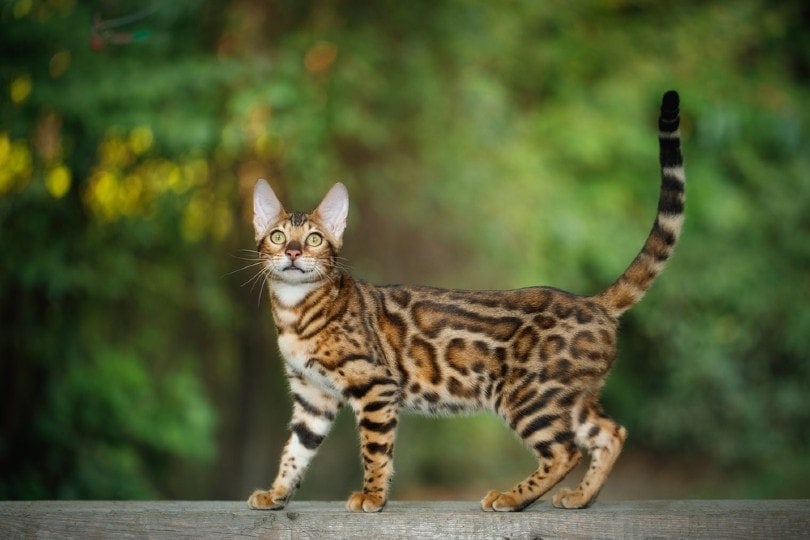
If you’re interested in owning a speedy cat, these are the breeds to consider. It’s no surprise that they are generally lean and active, with many individuals showing athletic builds.
Owning one of these cats is likely to keep you busy since they love playing, interacting with their families, running, and, of course, having their every need met by you!
These breeds are generally active and playful, though individual energy levels and running speed may vary widely within each breed, depending on age and health.
Slowest Cat Breeds

At the other end of the scale, we have the breeds considered slower and more laid back. They would rather spend their day curled up in the sun than chasing their favorite toy up and down the hallway.
Some of these slower cat breeds have flat faces, which is referred to as being brachycephalic. In some flat-faced breeds, this facial structure can be associated with breathing difficulties. As a result, they may be less inclined toward high-intensity running compared to more active breeds.
Although these lists can serve as a general guidance, cat breeds should and cannot be judged as “fast” or “slow” in any strict or universal sense. While certain breeds may tend to show higher or lower activity levels, individual cats' fitness levels can vary widely based on personality, health, environment, and age.
Physical traits such as facial structure or body type do not reliably determine a cat’s willingness to run, play, or exercise. Even within the same breed, energy levels can differ significantly from one cat to another.
Wrapping it up
Many house cats can reach bursts of up to around 20 miles per hour under good conditions. Some cats would rather not spend their days going that fast, but if they have to, they’re more than capable.
Other cats that are active and spend most of the day playing may reach speeds of up to around 30 miles per hour in short bursts. Given that’s not far off from the top speed of the world record for a human sprinter, that’s quite impressive.
It’s all due to a cat’s incredibly powerful back legs and flexible spines. So, the next time your house cat is curled up next to you, take a moment to appreciate the incredible anatomy that allows them to run so fast.
Featured Image Credit: Pixabay

Expert cat care, straight to your inbox
Vet-reviewed advice, behavior tips, and the best of Catster. Free, and you can unsubscribe anytime.
By signing up, you agree to our Terms & Conditions and Privacy & Cookies Policy.
Emma is a freelance writer, specializing in writing about pets, outdoor pursuits, and the environment. Originally from the UK, she has lived in Costa Rica and New Zealand before moving to a smallholding in Spain with her husband, their 4-year-old daughter, and their dogs, cats, horses, and poultry. When she's not writing, Emma can be found taking her dogs for walks in the rolling fields around their home...and usually, at least some of the cats come along, too! Emma is passionate about rescuing animals and providing them with a new life after being abandoned or abused. As well as their own four rescue dogs, she also fosters dogs for re-homing, providing them with love and training while searching for their forever homes.
Join the conversation
Ask a question, share your story, or send private feedback.