Do Cats Always Land on Their Feet? Vet-Approved Science & Info


In this article
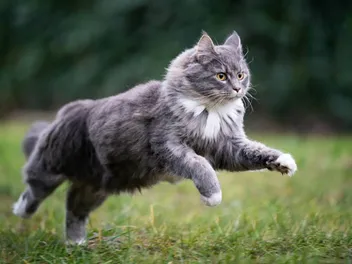
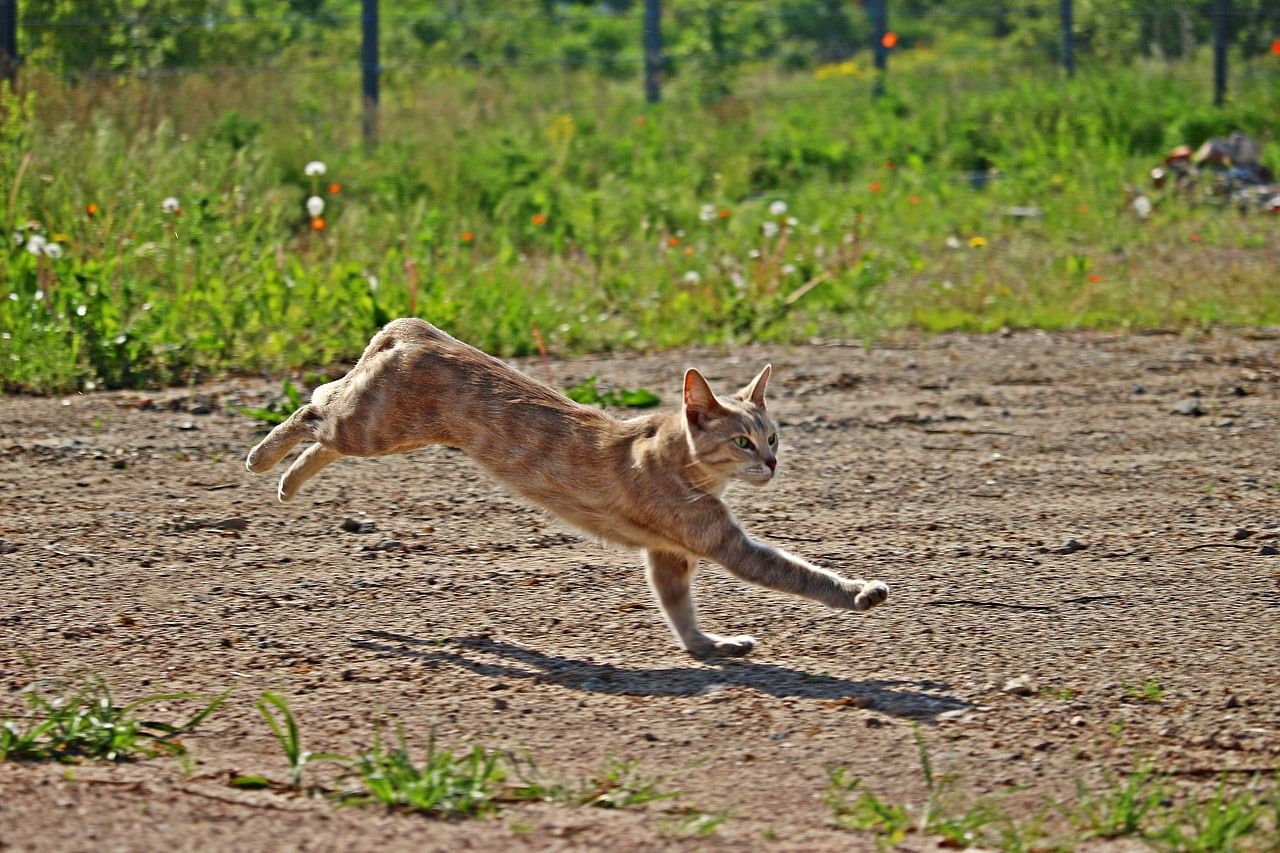
Most people have heard that cats have the ability to always land on their feet. Despite the popularity of this notion, is it true? Even though many things are still unknown about cats, their ability to land on their feet is not one of them.
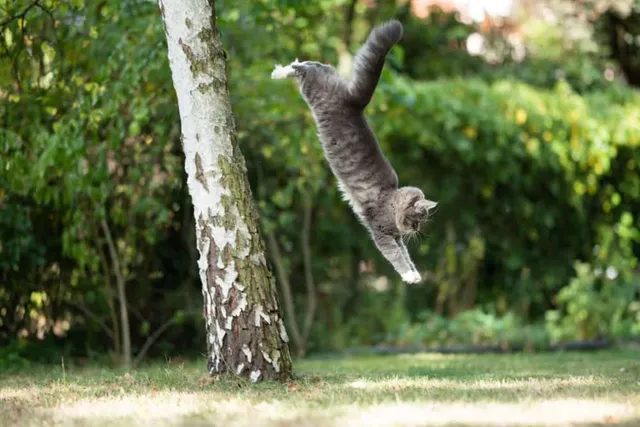
Cats do land on their feet most of the time. Of course, there will be instances of cats not landing on their feet, but cats have a reflex - known as the righting reflex - that allows them to land on their feet in most scenarios. Let's take a closer look at why cats can land on their feet from a scientific perspective. Believe it or not, science tells us a whole lot about this phenomenon.

Do Cats Always Land on Their Feet?
First, we should mention that although cats normally land on their feet, it is possible that they land on their backs or side from a fall. The height of the fall, their age, health issues (particularly those affecting their flexibility), and their weight are some of the factors that may inhibit a cat's ability to land on its feet.
Nevertheless, most cats can land on their feet when they fall. That's because cats have this balancing system built into their bodies called the righting reflex. This righting reflex was discovered in 1894 by Etienne-Jules Marey 1, who used a chronophotographic camera to capture a cat falling at 60 frames a second.

The Righting Reflex
The righting reflex 2 is the cat's specific ability to turn itself the right way during a fall. What allows cats to have this righting reflex is their very flexible spine and no functional clavicle (their clavicle doesn’t attach to other bones).
During a fall, cats first assess which side is down or up by either visual appreciation or with their vestibular apparatus (a part of the inner ear). This apparatus, which plays a part in balance and orientation, alongside their eyes, helps cats orient themselves.
Once a cat orients themselves during a fall, the reflex itself has three phases
The Righting Reflex
Depending on the fall itself and the cat’s flexibility, they may need to perform the second and third steps repeatedly during a fall. A cat needs a height of at least 3 feet to complete the righting reflex.
With a response as impressive as the righting reflex, you might think that only adult cats have this power. On the contrary, kittens start demonstrating the righting reflex as early as three weeks. Almost all kittens will have this reflex fully developed by the time they are 9 weeks old.
Other Features of Cats During a Fall
In addition to the righting reflex, cats have other features which allow them to minimize injury during a fall. However, contrary to popular belief, not all falls are safe for cats and can get injured as a result of a fall.
Terminal Velocity
More so, cats are incredibly light in comparison to their surface area. Their small size, light bone structure, and thick fur decreases their terminal velocity as they fall, which essentially slows the rate at which they fall.
A cat’s maximum velocity is nearly half that of a human. Cats reach a maximum velocity of 60 mph. Humans, in comparison, reach a maximum velocity of 120 mph. In other words, cats have a lower terminal velocity, so they fall slower than a person would (assuming the fall is from a place high enough to reach terminal velocity).
Legs
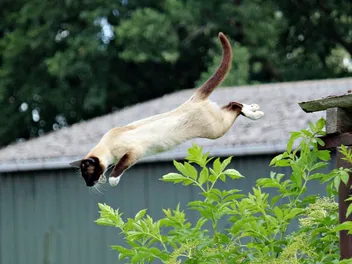
In addition to the righting reflex, cats' legs largely impact their survival and ability to fall safely. The righting reflex would be nothing if their legs couldn't support their weight and absorb shock whenever they fall from tall heights.
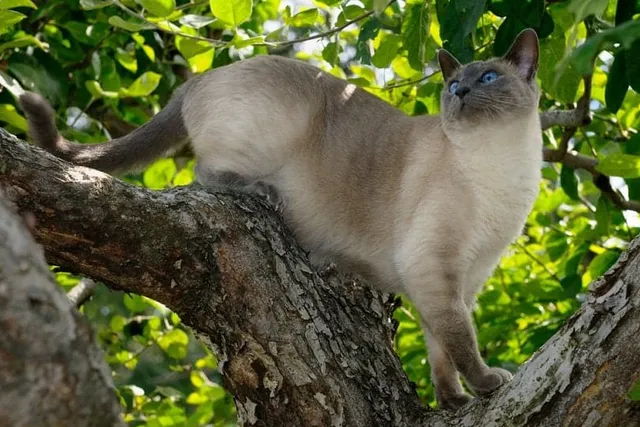
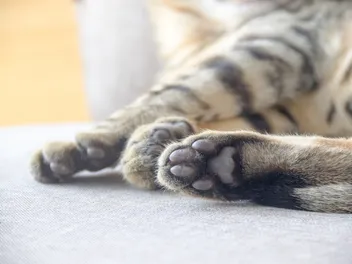
Given that cats spend a lot of time in trees, their paw pads have evolved to reduce shock impact. Even more so, as they fall, cats spread out their body and extend their legs to increase their drag.

Does Fall Height Matter?
A cat cannot complete the righting reflex if they fall from a distance of less than 3 feet as a minimum. In addition, cats land differently depending on the height from which they fall. Cats that fall less than five stories almost always land on their feet. This is because they do not attain terminal velocity at this height, and land on their feet to minimize the shock of the fall.
When cats reach terminal velocity, instead of landing on their feet, they spread their legs apart and attempt to land as flat as possible and often land on their chest. They do so to evenly distribute the impact of the fall.

Don't Let Your Cat Fall
Even though cats have an instinct to land on their feet when they fall, you certainly shouldn't push your cat off a ledge or put them in some type of scenario where they could fall. The righting reflex allows a cat to handle a fall; however, cats are not immune to injuries during a fall. In fact, many cats that fall from heights and get injured are a common occurrence in veterinary practice - so much so that there’s an umbrella term for when a cat comes in with an injury due to a fall: high-rise syndrome.
The last thing you want is to put your cat in unnecessary danger. Make sure to keep your pet cat safe, healthy, and away from open ledges. Doing so minimizes their risk of a fall and injury.
However, if your cat has fallen or you suspect it could have an injury we recommend you to speak to a vet.

Final Thoughts
Shockingly, the old saying that cats will always land on their feet is often true. Because of cats’ righting reflex, low terminal velocity, and shock-absorbing paws, they can usually securely land on their feet after falling from a height.
Nonetheless, cats are immune during a fall, and injuries can definitely occur. If you suspect that a fall has injured your cat, you should seek veterinary care for your pet.
Related Read: How High Can a House Cat Jump? (Highest & Average Jumps)
Featured Image Credit by: Pixabay
Expert cat care, straight to your inbox
News, insights, and useful advice, delivered to you.

No spam — unsubscribe anytime.
By signing up, you agree to our Terms & Conditions and Privacy & Cookies Policy.
How useful was this post?
Click a star to rate. You can leave written feedback afterwards. (We read all feedback.)
Emma is a freelance writer, specializing in writing about pets, outdoor pursuits, and the environment. Originally from the UK, she has lived in Costa Rica and New Zealand before moving to a smallholding in Spain with her husband, their 4-year-old daughter, and their dogs, cats, horses, and poultry. When she's not writing, Emma can be found taking her dogs for walks in the rolling fields around their home...and usually, at least some of the cats come along, too! Emma is passionate about rescuing animals and providing them with a new life after being abandoned or abused. As well as their own four rescue dogs, she also fosters dogs for re-homing, providing them with love and training while searching for their forever homes.