Why Are Cats Afraid of Cucumbers? Our Vet Explains
In this article
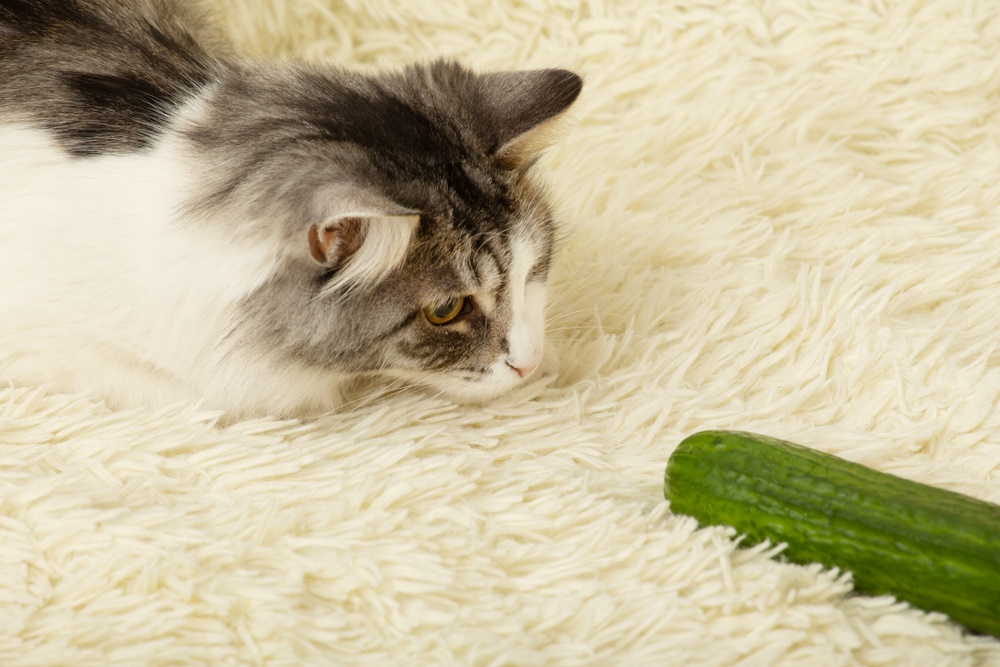
Videos of cats getting frightened by cucumbers abound online. They usually follow a vaguely similar pattern; a pet parent puts a cucumber behind a cat, who turns around, sees it, jumps out of fright, and then runs off. Seeing one of these videos may have made you wonder why cats react so strongly to cucumbers.
Let’s explore the real reasons why cats appear to be scared of cucumbers, although there are several theories. Some for example, suggest that when cats see cucumbers, they think they’re snakes and respond by getting away as quickly as possible. They point out that many cats hunt, catch, and eat snakes, suggesting that other reasons may have more weight.
The reality is that: Spoiler alert: Cats are not really scared of cucumbers! Let's dive into what is really going on here, and the reason why this trend is a big no-no to try with your cat.

Why Do Some Cats React So Strongly to Cucumbers?
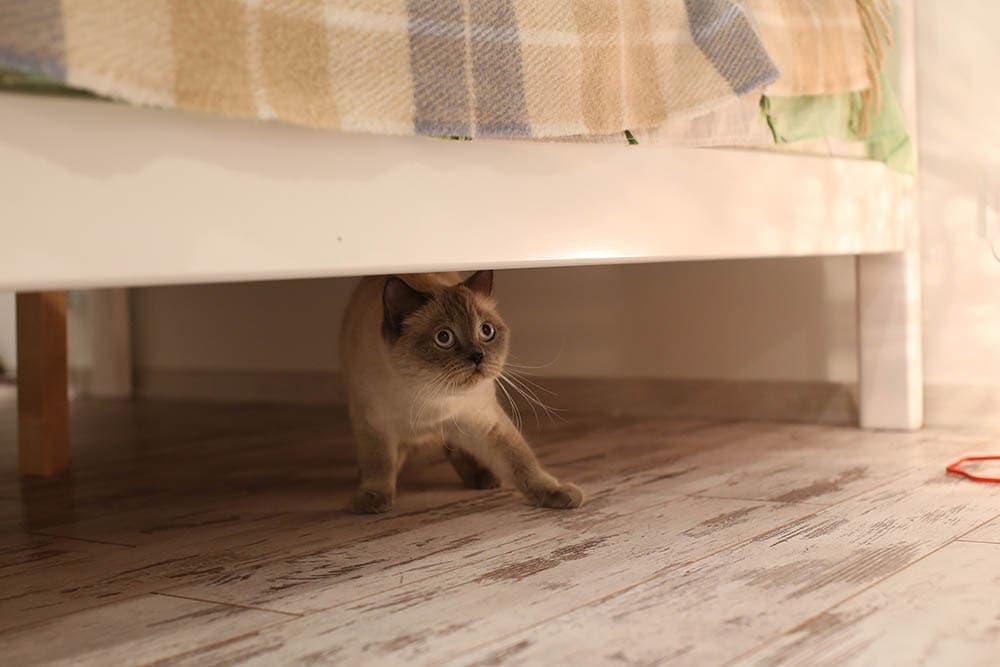
It may have something to do with the cat’s personality. Not all cats react strongly to cucumbers or even the sudden appearance of things in their environments. Anxious cats may be inclined to respond to novel objects with trepidation, and they may have the strongest reactions when cucumbers suddenly appear.
Experts suggest1 that scaring cats with cucumbers may have unintended consequences, as it can cause kitties to become frightened, which can lead to stress. Cats can build negative associations between frightening events and the places where they happened and the people involved.
It’s best to stick with pleasant activities. Positive interactions create comfortable, supportive environments where cats feel loved, safe, and welcomed.

What Is Stress?
Stress is a natural and adaptive response that helps to ensure survival by activation of defenses known as the stress response system. Stress causes cortisol to be released and the cat's physiology is affected resulting in, for example, cardiovascular adaptations such as increased blood pressure and heart rate. This is what we know as fight or flight response and is an alert system that kicks in the moments when animals are challenged by something in the environment that requires them to either run for their lives, for example, a predator, or engage in a fight, for example, a rival. As you can see, it is a mechanism used to guarantee the individual’s survival.
In the day-to-day life of a pet cat stress is essentially the mental and physical strain that cats feel when they’re exposed to negative environmental conditions. It can cause signs such as appetite changes, stomach issues, aggression, excessive vocalization and grooming, lethargy, withdrawal, and litter box problems. Many issues pet parents consider to be behavioral problems, such as aggression and inappropriate elimination, can be linked to stress.
Creating environments for cats that meet their needs and allow them to relax can keep them content and healthy.
If your pet is showing these signs, we suggest you speak to a vet.
So Are Cats Really Afraid of Cucumbers?
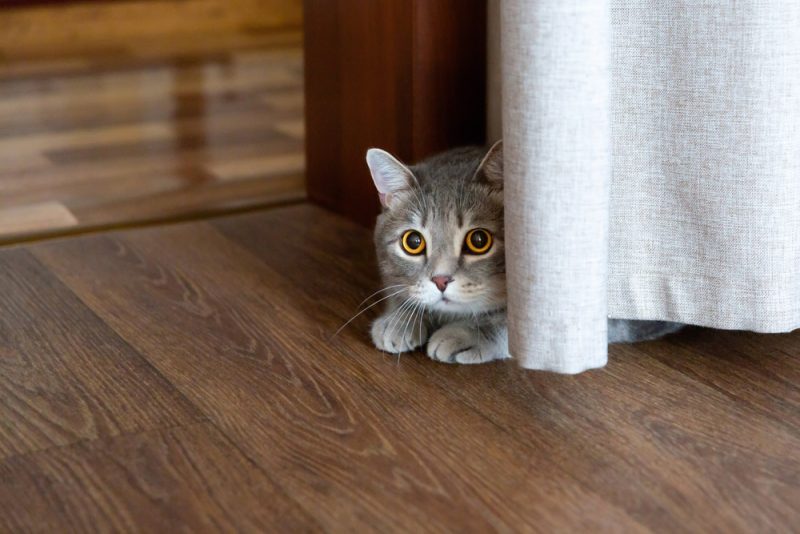
Cats are predators and as such, they rely on the element of surprise for a successful hunt. Cats know that being surprised when you are most vulnerable can mean very bad news. They are also very territorial animals that like to observe their environment from a tall position. This is why cats choose to take naps in tall places where they can relax, feel safe, and have a good vision of everything happening in their surroundings.
A domestic cat’s food bowl area is definitively considered their territory. Ironically, most people also place the bowls against the wall which is the opposite of what a cat would choose given the chance. A wild cat would instinctively eat with their back against a rock or in an open space that allows them to have a good vision of the surroundings, and to easily move away if being threatened. But, domestic cats who don’t need to hunt for food have learned to relax in the safety and comfort of their protected environment. So the cats are vulnerable but relaxed, eating with their focus on the bowls as they safely do every day when suddenly a very large and strange-looking object has caught them off guard right in their territory. The cat gets scared of the element of surprise, the vulnerability, the unknown object, and the fact that it wasn’t there when they just passed by a second ago. Instincts are wired and the fact that a cucumber has an elongated shape similar to a snake might also play a part.
So, it is not the cucumber, per se, that the cats are afraid of but the way this novel unfamiliar object is presented to them that scares them. If the same cucumber was presented to the cat gradually, allowing the cat to see and smell it instead of suddenly encountering it right next to their back in their territory, the reaction would be completely different.
Also, we humans get very scared when caught off guard by a familiar-looking human (even if we know them well) suddenly jumping out of a corner when we are not expecting them. If you are familiar with this feeling you know it is stressful, your heart pumps faster and you feel alerted. The cat experiences the same, so please do not repeat the scaring the cat with a cucumber experiment, as it causes stress and anxiety to cats.
Conclusion
There are several videos online of cats jumping in the air and running off after turning around and seeing cucumbers that were placed behind them. No one is entirely sure what causes cats to have these strong reactions.
Some think cucumbers remind cats of snakes, scaring them and triggering them to run off. Others suggest cats aren’t afraid of cucumbers but are reacting to the sudden appearance of something unexpected.
Stress can cause problems such as aggression and extra litter box peeing. Cats typically thrive in environments where their basic requirements are met, and they have lots of fun, feline-friendly activities to keep them engaged and entertained.
Sources
Featured Image Credit: tugol, Shutterstock

Expert cat care, straight to your inbox
Vet-reviewed advice, behavior tips, and the best of Catster. Free, and you can unsubscribe anytime.
By signing up, you agree to our Terms & Conditions and Privacy & Cookies Policy.
Dr. Paola Cuevas MVZ (Veterinarian)
Dr. Paola Cuevas is the Senior In-House Veterinarian at Pangolia, the parent company of Catster. She has over 18 years of experience as a veterinarian and animal behaviorist. Paola's focus is on preventive medicine and animal welfare. Paola has a large range of skills in from diagnostic imaging to nutrition and clinical pathology. Paola enjoys sharing her extensive knowledge of animal training with our Catster readers and is always happy to answer reader questions as our in-house veterinarian.
Join the conversation
Ask a question, share your story, or send private feedback.