How Many Legs Does a Cat Have? Vet Approved Facts & FAQ

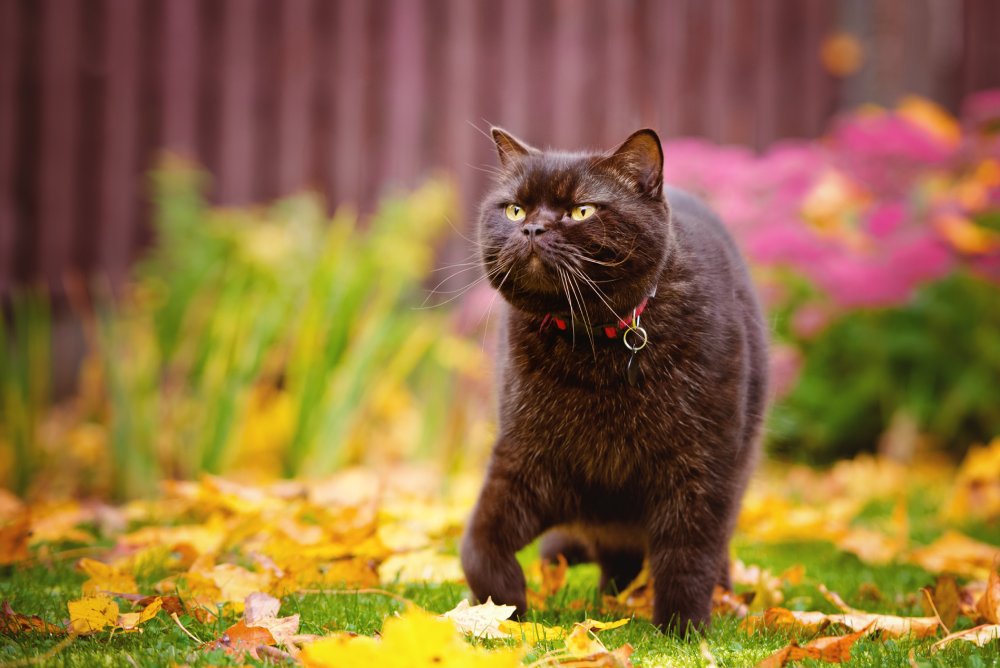
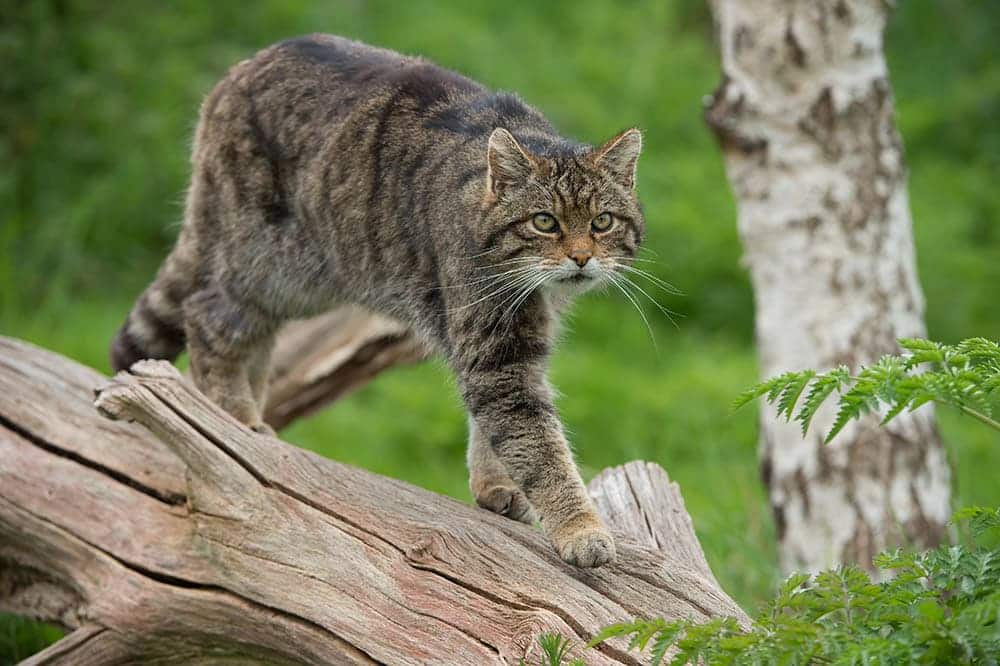
It might seem like a strange question; you’re probably thinking, “Cats clearly have four legs,” and you would be correct!” But this question has more to do with a cat’s anatomy, which is slightly different from ours.
So, what we really want to know is do cats have arms or legs? Cats have four legs, but the anatomy of their forelegs is the same as our arms. Let’s take a closer look at this answer and why a cat’s anatomy might have us questioning how many legs a cat has.

Do Cats Have Knees or Elbows?
Yes and no.
The anatomy of a cat’s front legs (or the front legs of any quadruped) is essentially the same as our arms. They have shoulders, elbows, wrists and fingers, but the morphology and arrangement of the limb means that we still refer to it as a leg.
Confused? Wait until you hear about horse legs!
Whether a limb is an arm or a leg comes down to semantics; in bipedal animals like ourselves, the front limbs are called arms, and in quadrupeds like cats, they are called forelegs. But the anatomy of the limbs remains the same, it is just the positioning that changes.

A Cat’s Paws Are Pretty Interesting
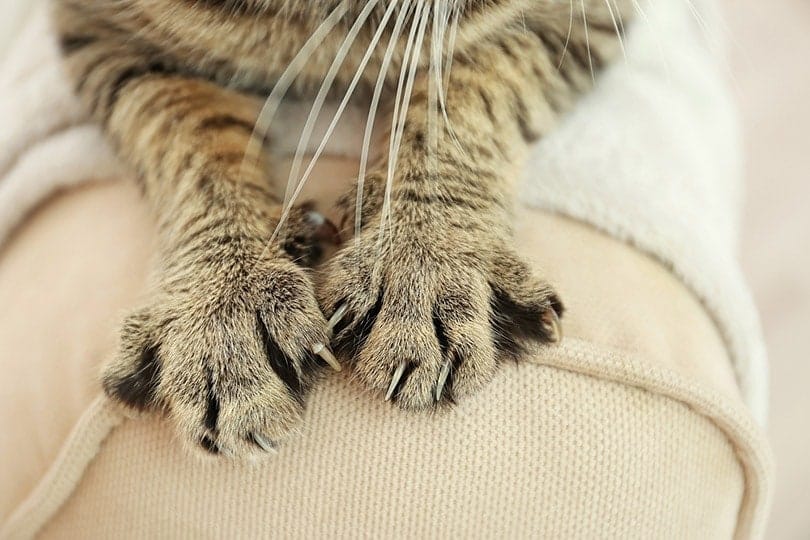
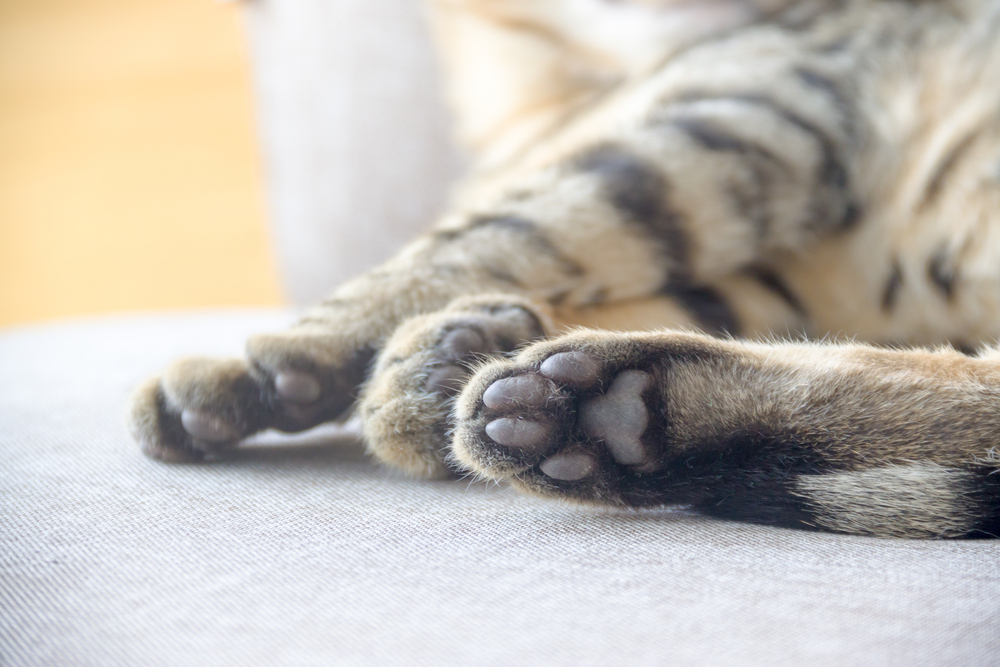
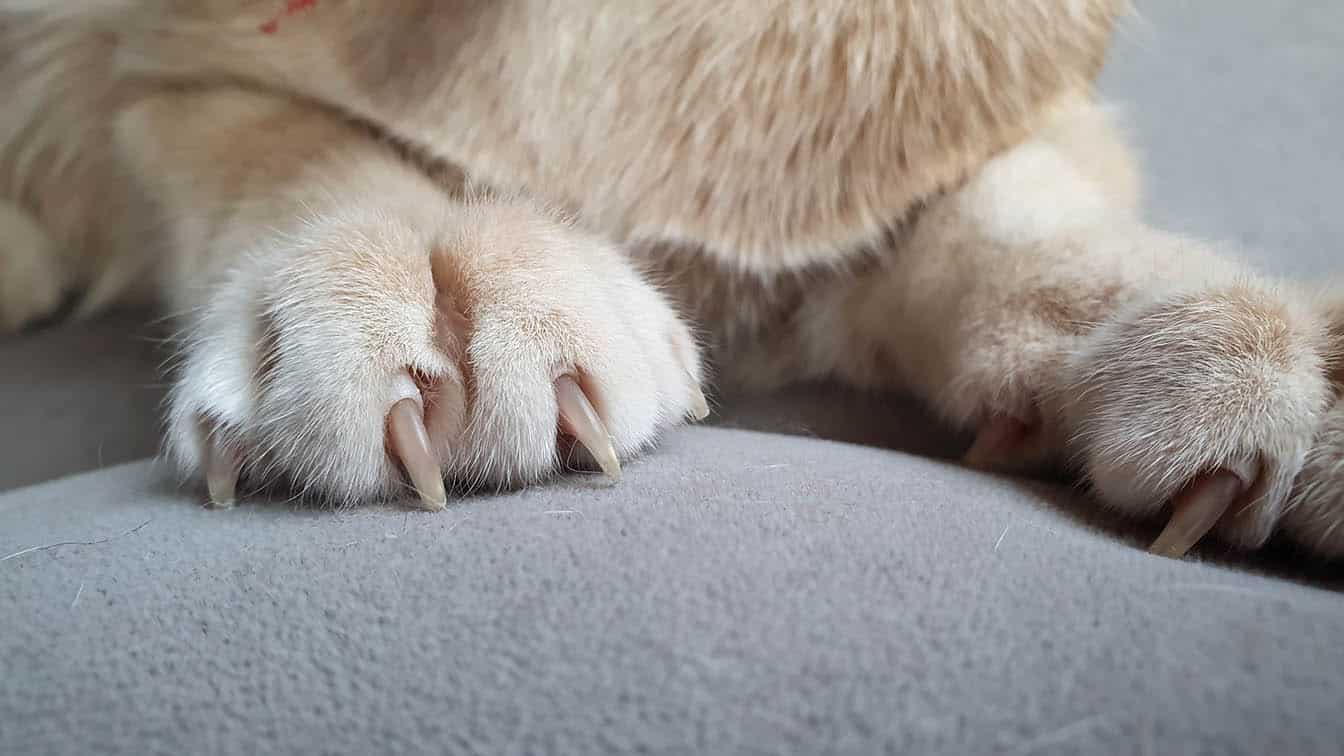
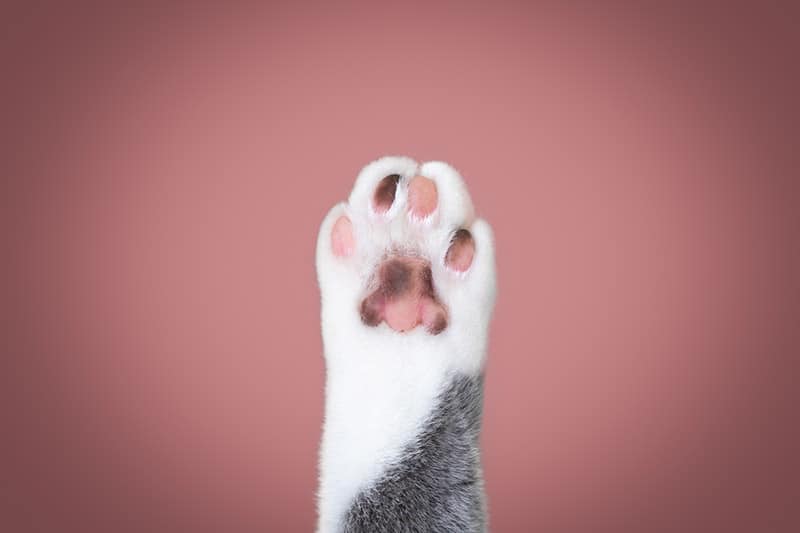
Of course, as a cat lover, you’ll agree that everything about cats is fascinating. You might have noticed that your cat doesn’t appreciate you touching their paws, and this is because they are one of the most sensitive parts of their body. Their paws are packed with nerve receptors, which help them to feel vibrations and also aid in keeping their balance.
Additionally, they work as shock absorbers, which help when cats jump and leap from higher elevations. Cats also sweat through their paws, which is why you might have noticed damp paw marks left behind when it’s particularly warm.
Cats Have More Toes on Their Front Paws Than Their Back Paws
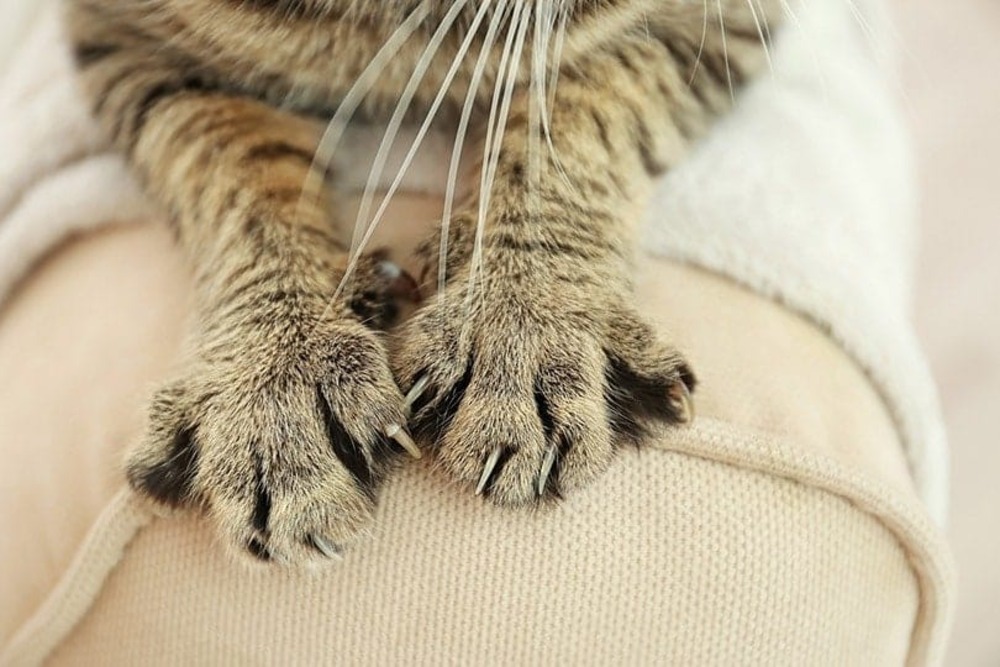
Cats have eighteen toes—four on each of their back paws and five on the front. Their inner toes are responsible for grasping things, but their lack of opposable thumbs means they can't pick things up, which is another reason their front legs aren’t considered arms, and the paws aren’t called hands.
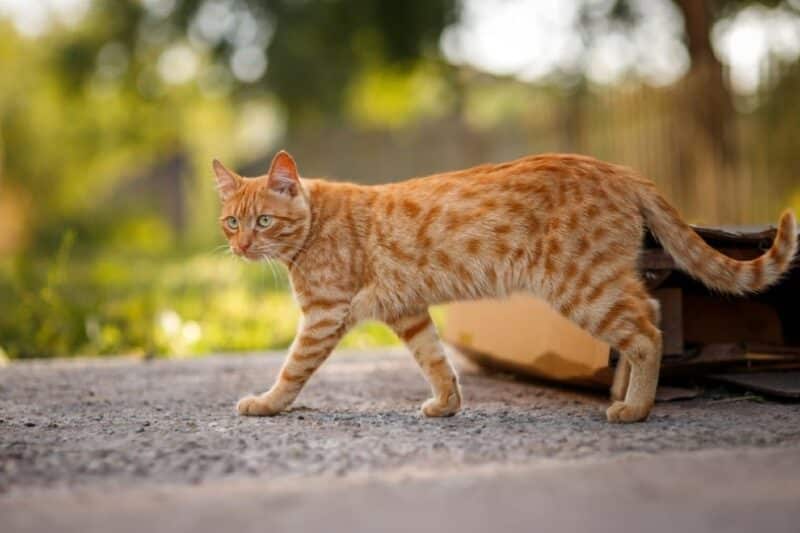
Like dogs, cats are digitigrade, which means they walk on their toes. Digitigrade mammals tend to be scavengers or hunters. They must be agile, quiet, and quick to hunt down prey or steal someone else’s dinner!

Frequently Asked Questions
Why Do Some Cats Have Extra Toes?
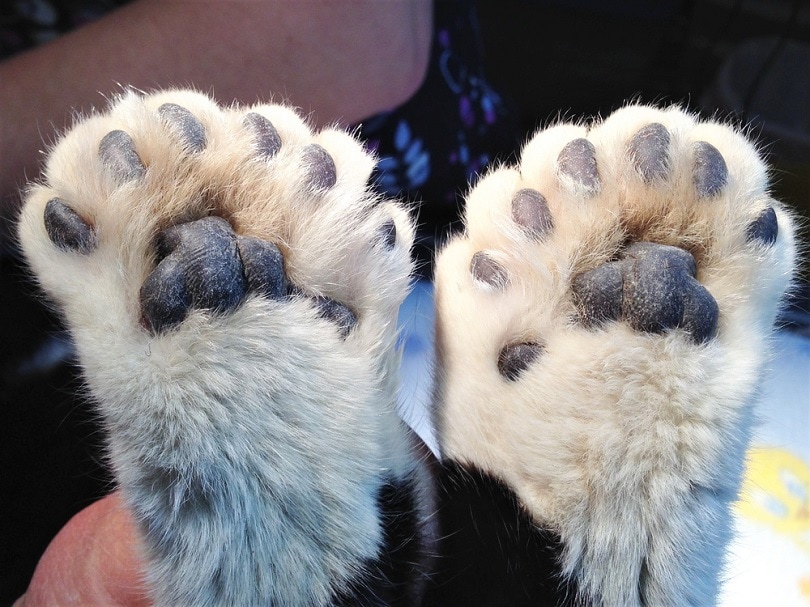
Polydactyly cats have extra toes and can have between four and seven toes on their paws, resulting from a genetic mutation. Generally, it affects their front paws, but it can also occur on their hind paws, and it’s incredibly rare for it to affect all four paws.
There are three types of polydactyl paws:
- Postaxial: The extra toes appear on the outside of the cat’s paw
- Preaxial: The extra toes appear on the inside of the cat’s paw
- Mesoaxial: The extra toes appear throughout the cat’s paw and will generally look like a combination of postaxial and preaxial

Do Cats Have Whiskers on Their Legs?
Cats have something called carpal whiskers on the underside of the “wrist,” which are helpful when they capture prey as they detect if there’s any movement. And, as they can't see very well when close to something, the whiskers also help determine the position of prey.
Are Cat Knees Different From Human Knees?
Yes and no. The most significant difference is that the angle between a cat’s knee and the hip varies between cats and humans and between different cat breeds. This angle is steeper, for example, in breeds like the Maine Coon, which contributes to the increased risk they have of developing orthopedic issues.

Final Thoughts
Cats have four legs, but the anatomy of their forelegs is the same as our arms. Cats don't use their front legs the way we do our arms. They lack opposable thumbs, and are quadrupeds, meaning they walk on four legs. We hope this clears up the question of the arms and legs of cats.
If you want to take a look at an even more interesting adaptation of the limbs, check out the anatomy of the horse - they run around on the toenail of a single digit!
See also: How to Care For a Three-Legged Cat
Sources
Featured Image Credit: otsphoto, Shuttetstock

Expert cat care, straight to your inbox
Vet-reviewed advice, behavior tips, and the best of Catster. Free, and you can unsubscribe anytime.
By signing up, you agree to our Terms & Conditions and Privacy & Cookies Policy.
Kerry-Ann lives in Scotland and would love to have a bigger garden so she could have her very own Highland cow. But her dogs probably wouldn’t like that idea very much. She has a La Chon called Harry who was sick with a liver shunt when he was a puppy. It wasn't likely he would make it into adulthood, which was difficult to comprehend, but he beat the odds and is a healthy old man now. She also has a Pug called Maddie who is a big foodie. She’s small, sassy, and every day she finds a new way to wind her brother up.
When she isn’t writing you can find Kerry-Ann going for long walks when it isn't raining, reading, or watching cartoons. She would one day like to be a tourist in her own country and travel through the Highlands with her family.
Join the conversation
Ask a question, share your story, or send private feedback.