Get

In Your Inbox

Catster is reader-supported. When you buy via links on our site, we may earn an affiliate commission at no cost to you. Learn more.

Why Do Cats Like Salt? 3 Vet-Reviewed Reasons

Share

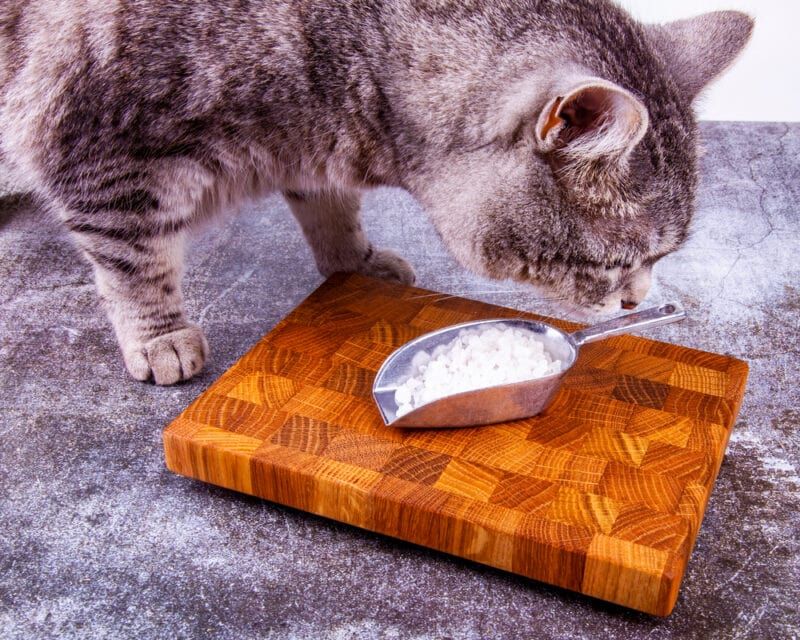
Food sea salt of a coarse grinding and grey cat on the table

There’s nothing quite as tasty as a handful of salty nuts or a bowl of potato chips. But unfortunately, your cat might agree and try to snatch chips right out of your hand. As strange as it may sound that your obligate carnivore, protein-loving cat might try swiping your salty snack, it does happen!

What’s with a cat’s affinity for salty foods, and is sodium okay for cats to eat? Cats can tolerate small amounts of salt, but as with humans, too much of this tasty mineral can cause issues.

Keep reading to learn why cats like salt and what role this essential mineral plays in a cat’s diet.

divider cats oct 2024

Why Do Cats Like Salt?

Here are three possible reasons why cats like to lick salt:

1. They Can Taste It

A cat’s sense of taste is weaker than some of its other senses. Humans have around 9,000 taste buds compared to cats’ approximately 470. Cats have taste receptors for sour, bitter, salt, and savory foods but do not taste sweet. So, if your cat loves salty foods, it may simply be because it’s something they can taste.

Different Kinds of Taste Receptors
You are free to use this image but we do require you to link back to Catster.com for credit

2. They Like It

Because cats can taste salty things, they may be more likely to eat salty food simply because they enjoy the taste of it. This may be why your kitty will lick at your face if they smell tears or sweat.


3. They Need It

Like humans, cats need salt for their bodies to operate as they should. This necessity for the mineral may be one of the reasons cats are drawn to salty things. Sodium is necessary for many bodily functions, including fluid balance, nutrient absorption, and muscle function. You can read more about salt’s role in your cat’s diet below.
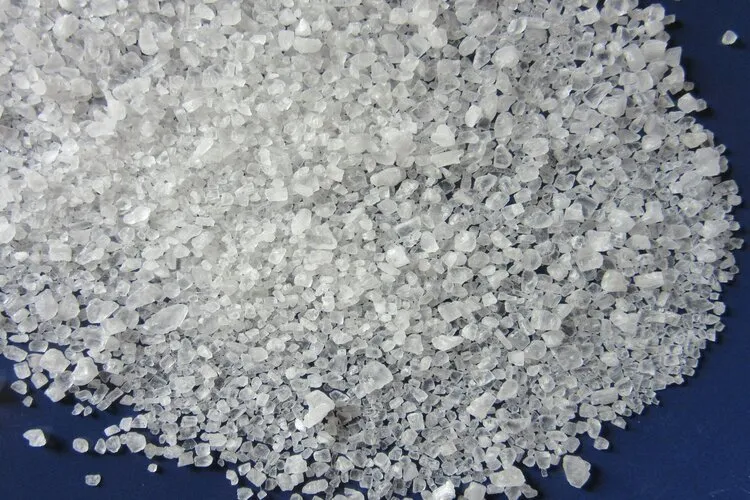
salts
image credit: rkit, Pixabay

What Role Does Salt Play in a Cat’s Diet?

Despite its bad reputation, salt isn’t an inherently bad mineral. In fact, it is an essential mineral for life in both humans and pets. It’s found in the blood and fluid cells throughout the body.

According to a Doctor of Veterinary Medicine, Brian C. Hurley, salt ensures an appropriate electrolyte balance to promote nerve and muscle cell function1. Salt makes our food and our pet’s food more palatable, is essential for regulating body fluids, and controls blood pressure and volume.

Cat food manufacturers incorporate the appropriate salt level to ensure proper bodily functioning. If you’re curious, the Association of American Feed Control Officials (AAFCO) recommends that dry cat food contain at least 0.2% sodium for maintenance, growth, and development2.

Sodium-restricted diets are sometimes recommended for cats with certain disease states, specifically cardiovascular or renal-related diseases. Many of these recommendations stem from human medicine, and more research is needed into our feline friends. Some research has shown a potential benefit to a higher sodium intake for some cats with lower urinary disease3. However, a subset of cats with this condition will be adversely affected by higher salt levels, so always follow a veterinarian’s advice on the best diet for your cat.

Need veterinary advice but can't get to the clinic? Catster recommends PangoVet, our online veterinary service. Talk to a vet online and get the answers and advice you need for your cat without having to leave your living room — all at an affordable price!

PangoVet_Mention-in-Content for PangoVet2 save money


Is It Dangerous for Cats to Eat Salt?

Licking salt or having a piece of food with a few sprinklings of salt is unlikely to cause any problems for your kitty.

The Pet Poison Hotline classifies salt as potentially toxic to pets, but it boils down to quantity and exposure. Like humans, too much or too little salt can cause issues.

However, sudden exposure to too much salt or extremely salty food like pickles can be problematic. Ingesting one gram of salt for every two pounds of body weight is a cause for concern. This would equate to approximately three-fourths of a teaspoon of salt for an average-sized cat. If you know your kitty has eaten a large amount of salt or highly brined food, it’s best to contact a vet for advice, as salt toxicity can be life-threatening.

The signs of salt poisoning include:
  • Vomiting
  • Diarrhea
  • Decreased appetite
  • Incoordination
  • Excessive thirst
  • Excessive urination
  • Tremors
  • Seizures
  • Coma
sick cat lying on blanket
Image Credit: one photo, Shutterstock

divider cats oct 2024

Final Thoughts

Cats are strange; any owner can tell you that! While they may need a meaty diet full of animal-derived protein, there’s no telling when your silly kitty will try swiping your potato chips or gnawing your hamburger’s pickles.

Salt is a necessary part of a cat’s diet, but too much can cause many problems. So, ensure you feed your cat a diet with the appropriate amount of salt, and refrain from adding other sodium-rich foods into their daily regimen.


Featured Image Credit: bellena, Shutterstock

Want content like this delivered to you?

Sign Up For Our Newsletter

News, insights, expert advice, and everything cat

* By submitting, you agree to our Terms & Conditions and Privacy & Cookies Policy.


How useful was this post?

Click on a star to rate (you can leave written feedback after clicking submit)

Help us improve Catster for pet parents!

Your feedback really matters.

What did you like about this post? Also how can we improve it?

Join the conversation

Leave a Reply

You’re very welcome to leave a comment or question. Please know that all comments must meet our community guidelines, and your email address will NOT be published. Let’s have a positive and constructive conversation.


Talk With A Vet Online

Peace of mind,
anywhere, anytime

Affordable vet advice

Do Cats Cause Schizophrenia? Scientists Find a Link – Here’s What It Means

Being a fierce advocate (and occasional recipient of) mental health support and awareness, the term ‘crazy’ is not one I like to fling...

One in 100 Cats Gets Diabetes – Here’s How to Catch It Early

One in every 100 cats develops diabetes.1 That’s not a rare, unlucky condition reserved for cats with obvious health problems. It’s common enough...

Dramatic Rescue Turns Into Dramatic Reunion

What started as a routine call for the RSPCA became a heroic, five-hour rescue featuring one trapped and traumatized cat, an emotional family...

Ask Dr. Paola – Help! How Do I Know if it’s Ear Mites! (May 4, 2026)

Welcome to our “Ask Dr. Paola” series, where every Monday we bring expert advice straight from Dr. Paola Cuevas (MVZ) to help our...

More related

Does Lemon Juice Kill Fleas on Cats? Vet-Verified Effectiveness & Safety Explained

Keeping our pets parasite-free is big business, with a projected 2026 global revenue of $3.68 billion.1 Fleas are quite the nuisance on several...

Is My Cat Deaf? 6 Vet Approved Ways to Tell

If you’ve been asking yourself, “Is my cat deaf or ignoring me?”, you’ve probably noticed changes in your cat’s behavior. Maybe they are...

50 Amazing Cat Tattoos (With Pictures)

Dogs may have earned the title of a man’s best friend, but cats hold a special place in every pet owner’s heart. Throughout...

Licky Treats: A Scientific Investigation into the Tube-Based Delights Taking Over Modern Cat Households

By Professor Lucifer Fluffovich, Department of Applied Snackology Human civilisation has produced many inventions of questionable usefulness: vacuum cleaners, pyramids, and the laser...

Keep reading

10 Do’s & Don’ts of Confining a Cat to a Room at Night (Vet-Reviewed)

There are several reasons why you might want to limit your cat’s space at night, from preventing certain behaviors to protecting your cat. But sectioning them off from the rest of the house can be a challenge. After all, you...

cat near door at home

Do Cats Really Need Baths? Most Owners Get This Wrong

You’ve likely been scrolling through social media and seen a video of someone giving their cat a luxurious bath, complete with special shampoos and a blow-dry. You look at your own cat, sprawled on the couch, and wonder: Am I...

cat on top of bathtub

How to Make a Cat Feel Safe? 10 Vet-Reviewed Behavior Tips

Every cat is unique: Some are fearless and bold, while others are calm and gentle. Still others cats tend to be nervous and anxiety-ridden. But sometimes, things go on in the home that can unsettle even the bravest feline, and...

happy cat with closed eyes hugging owner

How to Give a Cat a Head Massage: 4 Vet-Reviewed Tips & Benefits

You wouldn’t think giving a cat a head massage would be something your feline would like, but you would be surprised. While not all cats are receptive to being massaged, for some, it helps them to relax, calm down after...

Cat Massage

Are Hydrangeas Poisonous to Cats? Common Houseplants Examined

Hydrangeas are beautiful blooming flower bushes that are a stunning addition to any home garden. If you have cats, however, you should tread with caution when planting these gorgeous blooms in your yard. All parts of the hydrangea plant are...

Catster_Are Hydrangeas Poisonous to Cats

Himalayan Cat Health Problems: 6 Vet-Reviewed Issues

The Himalayan cat is a beautiful Asian breed with long hair and a “smooshed” face. They are a cross between Persians and Siamese, and they’re incredibly docile and lovable. These cats are popular as pets thanks to their easygoing personalities....

Catster_Health Problems of Himalayan Cats

Can Cats Eat Ginger? Vet-Approved Nutritional Info & FAQ

Ginger has many bioactive compounds like phenols which make it beneficial for human consumption. But can cats have ginger? Yes. Besides being safe for cats to eat, ginger may have several potential health benefits. However, you should not provide ginger-flavored...

Can Cats Eat Ginger

Can Cats Eat Smoked Salmon? Vet-Reviewed Facts & FAQ

To cut to the chase: yes, cats can eat smoked salmon, but not as their main source of food. Some worry that what’s in the smoked salmon (large amounts of salt, potential heavy metals, spices, excessive fat) could be harmful...

Can Cats Eat Smoked Salmon

Love Cats? So Do We! Join the Catster Community

Stay informed with expert pet care insights delivered straight to your inbox! Discover professional guidance on animal behavior, feeding tips, trusted product picks, and much more.


Sign up for the Catster Email Newsletter

Stay informed with expert pet care insights delivered straight to your inbox! Discover professional guidance on animal behavior, feeding tips, trusted product picks, and much more.