10 Do's & Don'ts of Confining a Cat to a Room at Night (Vet-Reviewed)


In this article
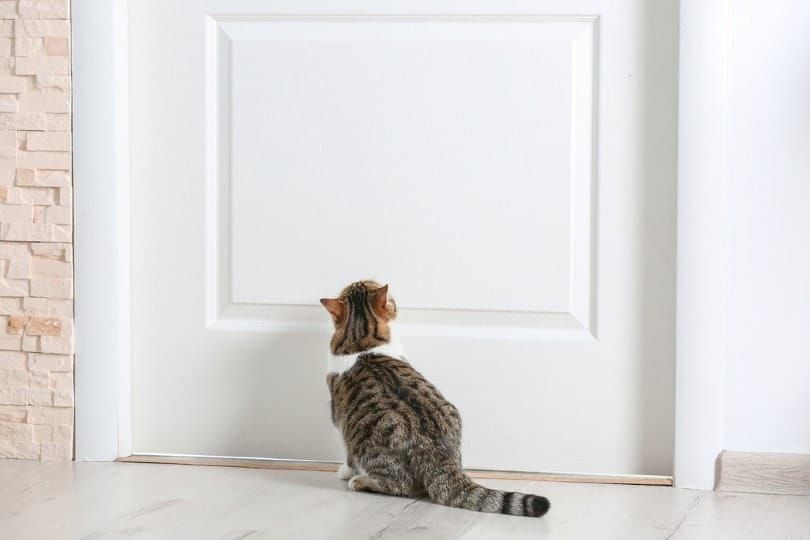
There are several reasons why you might want to limit your cat's space at night, from preventing certain behaviors to protecting your cat. But sectioning them off from the rest of the house can be a challenge.
After all, you won't want to make it seem like a punishment, and you'll want them to feel comfortable. Here are some dos and don’ts about confining your cat to a room at night.

The 6 Dos When Confining a Cat to a Room at Night
1. Always Have Fresh Food and Water Available
Leave your cat some food, as they will likely graze overnight, unless they have set meal times, such as cats suffering from diabetes. Offer treats or food-dispensing toys and puzzles to keep them occupied. Wet food is not ideal to be left overnight, as it will spoil, particularly depending on the room’s temperature. Offer some to your cat at dinner time and discard any uneaten wet food after 1-2 hours.
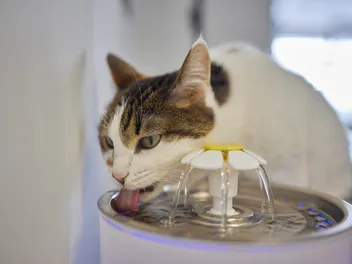
Fresh water is a daily essential. Many pet parents just fill up a heavy water dish that their cats have trouble spilling. Others buy automatic waterers to ensure that a constantly flowing fresh water source is available. The choice is yours.
Our Top Recommendations:
- Best Cat Foods - Catster's Reviews & Top Picks
- Best Cat Water Fountains - Catster's Reviews & Top Picks

Image Credit: BestPhotoPlus, Shutterstock
2. Make Them Comfortable
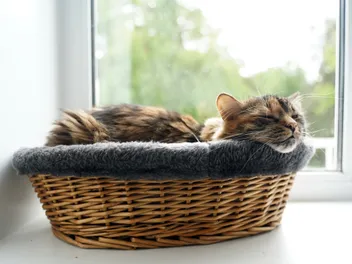
The first step in keeping a cat in a room at night is to keep them comfortable. Put their favorite bed or a comfy blanket in the room to ensure they have a suitable place to sleep. Make the environment cozy and ensure they have some special items to keep them calm, whether that be a favorite toy, plushie, or blanket. Leave them a food puzzle or other interactive toys to keep them entertained, as well as a scratching post and a perch to sit on.
Pick a room your cat already spends a lot of time in so that the smells and the furniture is familiar to them. Ideally, it should be a room they have chosen to be in, where they eat and sleep, and where they love to play. The room temperature should be suitable for your kitty, so they are not too warm or too cold.
Is there anything better than a happy cat? We don’t think so—that’s where the Hepper Nest Bed comes in.

- COMFY KITTY - Your cat or kitten will have an amazingly deep sleep in this self warming, nesting cat bed. The warm, fluffy cat bed lining provides calming stress relief for cats of all ages.
- PRETTY HOME - This round cat bed has a modern and unique design that’s perfect for a sleek indoor look. We don’t think of it as cat furniture but think of the Cat Nest as a “cat home”.
- SPACE SAVER - Reclaim your desk, window sill, or couch from kitten encroachment. This calming nest cat bed has an elevated, space-saving hideout so comfortable your kitty can't resist!
This product was designed with both your and your kitty's happiness in mind. While the comfortable bowl shape and wide lip to rest their heads on are ideal for sleepy kitties, you’ll appreciate the removable and machine-washable fleece liner for easy cleaning. It doesn’t get any better than this! Click here to try it out.
At Catster, we’ve admired Hepper for many years and decided to take a controlling ownership interest so that we could benefit from the outstanding designs of this cool cat company!
3. Give Direct Litter Box Access
Always make sure your cat has an available litter box. Depending on your number of cats, you should always have a litter box to accommodate each cat, plus an additional one. If they’re going to be confined to a room, they still need a spot to do their business.

4. Cat-Proof the Room
If you leave your cat unattended in a room, it's best to completely cat-proof the room. Pick up small items that might pose choking hazards, and put any dangerous items or substances, such as cleaning products, out of the room or out of reach. Protect them from electrical outlets and sharp objects.
5. Provide Entertainment
Fill the room with their favorite toys. You can give them a couple of self-play, chasing items, toy mice, or catnip stuffed plushies. Your cat will get a lot of value out of having an outlet at night. Since cats are naturally crepuscular creatures, they are most active at dawn and dusk.
However, make sure you do not leave any potentially unsafe toys with them that they could chew on or try to swallow. This is more common in kittens and young cats. Toys on a string are particularly dangerous, and swallowing them may cause a gastrointestinal blockage that requires veterinary surgical intervention. Some toys may also get wrapped around your cat's tongue. So, pick toys that cannot be chewed through or swallowed, such as feathers and string.

6. Give Them Something That Smells Like You
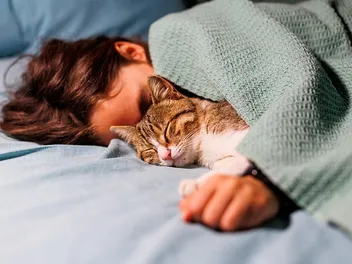
If they are used to sleeping with you, give them one of your clothing items. The smell may provide them with some reassurance, as they will feel like you are near. This can be a really good thing to try if they are used to sleeping in the room with you at night.

The 4 Don’ts When Confining a Cat to a Room at Night
7. Don’t Choose a Cramped or Small Room
If you can help it, try not to use a small room, like a pass-through, bathroom, or laundry room. If your cat is in a super confined space, it might cause them a great deal of stress. If your cat is stressed, they may vocalize, exhibit anxious behaviors, or develop separation anxiety.
Utility and laundry rooms are not suitable, as some cats may try to enter the washing or drying machine, sometimes without their owners noticing in time. This will lead to fatal internal injuries and organ failure if the machines are started with the cat inside. There are also detergents and many harmful chemicals that may be accidentally spilled, with your cat ingesting the substance while grooming their coat.

8. Don’t Leave Plants in the Room
Never leave any plants in the room. Not only can your cat destroy your beautiful greenery, but many plants can also pose a serious health hazard to your cats. It's no secret that cats love batting around, tearing off, and chewing up leaves of houseplants.
Instead of having plants in the room, you could always opt for a patch of cat grass. Your cat can gnaw away all day long with no consequence to them. They can also benefit from a little extra roughage in their diet, helping their digestive tract function.
9. Don’t Leave Your Breakables in Reach
Remove anything that you would like to keep. Our cats are very mischievous little creatures that love jumping up on shelves and other high platforms. If you leave your breakables on shelves where your cat can access them, you might wake up in the morning to a bit of destruction. Not to mention, your cat may step in broken glass and injure themselves.

10. Don’t Leave Chemicals, Essential Oils, or Toxic Products Around
Some things that are fine for us are bad news for cats. Don't leave any burning candles, essential oils, diffusers, household cleaners, or other harmful materials in the room with your cat. Some smart felines can weasel their way through even if these things are kept in a cabinet.
Essential oils are considered toxic to cats, and it goes without saying what can happen if a candle is left burning.

What Are the Reasons You May Confine a Cat?
When is a good time to confine a cat? Everyone will have their own reasons, but here are the most common.
1. To Prevent Destruction
If you have a destructive cat, it’s most important to seek advice and help from a vet or a feline behaviorist.
Although it may seem like a good idea to confine them in a room at night, this is rarely a good or long-term solution to a problem.
If your cat has suddenly become destructive or has exhibited a change in their behavior, there may be an underlying medical issue, source of pain, or stress and anxiety that has led to this. After the vet has ruled out any underlying health concerns, a trained feline behaviorist will help you in identifying a possible reason for such behavior and will advise you on ways of managing it.
2. To Provide Rest After Surgery
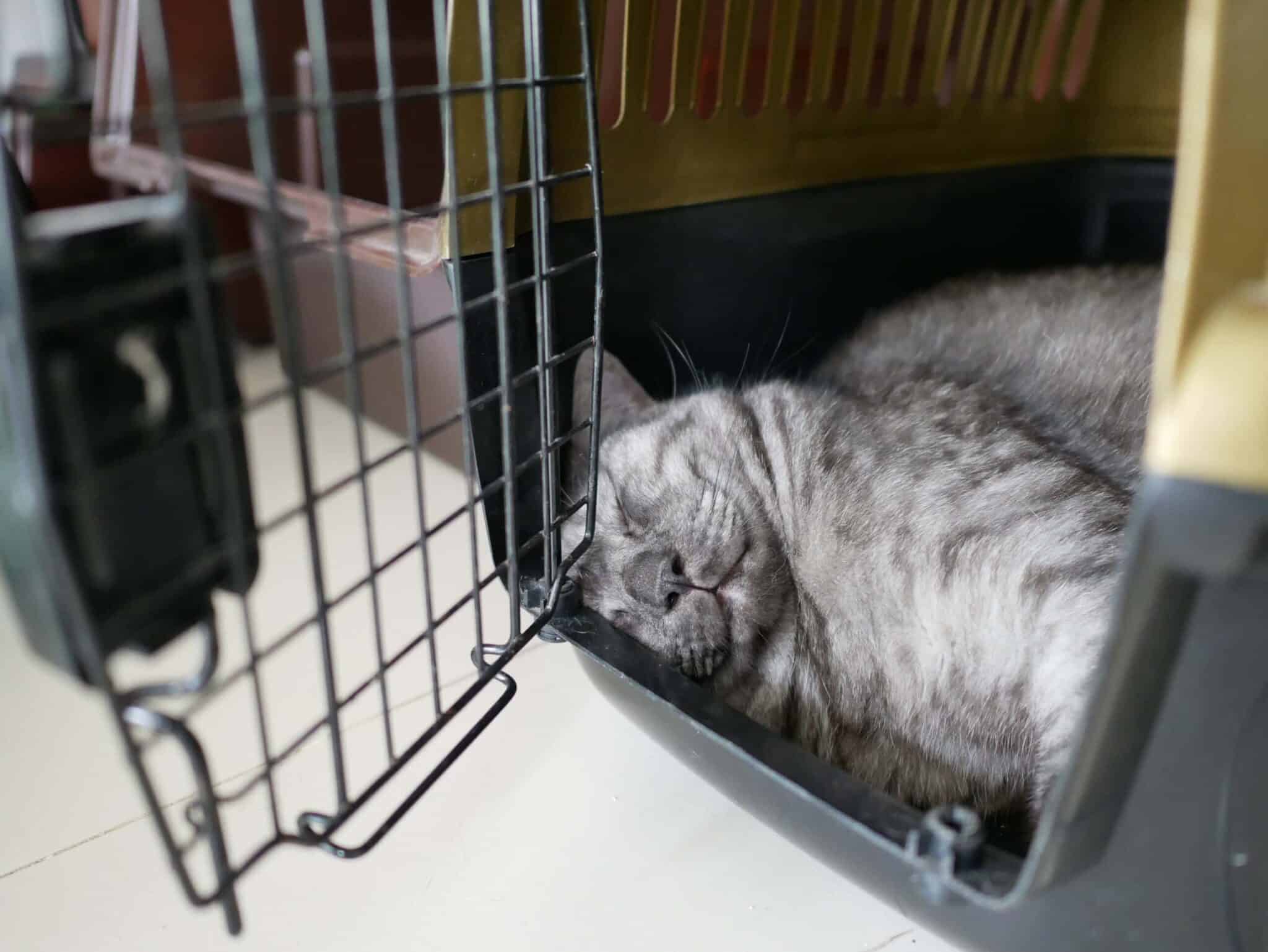
If your cat has had an orthopedic or another surgery that requires a certain amount of rest afterward, a vet may recommend confining them to a crate or a room for a few days or weeks. This way, their wounds, muscles, and bones have time to heal without the strain of excessive or premature exercise or jumping.

3. To Keep Your Cat Safe
If you have an older or disabled cat or a kitten, confining them to a room at night can be a way to ensure their safety. If you have a cat that likes to get into things that they aren’t supposed to, they might be safer if they’re confined to one room at night. If you limit their freedom, they can stay away from your cabinets, shelves, and other places where they might get into trouble and get injured.
4. To Get Some Sleep
Since cats are crepuscular, it can be challenging to sleep in the same home with them. If you have a particularly active young cat or one that really likes to play in twilight hours, putting them in their own separate room can help you get some nighttime Z’s.
5. To Prevent Squabbles
If you have multiple cats in the home and they don't get along too well when you're not around, you can always try confining them to separate rooms at night. This will help to prevent any fights from happening outside of your line of supervision. Using pheromone diffusers and ensuring each cat has their own litter box, food and water bowls, toys, scratching posts, and beds is also crucial. Seek help from a vet or a feline behaviorist, who can help you find a way for your cats to get along.
Looking for toys that will cater to the many needs of your cat? The Hepper Hi-lo Cat Scratcher is one of our favorite cat products, and it will encourage your cat to get active. Its clever three-angle design offers multiple ways for your cat to climb, stretch, and exercise. Made of a sturdy plywood base and a replacement cardboard insert, this scratcher is an option that cats can enjoy for years to come. If your cat requires a little encouragement for self-play, the Hepper Catnip Mice Toy Set is a fantastic choice for their instinctual needs. Made with natural, bite-resistant hessian fabric and filled with organic catnip. Cats can satisfy their natural prey instincts while getting the physical activity they need to thrive.
| Image | Product | Details | |
|---|---|---|---|

|
Hepper Hi-Lo Cat Scratcher |
|
Check Price |

|
Hepper Catnip Mice Toy Set |
|
Check Price |
At Catster, we've admired Hepper for many years, and decided to take a controlling ownership interest so that we could benefit from the outstanding designs of this cool cat company!
6. To Keep Mother With Babies
If you have a mother cat with a litter of kittens, confining them to a room will make sure they are together. Be certain the mother has fresh water, a constant supply of food, and adequate bathroom access.
Conclusion
Confining your cat to a room at night doesn't have to be a difficult task if done correctly and for a valid reason. Once you make the setup appropriate, everything else should fall into place for most cats. However, if your cat is unsettled and anxious if confined to a room, or if the reason for doing it is a behavioral issue, it’s important to get them checked by a veterinarian and consult with a feline behaviorist in order to find an underlying cause and a solution.
There are some instances when your cat will benefit from being confined to a room, such as keeping them safe and ensuring they are rested after surgery or an injury. But if you consider our dos and don'ts, it should be smooth sailing.
Featured Image Credit: Africa Studio, Shutterstock
Expert cat care, straight to your inbox
News, insights, and useful advice, delivered to you.

No spam — unsubscribe anytime.
By signing up, you agree to our Terms & Conditions and Privacy & Cookies Policy.
How useful was this post?
Click a star to rate. You can leave written feedback afterwards. (We read all feedback.)
As a freelance dog writer and passionate pet enthusiast, Ashley Bates is pursuing studies in animal therapy. A mother to four human children and 23 animal companions, Ashley is dedicated to volunteering at shelters, advocating for animal rights, and rescuing animals in need. Her goal is to spread awareness, provide education, and offer entertainment about pets to reduce homelessness. Ashley's specialties include dogs and cats.