Are Hydrangeas Poisonous to Cats? Common Houseplants Examined


In this article
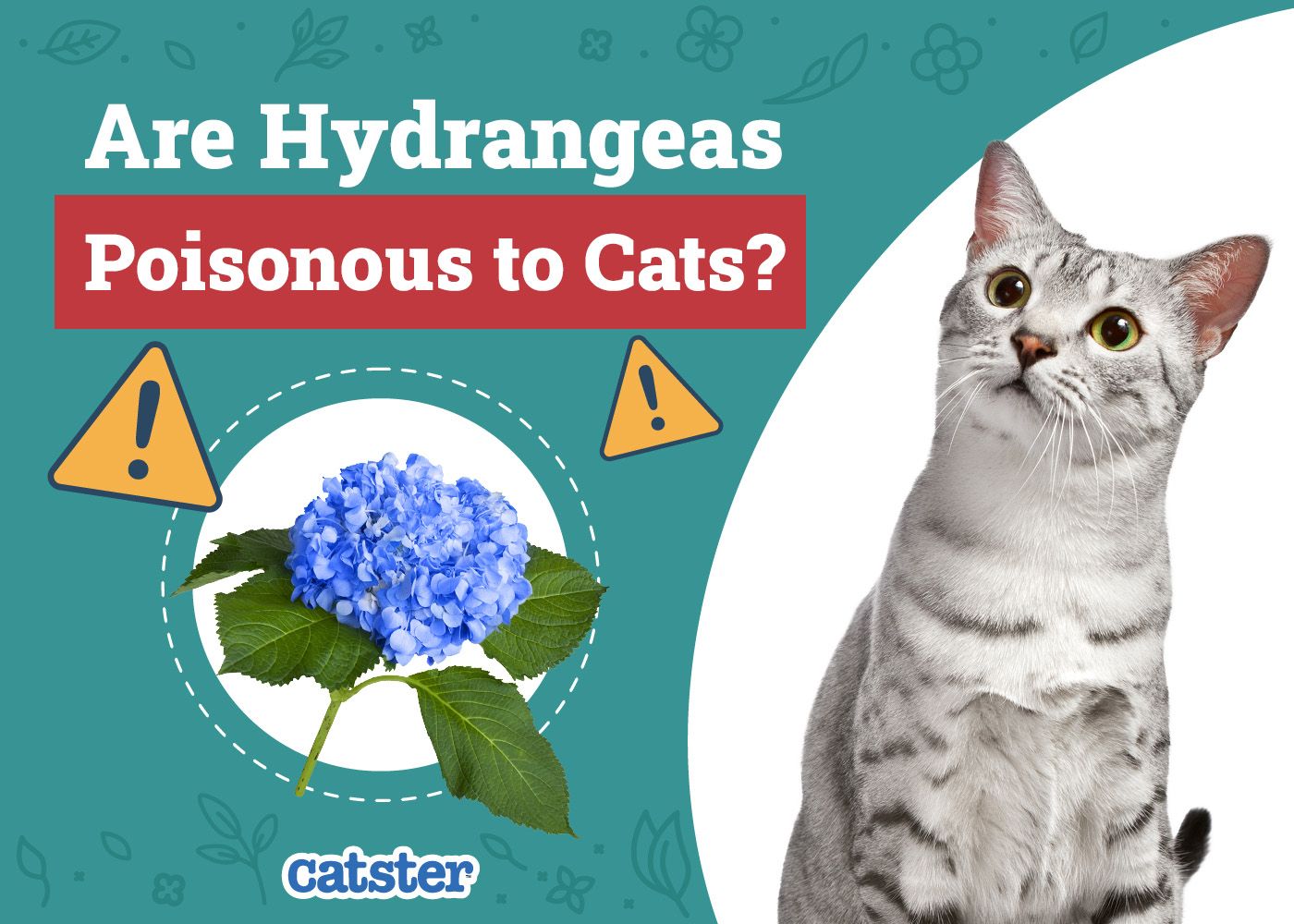
Hydrangeas are beautiful blooming flower bushes that are a stunning addition to any home garden. If you have cats, however, you should tread with caution when planting these gorgeous blooms in your yard. All parts of the hydrangea plant are poisonous to cats.
Keep reading to find out all you need to know about growing hydrangeas when you also own cats.

Will Hydrangeas Poison My Cat?
Cats can become poisoned if they eat any part of the hydrangea plant. This beautiful shrub contains a chemical called cyanogenic glycosides. This chemical can be found in a wide variety of plants and is actually not toxic in its natural form. But, when it becomes metabolized by the body, it produces cyanide, which, we all know, is highly toxic to mammals.
Every part of a hydrangea plant contains cyanogenic glycoside, but the flowers and leaves have the highest concentration.
The good news is that hydrangea poisoning in cats is rare. This is because your kitty would need to eat a lot of the plant to become poisoned by it.

What Happens if My Cat Eats Hydrangeas?
Your cats’ symptoms will depend on how much they have eaten and their size. Smaller cats will be at a higher risk of poisoning as they have to eat less than their larger counterparts to become ill.
If your kitty has eaten a little of the plant, you may notice they’re displaying gastrointestinal signs. They might start vomiting or have diarrhea.
In severe cases, your kitty might become lethargic, depressed, or seem confused.
What Do I Do if My Cat Has Hydrangea Poisoning?
If your cat has eaten any part of the hydrangea plant, it may start exhibiting signs within thirty minutes. If you notice they’re experiencing some of the aforementioned gastrointestinal signs or find them sniffing around your plant, you should give your vet a call or head to their office.
You might want to bring a cutting of the plant with you so your vet can properly identify the plant. They will perform a physical examination of your cat to rule out any other illnesses, as the signs of hydrangea poisoning can mimic a host of other conditions.
They might call for bloodwork and a urine test to ensure your cat’s organs are functioning as they should. An X-ray might be necessary to rule out any other potential causes of your kitties’ gastrointestinal signs.
You can also consult a vet online if you need quick and easy access to an expert's opinion.
What Are the Treatment Options for Hydrangea Poisoning?
Your treatment options will vary depending on the severity of the signs as well as the overall health of your cat. How long ago your cat ate the plant can also affect how your vet will want to treat the poisoning. The sooner your pet can get medical attention, the better his prognosis will be.
If you were able to catch it early, within thirty minutes of eating the plant, your vet might consider inducing vomiting to remove the toxins from your cat’s system.
If your kitty is having a severe reaction, your vet might suggest hospitalizing him and monitoring him overnight. They may need intravenous fluids to flush out the toxins from their body, treat dehydration from gastrointestinal side effects, and as general support.
In less severe cases, your vet might suggest treating your cat’s gastrointestinal issues and monitoring him at home. They may prescribe medication and suggest following a bland diet like cooked chicken and white rice for a few days.
In most cases, once the gastro symptoms have run their course, the prognosis is excellent and your cat will be likely to make a full recovery.

Can I Still Grow Hydrangeas if I Have Cats?
You can absolutely still grow this beautiful and bright bush in your garden if you’re a cat owner. You will need to ensure you’re growing it in a place your cat cannot access. If you keep your pets indoors, you won’t need to worry about hydrangea poisoning at all.
If your cats need their outdoor time, try keeping your hydrangeas at a height where your curious kitty is unable to access the flowers or leaves. You can also try covering it with netting to make accessing it more difficult or with a pebble border around it.
You might consider investing in a motion-activated sprinkler system near your toxic plants. Many gardeners install these on the borders of their gardens to keep all types of critters and pests out. When the sprinkler detects motion nearby, it will spray water in that direction to deter potential plant-eaters.
An animal-repelling mat is another great option for deterring pets from your garden. These mats are made from a flexible material and feature soft spikes that animals won’t like the feel of underfoot.
You might also consider investing in an ultrasonic deterrent. These handy devices work by emitting ultrasonic waves, LED lights, and alarms that stop animals from getting into your garden. While the jury is out about how effective these are, some studies suggest they may not be able to prevent all incursions but are effective at reducing their frequency and duration.
Are There Other Cat-Safe Plants I Can Grow?

If you’d rather not risk it at all, you might consider planting other beautiful, cat-safe blooms in your garden instead. Here are some stunning plants that can beautify your yard without potentially harming your kitty:
- Marigolds
- Snapdragons
- Zinnias
- Boston fern
- Burro’s tail
- African violets
- Petunias
- Asters
- Hibiscus
- Magnolia bush
- Mulberry tree
- Sunflowers
- Creeping zinnia
Final Thoughts
You, your cat, and your beautiful hydrangea bush can live together in harmony if you’re willing to put in the work to make the bush less attractive to your kitty. The last thing you want is for your cat to get sick because of your plants.
You know your cat best. If you know they err on the side of infinite curiosity, you might want to plant flowering trees, bushes, and non-toxic plants.
Sources
Featured Image Credit: Tunatura, Shutterstock
Expert cat care, straight to your inbox
News, insights, and useful advice, delivered to you.

No spam — unsubscribe anytime.
By signing up, you agree to our Terms & Conditions and Privacy & Cookies Policy.
How useful was this post?
Click a star to rate. You can leave written feedback afterwards. (We read all feedback.)
For Chantelle, writing and animals are the two driving forces in her life. Growing up on the Canadian prairies surrounded by pets, she now shares her home with five cats, two guinea pigs, and a bearded dragon. Chantelle, her husband, and their child pride themselves on being dedicated pet parent, even spending a fortune on wall-mounted cat shelves to provide their cats with an indoor jungle gym. When she's not snuggling with her cats or photographing their humorous moments, Chantelle is exploring the Rocky Mountains, rewatching her favorite Netflix series, and reading up on various random subjects.