Get

In Your Inbox

Catster is reader-supported. When you buy via links on our site, we may earn an affiliate commission at no cost to you. Learn more.

Are Marigolds Poisonous to Cats? Vet-Reviewed Houseplants Examined

Share

Catster_Are Marigolds Poisonous to Cats

If you are looking to grow this beautiful plant in your house with your feline companion or your kitty has taken a nibble of this flowering plant, you might be wondering if marigolds have any toxic or poisonous properties that would harm your cat. Fortunately, if a cat were to ingest a small amount of the pot marigold plant, it would not be harmful.

However, cats that consume large quantities of French marigold plants may face digestive issues. In this article, we explain what makes the marigold plant generally safe for cats and whether this plant can be grown in the same house as your feline friend.

divider 2 cats

Are the Marigold Plants Poisonous to Cats?

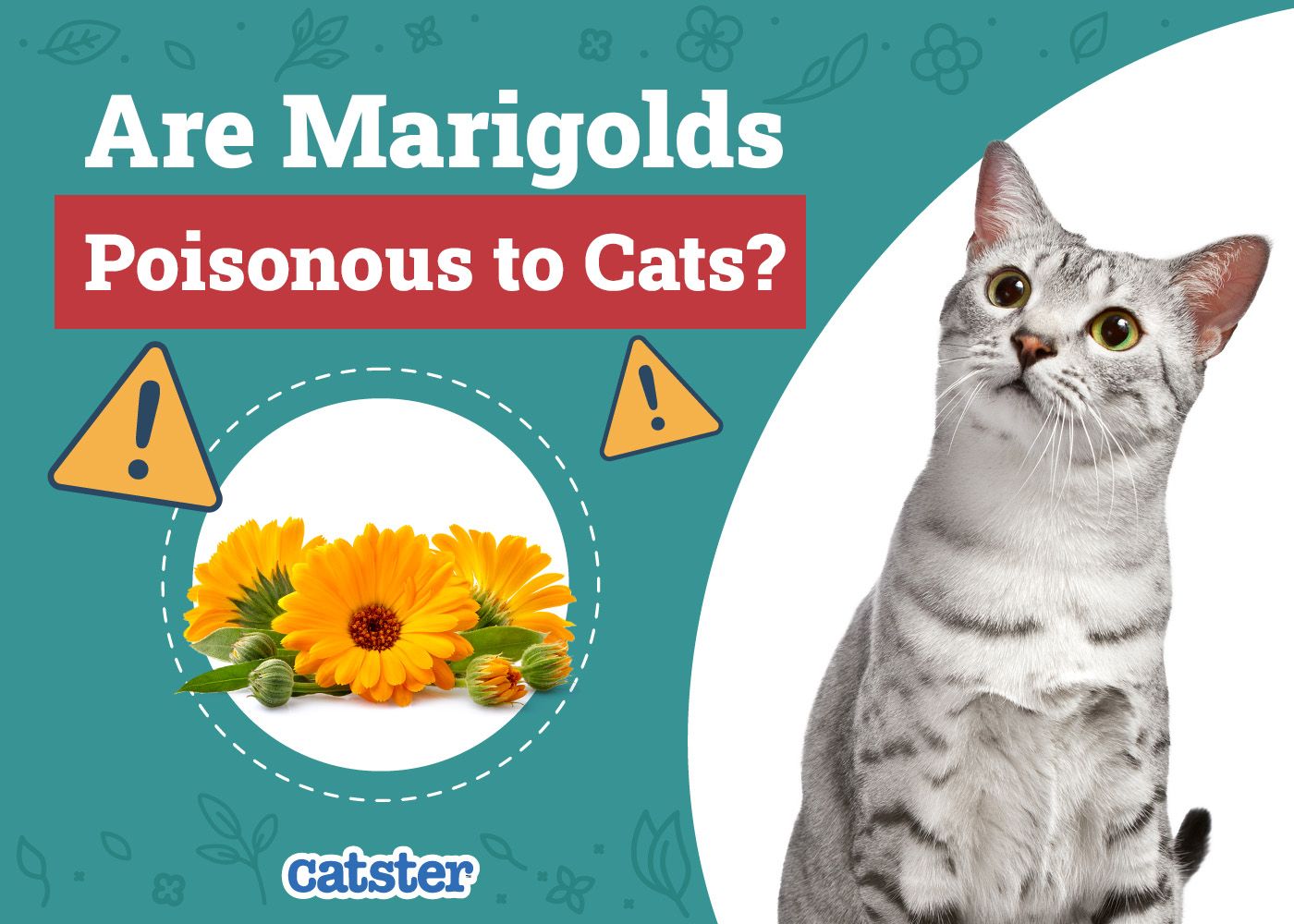
There are two classifications of the marigold plant, the Calendula officinalis (pot marigold) and the Tagetes patula (French marigold). Pot marigolds are generally considered to be harmless and non-toxic to cats, according to the ASPCA website, but French marigolds are mildly toxic to cats if ingested in large quantities.

Marigolds are popular plants usually put in pots or flower beds in a garden where they grow to medium size, with large, brightly colored flowers that attract insects and in some cases, cats.

Since cats are curious animals, they use their sense of taste and smell to explore their environment and see what tastes good and what doesn’t. Most cats will not like the taste of plants because they are strictly carnivores and should eat an animal-based and protein-rich diet rather than vegetation.

Although the common pot marigold is non-toxic to cats and not poisonous if they have a nibble on it, the French marigold is known to be toxic and can cause gastric upset in cats.

marigold flower
Photo Credit: MabelAmber, Pixabay

Can You Grow Marigolds With Cats?

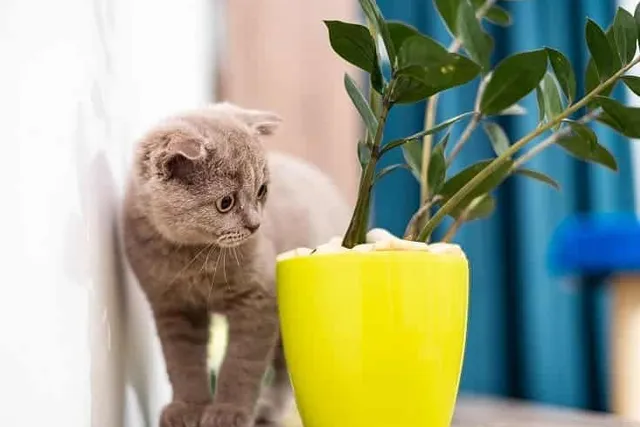
You can safely grow pot marigolds with your cat, but you should avoid growing the toxic variety (French or Tagetes marigolds) in the same environment as your cat. It is best to grow safe plants if you have a cat and not risk growing potentially toxic plants because it is difficult to determine if your cat will take a nibble of the plant or not.

It is also important to verify that the marigold plant you have purchased is free from harmful pesticides, herbicides, or hormones that are used to benefit the plant’s growth and beauty but can be harmful if ingested by your cat. Also, check if it is the non-toxic or toxic variety of the marigold plant.

divider 2 cats

How Can You Tell If Your Cat Has Eaten Too Much of a Marigold Plant?

If you suspect that your cat has eaten a French or Tagetes marigold plant, it is important to take them to a veterinarian. A cat that is reacting to eating this plant may experience the following signs:

  • Excessive drooling and salivation
  • Abdominal pain
  • Red skin or rashes
  • Diarrhea
  • Vomiting
  • Irritation of the mucous membranes
  • Runny nose
  • Inflammation on your cat’s mouth, nose, and around the eyes

These signs are most common if your cat has ingested the toxic variety of the marigold plant, but signs such as gastric upset can also occur in cats that have eaten too much of the pot marigold plant. A veterinarian will be able to give your cat the right medications and treatment to help them feel better quickly. Since excessive drooling and diarrhea are the most serious signs of marigold poisoning, it can quickly cause a cat to become dehydrated, and they will need IV fluids from a veterinarian.

If you have a question about your cat's health or behavior, why not Ask a Vet for Free with Catster. Our veterinary team answers reader questions and provides trusted advice to help you better understand your cat.

askavet on catster

divider 2 cats

Conclusion

If you share a love for both the attractive flowering pot marigolds and cats, you can grow this plant in your house with your cat because it is a non-toxic member of the marigold plant family. However, you should take caution and consult with someone experienced in identifying the different plant species so you can ensure that you are growing the right type of marigold to avoid any accidental poisoning of your cat.


Featured Image Credit By: Pikist

Want content like this delivered to you?

Sign Up For Our Newsletter

News, insights, expert advice, and everything cat

* By submitting, you agree to our Terms & Conditions and Privacy & Cookies Policy.


How useful was this post?

Click on a star to rate (you can leave written feedback after clicking submit)

Help us improve Catster for pet parents!

Your feedback really matters.

What did you like about this post? Also how can we improve it?

Join the conversation

Leave a Reply

You’re very welcome to leave a comment or question. Please know that all comments must meet our community guidelines, and your email address will NOT be published. Let’s have a positive and constructive conversation.


Catster's Digital Magazine is Back!

Vet-approved health & behavior advice

Real cat stories & community features

The Original Space Invaders – Why Zero Respect for Personal Boundaries Is a Good Thing

Cats have a reputation for being independent, and in many ways they are. But anyone who has tried to work at a laptop...

How Cats Are Helping to Cure Cancer

When most people think about medical breakthroughs, they picture scientists in laboratories and clinical trials involving human patients. Few would imagine that the...

Ask Dr. Paola – My Cat Loves Eating Grass, But It Makes Her Vomit! (June 29, 2026)

Welcome to our “Ask Dr. Paola” series, where every Monday we bring expert advice straight from Dr. Paola Cuevas (MVZ) to help our...

Learning to Speak Cat with Anthony Smith

Many cat lovers know me through Learn to Speak Cat and Cattitude – Doggonit, cartoons that explore the often mysterious, occasionally mischievous, and...

More related

Who Are the Biggest Cats in the World? 2026 Records Update

From the largest domestic cat in the world to the longest, the heaviest to the kitty with the longest tail, we’ve put a...

How to Make a Cat Feel Safe? 10 Vet-Reviewed Behavior Tips

Every cat is unique: Some are fearless and bold, while others are calm and gentle. Still others cats tend to be nervous and...

Hypertension In Cats: Vet Reviewed Signs, Causes & Care

Cats are beloved family members that rely on their humans for love, companionship, and care. However, cats that receive love, high-quality food, and...

Can Cats Drink Beer? Our Vet Explains

If you have ever considered letting your cat taste your beer, here’s why you should not contemplate this possibility anymore. Sharing beer—or alcohol...

Keep reading

Can Cats Eat Hay? Vet-Reviewed Nutrition Facts

While cats are often notoriously picky about cat food, they do seem to like nibbling on various plants and human foods. If you have hay lying around the house, don’t be surprised if your cat takes a bite or two....

Can Cats Eat Hay

How to Get Cat Smell Out of the House: 10 Effective & Easy Ways

Even if you can’t see cats wandering around, you can recognize a cat house by the smell. Whether it’s everyday dander or random urine spots, cats have a way of making a home their own with a unique aroma. But...

man cleaning smelly litter box

Chronic Diarrhea in Cats: Our Vet Discusses Signs, Causes & Treatment

Nobody likes it when their cat has diarrhea, the kitty included. Not only is it potentially messy, but it can also be frustrating if it’s been going on seemingly without end or if it keeps popping back up when you...

maine-coon-cat-using-the-litter-box

When Do Kittens Open Their Eyes? Vet-Reviewed Facts & FAQ

Did you know that kittens are born deaf and blind? In fact, newborn kittens enter the world with their eyes entirely shut, and they don’t open their eyes until they are 1-2 weeks old. In this article, we will discuss...

Snowshoe Lynx Point Siamese kittens

My Cat Is Pressing Their Head Against Me, Should I Worry? Vet-Approved Facts, Causes & Care Tips

Cats show their affection in funny ways, including rubbing or head-butting you or other pets. They like to rub or bump their head and faces against objects to mark their scent and show love. If your cat is pressing their...

Girl butting heads with her ginger cat

How Can I Stop My Cat From Waking Me Up? 20 Tips & FAQ

It can be so frustrating when your cat keeps waking you up early in the morning! Whether it’s incessant meowing or relentless scratching, an early alarm call from your feline friend is the last thing you want. So, if you’re...

cat in between two people lying in bed

Can Cats Eat Rabbit? Vet-Verified Health Risks & Precautions

While we may want to think of our precious felines as nothing more than furry companions to spend our days with, they are cunning hunters who enjoy the chase and relish in their victories when they happen. Realizing this leaves...

Can Cats Eat Rabbit

What Does a Cat Hairball Look Like? Vet-Reviewed Facts & FAQ

The sound of a cat retching up a hairball will get most pet parents moving at lightning speed to protect their beloved furniture, clothes, and anything else their demon-spawn cat might want to puke on. However, new cat owners might...

tabby cat gagging or choking

Love Cats? So Do We! Join the Catster Community

Stay informed with expert pet care insights delivered straight to your inbox! Discover professional guidance on animal behavior, feeding tips, trusted product picks, and much more.


Sign up for the Catster Email Newsletter

Stay informed with expert pet care insights delivered straight to your inbox! Discover professional guidance on animal behavior, feeding tips, trusted product picks, and much more.