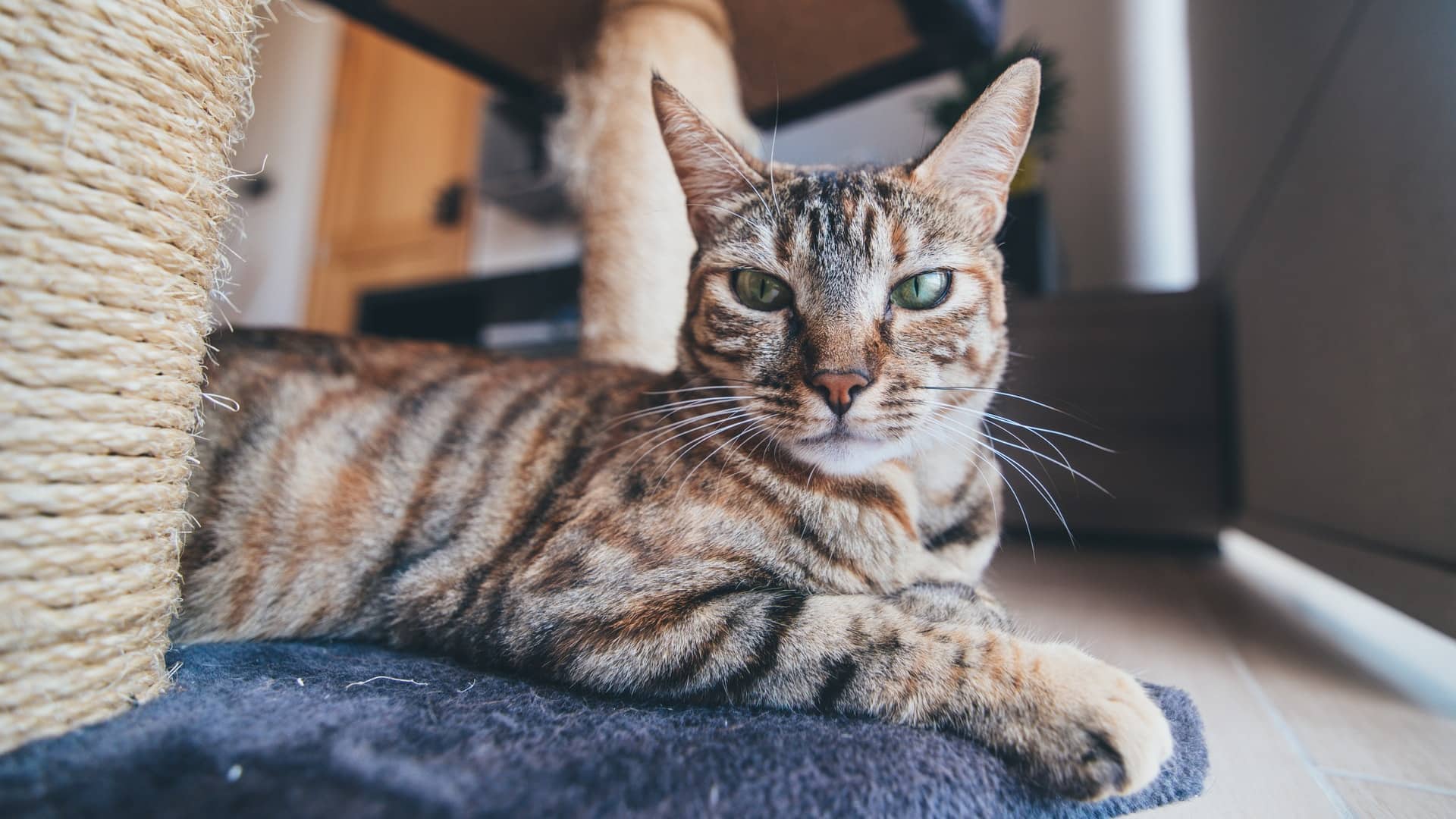
What's the Best Material for a Cat Scratching Post? Vet-Approved Tips & Tricks

In this article
Scratching posts are wonderful and necessary items that help keep your cat entertained while fulfilling a natural and necessary instinct. Furthermore, having the right scratching post may prevent them from tearing up your home’s furniture and carpet. However, commercial scratching posts can be expensive, and you can usually make them yourself for less money.
If you are considering creating a scratching post for your cat, keep reading for a list of the best materials for it. We also provide tips and tricks to help you get ideal results.

The 7 Best Materials for a Cat Scratching Post
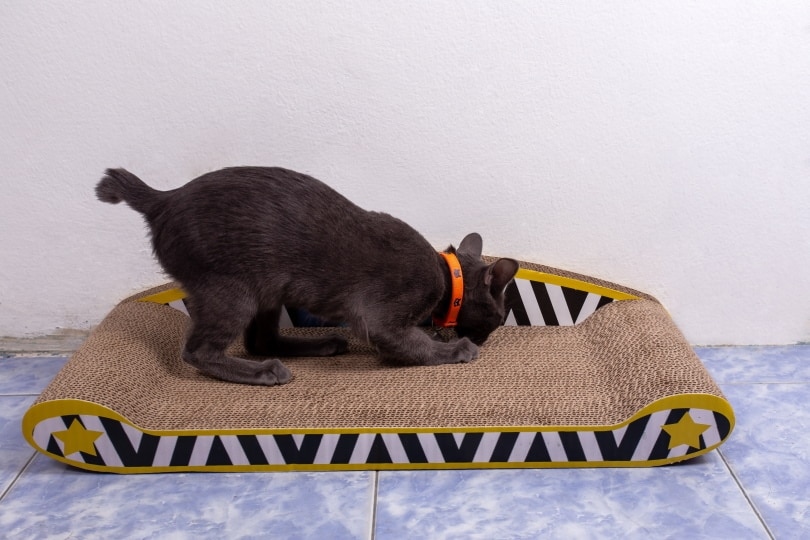
1. Cardboard

Cardboard is a popular and affordable material choice for cat scratching posts, and it offers several advantages for both cats and their owners. It’s inexpensive, and you can often recycle old boxes for free, and the texture is perfect for scratching. You can easily shape it into many different shapes and sizes to find something that your cat likes, and it’s easy to replace. It’s also environmentally friendly.
The downside is that it wears out quickly, and many people complain that it doesn’t look as nice as some other options.
Pros
- Inexpensive
- Easy to shape
- Environmentally friendly
Cons
- Wears out quickly
- Lackluster appearance
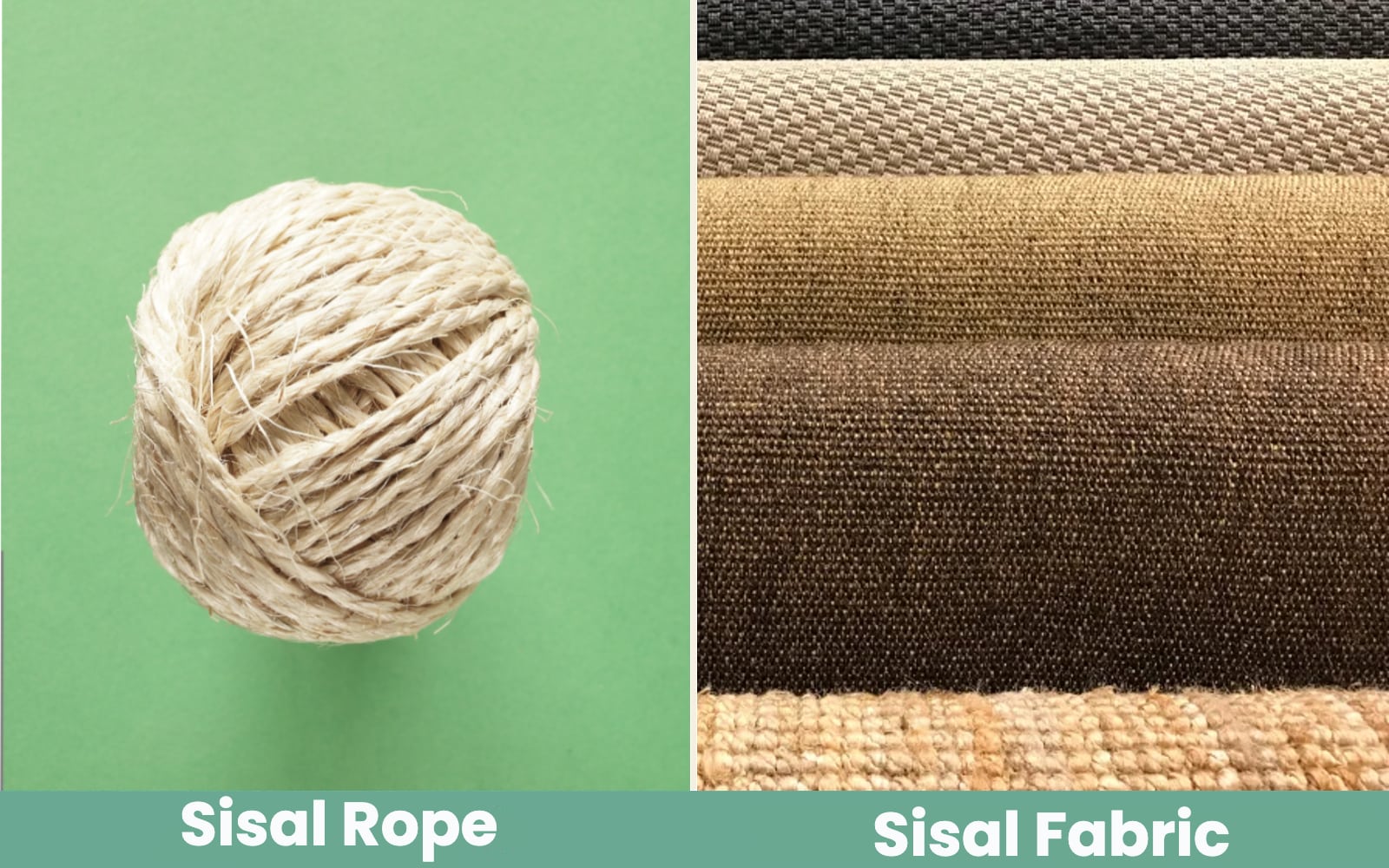
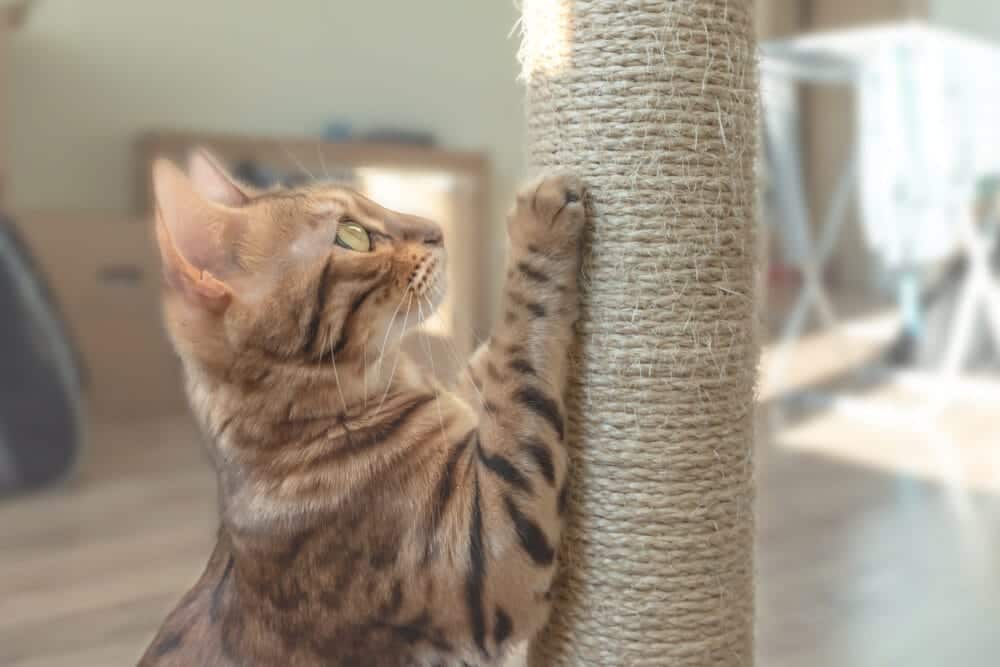
2. Sisal Rope

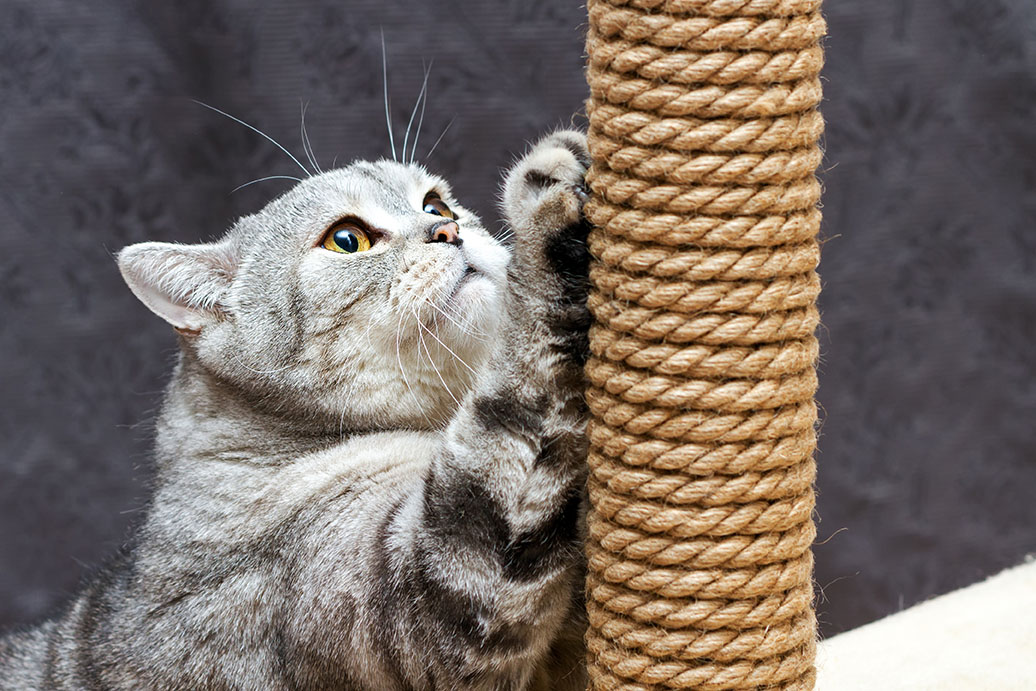
Sisal rope is a widely used material for cat scratching posts due to its durability and ability to withstand the constant wear and tear of a cat’s scratching behavior. It can last a long time, even with heavy use, and cats generally find the texture of sisal rope highly appealing. Its texture aids in the natural shedding of the outer sheath of a cat’s claws, keeping them sharp and healthy, and it’s relatively easy and inexpensive to replace if it becomes worn. Sisal comes from the Agave sisalana plant and is environmentally friendly.
The downside is that some cats might prefer the texture of other materials.
Pros
- Durable
- Easy to replace
- Environmentally friendly
Cons
- Some cats may prefer other materials
3. Sisal Fabric
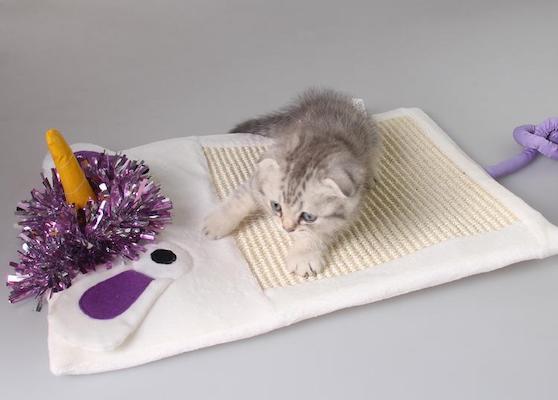
Sisal fabric is an excellent choice for cat scratching posts, offering many of the same advantages as sisal rope. It’s extremely durable and has a texture that many cats enjoy. It’s also perfect for cats that prefer a horizontal scratching surface instead of a post. Sisal fabric can have patterns that help make it more attractive.
The downside is that it’s more expensive than sisal rope and less easily replaced.
Pros
- Durable
- Attractive
Cons
- More expensive
4. Hemp

Derived from the Cannabis sativa plant, hemp is gaining popularity as an eco-friendly and sustainable material for various products, including cat scratching posts. Hemp fibers are known for their strength and resilience, and a well-made hemp scratching post can withstand the rigors of a cat’s scratching behavior for an extended period. It’s non-toxic and has a texture that many cats enjoy. You can find it in rope or fabric, often with attractive patterns.
The downside is that it is more expensive than the other options.
Pros
- Durable
- Environmentally friendly
Cons
- Expensive
5. Jute

Jute is a natural fiber that you can find in rope or rug form and makes a perfect material to use for a scratching post. It is highly sustainable and biodegradable yet durable enough to withstand the wear and tear caused by a cat’s scratching behavior. The texture is softer than sisal but rough enough to maintain claw health.
The downside is that it can be more expensive than some other options, and some cats might not like the texture.
Pros
- Environmentally friendly
- Durable
Cons
- Expensive
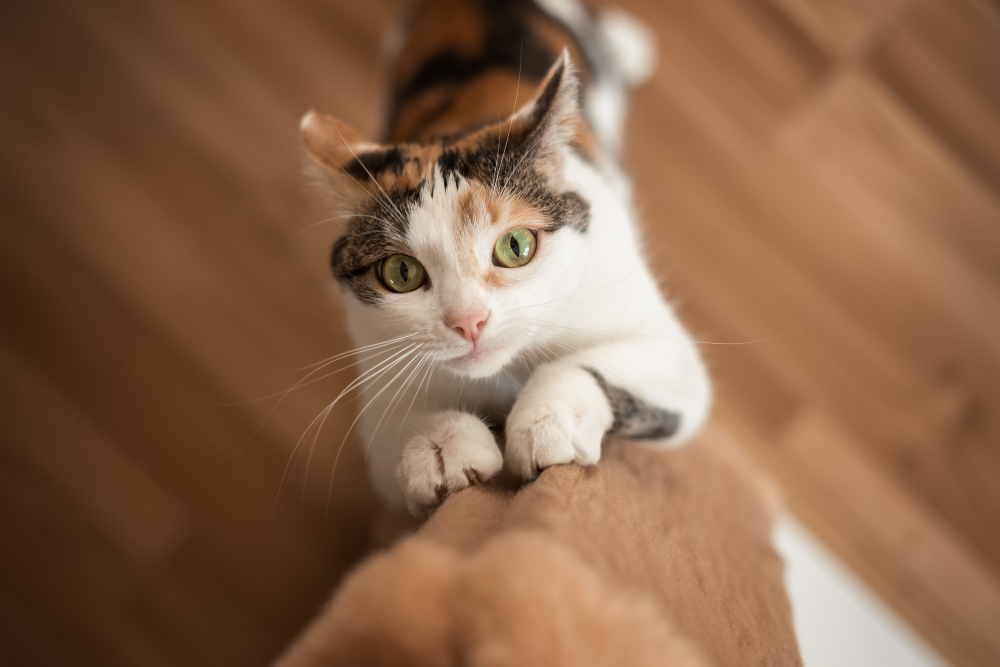
6. Carpet

Carpet-covered cat scratching posts are popular among cat owners due to their comfort and versatility. It is comfortable, warm, and durable, with a texture that many cats enjoy. It’s also available in many colors and patterns, helping it look great in any home, and you can often find scraps to help keep costs down.
The downside is that it can trap a large amount of dirt and fur and might not be rough enough to maintain the cat’s claws. It might also confuse your cat into thinking that all carpet is good for scratching.
Pros
- Attractive
- Comfortable
- Durable
Cons
- Traps dirt and fur
- Might confuse cats
7. Wood

Wooden scratching posts are exceptionally sturdy and long-lasting, making them ideal for even the most vigorous scratchers while providing attractive pieces of furniture in your living space. They can come in various designs, including those with multiple levels, platforms, and hiding spots, and many cats enjoy the texture of wood for scratching. Unfortunately, wood scratching posts are often expensive and less environmentally friendly than plant fibers.
Pros
- Attractive
- Durable
- Versatile
Cons
- Expensive
- Not that environmentally friendly
Why Do Cats Scratch?
Scratching helps cats mark their territory by leaving both a visual mark and a scent from the glands in their paws. It also helps them stretch their muscles and keep their bodies limber, making it a form of exercise. Scratching sheds the outer sheath of their claws, keeping them sharp and healthy. Some cats will also visit the scratching post more frequently when feeling stressed, as it can help them relieve tension.

Pro Tips for Choosing the Right Material for a Cat Scratching Post
- Pay attention to your cat’s scratching habits. If they prefer a specific texture, try to choose a scratching post that matches it.
- If you’re looking for a long-lasting option, sisal rope or wood may be your best bet. However, be prepared to invest more up front for the materials.
- If eco-friendliness is important to your family, cardboard or natural fiber materials like sisal, hemp, and jute are more sustainable choices.
- Consider the long term. While some materials are initially more affordable, they may require more frequent replacement, resulting in higher overall costs.
- Consider the overall look of the scratching post. It should fit well with your home décor and provide additional features that your cat may enjoy, such as platforms or hiding spots.

- Premium Materials - Hepper's cardboard scratcher is made with dense, B-flute cardboard, and a metal core. Encased in a 1/2" plywood frame with gloss coating. Stable and beautiful, use after use
- High, Low and Lower - A single cat scratch pad won't keep your cat engaged. 3 unique positions keeps them coming back, and back, and back again. Finally, something to get them away from the couch!
- Activates Muscles - The Hi Lo isn't just a cat nail file to stop the chief cat couch scratcher. The deep cat scratcher wave encourages maximum musculoskeletal activation for a healthier workout
We're quite fond of cardboard as a material in cat scratchers, which is why we love the Hepper Hi-Lo Cat Scratcher. Encased within a well-constructed, modern birch plywood frame, this scratcher is designed with both cats and their owners in mind. It offers three versatile configurations to keep your feline friend active and entertained while enticing them to fulfill their natural scratching instincts (and away from scratching things they shouldn't). For more details, click here!
At Catster, we’ve admired Hepper for many years, and decided to take a controlling ownership interest, so that we could benefit from the outstanding designs of this cool cat company!
Pro Tips for Maintaining Your Cat’s Scratching Post
- Replace or repair any worn or frayed parts immediately.
- Depending on the material, you may need to regularly vacuum, brush, or wipe it down to remove dirt, fur, and odor.
- Put the scratching post in a location where your cat spends most of their time or near their favorite lounging spots to encourage use.
- Put catnip on the post if they need extra encouragement.
- Praise and reward your cat with extra petting and treats when they use the scratching post to reinforce good behavior.
- Take into consideration getting your cat a commercial scratching post, which can be a great option combining different textures, shapes, and heights and looking fab in your home.
Summary
The best materials for a cat scratching post include cardboard, sisal, and hemp. These are inexpensive, durable, and easy to use. Cardboard is a great place to start because you can usually recycle a few old boxes to get it, and you can try out a few post designs to see what your cat likes before committing to a more costly but more durable material.
Trying out different materials to find what your cat likes best will enable you to build a scratching post that your cat uses, but you can help coax them by placing it in their favorite area and putting catnip on it.
You might also like: Sandpaper Cat Scratcher: Is It a Good Idea?
Featured Image Credit: Dizfoto, Shutterstock

Expert cat care, straight to your inbox
Vet-reviewed advice, behavior tips, and the best of Catster. Free, and you can unsubscribe anytime.
By signing up, you agree to our Terms & Conditions and Privacy & Cookies Policy.
Ed Malaker is a veteran writer who has contributed to a wide range of blogs that cover tools, pets, guitars, fitness, and computer programming. When he’s not writing, Ed is usually performing DIY projects around the house or working in the garden. He’s also a musician and spends a lot of time helping people fix their guitars and composing music for independent films.
Join the conversation
Ask a question, share your story, or send private feedback.