Is a Sandpaper Cat Scratcher a Good Idea? Vet-Approved Facts & Safety Guide

If you’re thinking about making a DIY cat scratcher for your furry friend, you might be wondering if you can use materials that you have lying around the house. Offering your cat a few scratching posts can save your furniture and keep your cat happy and healthy.
If you're wondering if sandpaper is a valid option, the short answer is no. It is too abrasive and does not allow your cat to sink their nails into it. Keep reading if you would like to learn the secrets of this unique feline behavior and more about the best materials for your cat’s scratching posts.

Why Do Cats Scratch Things?
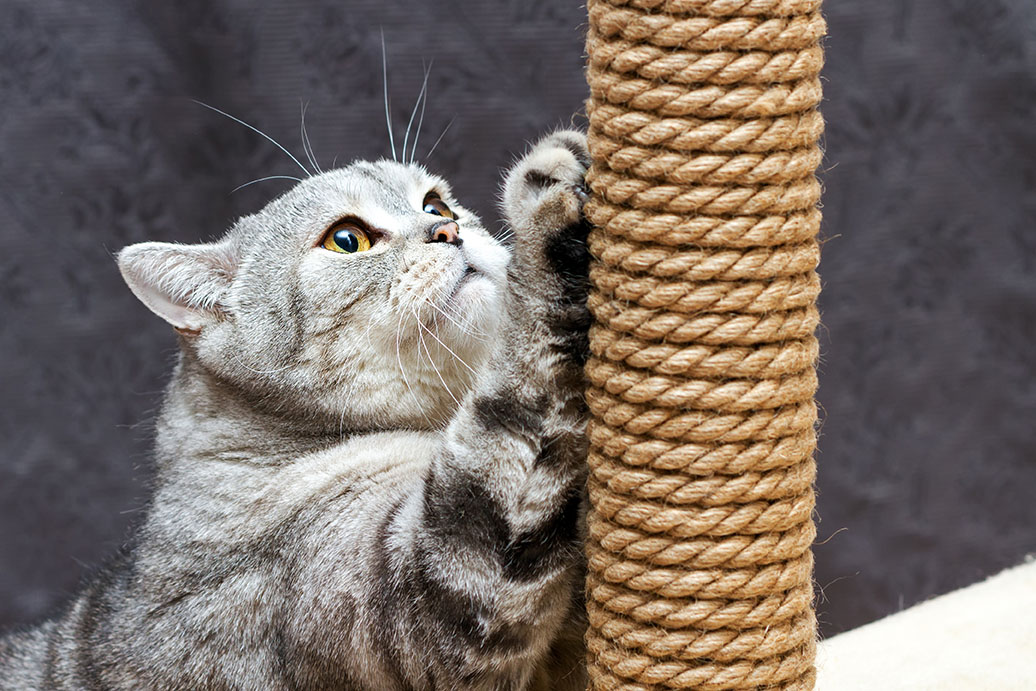
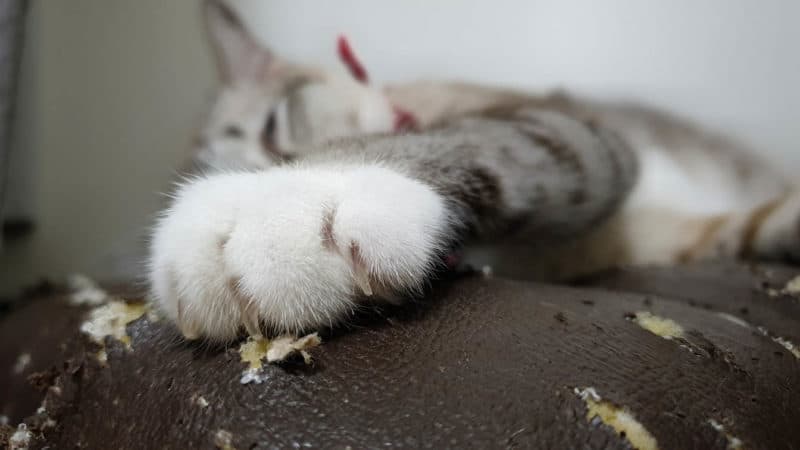
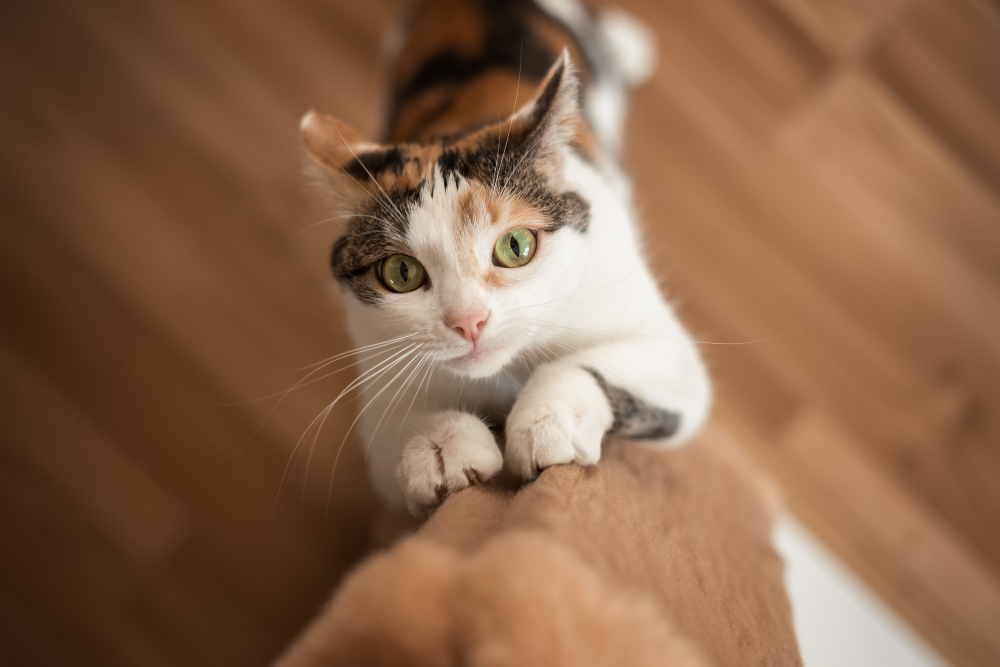
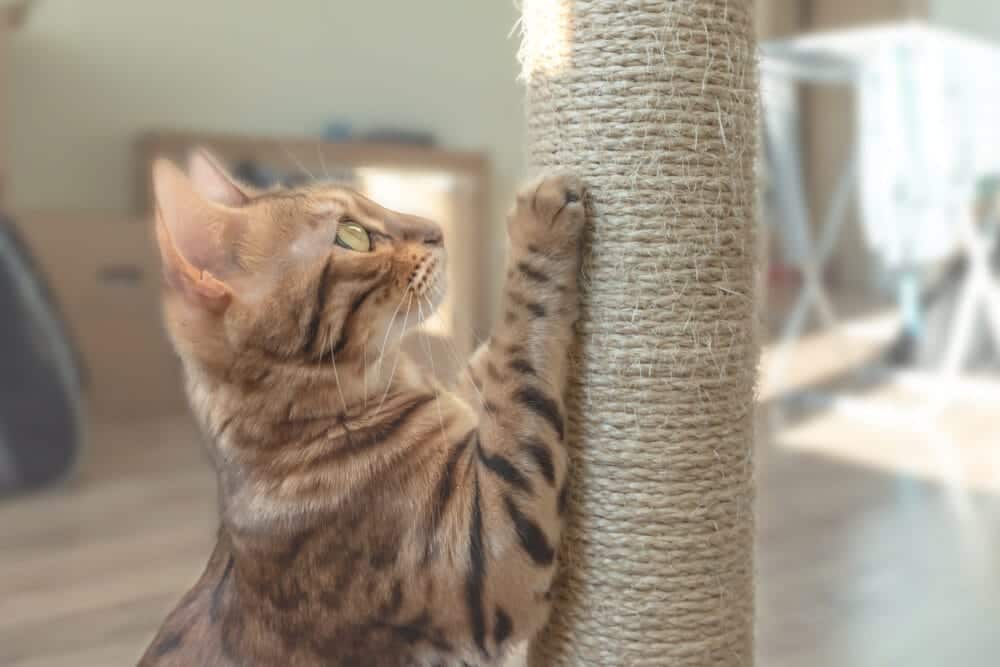
Scratching is an instinctive behavior for your cat, so it’s not something that they have any control over. They just have to scratch! There are a few main reasons that cats scratch.
Main reasons why cats scratch:
If you catch your cat scratching something that you’d rather they didn’t, like the arm of your brand-new couch, punishing them is never the answer. Instead, redirect this behavior to somewhere specific, like a cat scratcher!
If you haven’t provided environmental enrichment for your cat, you shouldn’t be surprised if your cat can’t resist scratching on any surface within your house. With that in mind, offering a few cat scratchers will allow your cat to carry out this natural behavior while keeping your furniture free from the effects of their claws.

Is Sandpaper a Good Material for Scratching Posts?
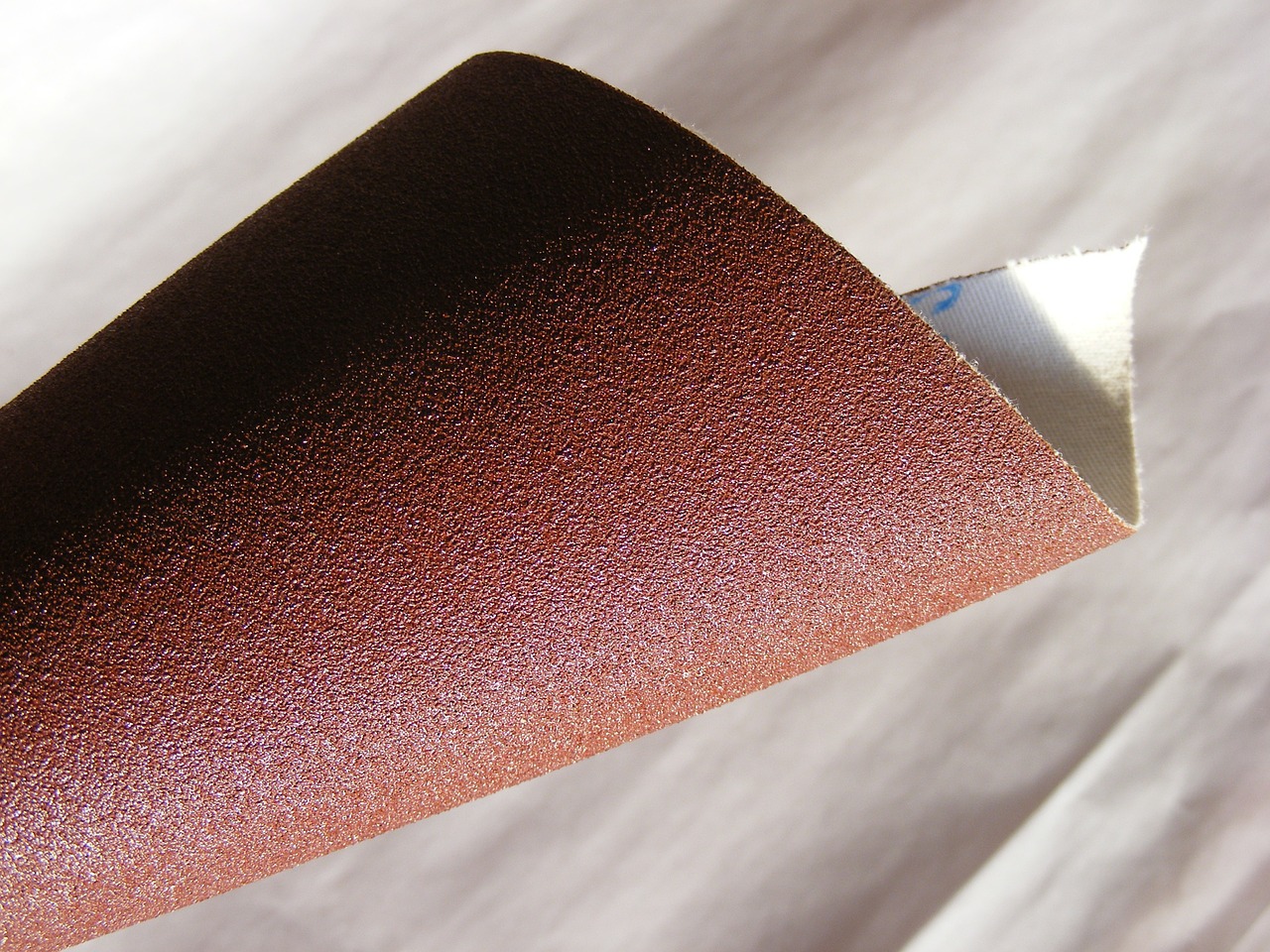
If you’ve been researching cat scratching posts, you may have seen DIY plans that use sandpaper. The material is coarse, cheap, and readily available, and you might even have some lying around your house. But is it a suitable material?
The answer is no. Sandpaper is not a suitable option for a DIY scratching post. Your cat probably wouldn’t be interested in it at all; besides, it's not suitable for cats. Just like us, cats have their individual likes and dislikes. Some cats will be clear in letting you know what is acceptable and what is not!
This mainly applies to food and toys, but it also applies to scratching posts. Some cats might seem interested in using scratching posts with sandpaper, and others won’t go anywhere near them. While some cats might tolerate a sandpaper scratching post, we recommend trying other, more suitable materials.

- Premium Materials - Hepper's cardboard scratcher is made with dense, B-flute cardboard, and a metal core. Encased in a 1/2" plywood frame with gloss coating. Stable and beautiful, use after use
- High, Low and Lower - A single cat scratch pad won't keep your cat engaged. 3 unique positions keeps them coming back, and back, and back again. Finally, something to get them away from the couch!
- Activates Muscles - The Hi Lo isn't just a cat nail file to stop the chief cat couch scratcher. The deep cat scratcher wave encourages maximum musculoskeletal activation for a healthier workout
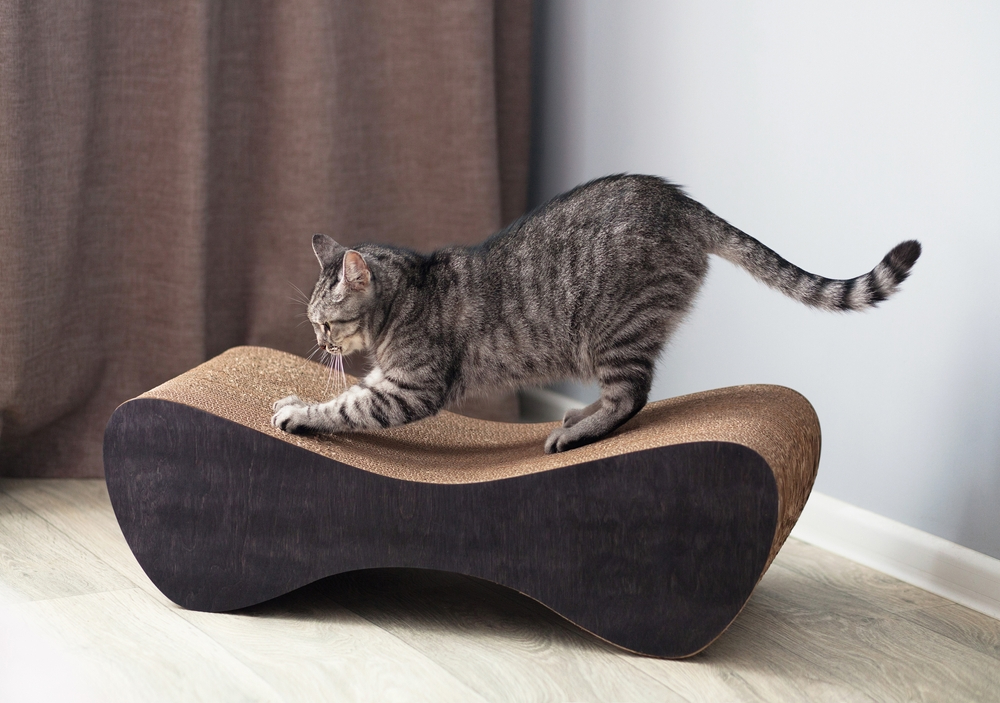
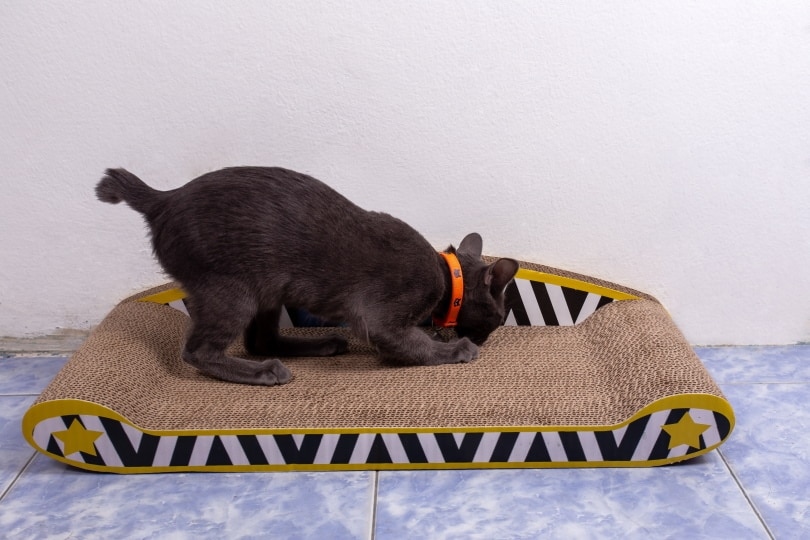
We're quite fond of cardboard as a material in cat scratchers, which is why we love the Hepper Hi-Lo Cat Scratcher. Encased within a well-constructed, modern birch plywood frame, this scratcher is designed with both cats and their owners in mind. It offers three versatile configurations to keep your feline friend active and entertained while enticing them to fulfill their natural scratching instincts (and away from scratching things they shouldn't). For more details, click here!
At Catster, we’ve admired Hepper for many years, and decided to take a controlling ownership interest, so that we could benefit from the outstanding designs of this cool cat company!
Sandpaper Can Hurt Your Cat’s Paw Pads
The abrasive sandpaper can hurt your cat’s paw pads as they run them down the surface. This can lead to superficial damage and discomfort in your cat’s paw pads. These lesions can become large and deep and even get infected if your cat starts licking the injured paws as a reaction to the pain.

Abrasive Materials Like Sandpaper May Not Be the Best Choice
The scratching posts you’ll see for sale in pet stores and online are usually made from various materials.
Abrasive materials for cats:
None of these materials are abrasive like sandpaper and are generally considered more suitable materials for scratching posts. Abrasive materials like sandpaper don’t necessarily help your cat shed the old layers of their claws, which is one of the reasons that they scratch things in the first place.
Many cats don’t like the texture of sandpaper, and it’s even recommended as a material to place over areas you don’t want your cat to access!
What’s the Best Material for Cat Scratching Posts?
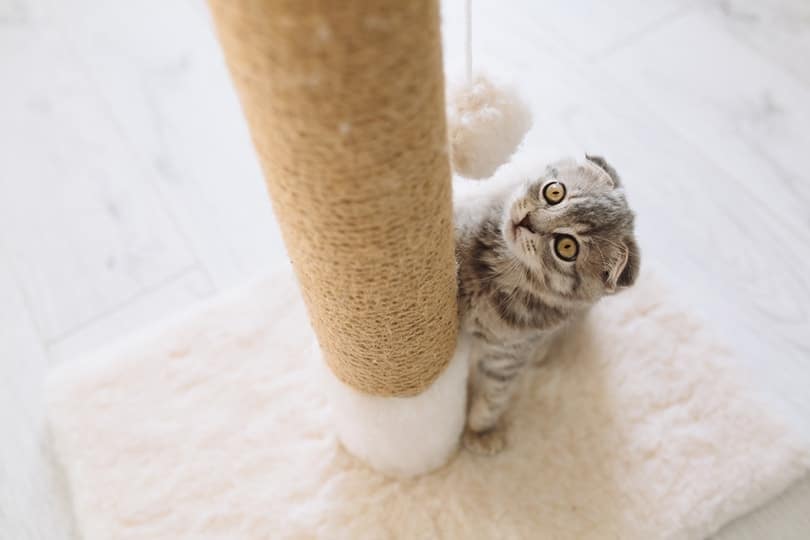
If you’re trying to make a DIY scratching post for your cat, there are many other materials that they’ll probably prefer to sandpaper.
We recommend trying:
If your house has carpeted areas you don’t want your cat scratching, you might want to avoid a carpet-covered scratching post. It can be confusing for your cat to be allowed to scratch the carpet on the post but told not to scratch it everywhere else! Some cats do fine working out where it’s acceptable to scratch carpet, but for other cats, you may find that they scratch every carpet!


Wrapping It Up
Scratching behavior is a normal feline means of communication. You should avoid using sandpaper for your cat’s scratching post and use other materials more suitable for this purpose. Cats generally prefer a softer material, like cardboard or rope, to sink their claws into. This helps them easily remove the outer dead layer of their claws, which is one of the reasons that cats love to scratch, but not the only one!
Featured Image Credit: Pixabay

Expert cat care, straight to your inbox
Vet-reviewed advice, behavior tips, and the best of Catster. Free, and you can unsubscribe anytime.
By signing up, you agree to our Terms & Conditions and Privacy & Cookies Policy.
Christian started writing for a local newspaper as a teenager, and he's been involved in the publishing industry for most of his adult life. Combining his love of writing with a passion for animals, he is currently the Director of Editorial at Pangolia and the Editor-in-Chief at Catster.
Christian lives in the Philippines with his wife, son, and four rescue cats: Trixie, Chloe, Sparky, and Chopper.
Join the conversation
Ask a question, share your story, or send private feedback.