Why Is My Cat Peeing on My Bed? 6 Vet-Reviewed Reasons for This Behavior


In this article
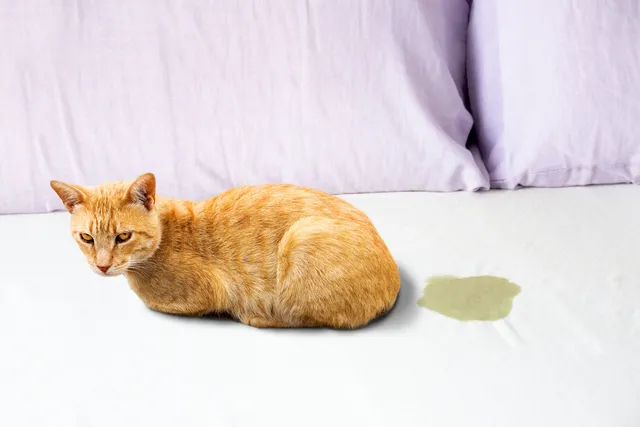
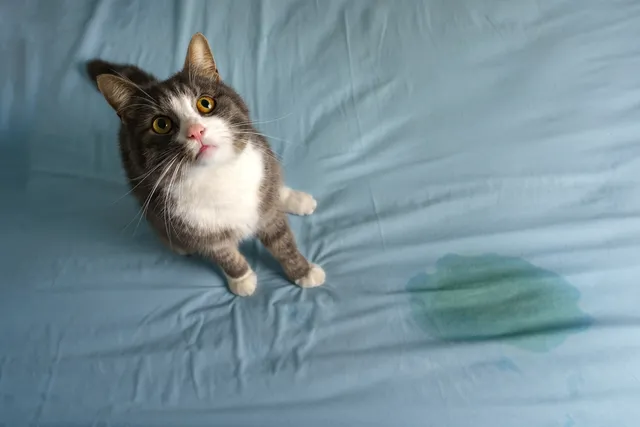
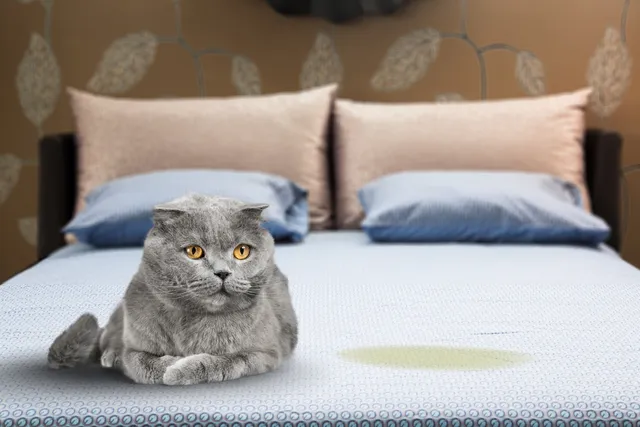
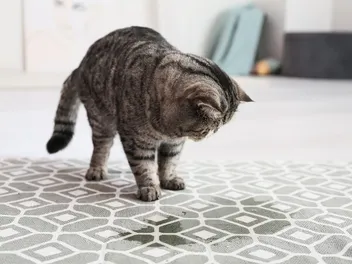
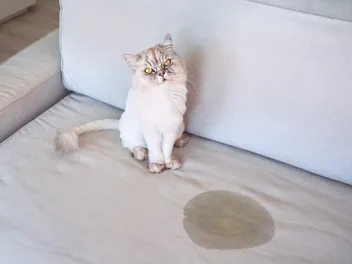
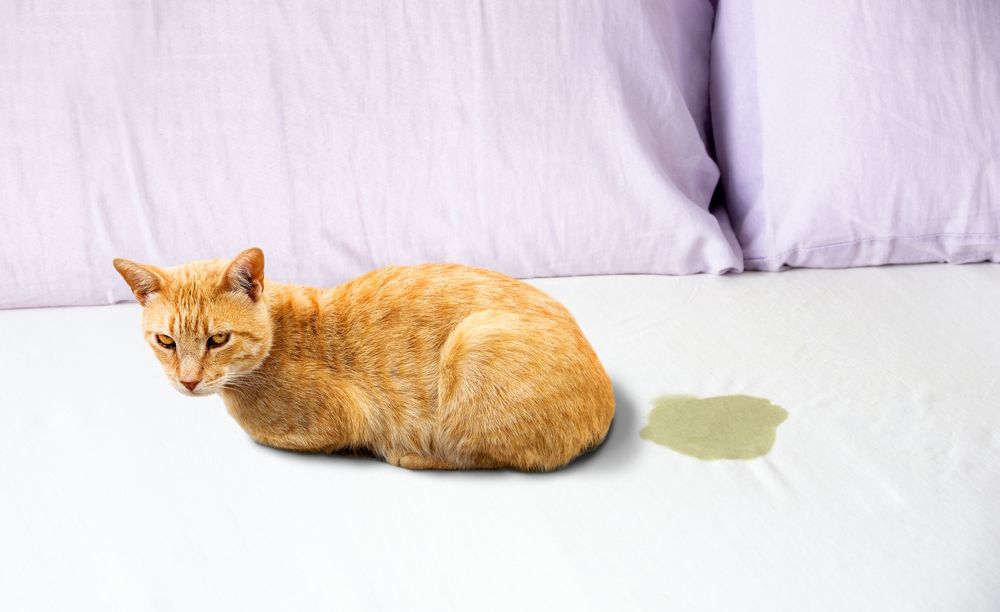
If you come home to find a damp patch of cat pee on your bed, it can be pretty frustrating. But rather than get annoyed with your kitty, you should figure out exactly why they might be using the bed instead of their litter tray. We rounded up six reasons that your cat might be peeing on your bed.

The Importance of Effective Cleaning
If you don’t thoroughly clean your bed after your cat has an accident, they may urinate in the same spot again due to lingering smells. An enzyme-based cleaner can eliminate these odors, helping to prevent your cat from thinking it’s an appropriate place to relieve themselves.
Our Favorite Enzyme Cleaner
The Hepper Advanced Bio-Enzyme Pet Stain & Odor Eliminator Spray is our favorite enzyme cleaner out there. It permanently removes even the very worst kitty stains and smells, leaving your home fresh and clean! Click here to learn more about this amazing product and get yourself a bottle.

- ADVANCED ENZYMATIC CLEANER - Penetrates the most stubborn smells and stains at the deepest molecular levels to dissolve any pet mess you encounter and lift it away at the source.
- FOR ANY MESS, ON ANY SURFACE - This pet odor eliminator cleans your carpets, floors, furniture, fabrics, and more. Whether it's urine, feces, vomit, or drool, you can erase all foul spots and smells!
- FRESH, NATURAL ODOR - Our unique formulation doesn't rely on dangerous or unpleasant chemical fragrances to get the job done. We eradicate smells and stains, not just cover them up.
At Catster, we’ve admired Hepper for many years, and decided to take a controlling ownership interest so that we could benefit from the outstanding products of this cool cat company!
The 6 Reasons Why Your Cat Is Peeing on Your Bed
1. They Have a Medical Condition
Urinating outside the litter box can be a sign of a medical problem. So, if your cat is peeing on your bed or anywhere else they shouldn’t, the first thing to do is make an appointment to see a vet.
Cystitis, urinary stones, urethral obstruction, kidney disease, or diabetes can all cause this type of problem in cats. Either they simply can’t make it to the litter box in time, or they’ve developed a dislike of using their litter box. Whichever it is, medical problems that affect your cat’s urinary tract require immediate vet attention.
2. Your Cat Doesn’t Like the Litter Box or Litter
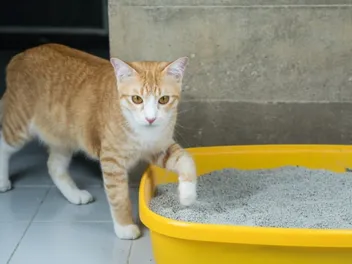
Focus on your cat’s litter box. Determine whether your cat does or doesn’t like the type of litter box that you have. Maybe it’s covered and too small for them to use comfortably. Some older cats struggle to get into high-sided boxes, and they’ll look for somewhere else to go.
The type of litter you use is another consideration. Some cats find scented litter too overpowering, while others might not like the texture of the litter on their paws. Try placing two litter boxes filled with different litter next to each other, and see which your cat prefers.
Remember, when changing litter types, you must do so slowly over the course of a few days. Start mixing 75% old litter with 25% new, and gradually add more and more of the new litter until the change is complete.
If you have multiple cats, remember the rule of thumb: The total number of litter boxes should be the number of cats in the house, plus one. It might sound like a great deal of work, but compared to having a stressed kitty that can’t find a clean litter box, it’s preferable!
3. Your Cat’s Litter Box Is Dirty
Cats are fastidious animals, and they don’t like having to use a dirty litter box. If you’ve been away all day and only have one litter box, your cat may decide to pee or poop somewhere else rather than use a dirty box.
Using an automatic and self-cleaning box can solve this problem, as can having multiple litter boxes for your cat to choose from.

4. They May Not Like the Location of Their Litter Box
Bedrooms are usually one of the quietest places in the house, so consider the location of your cat’s litter box in comparison. Most cats prefer to do their business in peace, away from windows and doors, and if their litter box is in a high-traffic area, they may not be comfortable using it.
Placing your cat’s litter box in a quiet area of the house they’re comfortable spending time in will help encourage them to use it. Putting it next to appliances like furnaces or dryers that suddenly make loud noises can startle your cat, discouraging them from using the litter box.
Make sure the litter box isn’t placed in a corner where your cat may feel trapped if another cat or your dog comes over to see what they’re doing. It’s a good idea to place a few different litter boxes in a few locations around the house and pay attention to which ones seem more popular when you’re cleaning them out.
5. They May Be Anxious or Stressed
If your cat has been cleared of any medical conditions and their litter box does not seem to be the issue, consider if they’re anxious or stressed. Despite their aloof demeanor, cats are sensitive souls and prone to becoming stressed from external factors.
Competing for resources can make cats stressed, and if you have multiple cats and not enough places for them to eat, drink, rest, hide, and do their business, they may be stressed. If you have three cats, make sure there are four water bowls, four food bowls, and five litter boxes, all positioned separately around the house. That way, whatever each cat wants, there’s always a spare!
Living in a loud or busy household when they’re used to peace can increase your cat’s anxiety. Moving home or adding another pet or baby to the family can cause stress too. Even a neighbor getting a new cat or dog can cause anxiety levels to skyrocket, depending on your cat’s personality.
Considering what’s changed in your home environment is a good place to start when trying to reduce stress in your cat. You can add a pheromone diffuser to help your cat feel less stressed, speak to your vet, and/or seek help from a cat behaviorist.
6. They Have Separation Anxiety
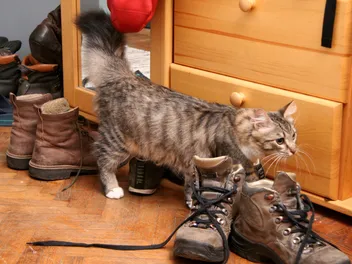
Urinating on your bed when you are not at home might be the only behavioral sign of separation anxiety that your cat may show. Other locations can include places where there is a presence of your smell, such as your bed, clothes, pillows, and shoes.

Your Cat Is Not Cross With You
Sometimes, it can be easy for us to anthropomorphize our cats, and you might be tempted to think that your cat is peeing on your bed because you stayed late at work or went away for the weekend. In reality, cats don’t think like that. Peeing on your bed is a sign that your cat is trying their best to cope with something, whether a new feline housemate or a medical condition.
When cleaning up your cat’s urine, make sure to use an enzymatic cleaner to remove all traces of it. Your bedspread may smell clean to you after a wash with regular detergent, but your cat will still be able to smell their scent. They may be tempted to pee again in the same place.
You can also keep your bedroom door closed when you’re away from home and only allow your cat to hang out on your bed when you’re there. Feeding them treats and playing on your bed with your cat may remove their association with using it as a place to pee. Cats don’t like to pee near their food, so switching their perspective of your bed from a place to pee to a place to eat can help.
Seek Advice From Your Vet
If your cat is peeing on your bed, the first thing to do is speak to your vet and rule out medical conditions. Your cat may need medication or ongoing treatment. Your vet may also be able to offer advice on how to help your cat cope with a change in their home environment, dealing with a new pet in the house, or moving.
Final Thoughts
There’s always a reason behind your cat peeing on your bed, from medical conditions to stress or the location of their litter box. Working out the root of the problem will give you the best chance of figuring out how to help your cat. Be patient, and remember to spend plenty of time playing with and cuddling your cat when they get it right. Before long, their accidents on the bed will be a thing of the past.
Featured Image Credit: cunaplus, Shutterstock
Expert cat care, straight to your inbox
News, insights, and useful advice, delivered to you.

No spam — unsubscribe anytime.
By signing up, you agree to our Terms & Conditions and Privacy & Cookies Policy.
How useful was this post?
Click a star to rate. You can leave written feedback afterwards. (We read all feedback.)
Emma is a freelance writer, specializing in writing about pets, outdoor pursuits, and the environment. Originally from the UK, she has lived in Costa Rica and New Zealand before moving to a smallholding in Spain with her husband, their 4-year-old daughter, and their dogs, cats, horses, and poultry. When she's not writing, Emma can be found taking her dogs for walks in the rolling fields around their home...and usually, at least some of the cats come along, too! Emma is passionate about rescuing animals and providing them with a new life after being abandoned or abused. As well as their own four rescue dogs, she also fosters dogs for re-homing, providing them with love and training while searching for their forever homes.