Get

In Your Inbox

Catster is reader-supported. When you buy via links on our site, we may earn an affiliate commission at no cost to you. Learn more.

What Is the Best Kind of Rope for Cat Scratching Posts? 5 Options & Tips
Share

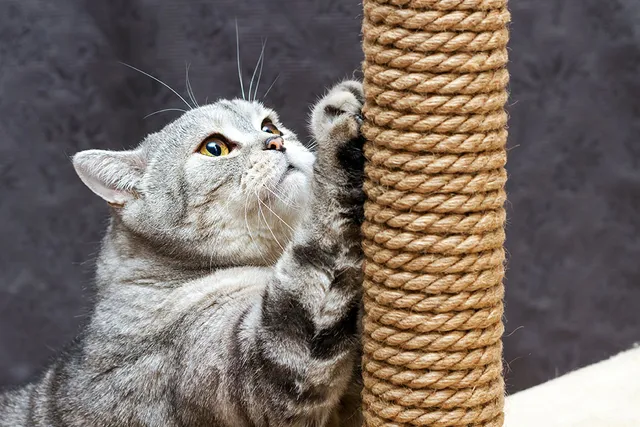
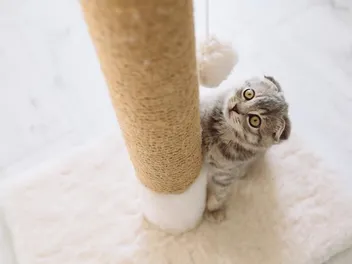
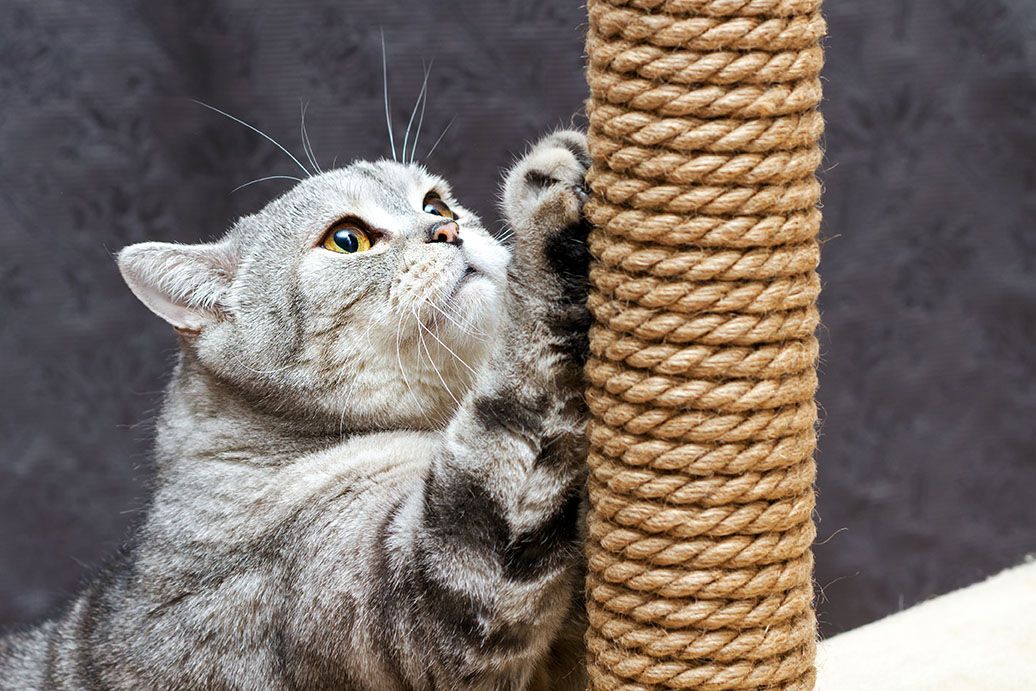
gray shorthair scottish cat scratching

If you’re a cat owner, you know that they love to scratch and that it’s an essential and instinctive behavior. Rather than try to discourage your cats from scratching, the best solution is to provide plenty of opportunities for your cat to do so. Instead of letting your cats use your furniture, it’s far better to invest in a few scratching posts and enjoy watching your cat have fun while keeping your furniture intact.

If you’re wondering what kind of rope or material is best for scratching posts, we’re here to tell you everything you need to know.

divider cat faces oct 2024

About Cat Scratching Posts

Different cats will appreciate various types of surfaces on their scratching posts. You may find that your cat has a clear preference for one type of material or another. It’s worth trying a few materials to find the one your cat likes the most.

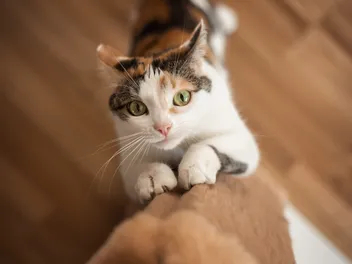
white cat scratching
Image by: Pixabay

Why Do Cats Scratch?

Scratching is an instinctive behavior for cats, and it’s not something they can stop doing.

It serves a few different purposes for our feline friends, including:
  • Removing the old outer layer of their claws
  • Stretching their muscles
  • Relieving anxiety, stress, and frustration
  • Marking their territory with scent glands on their paws

In the wild or even for domestic kitties that spend time outdoors, they select trees to meet their scratching needs. Tree bark offers enough resistance for them to get a good stretch while also being tough enough to help remove the outer layers of their claws.

Cats will choose a variety of trees with different textures and angles. This can help them exercise a range of muscle groups, leave their pheromones as a signal to other cats, and get their claws nice and clean!

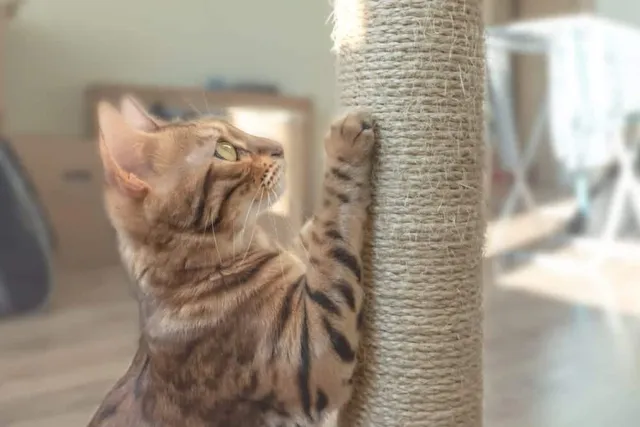
cat on the scratching post
Image by: Pxfuel

What Do Cats Want in a Scratching Post?

What your cat is looking for in a scratching post may differ from what you’re looking for. You might choose a scratching post based on how it looks and whether it matches your home.

Your cat will be looking for:
  • If they can sink their claws into the material
  • If it shreds under their claws
  • A post that’s sturdy enough to support their entire weight
  • A post they can stretch their full body height against

A post could be made of your cat’s preferred material, but if it falls over when they lean against it, they likely won’t use it again. So, it’s worth making sure the post you choose covers all the previous points, and you should be good to go!

divider 1 paws

The 5 Types of Material for Cat Scratching Posts

There’s only one type of rope suitable for cat scratching posts, and that’s sisal rope. Before we dive into what makes it such a great material for scratching posts, let’s take a quick look at other materials that are also used and their pros and cons.

1. Corrugated Cardboard

This is a popular choice for scratching posts and is often used for horizontal and sloping surfaces. It’s cheap and available in a wide range of styles, but it doesn’t last as long as some other materials, so it must be replaced more often.

Pros
  • Inexpensive
  • Most cats love them
Cons
  • Need replacing quickly
  • Can leave shredded paper on the floor
  • Easy to knock over

2. Carpet

cat in the scratched carpet
Image by: Maliflower73, Shutterstock

Carpet is a popular choice for scratching posts. If you have a house without any other fabric, it can be a good option, but one major problem is that it can encourage cats to scratch other carpeted areas, too. After all, your cat can’t necessarily tell the difference between the carpet on their scratching post and the brand-new carpet you installed in your bedroom!

Pros
  • Readily available
  • Comes in many colors
  • Cheap
Cons
  • Can catch in cats’ claws
  • Can encourage scratching of other carpeted areas

3. Wood

Most cats love the feeling of scratching wood. It’s the material they’ll choose when outside, so it can make an excellent choice for an indoor scratching post, too. Wood isn’t a common material for commercially available cat scratching posts, so you may need to make your DIY version.

Pros
  • Natural material
  • Looks attractive
  • Long-lasting
  • Shreds nicely
Cons
  • Untreated wood may have bugs in it
  • Not usually available in shops

4. Sisal Fabric

two-devon-rex-cat-resting-in-cat-tree
Image by: Veera, Shutterstock

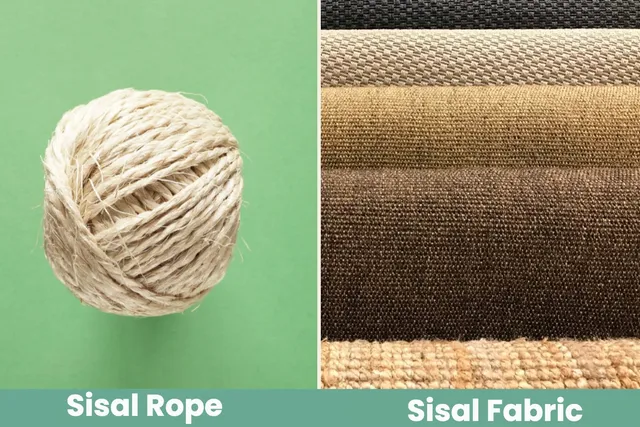
Similar to sisal rope, sisal fabric has been woven into a sheet rather than wrapped around a post or other surface. Some cats prefer sisal fabric because they can pull their claws through the weave rather than getting caught in the lines of rope.

Pros
  • Appealing texture for cats
  • Available in many colors
  • Good value for money
Cons
  • Not as durable as sisal rope

Now that we know more about the different types of material available for cat scratching posts, let’s take a more detailed look at the most popular material: sisal rope.


5. Sisal Rope

This rope comes from the agave plant, which is also sometimes called the American aloe.

Pros
  • Hardwearing
  • Durable
  • Cost-effective
  • Eco-friendly
  • Easy to replace
  • Comes in many colors
  • Appealing for cats
  • Biodegradable
Cons
  • Needs replaced over time

divider 2 cats

Conclusion

Due to its durability and appealing texture, sisal rope is one of the best materials for scratching posts. Unlike other materials, you don’t have to replace it as often, and most cats enjoy the feel of sisal rope. However, the alternatives we discussed can also keep your cat’s claws healthy and sharp. You may have to experiment with a few materials before finding one your cat prefers, but purchasing a post with sisal rope is an excellent place to start!

Related Reads:


Featured Image Credit: Zzzufa, Shutterstock

Want content like this delivered to you?

Sign Up For Our Newsletter

News, insights, expert advice, and everything cat

* By submitting, you agree to our Terms & Conditions and Privacy & Cookies Policy.


How useful was this post?

Click on a star to rate (you can leave written feedback after clicking submit)

Help us improve Catster for pet parents!

Your feedback really matters.

What did you like about this post? Also how can we improve it?

Join the conversation

4 Responses

  1. Thank you for the information. The one thing I noticed when searching for Sisal rope is that it comes in different sizes…4mm or 6mm. Which is the best one to buy?

    1. Hi Christine Queiroli,
      The ideal thickness depends on your cat's age.
      For a kitten: 4 mm is appropriate as it is softer.
      For an adult cat: 6 mm will last longer and provide a more satisfying "Shreddy" sensation.

  2. Sisal is not necessarily the best type of rope for cat scratchers. I have a cat that reacts to it. He has diagnosed environmental allergies and sensitivities. The best for sensitive kitties is recycled paper. While I do have sisal (which he doesn't use) my other cat uses normally and it that rope doesn't last like the recycled paper does.

    1. Hi Junie Jones. Thank you so much for sharing your valuable insight and personal experience regarding sisal and recycled paper scratchers! That's a very helpful tip for other readers who have cats with environmental allergies and sensitivities.
      It's great to hear that you've found a durable and comfortable alternative in the recycled paper rope for your sensitive cat. Every cat parent eventually learns what works best for their unique feline friend!
      We appreciate you taking the time to educate our community on material choices.

Leave a Reply

You’re very welcome to leave a comment or question. Please know that all comments must meet our community guidelines, and your email address will NOT be published. Let’s have a positive and constructive conversation.


Catster's Digital Magazine is Back!

Vet-approved health & behavior advice

Real cat stories & community features

Chatting About the Importance of Spaying/Neutering, Cat Retail Shopping Ban & Red-Level Storms | Chatty Cattys, Episode 30

In this episode of Catster’s Chatty Cattys podcast, Nicole and Dr. Karyn are celebrating a major legal win for pets before diving into...

Is Your Cat Happy? Here’s How You Can Tell

Cats have a reputation for being indifferent, even inscrutable. But despite their seemingly ambivalent appearance, cats experience many emotions, including happiness, and they...

Human Brains Age Like Cats – New Study Debunks the 7-Year Rule

If you’ve ever caught your senior cat staring blankly at a wall, wandering the halls at 3 am, calling out for no clear...

Chatting with Devin About Here! Have a Kitten, Fostering, & Why Two Are Better Than One | Chatty Cattys, Episode 29

In this episode of Catster’s Chatty Cattys podcast, Nicole & Dr. Karyn sit down with Devin, the founder and one-woman show behind “Here...

More related

Is Neosporin Safe for Cats? Vet-Reviewed Advice

Neosporin is one of the go-to medications in most of our medicine cabinets. For surface cuts and scratches, this triple-antibiotic ointment can work...

Do I Have To Play With My Cat? Vet-Reviewed Facts & Tips

Playtime with your cat isn’t just a fun activity; it’s vital to your cat’s well-being. Cats don’t want to spend all nine lives...

What Is a Feral Cat Colony? Important Facts, How to Help & More

The U.S. has over 60 million unowned cats roaming its streets and alleyways1. Feral cats are undomesticated cats that live in groups or...

12 Healing Crystals for Cats: A Holistic Guide

Are you someone who believes in the healing power of crystals? Maybe you have a pocket full of charged gems or you place...

Keep reading

Can Cats Eat Mango? Vet Reviewed Nutrition Facts & Safety Guide

Mango is a delicious, nutritious superfood—at least for humans. But what about cats? Maybe your kitty is curious about anything that you eat, or perhaps you just want to add variety to your pet’s diet. Either way, mango is safe...

Can Cats Eat Mango

Can Kittens Drink Milk? Vet-Verified Nutrition Facts & FAQ

There are plenty of feline stereotypes. For example, cats have a reputation for being curious and aloof, which is more or less accurate. Another common stereotype is that kittens love to drink milk, specifically cow’s milk. So, can kittens drink...

Can Kittens Drink Milk

My Cat Just Had Kittens, What Do I Do? (7 Vet-Recommended Tips)

If you’ve been waiting patiently for your cat to have her kittens, and now the time has come, it can be stressful. But if you’ve never overseen a kitten birth or cared for a cat mom and her newborn babies,...

mother cat and its kittens

How to Trim a Cat’s Nails (Who Won’t Cooperate): 12 Vet-Approved Tips

Trimming a cat’s nails can be an important part of feline maintenance. Cats use their claws for hunting, defense, and balance. While they do scratch them against abrasive surfaces like trees, fences, walls, and even scratch posts, they may still...

trimming nails of cat

Sudden Death in Cats: 10 Vet-Verified Causes

Sudden death in cats is a tragic event that often occurs without any warning. There are many possible causes of sudden death in cats, although some preventative steps can be taken to help avert this tragedy. One of the most...

sick siberian cat

Can Cats Eat Dog Treats? Vet-Approved Nutrition Facts & FAQ

If your cat accidentally got into your dog’s treats, it’s normal to be a little alarmed. The good news is that, in most cases, it’s safe for your cat to chomp on a dog treat now and again. They’re not...

Can Cats Eat Dog Treats

Boost Your Cat’s Protection This Summer with Great Deals on Flea & Tick Prevention at PetSmart

With warm weather on the horizon, it’s time to get ready – and we’re not talking about working on our beach bod! While summer might be the season of sunny days, warm nights, barbecues, picnics, and pool parties, it is...

Calico maine coon cat sitting outside

Can Cats Eat Rice? Vet-Approved Facts & FAQ

Cats are obligate carnivores—that is, they are meant to eat mostly animal protein. But while it’s true that felines need specific nutrients only found in animal tissue, they can tolerate small amounts of carbs, which means, technically, yes, cats can...

Can Cats Eat Rice

Love Cats? So Do We! Join the Catster Community

Stay informed with expert pet care insights delivered straight to your inbox! Discover professional guidance on animal behavior, feeding tips, trusted product picks, and much more.


Sign up for the Catster Email Newsletter

Stay informed with expert pet care insights delivered straight to your inbox! Discover professional guidance on animal behavior, feeding tips, trusted product picks, and much more.