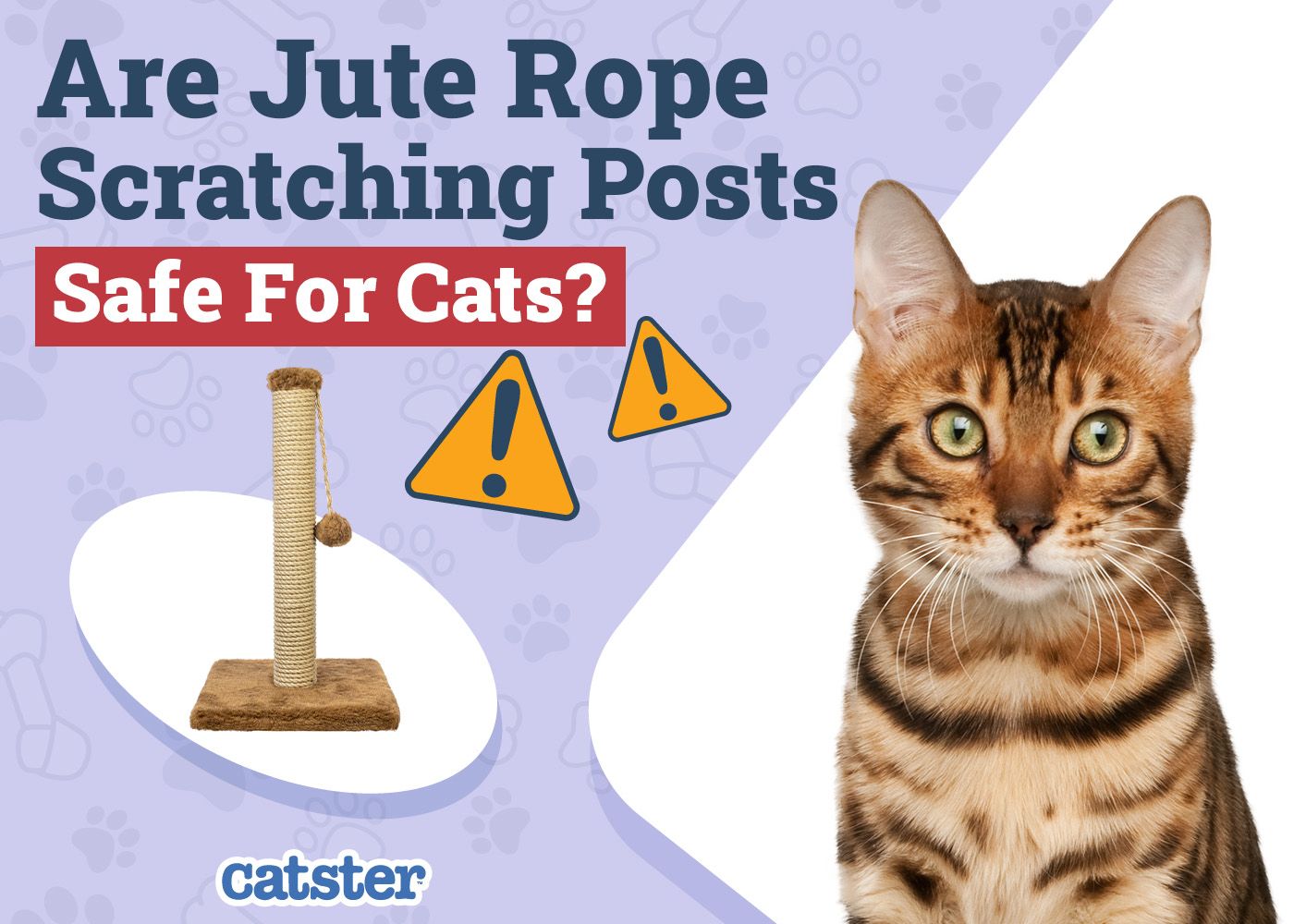
Are Jute Rope Scratching Posts Safe for Cats? (Common Materials Explained)


In this article
Being a cat owner means stocking up on all kinds of scratching posts, especially if you don’t want your furniture clawed up! Whether you’re a new cat owner or just looking for a new scratching post, you might be wondering what the best material is for your kitty to claw.
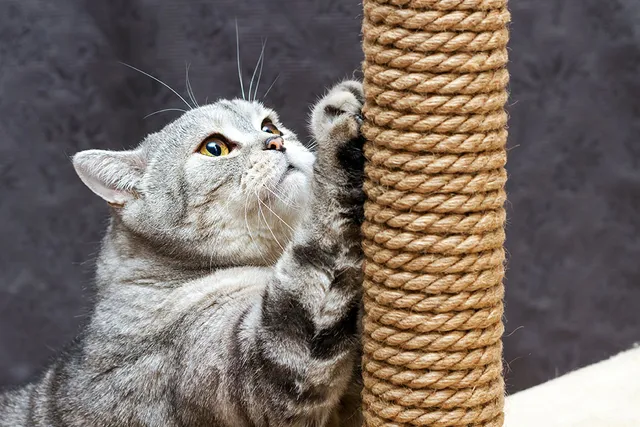
If you’ve seen a jute rope scratching post and are wondering about its safety, you can rest assured that it is safe for cats. It isn’t the most commonly used material, though, as sisal is generally recommended for this purpose.
Here, we provide you with extra information about jute, as well as what material is best for cat-scratching posts.

What Is Jute?

Jute is a natural material that comes from the jute plant, which is cultivated in India.1 White jute (Corchorus olitorius) is the most common plant used for making jute fabric. While cotton is the most widely used plant-based fiber, jute is second in line. The Western world doesn’t use jute as much as India does, though, where it is one of the primary textile fibers.
The plants grow over 10 feet tall, and the fiber is harvested in one long string, which makes jute the longest natural textile fiber worldwide. The fabric derived from the jute plant has a relatively rough texture, so it’s typically used in industrial work.
Jute works for scratching posts because it’s durable and biodegradable, particularly when spun into rope. This means it can stand up to scratching and climbing. Also, well-made jute doesn’t shed as much as other fabrics.
What Other Materials Are Used on Scratching Posts?
Several different materials are commonly used for scratching posts.
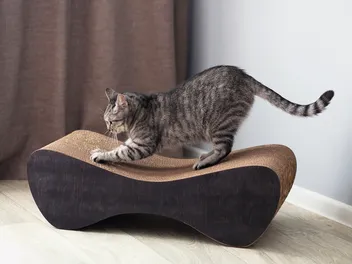
Cardboard

If you’ve ever moved to a new place with a cat, you know first-hand that cats are drawn to cardboard boxes, whether hiding in them, using them for sneak attacks, or scratching them.
Cardboard feels good under a cat’s paws because it’s pliable. It’s not as dense as some other materials used on scratching posts either, so cats are less likely to get their claws caught. Cats also appreciate the sound that cardboard makes while scratching it.
Cardboard scratchers are less expensive, but unless they’re well-made, they wear out rather quickly, and you’ll find bits of cardboard everywhere after a good scratching session.
The Hepper Hi-Lo Modern Cat Scratcher is a functional and stylish design that makes it the ultimate scratching spot for your cat – and a superhero in the battle against furniture destruction. Unlike most cat toys that end up being ignored, this one's a crowd-pleaser for both cats and their hoomans.
With its 3 configurations, thick textured cardboard, and solid birch plywood frame, it encourages your cat's natural scratching instincts, so they stay away from your precious furniture, rugs, and curtains, among all other things they shouldn't scratch. The Hi-Lo is like your home's mini guardian, keeping it safe while looking super sleek and trendy.
At Catster, we’ve admired Hepper for many years, and decided to take a controlling ownership interest, so that we could benefit from the outstanding designs of this cool cat company!
Wood
Wood is durable and makes an excellent sound while your cat is scratching it, which they will appreciate. You can find commercial wood scratching posts, though you can save money by making your own.
However, you should be aware that certain kinds of wood are toxic, so make sure you pick the safest wood for your scratching post.
Carpet
Carpet is a common material for a scratching post. How well it works depends on the type of carpet used, but all carpet wears out eventually.
You’ll want to get a scratching post with carpet that isn’t like any of the carpets and rugs in your home, as this could lead to your cat scratching your carpets too. Carpet also won’t give your cat the most satisfying scratch, and they are more likely to get their claws stuck in the loops.
Sisal

Sisal is the most common and recommended fiber for scratching posts, both the rope and woven material forms. It’s a natural material like jute and is heavy-duty, so it can withstand a great deal of scratching.
Sisal is cultivated from the leaves of the agave plant, which is indigenous to southern Mexico, but most of the sisal that you will find today is from East Africa.
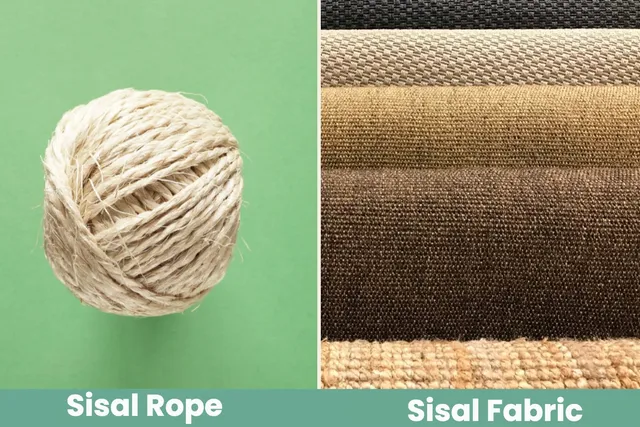
Sisal Rope vs. Sisal Fabric
Most cats seem to prefer woven sisal fabric on a scratching post over sisal rope, which works quite well, but since it is wrapped around the post, it creates grooves, making the surface bumpy. Cats prefer the smooth yet rough surface of the fabric, which enables them to catch the surface with their claws and scratch down without anything getting in the way.
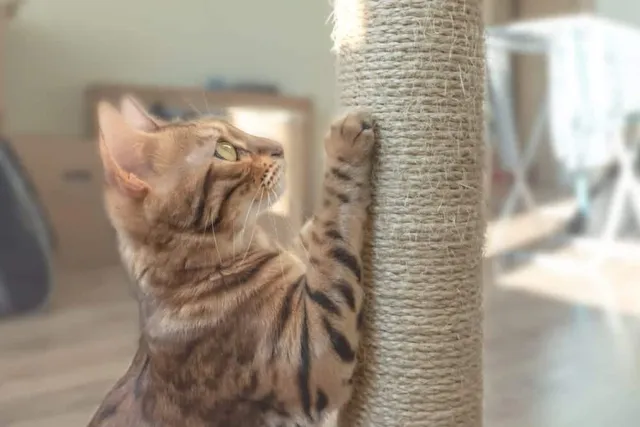
Another issue with sisal rope is that as your cat scratches it, many of the fibers will start to stick out, which can be rather sharp for your cat. This can create a negative association with using the scratching post, and they will begin to scratch things that they shouldn’t. But sisal fabric turns into soft fibers as your cat scratches, and while it will still fray, it won’t have those sharp bits.
Overall, your best bet is to pick sisal fabric instead of sisal rope, though, of course, some cats might prefer the rope over the fabric. If you start with a rope scratching post and your cat doesn’t use it that often, you might want to try one with sisal fabric and vice versa.
The Differences Between Sisal and Jute
Sisal and jute have quite a few things in common. They are natural fibers harvested from plants, they look fairly similar, and they even tend to get grouped. One difference is the texture. Sisal is stiff and one of the strongest natural fibers available. Jute tends to be soft, making it less durable than sisal.
The one that you choose ultimately depends on your cat. While tough sisal fabric is usually the best choice, some cats might prefer the softer jute.

When Picking Out a Scratching Post
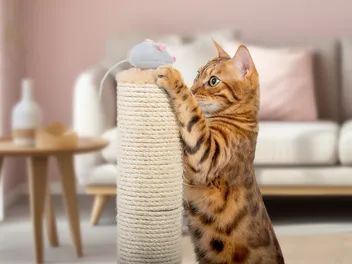
Beyond the type of material that the scratching post is covered in, you should consider a few other factors. You don’t want a huge scratching post for a tiny cat or a small post for a large cat. The tree needs to be tall enough for your cat to stretch up for a full-body scratching session. They won’t be comfortable if they need to crouch down to scratch.
It also needs to be stable enough that it doesn’t wobble, let alone fall over. The wobbler it is, the less likely your cat will use it. You want the post to have a sturdy, wide, and heavy bottom, and you should avoid anything that is top-heavy.
Additionally, some cats might want to scratch in a horizontal position, so cat owners will opt for multiple scratching posts with different materials in both horizontal and vertical options. This is also a good way to figure out your cat’s preferences, and your cat is much less likely to scratch your furniture.


Conclusion
Jute is perfectly safe for cats to scratch, but you might find it challenging to find it because sisal tends to rule the scratching-post world. But if you do find a jute post or plan to make one yourself, you don’t have to worry about your cat using it. It might just fall apart after a while.
Don't forget that you should avoid getting a post covered in a material that’s too similar to your furniture or rugs, or your cat will scratch everything!
Featured Image Credit: MarinaTr, Shutterstock
Expert cat care, straight to your inbox
News, insights, and useful advice, delivered to you.

No spam — unsubscribe anytime.
By signing up, you agree to our Terms & Conditions and Privacy & Cookies Policy.
How useful was this post?
Click a star to rate. You can leave written feedback afterwards. (We read all feedback.)
Kathryn was a librarian in a previous lifetime and is currently a pet writer. When she was a child, she hoped to work in ZOOs or with wildlife in some way, thanks to her all-consuming love for animals. Sadly, she's not strong in the sciences, so she fills her days with researching and writing about all kinds of animals and spends time playing with her adorable but very naughty tabby cat, Bella. Kathryn is hoping to add to her family in the near future – maybe another cat and a dog.