How to Use Sisal Rope for Cat Trees: 3 Important Things to Know
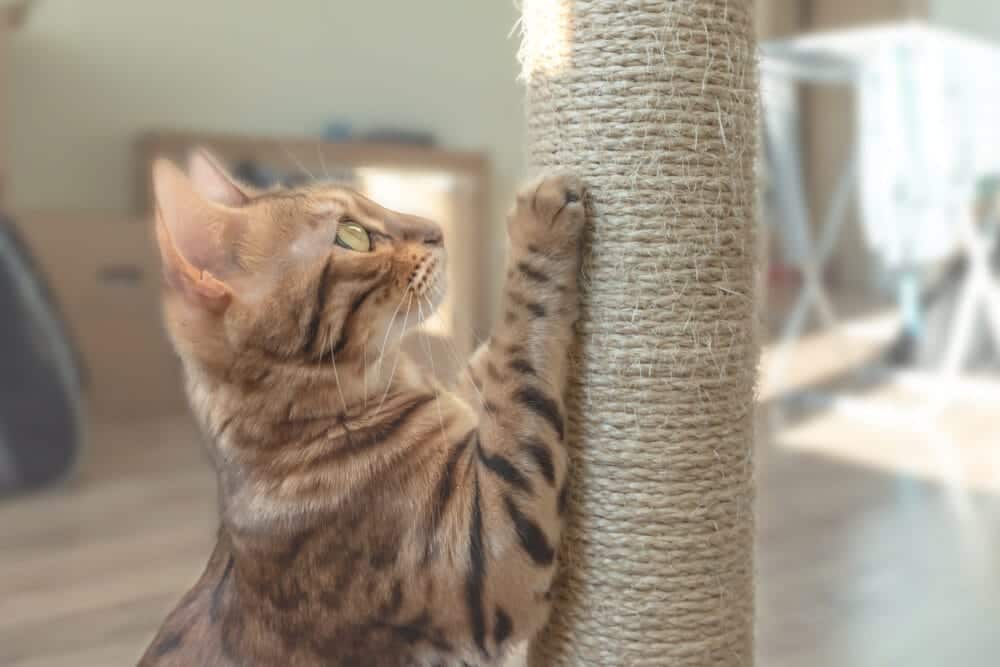
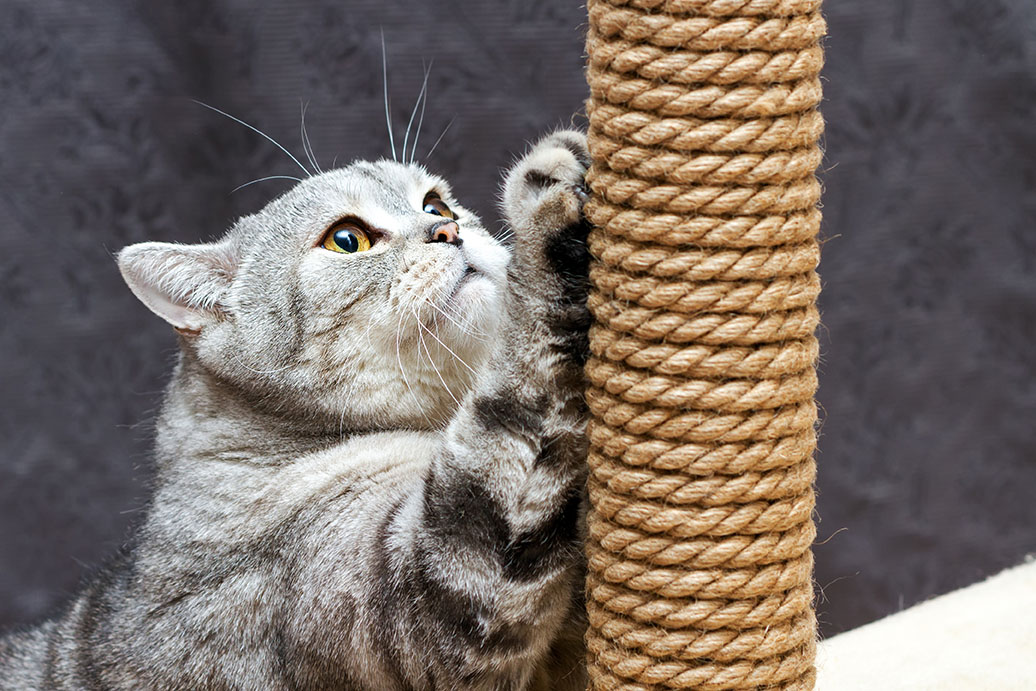
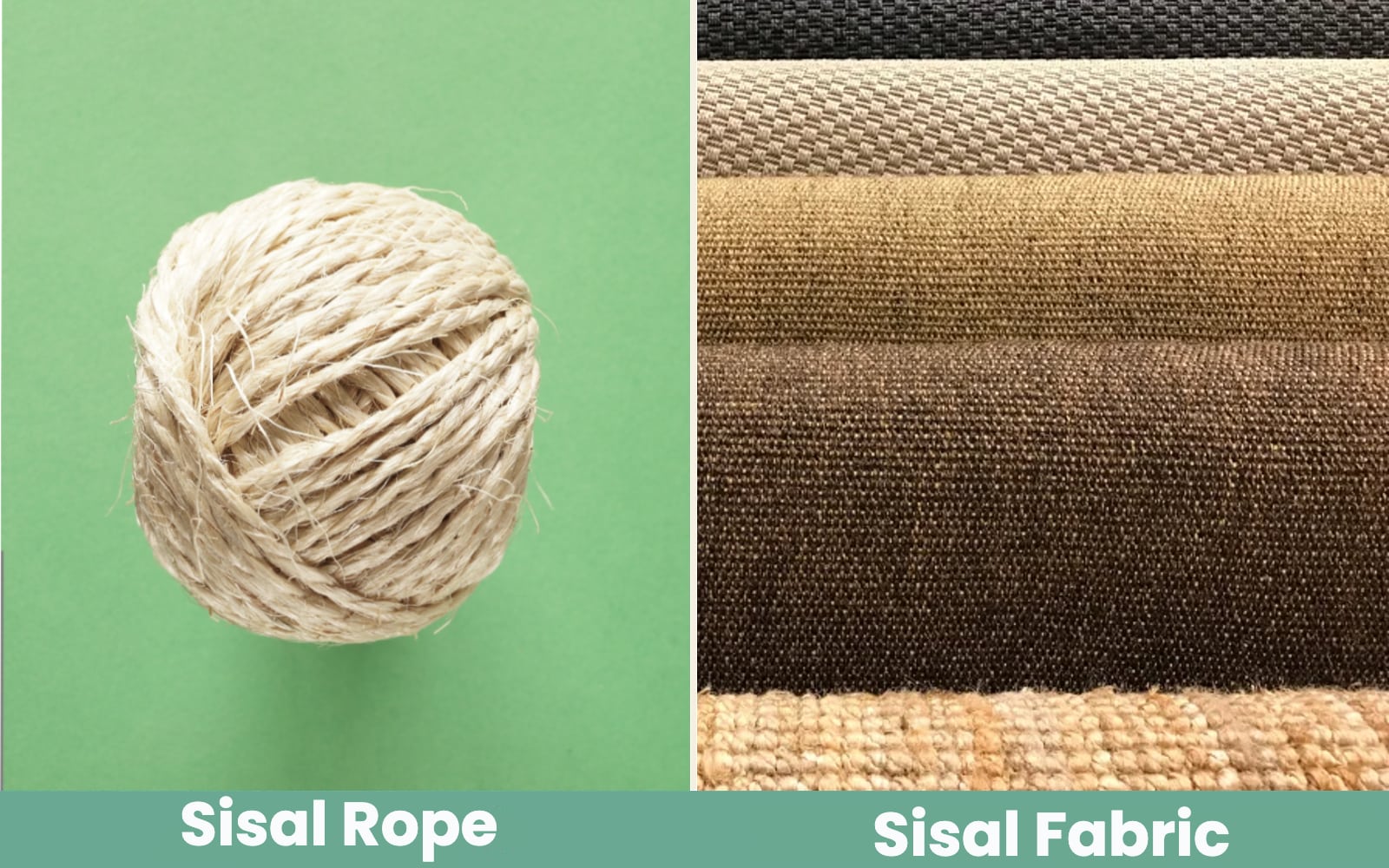
Sisal rope is the best option for cat scratching posts out there. For this reason, it is often utilized on cat climbing structures and scratching posts. However, you can also purchase sisal separately from Amazon and various other websites. Therefore, you can use it to make your own cat scratching post or even replace the sisal on a post you already own.
In this article, we’ll look at how to do just that. We’ll go over how to attach sisal safely and efficiently, as well as the exact sisal you should purchase.

The 3 Things to Know When Using Sisal Rope for Cat Trees
1. Types of Sisal Rope
All sisal rope is made out of the same material. Therefore, you don’t have to worry about material differences, as long as there are no chemicals or oils present. However, sisal rope does come in many different sizes. The size you utilize doesn’t matter all that much. Still, we recommend using a rope that is a bit on the smaller side. Between ¼ to 3/8 inches is the best option.
If all you can find are bigger ropes, you can also use these. However, they tend to be a bit harder to work with.
However, if you use thinner rope, you will need to purchase more rope as it will take up less room per foot. Thinner rope usually lasts longer, though, so you have to determine if you want to spend more now or later.

2. Determining How Much Sisal Rope You Need
When you’re trying to determine how much sisal rope you need, your first step should be to figure out the circumference of your post. To do so, use a flexible measuring tape and measure around the post. Next, find out the height of your post.
Now you can use that information to determine how much rope you’ll need. The circumference of the rope matters, as well, so be sure to figure out the type of rope you’re using, as well.
For those purchasing ¼-inch rope, you’ll need two layers of rope for every inch of height. Therefore, you can use the equation: Circumference of Post * Height of Post (inches) * 2.
However, if you purchase a 3/8-inch rope, you’ll need a bit more for every inch of height. Therefore, you’ll have to use the equation: Circumference of Post * Height of Post (inches) * 2.67.
Of course, it is always a good idea to have a bit extra in case you mess up with the installation process. Plus, you’ll be able to use any excess later.
3. Installing Sisal Rope
Now that you have the correct rope and know how much you need, you’ll need to install it. To do so, you’ll need some sort of glue. While you can staple the sisal instead of gluing, this isn’t recommended as it will be far less durable.
Often, hot glue is utilized when gluing down sisal rope. Hot glue is non-toxic and sturdy. Plus, most people either already have hot glue ready, or they can get it rather easily. Therefore, it is a great option for adding sisal rope to the scratching post. However, because this glue is hot, it can cause burns. So, be careful when using it.
For the rope to stay in place, you will have to paste it little by little because hot glue also takes a few moments to set. If you’re using hot glue, be sure to hold the sisal in place for a few moments to ensure that it stays in place. Do it carefully to ensure all of the sisal rope you use is pasted to the post until you cover its entire surface.
The 4 Steps to Replacing Sisal Rope
To replace sisal rope, here is a complete breakdown of all the necessary steps:
1. Remove the Damaged Rope
First, you need to remove the rope that is damaged. To do so, simply pull it off if possible. You don’t have to worry about damaging the rope since you’ll simply discard it after you use it. Use scissors if you need help in some tough places.
Many posts have staples that also help to hold the sisal in place. If this is the case with your rope, then you’ll need to remove these staples to get rid of the rope.

2. Clean the Post
Next, you’ll need to clean the post from any remaining glue. Old glue may prevent the new glue from adhering strongly to the post, so it needs to be removed. Simply scrape it off with a butter knife or similar tool.
You don’t have to remove all the glue. However, the more glue you remove, the easier the next steps will be.
3. Attach the Sisal
Now, all you need to do is attach the sisal to the post. Using staples at the beginning of the strand can help strengthen it. However, do not use staples exclusively, as your cat will simply pull the cord off through the staples if you do so.
Attach the sisal to the whole post, wrapping around it tightly. You don’t want the sisal to overlap, as this can create weak points and may cause your cat’s nails to get stuck. However, you do want the sisal pretty tight to ensure that there aren’t any gaps.

4. Cut off the Remaining Sisal
Whenever you get to the top of the scratching post, simply cut off the remaining sisal. You can keep this sisal for later use, or you can throw it away. Either way, be sure to snugly glue down the end or even use a staple to ensure that it stays in place.
When to Replace Sisal Rope
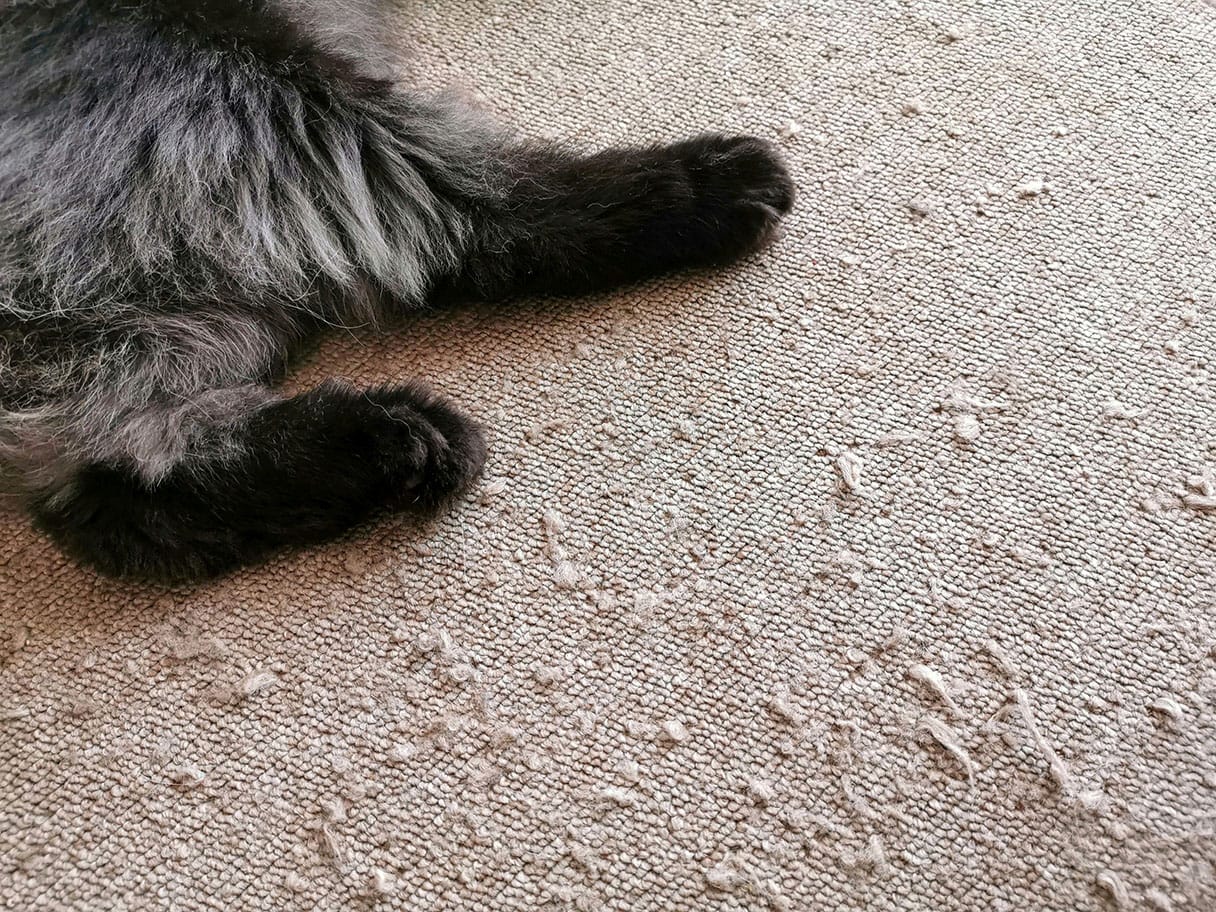
Generally, you should replace sisal rope whenever it is starting to look excessively frayed. How long a particular wrapping lasts depends on how much your cat uses it and the quality of the sisal. Some posts may only last around 6 months or so. However, others may last as long as 18 months before they need replacing.
If you see that the sisal is torn or hanging loosely from the post, it is absolutely time to change it. However, you may want to change it once it looks likely frayed.
Never leave loose loops of rope hanging off the post, as these can be dangerous for cats. Even if you can’t replace the sisal right away, you should cut these loops to ensure that your cat doesn’t get caught on them.
Conclusion
We highly recommend that you replace the sisal rope on your cat’s scratching post regularly. In this way, you can ensure that your feline has a nice scratching post to use—even after the original sisal has fallen away.
Luckily, replacing the sisal isn’t terribly difficult. All you need to do is purchase a new sisal to replace the old, worn-out rope. Then, after removing the old rope, glue it to the post. Usually, hot glue is recommended because it is safe for cats and easy to use. However, you may also use non-toxic wood glue if you’d like (though this will take longer to cure).
You’ll probably need to replace the sisal regularly. Cats usually go through a sisal scratching post every 6–18 months.
Related Reads:
Sources
Featured Image Credit: Svetlana Rey, Shutterstock

Expert cat care, straight to your inbox
Vet-reviewed advice, behavior tips, and the best of Catster. Free, and you can unsubscribe anytime.
By signing up, you agree to our Terms & Conditions and Privacy & Cookies Policy.

Kristin is passionate about helping pet parents create a fulfilling life with their pets by informing them on the latest scientific research and helping them choose the best products for their pets. She currently resides in Tennessee with four dogs, three cats, two fish, and a lizard, though she has dreams of owning chickens one-day!
Join the conversation
Ask a question, share your story, or send private feedback.