Get

In Your Inbox

Catster is reader-supported. When you buy via links on our site, we may earn an affiliate commission at no cost to you. Learn more.

What Is the Best Kind of Rope for Cat Scratching Posts? 5 Options & Tips
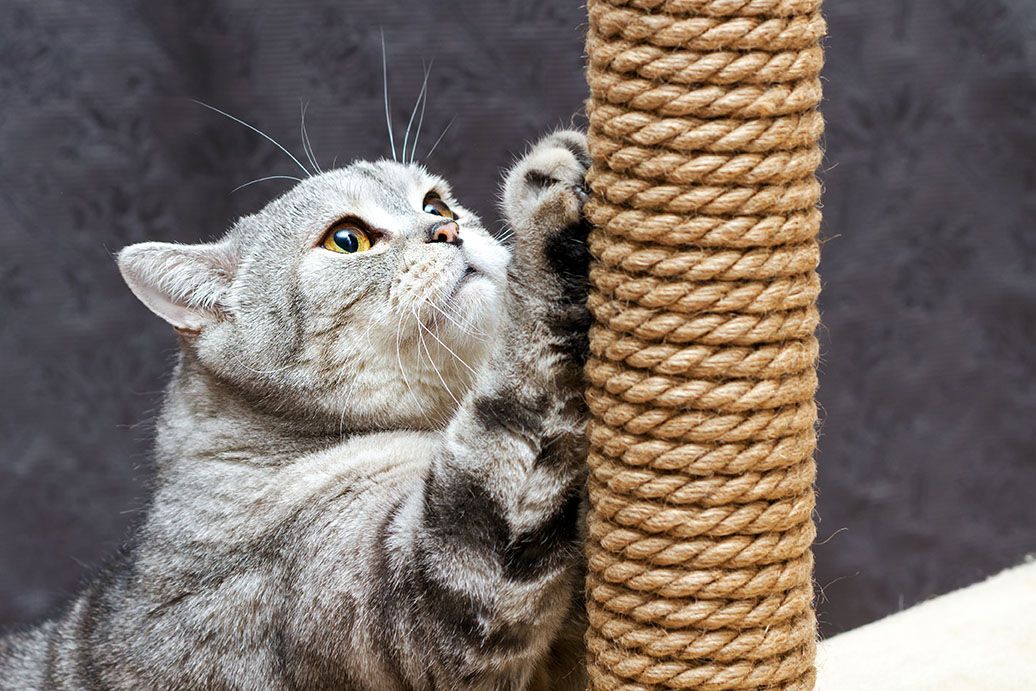
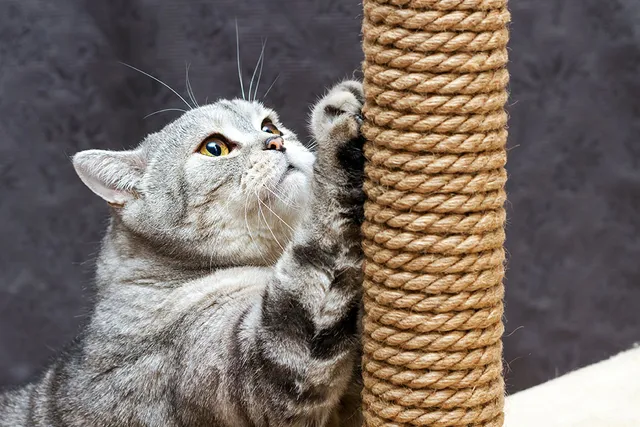
gray shorthair scottish cat scratching

If you’re a cat owner, you know that they love to scratch and that it’s an essential and instinctive behavior. Rather than try to discourage your cats from scratching, the best solution is to provide plenty of opportunities for your cat to do so. Instead of letting your cats use your furniture, it’s far better to invest in a few scratching posts and enjoy watching your cat have fun while keeping your furniture intact.

If you’re wondering what kind of rope or material is best for scratching posts, we’re here to tell you everything you need to know.

divider cat faces oct 2024

About Cat Scratching Posts

Different cats will appreciate various types of surfaces on their scratching posts. You may find that your cat has a clear preference for one type of material or another. It’s worth trying a few materials to find the one your cat likes the most.

white cat scratching
Image by: Pixabay

Why Do Cats Scratch?

Scratching is an instinctive behavior for cats, and it’s not something they can stop doing.

It serves a few different purposes for our feline friends, including:
  • Removing the old outer layer of their claws
  • Stretching their muscles
  • Relieving anxiety, stress, and frustration
  • Marking their territory with scent glands on their paws

In the wild or even for domestic kitties that spend time outdoors, they select trees to meet their scratching needs. Tree bark offers enough resistance for them to get a good stretch while also being tough enough to help remove the outer layers of their claws.

Cats will choose a variety of trees with different textures and angles. This can help them exercise a range of muscle groups, leave their pheromones as a signal to other cats, and get their claws nice and clean!

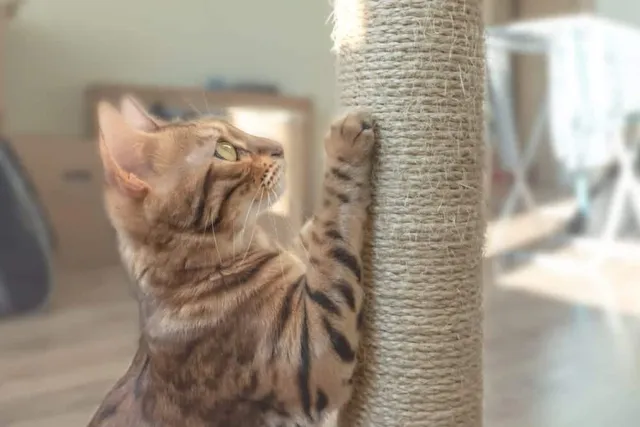
cat on the scratching post
Image by: Pxfuel

What Do Cats Want in a Scratching Post?

What your cat is looking for in a scratching post may differ from what you’re looking for. You might choose a scratching post based on how it looks and whether it matches your home.

Your cat will be looking for:
  • If they can sink their claws into the material
  • If it shreds under their claws
  • A post that’s sturdy enough to support their entire weight
  • A post they can stretch their full body height against

A post could be made of your cat’s preferred material, but if it falls over when they lean against it, they likely won’t use it again. So, it’s worth making sure the post you choose covers all the previous points, and you should be good to go!

divider 1 paws

The 5 Types of Material for Cat Scratching Posts

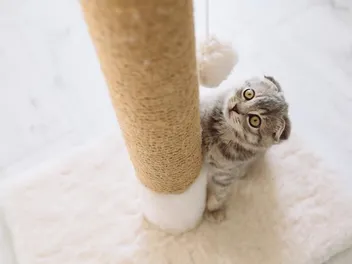
There’s only one type of rope suitable for cat scratching posts, and that’s sisal rope. Before we dive into what makes it such a great material for scratching posts, let’s take a quick look at other materials that are also used and their pros and cons.

1. Corrugated Cardboard

This is a popular choice for scratching posts and is often used for horizontal and sloping surfaces. It’s cheap and available in a wide range of styles, but it doesn’t last as long as some other materials, so it must be replaced more often.

Pros
  • Inexpensive
  • Most cats love them
Cons
  • Need replacing quickly
  • Can leave shredded paper on the floor
  • Easy to knock over

2. Carpet

cat in the scratched carpet
Image by: Maliflower73, Shutterstock

Carpet is a popular choice for scratching posts. If you have a house without any other fabric, it can be a good option, but one major problem is that it can encourage cats to scratch other carpeted areas, too. After all, your cat can’t necessarily tell the difference between the carpet on their scratching post and the brand-new carpet you installed in your bedroom!

Pros
  • Readily available
  • Comes in many colors
  • Cheap
Cons
  • Can catch in cats’ claws
  • Can encourage scratching of other carpeted areas

3. Wood

Most cats love the feeling of scratching wood. It’s the material they’ll choose when outside, so it can make an excellent choice for an indoor scratching post, too. Wood isn’t a common material for commercially available cat scratching posts, so you may need to make your DIY version.

Pros
  • Natural material
  • Looks attractive
  • Long-lasting
  • Shreds nicely
Cons
  • Untreated wood may have bugs in it
  • Not usually available in shops

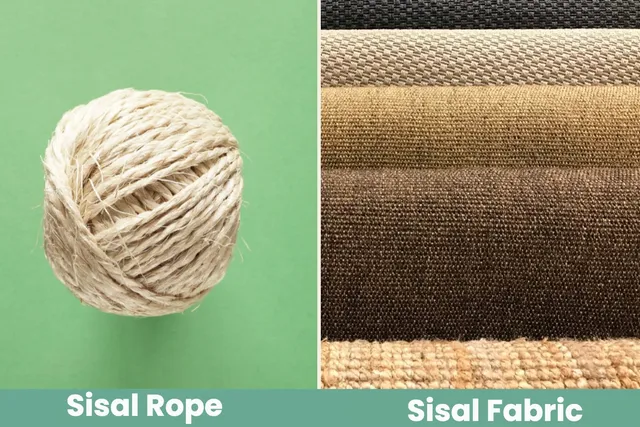
4. Sisal Fabric

two-devon-rex-cat-resting-in-cat-tree
Image by: Veera, Shutterstock

Similar to sisal rope, sisal fabric has been woven into a sheet rather than wrapped around a post or other surface. Some cats prefer sisal fabric because they can pull their claws through the weave rather than getting caught in the lines of rope.

Pros
  • Appealing texture for cats
  • Available in many colors
  • Good value for money
Cons
  • Not as durable as sisal rope

Now that we know more about the different types of material available for cat scratching posts, let’s take a more detailed look at the most popular material: sisal rope.


5. Sisal Rope

This rope comes from the agave plant, which is also sometimes called the American aloe.

Pros
  • Hardwearing
  • Durable
  • Cost-effective
  • Eco-friendly
  • Easy to replace
  • Comes in many colors
  • Appealing for cats
  • Biodegradable
Cons
  • Needs replaced over time

divider 2 cats

Conclusion

Due to its durability and appealing texture, sisal rope is one of the best materials for scratching posts. Unlike other materials, you don’t have to replace it as often, and most cats enjoy the feel of sisal rope. However, the alternatives we discussed can also keep your cat’s claws healthy and sharp. You may have to experiment with a few materials before finding one your cat prefers, but purchasing a post with sisal rope is an excellent place to start!

Related Reads:


Featured Image Credit: Zzzufa, Shutterstock

Want content like this delivered to you?

Sign Up For Our Newsletter

News, insights, expert advice, and everything cat

* By submitting, you agree to our Terms & Conditions and Privacy & Cookies Policy.


How useful was this post?

Click on a star to rate (you can leave written feedback after clicking submit)

Help us improve Catster for pet parents!

Your feedback really matters.

What did you like about this post? Also how can we improve it?

Join the conversation

4 Responses

  1. Thank you for the information. The one thing I noticed when searching for Sisal rope is that it comes in different sizes…4mm or 6mm. Which is the best one to buy?

    1. Hi Christine Queiroli,
      The ideal thickness depends on your cat's age.
      For a kitten: 4 mm is appropriate as it is softer.
      For an adult cat: 6 mm will last longer and provide a more satisfying "Shreddy" sensation.

  2. Sisal is not necessarily the best type of rope for cat scratchers. I have a cat that reacts to it. He has diagnosed environmental allergies and sensitivities. The best for sensitive kitties is recycled paper. While I do have sisal (which he doesn't use) my other cat uses normally and it that rope doesn't last like the recycled paper does.

    1. Hi Junie Jones. Thank you so much for sharing your valuable insight and personal experience regarding sisal and recycled paper scratchers! That's a very helpful tip for other readers who have cats with environmental allergies and sensitivities.
      It's great to hear that you've found a durable and comfortable alternative in the recycled paper rope for your sensitive cat. Every cat parent eventually learns what works best for their unique feline friend!
      We appreciate you taking the time to educate our community on material choices.

Leave a Reply

You’re very welcome to leave a comment or question. Please know that all comments must meet our community guidelines, and your email address will NOT be published. Let’s have a positive and constructive conversation.


Talk With A Vet Online

Peace of mind,
anywhere, anytime

Affordable vet advice

19 Important Cat Terms Every Cat Owner Should Know (2026 Update)

Sometimes, owning a cat seems to require you to speak a completely different language. There are quite a few cat-specific terms that you...

Why Does My Cat Sleep Pressed Up Against Me? 5 Possible Reasons

Cats are interesting creatures that seem to be mostly content by themselves. It’s not unusual to find your cat curled up on your...

Can Cats Eat Banana Bread? Vet-Approved Facts & FAQ

There are precautions we need to take when sharing tasty treats with our feline friends. Sometimes, our food is a healthy snack, and...

Why Do Cats Like Christmas Trees? 7 Vet-Reviewed Reasons

According to the National Christmas Tree Association, Americans buy up to 30 million real trees annually for the holiday. Canada and every state...

More related

Is It Illegal to Drop a Cat Off at a Shelter? Consequences & Safer Options

The decision to take on a pet cat should not be made lightly. Owning a cat, while being one of the most loving...

8 Most Popular Cat Breeds in India (With Info & Pictures)

Traditionally, cat ownership wasn’t that popular in India. Plenty of street cats hung out in the alleys, but they typically fended for themselves,...

How Far Can Cats Travel in a Day? Facts & FAQ

Big wild cats roam vast territories daily to find prey, keep out competitors, and generally keep an eye on their land. The average...

10 Best Cat Strollers in 2026 – Reviews & Top Picks

Your cat would probably love to get out and explore. If you don’t want to fiddle with leash training or you just want...

Keep reading

How Does a Cat Neutering Procedure Work? Vet-Reviewed Facts & Care Tips

A neuter procedure is the surgical removal of a male cat’s testicles. Reading that definition might make you cringe. You may even question if the procedure is worth it. It’s not something you or your cat enjoys, but it comes...

cat neutered

My Cat Is Limping But Still Jumping & Running, What’s Wrong? Vet-Reviewed Advice

It is always a worrisome moment when we notice something wrong with our pets. We don’t like to think of our beloved feline friends being injured, hurt, or feeling unwell, especially as they can’t speak to us to inform us...

White and orange cat with limp leg on paved street

How Do Cats Play With Dogs? Vet-Approved Body Language & Behavior Explained

Cats and dogs are natural enemies, right? Wrong. Many cats and dogs actually enjoy each other’s company; they can even become friends! It’s not uncommon to see best buds of different species cuddling up together or playing with one another....

dog and cat on floor

Why Does My Cat Stare at Me? 7 Vet-Reviewed Reasons for This Behavior

You’re alone in your home, just going about your business, and you suddenly get the sinking feeling that you’re being stared at. You look out the window—nothing. You call out and ask if anyone’s there—no response. That’s when it hits...

Grey tabby cat with intense golden eyes

Why Does My Cat Bury Their Head? 7 Vet-Reviewed Reasons

Cats have many cute habits, one of which is their tendency to bury their head while they sleep. Regardless of whether you’ve owned cats all your life or have only recently adopted your first feline, most cat owners are familiar...

Striped grey cat curled up in bed

What Does It Mean When a Cat Is Panting? 7 Vet-Reviewed Reasons

Panting is very common in our canine pals, but is much more rarely observed in cats. It’s important not to shrug your cat’s panting off like you do when your dog does since this can be an indication that something...

cat walking outdoor and panting

Why Do Kittens Cry? 8 Vet-Reviewed Reasons & How to Stop It

Kittens are super cute, and many people go gaga for the tiny cats. Kittens are also an immense responsibility and a great worry, particularly since they tend to cry. A lot. They are sweet and adorable until they keep you...

Adorable tortie Maine Coon kitten

How to Tell if My Cat Is Sick? 24 Vet-Approved Signs

The cat is one of the oldest domesticated animals. They are intelligent, active, and playful. Cats are expressive animals, and they often communicate their moods, desires, and feelings through their expressions. Some of the more common expressions a cat will...

tired sick cat lying on bed

Love Cats? So Do We! Join the Catster Community

Stay informed with expert pet care insights delivered straight to your inbox! Discover professional guidance on animal behavior, feeding tips, trusted product picks, and much more.


Sign up for the Catster Email Newsletter

Stay informed with expert pet care insights delivered straight to your inbox! Discover professional guidance on animal behavior, feeding tips, trusted product picks, and much more.