Basepaws Cat DNA Test Review: Pros, Cons, FAQ & Verdict

In this article
Our Final Verdict

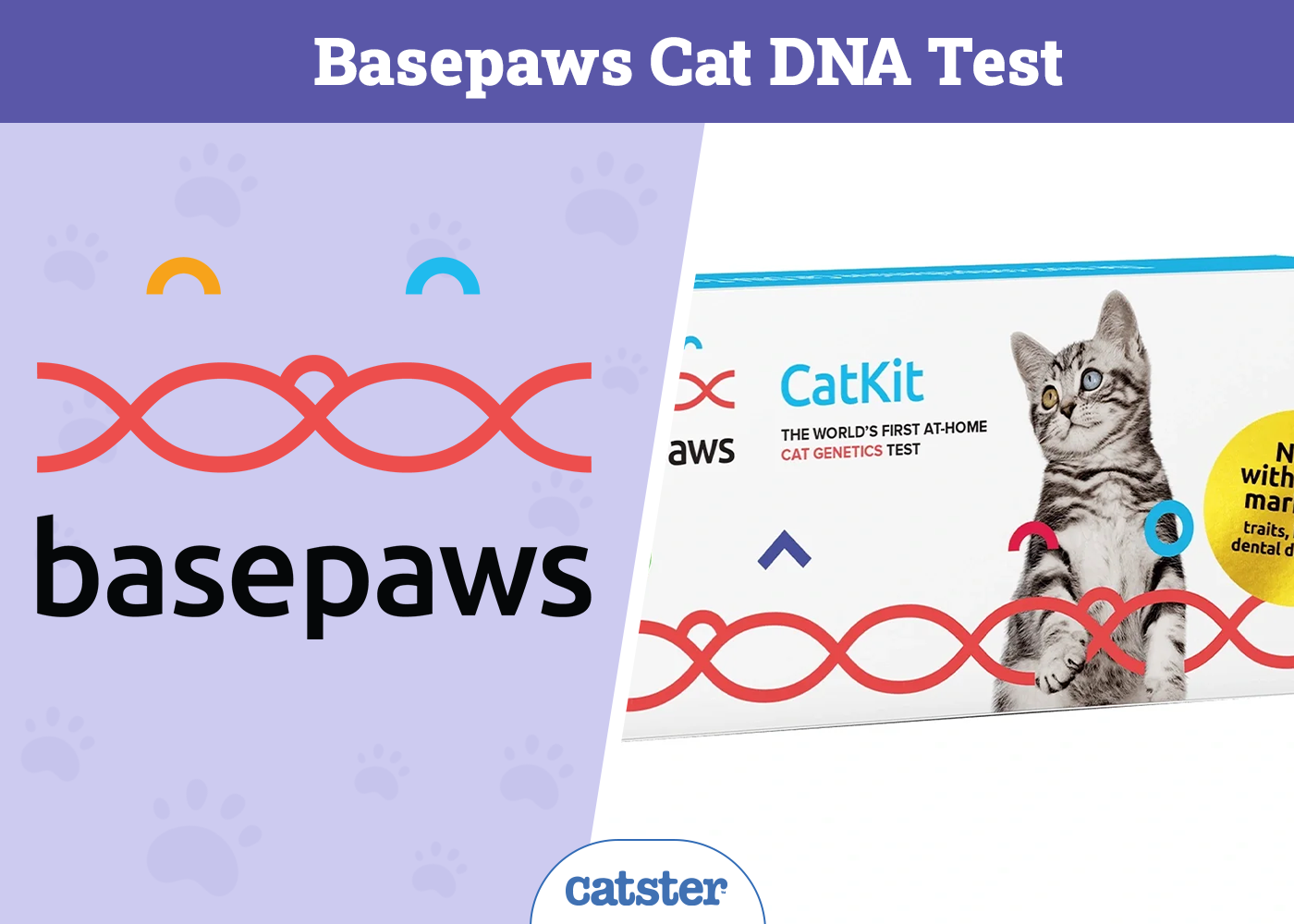
Have you ever wondered about the breeds that make up your cat? Or wondered what potential health problems your pet might face in the future? If you have, you’ll be thrilled to learn about the Basepaws at-home cat DNA test!
With this DNA test, you can get a breed analysis—by percentage—of which breeds your favorite feline comes from. You can also get the lowdown on whether your kitty carries the potential for a host of feline diseases. That’s not all, though! Basepaws will also look at specific genetic traits in your pet that will tell you their blood type and more.
The test is simple to use. You only need to get a sample from your cat, send it off, then sit back and wait for results. So if you’re curious, keep reading to find out the pros, cons, FAQ, and more!
Basepaws Cat DNA Test – A Quick Look
Pros
- Identifies potential health issues
- Easy to obtain a sample
- Identifies breeds your cat is made up of
- Identifies genetic traits
Cons
- Can only identify 21 breeds as of now
- Turnaround time for results may be lengthier than promised
- On the pricier side
Specifications
| Product Name: | Basepaws Breed + Health Cat DNA Test |
| Breed types identified: | 21 |
| Feline diseases identified: | 43 |
| Genetic traits identified: | 25 |
| Included in kit: | Instructions, swab testing tube, specimen bag, mailing box |
Breed Types
Currently, the Basepaws cat DNA test can identify 21 breeds. While the majority of feline DNA results will come back showing them as having Polycat DNA (the Basepaws’ name for the Domestic Shorthair breed, aka a mixed breed), the following breeds can be identified:
- Abyssinian
- American Shorthair
- Maine Coon
- Norwegian Forest Cat
- Ragdoll
- Russian Blue
- Siberian Forest Cat
- Turkish Van
- Turkish Angora
- Burmese
- Birman
- Oriental Shorthair
- Peterbald
- Thai Siamese
- British Shorthair
- Himalayan
- Exotic Shorthair
- Persian
- Bengal (Asian Leopard x Domestic)
- Savannah (Serval x Domestic)
- Egyptian Mau
Breeds are also broken down into the following breed groups of Eastern (Asia), Exotic (Egyptian Mau & hybrids), Persian (Persian & Persian-related), and Western (Americas & Europe).
When you get the results of your cat’s DNA test, it will include a breed analysis that breaks down by percentage which breeds your pet’s DNA resembles most. Each identified breed comes with a detailed overview, plus their predispositions to specific health issues.

Feline Diseases
With the Basepaws cat DNA test, you can get a ton of information about your cat’s health. Besides testing for breeds, the DNA test also checks 64 health markers related to 43 feline genetic disorders. What are genetic markers? These are changes in the gene sequence associated with certain health issues; when these appear, your cat has a higher risk of developing certain diseases.
The list of genetic disorders you’ll find in your Basepaws cat DNA test result is extensive and include common ones, such as:
- Pyruvate Kinase (PK) Deficiency
- Hypertrophic Cardiomyopathy
- Glaucoma
- Hypothyroidism
As well as some less common diseases that you might be unfamiliar with, including:
- Autoimmune Lymphoproliferative Syndrome (ALPS)
- Factor XII deficiency
- Cystinuria
- Mucopolysaccharidosis
Not only does the Basepaws cat DNA test check for all of this, but it also tests for the most common dental diseases in cats.
When you get your results, you’ll find these disorders and diseases listed out with either a “Clear”, “Carrier”, “At Risk”, or “At High Risk” next to them to let you know how your kitty did.

Genetic Traits
The Basepaws cat DNA test will also give you the down low on why your feline looks the way they do by screening for 25 genetic traits. These traits fall into the categories of length of coat, color and pattern of coat, texture of coat, body morphology, and how susceptible kitty is to viral infection.
The complete list of genetic traits screened for includes:
- Albinism
- Amber coat color
- Black coat color (melanism)
- Blood type
- Blotched tabby coat pattern
- Burmese coat color
- Charcoal coat color
- Chocolate (dark brown) coat color
- Cinnamon (light brown) coat color
- Copal coat color
- Curly coat (KRT71-related)
- Curly coat (LPAR6-related)
- Dilute coat color
- Hypotrichosis (with short life expectancy)
- Likely resistance to FIV
- Long-haired coat
- Lykoi coat
- Mackerel tabby coat pattern
- Osteochondrodysplasia and folded ears
- Polydactyly
- Russet coat color
- Short and kinked tail
- Short tail
- Siamese coat color (pointed)
- Sphynx coat

Results
So, how do you get these results from Basepaws? Well, after you’ve mailed your sample back in, it should take approximately 4-6 weeks for the result to arrive. You’ll get these by email (but remember to create an account on the Basepaws website to receive that email!).
The results will be lengthy—the document is about 30 pages long (though some of this will include overviews of the breed types your pet matched). The results will also have a chromosome map and breed analysis, along with information about the potential feline diseases your pet could be at risk for, plus the genetic traits mentioned above. If your cat gets anything other than clear on the health issues portion, it’s recommended you send the results to your vet so you can set up a consultation.
FAQ
Is the Basepaws cat DNA test available internationally?
Yes. International shipping is available with a $15 shipping charge.
Is free return shipping of the sample included?
All continental U.S. orders come with a prepaid return shipping label, but this is not included for international customers.
How do I get a sample from my cat?
Before obtaining a sample, you’ll need to wait at least a half hour after your pet has eaten or drunk anything. Then, you’ll have to swab your pet’s gums, inner cheeks, and/or tongue, with all sides of the swab coming in contact with one of those for at least 5-10 seconds.
Can I send my cat’s report to our vet?
Absolutely! There’s a place in your online account labeled “Share with Your Vet”. Click on that, and the results will be sent to your vet directly.
What the Users Say
It’s always good to look into what other cat parents are saying about a product before you use it. We did the work for you to save you the time of hunting down reviews.
The majority of users of the Basepaw cat DNA test were happy with the experience. Many mentioned that the markers for feline disease were extremely helpful and that they had a lot of fun finding out what breeds made up their pets.
Some worried about how difficult it would be to get the DNA sample from their pets, but most were pleasantly surprised at how easy it really was. We also discovered that if something happens with your original swab tube and it doesn’t work out, Basepaws will send you another for free!
We did find a couple of people who were disappointed they didn’t learn anything new about their pets from the test (at least breed-wise), and there were a couple of complaints about how long the turnaround time for the test took. Though the website states that results come in 4-6 weeks, some people's results took longer.

Conclusion
If you want more information about your cat, then the Basepaws at-home cat DNA test can tell you quite a bit. From breed analysis to the potential for future health problems and more, Basepaws can give you tons more insight into your beloved pet.
The downside is that the test is a bit pricey and can only identify 21 breeds at the moment. However, the ability to learn more about genetic markers that indicate whether kitty is predisposed to certain diseases could be a lifesaver. Overall, the people who have used the test have been pleased with the results, so if you’re interested in learning more about your pet, this could be an excellent way to do so!
See also:
Sources
Featured Image Credit: MDavidova, Shutterstock
Expert cat care, straight to your inbox
News, insights, and useful advice, delivered to you.

No spam — unsubscribe anytime.
By signing up, you agree to our Terms & Conditions and Privacy & Cookies Policy.
How useful was this post?
Click a star to rate. You can leave written feedback afterwards. (We read all feedback.)
Misty Layne lives out in the woods in small-town Alabama with her two Siamese cats —Serafina and Jasper. She also has an array of stray cats, raccoons, and opossums who like to call her front porch home. When she’s not writing about animals, you’ll find her writing poetry, stories, and film reviews (cats, by far, her favorite writing topic, though!). In her free time, Misty enjoys chilling with her cats, playing piano, watching indie and foreign films, photographing abandoned places, and catching up on her never-ending TBR list.