Are Succulents Toxic to Cats? Vet-Approved Facts & Safety Guide


In this article
Many cat owners love to fill their homes with succulent plants, but are any of these plants poisonous to your cat? Succulents are easy to look after, look great as houseplants, and are adaptable to a range of conditions.
The good news is that most succulents are non-toxic to cats. But what about the rest? Some succulents can indeed poison your cat. So, if you want to keep these low-maintenance plants in the same area as your cat, you need to be careful choosing which varieties to keep.

Succulents That Are Poisonous to Cats
Before you head out to the garden center and choose a whole range of succulents for your house or backyard, you might find yourself wondering if succulents are poisonous to cats. You'll want to make sure you steer away from the following plants:
- Aloe vera
- Kalanchoe species
- Pencil Cactus (Euphorbia tirucalli)
- Jade (Crassula ovata)
1. Aloe Vera

Aloe vera is an extremely popular succulent, and the sap or juice of the aloe vera plant can be found in all sorts of treatments, from after-sun gel to flavored waters and supplements. But aloe vera contains compounds called saponins and anthraquinones, which are toxic to both cats and dogs.
Anthraquinones are laxatives, which increase bowel movements. As these compounds are broken down by bacteria within a cat’s intestines, they produce mucus and an increased amount of water. This combination can cause diarrhea and vomiting. Cats that have ingested aloe vera may also show signs of lethargy, depression, a change in the color of their urine, and lack of appetite. Sometimes, tremors will also be present. The Pet Poison Helpline lists aloe vera as having a mild to moderate toxicity level when ingested.
2. Kalanchoe Species

Kalanchoe is a genus of about 120 species of succulents known as stonecrops. These pretty plants hail from the tropics and have plenty of beautiful blooms and succulent leaves. As well as being known as kalanchoe, they are also called devil’s backbone, chandelier plant, and mother of millions.
Kalanchoe contains bufadienolides, which are cardiac toxins. The ingestion of small amounts of this plant usually results in gastrointestinal irritation. Large amounts can cause more serious symptoms of poisoning, including an irregular heartbeat, weakness, and potentially, collapse.
3. Pencil Cactus

The Euphorbiaceae family is a large collection of different plants, including the pencil cactus (Euphorbia tirucalli) and the crown of thorns (Euphorbia milii). The milky sap of these plants is irritating. When ingested, these can cause discomfort and irritation to your cat’s mouth and digestive tract.
If your cat gets this milky sap on their eyes, they can also suffer from irritation.
4. Jade Plant

The scientific name for the jade plant is Crassula ovata, but it’s also known as the money plant, jade tree, or lucky tree. Cats that ingest the jade plant won’t end up feeling so lucky, though!
If your cat chews on a jade plant, it can cause vomiting, depression, and incoordination.
Succulents Safe For Cats
Now that we’ve covered which succulents should be avoided if you have cats, let’s take a look at the ones that are safe to keep around your cats. You can choose from:
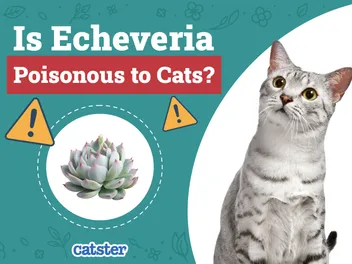
- Hens and chicks (Echeveria elegans)
- Haworthia species
- Burro’s tail (Sedum morganianum)
- Christmas cactus (Schlumbergera bridgesii)
- Sedum species
1. Hens and Chicks

This easy-to-care-for succulent has the scientific name, Echeveria elegans. Available in many different varieties, it’s widely available, grows almost anywhere, and is visually appealing. The main plant or “hen” is surrounded by smaller offshoots, called “chicks.”
2. Haworthia Species

If the shape of aloe vera appeals but you’d rather not keep it in your house with cats, then the Haworthia species, such as Haworthia fasciata, are an excellent alternative. These attractive succulents are also sometimes called the zebra cactus, thanks to the distinctive stripes on their leaves. Unlike aloe vera, it’s completely safe to keep around cats.
3. Burro’s Tail
With distinctive tendrils of small yet chunky leaves, burro’s tail or donkey’s tail has the scientific name, Sedum morganianum.
It makes a great succulent choice for putting on shelves or hanging planters.
4. Christmas Cactus

The Christmas cactus (Schlumbergera bridgesii) is so named due to the pretty pink flowers that bloom around Christmas time. It’s low maintenance and is easy to propagate, meaning if you have one, you’ll soon have plenty more to place around the house or offer as gifts.
5. Sedum

This is a genus of plants of about 600 species. They come in a variety of heights, colors, and forms. The flowers form clusters and can be white, yellow, pink, purple, or reddish in color. They’re easy to grow and easy to look after.
Staying Safe With Succulents Toxic To Cats
The best way to protect your cat from the dangers of ingesting poisonous succulents is to avoid keeping any of these plants in the house. Before you go plant shopping, check the ASPCA toxic and non-toxic plan list and Pet Poison Helpline’s detailed list of poisonous plants.
If you want to check that existing plants are safe, ask an experienced horticulturist to help you identify them before looking them up. It’s usually a good idea to use the plant’s Latin (scientific) name rather than the common name, which can vary from region to region.

Maybe you already have a few succulents in your house that you’ve now identified as poisonous, but you don’t necessarily want to get rid of them. Well, the truth is that you could try to keep these plants in a separate part of the house than your cats; however, if you really want to keep your feline friend safe, it’s best to find a home for your succulents where no dogs or cats live.
If your cat seems interested in eating a succulent in your home, they may be searching for greenery to add to their diet. Immediately remove any plants that you think may be toxic, and offer your cat a tray of cat grass instead. This may satisfy their craving, and they will leave your remaining succulent houseplants free from nibbles!
What to Do if Your Cat Eats a Poisonous Succulent
If you suspect that your cat has eaten a succulent that could be poisonous, it’s essential to speak to your vet for advice right away. Try to get a positive identification of the plant in question, and take photos or a sample of a leaf to show your vet. Knowing what your cat has eaten will help inform your vet’s treatment plan.
You can also call the Pet Poison Helpline for advice, but they will also ask for a positive identification of whatever your cat has eaten.
Being proactive and learning about which succulents are safe for cats and which can cause them harm is the best way to keep your cat happy and healthy when they’re living in the same house as these beautiful plants.
Find out if other plants are toxic to cats:
Expert cat care, straight to your inbox
News, insights, and useful advice, delivered to you.

No spam — unsubscribe anytime.
By signing up, you agree to our Terms & Conditions and Privacy & Cookies Policy.
How useful was this post?
Click a star to rate. You can leave written feedback afterwards. (We read all feedback.)
Emma is a freelance writer, specializing in writing about pets, outdoor pursuits, and the environment. Originally from the UK, she has lived in Costa Rica and New Zealand before moving to a smallholding in Spain with her husband, their 4-year-old daughter, and their dogs, cats, horses, and poultry. When she's not writing, Emma can be found taking her dogs for walks in the rolling fields around their home...and usually, at least some of the cats come along, too! Emma is passionate about rescuing animals and providing them with a new life after being abandoned or abused. As well as their own four rescue dogs, she also fosters dogs for re-homing, providing them with love and training while searching for their forever homes.