Get

In Your Inbox

Catster is reader-supported. When you buy via links on our site, we may earn an affiliate commission at no cost to you. Learn more.

Inhaler for Cats: Vet-Approved Tips on How to Use It for an Asthmatic Feline

Share

Treating a cat for asthma with an inhaler

Feline asthma is a respiratory condition that results from inflammation and muscle constriction in the airways. It is not well-understood in cats, but is often treated similarly as asthma in humans.

There are several treatments for asthma in cats, including corticosteroid medication and bronchodilators. In some cases, veterinarians may prescribe the use of an inhaler, a device that delivers medication in the form of an aerosolized mist that can be inhaled into the lungs.

If you have or are considering a inhaler for your cat, here’s everything you need to know about the device and some expert tips on how to use one.

divider 2 cats

What Is an Inhaler and How Does It Work?

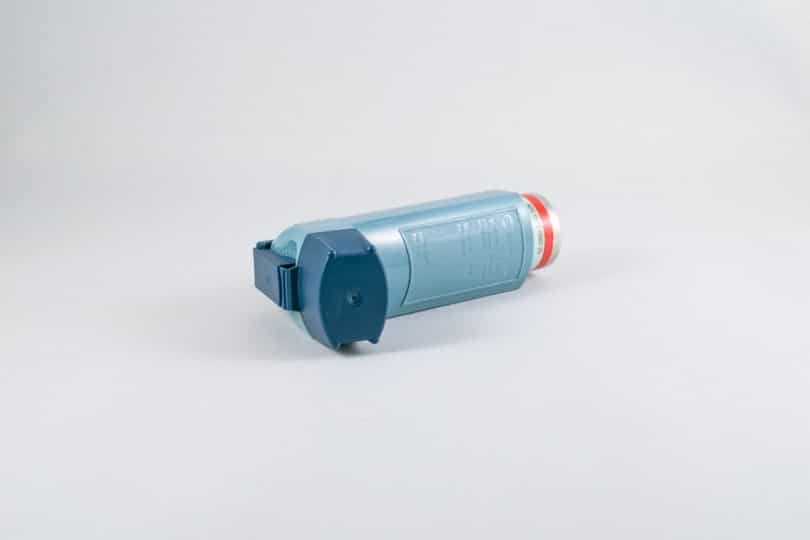
An inhaler is a device that delivers aerosolized medication to the lungs. This gets certain medications to the specific organs that need them, and also avoids systemic effects of the medications.

The medications used with inhalers in cats commonly include steroids and bronchodilators. Steroids are typically used to downregulate inflammation, while bronchodilators are used to relax constricted muscle tissue in the airways.

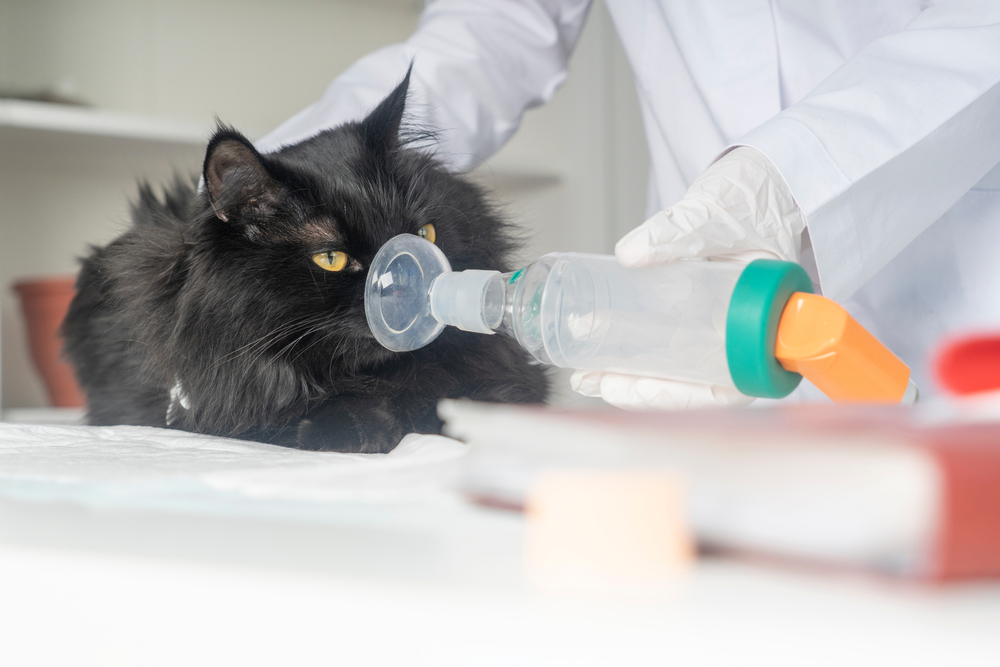
Inhalers are used with a spacing chamber and a face mask that fits over your cat’s muzzle to allow the medication to be inhaled deeply into the respiratory tract. Inhalers don’t include this additional equipment, so you may need to obtain them online or from a vet.

owner using inhaler to her cat for asthma
Image By: RozochkaIvn, Shutterstock

How to Use An Inhaler

Inhalers may not be an enjoyable experience for your cat, but they can get used to them with some training and patience.

Here are some tips to get your cat used to the inhaler:
  • Practice with the mask with the inhaler and spacing chamber off; start by placing the mask up to your cat, to allow them to become familiar with it.
  • Initial mask placements should only last for a second or two, becoming longer as your cat adjusts.
  • Try putting wet cat food or baby food inside of the mask and let your cat lick it.
  • Speak in a soothing voice and praise your cat for tolerating the mask.
  • Offer a treat or toy after the practice treatment is complete to reinforce positivity.

Once your cat is used to the mask, you can trial adding the inhaler and spacing chamber. You will need to follow the manufactuer’s instructions for both the mask, chamber and the inhaler, which may include:

  • Shake the inhaler.
  • Insert the inhaler into the chamber and gently apply the mask to your cat’s muzzle.
  • Use the inhaler to release the appropriate amount of medication. Allow your cat to breathe this for 5-6 breaths.
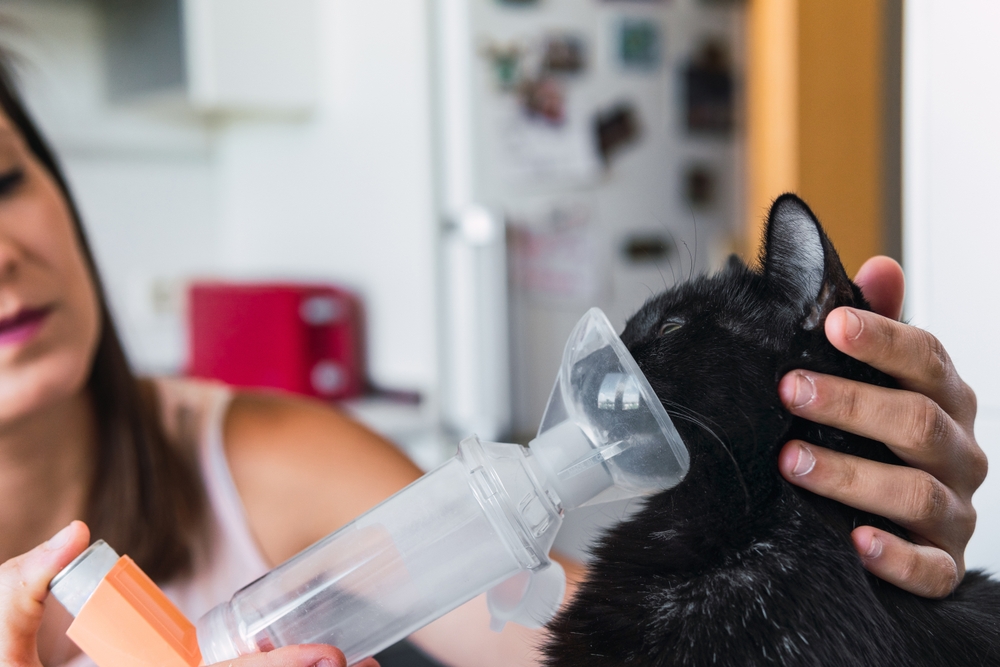
woman using inhaler to her black cat with asthma
Image Credit: Jota Buyinch Photo, Shutterstock

divider cats oct 2024

Frequently Asked Questions (FAQ)

How Is An Inhaler Different Than A Nebulizer?

An inhaler is a small, self-contained device that delivers aerosolized medication. A nebuliser is a larger unit that generally requires input (electricity or oxygen, and water) and delivers humidified air, as well as anything added to the water in the nebuliser.

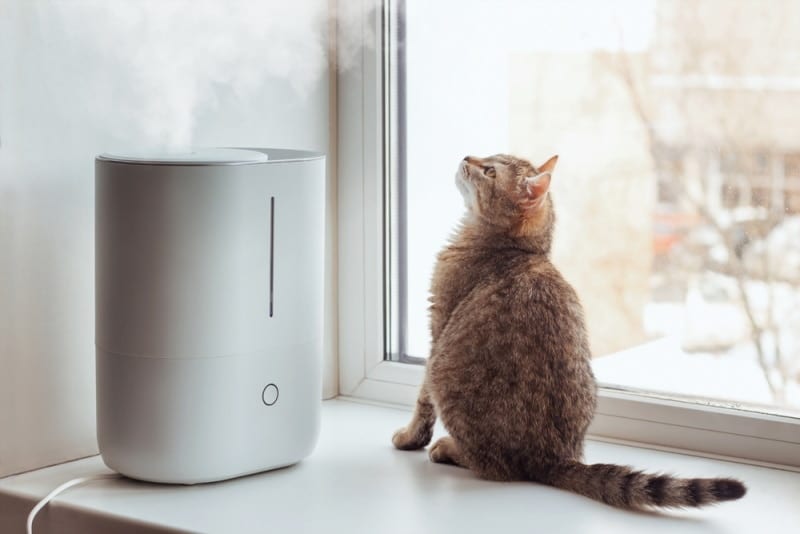
Nebulisers are occasionally used in feline medicine to help humidify the environment for hospitalized cats, or at home for similar reasons, but rarely would they be used for other purposes.

How Many Times A Day Does My Cat Need Their Inhaler?

If an inhaler is prescribed, the vet will give you instructions on how often to use it. Depending on the medication, the inhaler may be used as needed, or even multiple times daily.

If you need to speak with a vet but can't get to one, head over to PangoVet. It's an online service where you can talk to a vet online and get the advice you need for your pet — all at an affordable price!

PangoVet_Mention-in-Content for PangoVet2 save money

divider 2 cats

Conclusion

If your cat has asthma or other respiratory conditions, an inhaler can be a helpful treatment to open their airways and help them breathe more comfortably. Getting a cat used to inhaler treatments takes some training, but it’s generally a simple and smooth process. Always follow the vet’s instructions for using an inhaler to treat your cat’s condition.


Featured Image Credit: Shveyn Irina, Shutterstock

Want content like this delivered to you?

Sign Up For Our Newsletter

News, insights, expert advice, and everything cat

* By submitting, you agree to our Terms & Conditions and Privacy & Cookies Policy.


How useful was this post?

Click on a star to rate (you can leave written feedback after clicking submit)

Help us improve Catster for pet parents!

Your feedback really matters.

What did you like about this post? Also how can we improve it?

Join the conversation

Leave a Reply

You’re very welcome to leave a comment or question. Please know that all comments must meet our community guidelines, and your email address will NOT be published. Let’s have a positive and constructive conversation.


Catster's Digital Magazine is Back!

Vet-approved health & behavior advice

Real cat stories & community features

Chatting About the Rainbow Bridge, Euthanasia, and Laughter During Grief | Chatty Cattys, Episode 24

If you’ve ever felt the loss of a beloved cat, or are dreading the day when your pet crosses the rainbow bridge, you’ll...

The Simple Reasons Cats Refuse to Let Anyone Use the Bathroom Alone

Cats have an extraordinary talent for making themselves present in the most inconvenient places, and the bathroom ranks near the top of the...

A Paw-sitive Milestone: Canada Officially Becomes a Declaw-Free Nation

Canada has officially become a declaw-free nation. On May 25, 2026, a new regulation was filed in Ontario under the Provincial Animal Welfare...

The Surprisingly Simple Ways to Help a Cat With Hairballs

Cats spend an astonishing amount of time grooming. It is part hygiene routine, part comfort ritual, and part instinct that traces back generations....

More related

Can Cats Drink Ensure? Vet-Approved Health Facts & Safety Guide

When your cat isn’t feeling well, you want to ensure they stay hydrated. Since a loss of appetite can strike humans and animals...

Where to Find Free Cat Food Samples? 12 Sites to Visit in 2026

If you’ve been thinking about transitioning your cat to a new food, you may be interested in trying a few brands before shelling...

9 Best Stainless Steel Cat Bowls in 2026 – Reviews & Top Picks

Stainless steel products are a no-brainer in a house full of animals. This material doesn’t stain or scratch. Better yet, it’s naturally resistant...

Signs an Older Cat is in Pain: 8 Vet-Reviewed Indications

As the years have rolled on, you’ve probably seen your cat’s behavior change. They start off as kittens with tons of energy, running...

Keep reading

Why Does My Cat Pee on the Floor? 7 Vet-Reviewed Reasons & Care Tips

While it is annoying to have your cat pee on the floor in your house, it is not entirely unheard of. Many things can cause a cat to do this, and identifying the cause of this behavior is necessary in...

cat looking a pee on the floor

Why Do Cats Hang Out in Weird Places? 4 Vet-Reviewed Reasons

Does your cat enjoy sleeping on your head? Perhaps they like snuggling up inside your favorite vase? Or maybe you can’t wash your hands in the bathroom because your cat is hanging out in the sink? Cats do seem to...

cat hanging out in the bathroom sink

Can Cats Be Allergic to Catnip? Feline Facts & Alternatives (Vet-Reviewed Info)

So, your cat had some catnip and is now acting weird. Should you be worried? Well, you’re in luck because in most cases, you don’t need to worry! Catnip isn’t an addictive substance. However, some cats may be allergic to...

jar of catnip

Can I Wash My Cat with Dr. Bronner’s? Vet-Verified Facts & Considerations

As all kitty owners know, cats and water typically don’t go together. However, what if your feline friend needs an emergency bath, and you don’t have any pet shampoo handy? In that case, using an unscented castile soap like Dr....

cat on top of bathtub

Can Cats Eat Jelly (Jam)? Vet-Reviewed Facts to Consider

Spreading jelly on your morning toast or putting it in a sandwich is an easy, delicious way to make a quick meal taste good without too much work. Food, no matter what it is, is always bound to capture a...

Can Cats Eat Jelly (Jam)

How to Calm a Crazy Cat: 6 Vet-Approved Tips & Causes of Extra Energy

With their sudden energetic outbursts, wall-climbing maneuvers, putting their butts in our face, and countertop cruising, you might be forgiven for thinking that cats are more than a little crazy. However, there’s a limit to how much ‘crazy’ we can...

playful british shorthair cat

What Essential Oils Are Safe to Diffuse Around Cats? Vet-Reviewed Facts

Diffusing essential oils in your house can make your home smell amazing and can even help you relax after a stressful day. However, if you have a cat (or cats), you may want to avoid using essential oils altogether as...

essential-oils-and-cat

Why Cat Ear Sores Shouldn’t Be Ignored (Even Small Ones)

You’re giving your cat a head scratch when your fingers catch on something rough. You pull your hand back and look closer – there’s a scab on the edge of their ear. A crusty patch. Maybe some hair loss around...

close up cat with eye sore

Love Cats? So Do We! Join the Catster Community

Stay informed with expert pet care insights delivered straight to your inbox! Discover professional guidance on animal behavior, feeding tips, trusted product picks, and much more.


Sign up for the Catster Email Newsletter

Stay informed with expert pet care insights delivered straight to your inbox! Discover professional guidance on animal behavior, feeding tips, trusted product picks, and much more.