Get

In Your Inbox

Catster is reader-supported. When you buy via links on our site, we may earn an affiliate commission at no cost to you. Learn more.

Are African Violets Poisonous to Cats? Vet-Reviewed Houseplant Safety Guide


Share

Catster_Are African Violets Poisonous to Cats

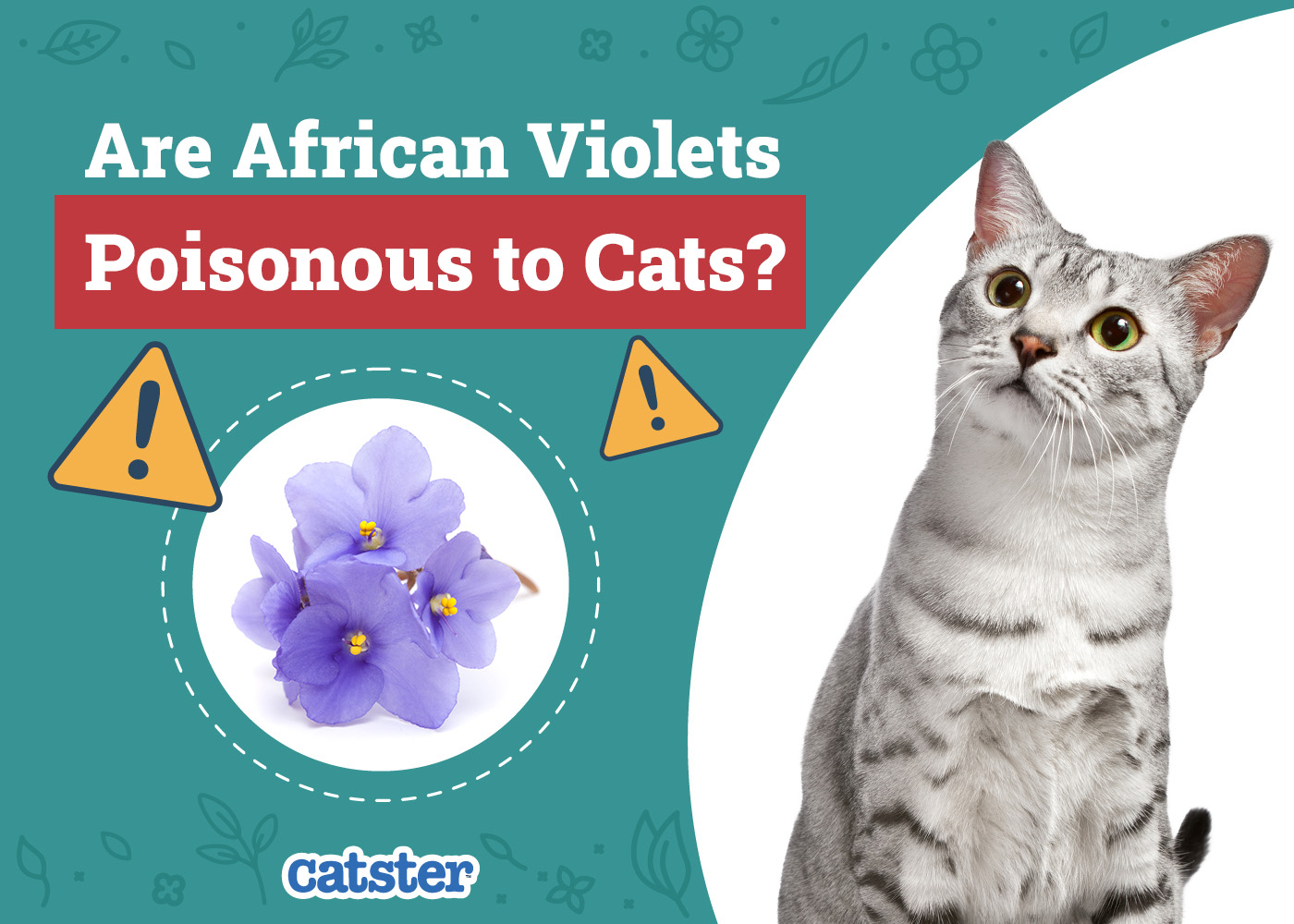
African violets are common houseplants that are relatively easy to care for. They have soft and fuzzy leaves and produce pretty and dainty flowers. Fortunately, African violets aren’t poisonous to cats, so these pet owners can have as many of them in their homes as they want. Continue reading to learn more.

divider 2 cats

About the African Violet

The African violet, or Saintpaulia ionantha, is one of the members of the Gesneriaceae family. Plants of this family, including cyrtudeiras and candy corn plants, are safe for cats and aren’t known to be toxic.

Aside from their quaint appearance and unique leaves, African violets are also popular because they’re pretty hardy if you know how to care for them. While they’re not quite for beginners, they provide just enough of a challenge for plant owners who are looking to expand their knowledge and level of care to the next step.

African Violet
Image Credit: Peggychoucair, Pixabay

divider 3 paws

Keeping Cats Away From African Violets

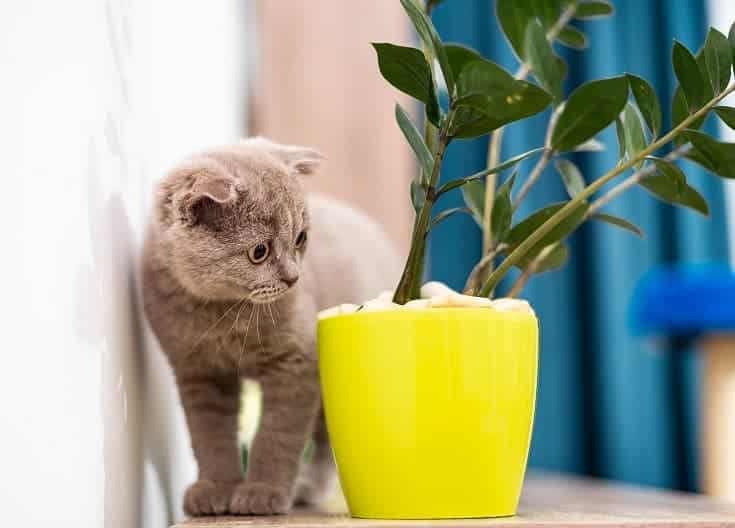
These plants can be enticing because of their soft leaves. While African violets aren’t toxic to cats, it can still be an inconvenience to find bitten leaves or a turned-over pot caused by a curious cat. Here are some things you can do to keep your cat away from a pot of African violets.

1. Make the African Violet Hard to Reach

african violet near window
Image Credit: O_Lypa, Shutterstock

One of the best ways to protect an African violet is to place it in a spot that’s difficult to reach. This can be a challenge, as many cats are agile and able to squeeze into tight spaces. Try to place the plant on a narrow surface that doesn’t provide enough room for your cat to stand on. Keep it away from other surfaces that cats can use to jump off of to reach it.

If you have a particularly determined cat, you may have to place the plant in a room with a door that your cat can’t access, such as a bedroom or office.


2. Use a Deterrent

There are several different kinds of cat-safe deterrents that you can use to discourage your cat from playing with plants.

One deterrent is cat tape. Cats don’t like the feeling of this tape on their paws, but it doesn’t do any damage to them. Surrounding the plant pot with cat tape can discourage your cat from picking at it.


3. Bring Home Cat Grass

cat eat young wheatgrass
Image Credit: QueenNuna, Shutterstock

If your cat just likes chewing on all kinds of plants, you can try growing some cat grass. Cat grass is actually beneficial and can help cats with digestion, reduce hairballs, and alleviate constipation.

divider 2 cats

Other Common Houseplants That Are Safe for Cats

cat-surrounded-by-house-plants
Image Credit: Foto2rich, Shutterstock

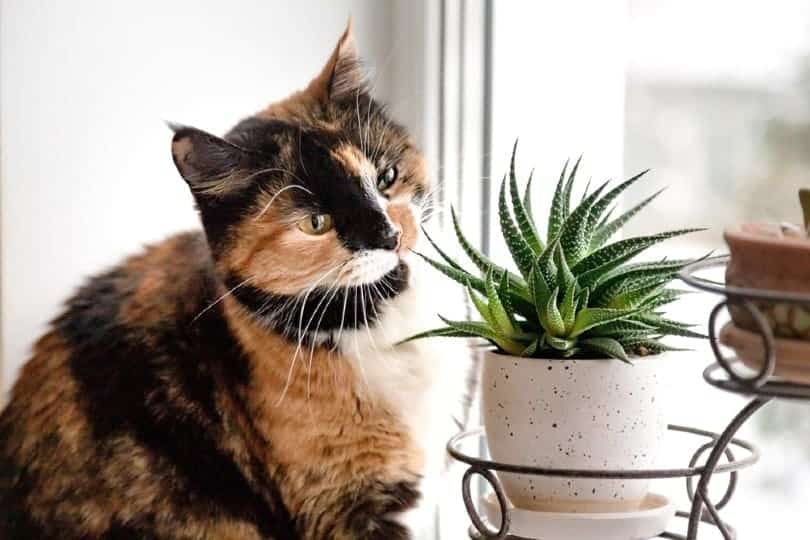
Houseplants can add more color and liveliness to a room. While they add a nice touch to a room and can be fun to care for, it’s important to bring home non-toxic plants to keep your cat safe.

Non-toxic plants to keep your cat safe:
  • Boston fern (Nephrolepis exalta bostoniensis)
  • Bromeliads (Neoregalia spp.)
  • Parlor palm (Chamaedorea elegans)
  • Red edge peperomia (Peperomia clusiifolia)
  • Rattlesnake plant (Calathea insignis)
  • Spider plant (Chlorophytum comosum)
  • Common staghorn fern (Platycerium bifurcatum)
  • Airplants (Tillandsia spp.)

Common House Plants That Are Poisonous for Cats

Different kinds of plants carry a variety of toxins that can be harmful to cats. Your cat’s clinical signs will vary depending on the type of toxin that they ingest. For example, ingesting a small amount of insoluble calcium oxalate crystals can cause skin irritation and an upset stomach, while any part of lilies can be fatally toxic to cats.

It’s best to avoid these types of common houseplants:
  • Any type of lily
  • Cyclamen (Cyclamen spp.)
  • Daffodils (Narcissus spp.)
  • English ivy (Hedera helix)
  • Garden hyacinth (Hyacinthus orientalis)
  • Kalanchoe (Kalanchoe spp.)
  • Philodendrons (Philodendron spp.)
  • Pothos (Epipremnum aureum)
  • Azalea (Rhododendron spp.)
  • Sago palm (Cycas revoluta)

If you suspect your cat ingested one of these plants, we suggest you immediately speak to a vet.

If you need to speak with a vet but can't get to one, head over to PangoVet. It's an online service where you can talk to a vet online and get the advice you need for your pet — all at an affordable price!

PangoVet_Mention-in-Content for PangoVet2 save money

divider 2 cats

In Conclusion

You can be a cat lover and plant lover at the same time. While many common houseplants can be toxic to cats, there are many non-toxic options. Luckily, African violets are safe for cats and can add fun colors to your home.


Featured Image Credit: Sunny_Smile, Shutterstock

Want content like this delivered to you?

Sign Up For Our Newsletter

News, insights, expert advice, and everything cat

* By submitting, you agree to our Terms & Conditions and Privacy & Cookies Policy.


How useful was this post?

Click on a star to rate (you can leave written feedback after clicking submit)

Help us improve Catster for pet parents!

Your feedback really matters.

What did you like about this post? Also how can we improve it?

Join the conversation

Leave a Reply

You’re very welcome to leave a comment or question. Please know that all comments must meet our community guidelines, and your email address will NOT be published. Let’s have a positive and constructive conversation.


Talk With A Vet Online

Peace of mind,
anywhere, anytime

Affordable vet advice

What Feral Cats Actually Need From the People Who Feed Them

Feral cats are everywhere. Slipping between parked cars, darting under porches, appearing briefly at dusk before vanishing again. Most people see them, feel...

Capturing Catstanbul

Istanbul – famous for its bustling markets, unique architecture, and vibrant culture, there is one more feature of this Mediterranean capital that deserves...

Ask Dr. Paola – Help! My Male Cat Gets Into Fights! (March 9, 2026)

Welcome to our “Ask Dr. Paola” series, where every Monday we bring expert advice straight from Dr. Paola Cuevas (MVZ) to help our...

Why Your Cat’s Poop Smells Like a Biohazard

Nobody enjoys litter box duty, but sometimes it gets unbearable. The smell hits you from across the room. You’re scooping faster, lighting candles,...

More related

Feliway vs Comfort Zone: Which Pheromone Is Better?

Both the Feliway and Comfort Zone pheromone diffusers are designed to make your cat feel calmer and less anxious and generally be a...

Maine Coon vs American Shorthair Cat: What’s the Difference? (With Pictures)

The Maine Coon is one of the most popular large cat breeds in the U.S. due to their teddy bear-like appearance and gentle...

Norwegian Forest Cat: Info, Pictures, Facts, & Traits

If you’re looking for a chunky cat that’s larger than life in more ways than one, the Norwegian Forest Cat’s size and personality...

Can Cats Get Dizzy? Vet-Reviewed Science & Facts

While dogs are often jokers, cats are the elegant masters of the home. We rarely see cats, especially adult felines, tripping around the...

Keep reading

Can Cats Eat Pears? Vet-Verified Nutrition Facts & FAQ

Fruit is a tasty addition to a healthy diet for humans and even for dogs, as it provides plenty of dietary fiber and many other essential minerals and vitamins. It is well known that dogs can have small amounts of...

Can Cats Eat Pears

What Do Cats Think About All Day? Facts & FAQ

Your cat is sitting in their favorite spot, staring into the distance. They look just like they’re contemplating the mysteries of the universe—but are they? Figuring out what cats think about all day isn’t an easy task. There aren’t very...

ragdoll cat lying on couch

How to Potty Train a Kitten: Vet-Approved Tips & Tricks

If you’ve landed on this post, odds are that you just added a new kitten to your life. Given that your new bundle of feline joy is a kitten, they will need a little direction from you. When it comes...

cat toilet_kachalkina veronika_shutterstock

Inhaler for Cats: Vet-Approved Tips on How to Use It for an Asthmatic Feline

Feline asthma is a respiratory condition that results from inflammation and muscle constriction in the airways. It is not well-understood in cats, but is often treated similarly as asthma in humans. There are several treatments for asthma in cats, including...

Treating a cat for asthma with an inhaler

Why Does My Cat Sleep on Me? 6 Vet-Reviewed Reasons & Solutions

Cats have strange and quirky behaviors that help keep their owners both entertained and confused. One common yet endearing habit of felines is choosing to curl up and sleep on their owners. While having your cat snooze on your lap...

cat sleeping on its owner's chest

Can Cats Eat Guava? Vet-Approved Facts & FAQ

Guava is a popular fruit for various reasons. It’s no shocker that humans delight in and derive nutrients from this tropical fruit. But what about feline companions? Can they eat guava? And if so, do they get any nutritional reward...

Can Cats Eat Guava

When to Euthanize a Cat? Vet-Reviewed Factors & FAQ

Watching a beloved family pet get old can be hard. As cats age, they will grow weaker and skinnier. Their behavior might change. They might not be the same cat that you used to know when they were younger. In...

a sick siberian cat being carried by owner

10 Best Budget Cat Foods in Canada in 2026: Reviews & Top Picks

How lucky are we to have cats in our lives? Our cats give us so much and ask for little in return—except for complete devotion. An important part of looking after a cat is ensuring that they are on a...

grey cat licking lips after eating cat food from bowl inside on floor

Love Cats? So Do We! Join the Catster Community

Stay informed with expert pet care insights delivered straight to your inbox! Discover professional guidance on animal behavior, feeding tips, trusted product picks, and much more.


Sign up for the Catster Email Newsletter

Stay informed with expert pet care insights delivered straight to your inbox! Discover professional guidance on animal behavior, feeding tips, trusted product picks, and much more.