How Do Cats Give Birth? (Vet Approved Pregnancy & Labor Facts)


In this article
It can come as a surprise to find out your cat is pregnant; most likely, you thought she’d only put on a bit of extra weight. You may not be aware of how the process goes or how you can help your beloved feline out during it. So, how do cats give birth? The process is similar in some ways to human birthing, but it differs drastically in other ways. Below, we'll discuss how to be prepared for your feline’s pregnancy and labor!

How to Tell if a Cat Is Pregnant
Unfortunately, it can be tricky to tell if your cat is pregnant, which is why it surprises several cat parents! The best way to determine if your cat is pregnant is to visit the veterinary clinic for an examination, ultrasound, X-ray, or blood test. However, you may notice a few slight changes in your pet at home that indicate pregnancy.
One change is your cat’s behavior. While not all felines undergo behavioral changes while pregnant, some may become more aggressive or affectionate.1
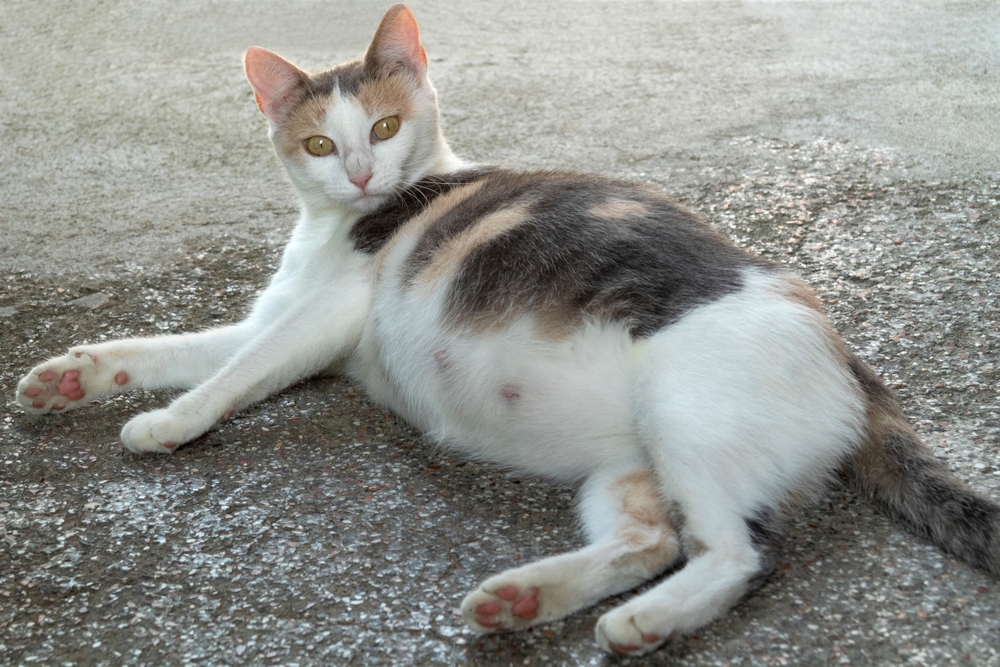
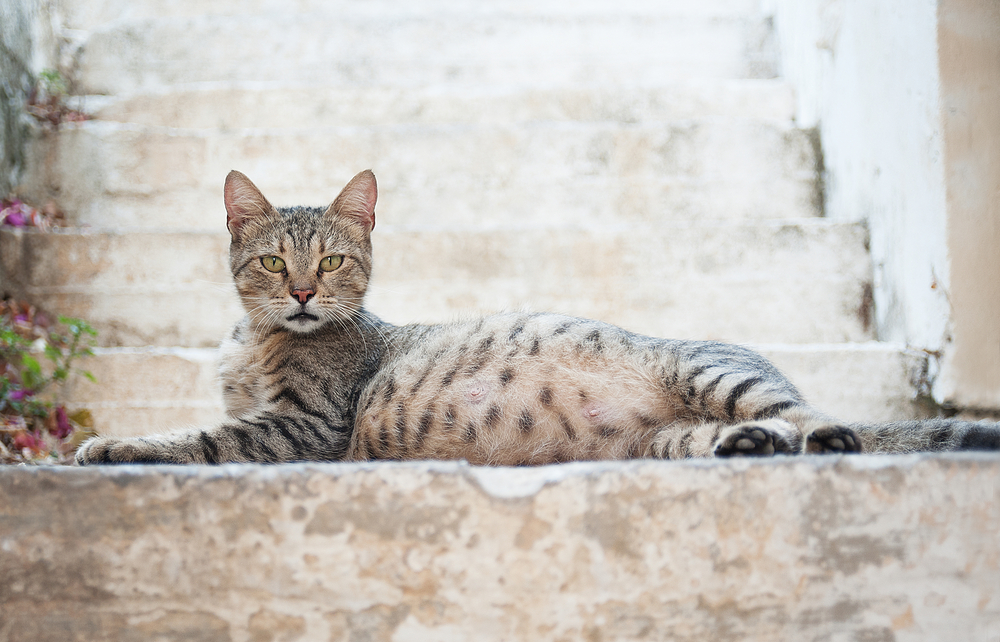
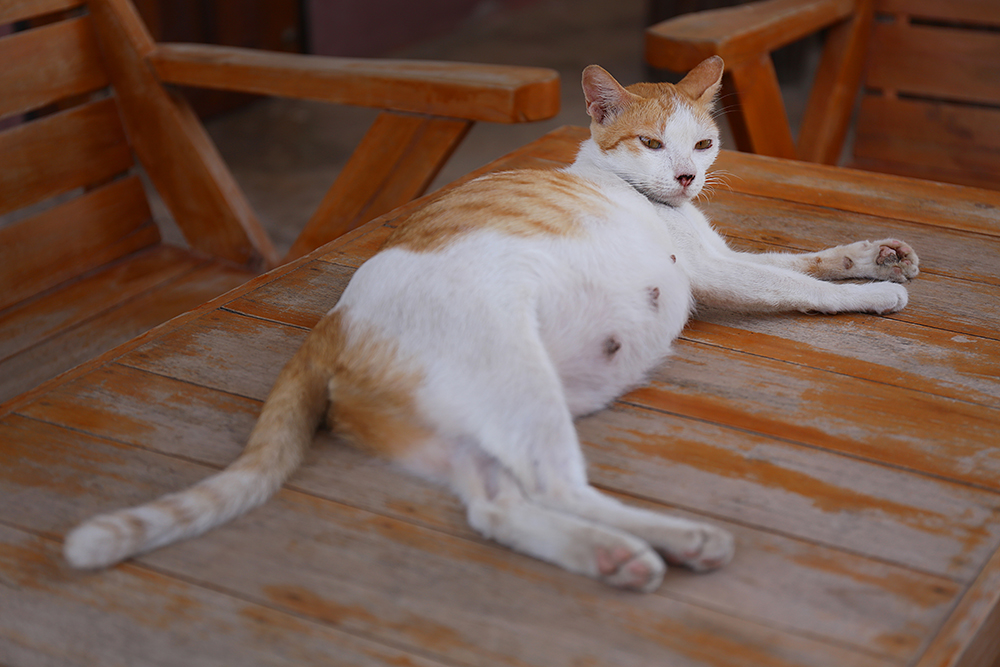
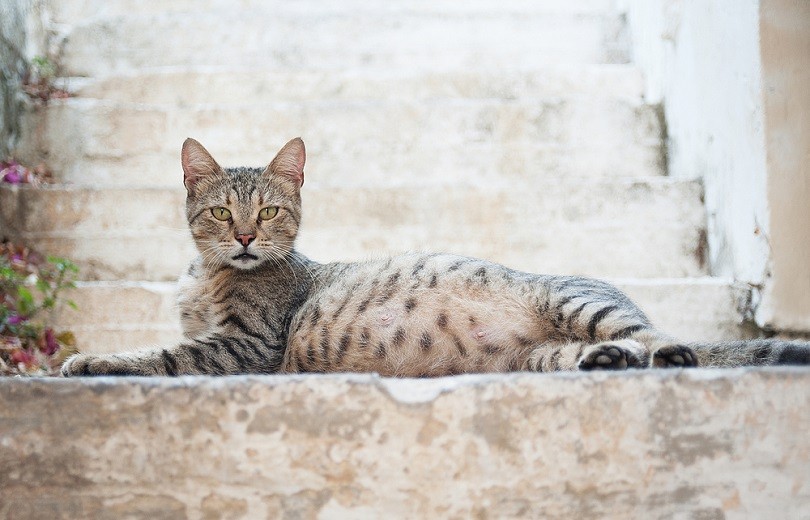
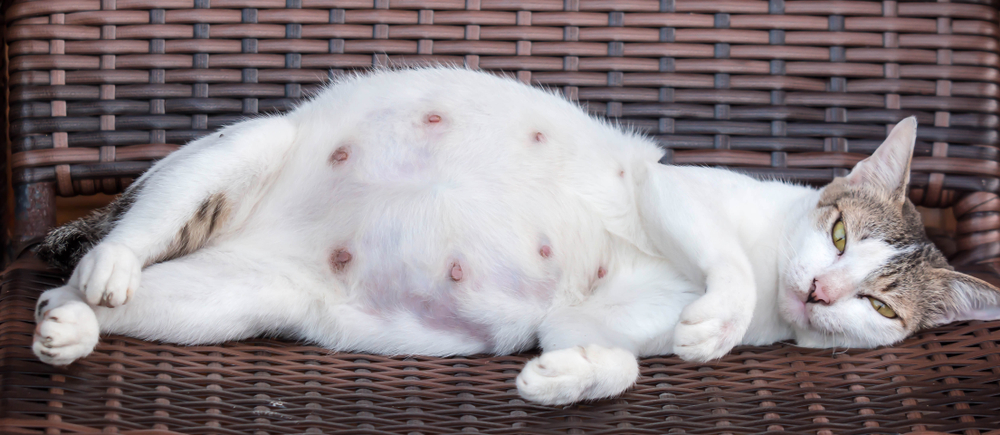
Another change that will occur is your pet putting on weight and the abdomen becoming rounder. Unfortunately, this doesn’t happen until later in pregnancy, and since felines are only pregnant for roughly 2 months, it could leave you with little time to prepare for the kittens.2 Along with weight gain and the rounding of the stomach, your cat’s nipples may become larger and pinker.
One other way to tell if your cat is pregnant isn’t something you’ll see but feel. If your four-legged friend has gained weight or experienced behavior changes and you suspect pregnancy, your vet can try palpating the abdomen to feel for kittens.3

Signs of Labor
So, now you know how to determine if your cat is pregnant in the first place, but that doesn’t necessarily mean you know just how far along she is. That’s why it’s vital to understand what it looks like when labor is just around the corner. You’ll see several signs that will give you the heads-up you need to prepare for your pet giving birth.
A couple of days before labor begins, your cat will begin nesting (she will seek out a safe spot to birth the kittens). This spot could be under the bed, in the corner of a rarely used room, or even in a closet.
You’ll also see changes in your pet’s behavior. Some of these include a loss of appetite, more vocalization, restlessness, pacing, excessive grooming (particularly around the genitals), and panting.
As labor is finally about to start, your cat’s temperature can drop from 101° to 99° F, and there might be some vomiting. You could also see the abdomen dropping.
Finally, when contractions begin, your pet may start getting louder with their vocalizations because of the pain, and there could be a vaginal discharge.

The 3 Different Stages of Labor
Finally, how do cats give birth? Well, there are three stages of labor that cats go through during the birthing process, which we’ll discuss below.
Stage 1: Remember when we mentioned your cat’s temperature dropping and possible vomiting? These happen in stage 1 of your pet’s labor. This is the stage where the cervix begins relaxing, and contractions will start up (though intermittently). As the cervix relaxes, the muscles of the pelvis slacken while the perineum becomes longer and looser. At this point in the labor journey, you won’t be able to tell if your cat is experiencing contractions.
You will notice your cat acting restless, pacing in and out of the nesting area, vocalizing more, beginning to pant, possibly vomiting, and the aforementioned decrease in temperature. Watch for the temperature decrease because it indicates full contractions are only 12–36 hours away!
Stage 2: Stage 2 of feline labor begins with stronger contractions that come more frequently. Eventually, they will lead to the birth of the first kitten. After the first kitten, the rest of the kittens should come every 30–60 minutes (timing will vary depending on the cat). All kittens in a litter (usually 4–6) should be born in 6 hours or less.
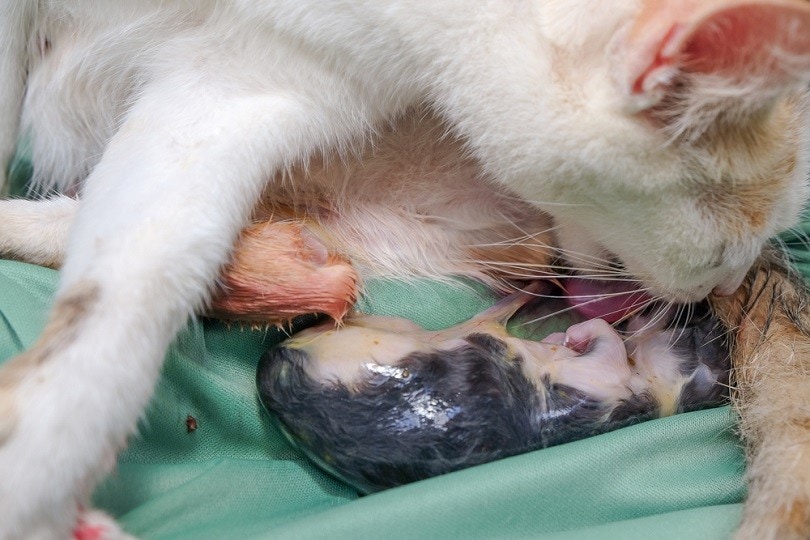
One important thing to know about the kittens is that they are born inside a thin membrane. The mother will usually remove this membrane as each kitten is delivered so the babies can breathe. Another vital factor to know is that it’s fine for kittens to be born head or tail first; both are acceptable, but tail-first sometimes takes a bit more time.
It’s also essential that you don’t distract your cat or move them during this stage! If the mother becomes stressed, she can just stop the labor and pick it up the next day.
Stage 3: Finally, we reach the third stage of labor, also known as the afterbirth, where the mother passes the placenta. The placenta should be passed after every kitten is born and will look like a blackish-green mass; the mother will likely eat it!
It’s a good idea to keep track of how many placentas have been passed to ensure they match the number of kittens birthed. A condition known as retained placenta occurs when not all of the placenta has been passed; it can lead to your cat becoming ill and unable to care for the kittens.
During labor, you should be on the lookout for any complications or signs of distress in your cat. One such possible complication is if your cat has entered stage 2 of labor but has been straining to birth a kitten for more than 20 minutes. In that case, contact your vet immediately.
The other is that there may also be an instance where the mother doesn’t remove the thin membrane from a kitten for whatever reason. If that’s the case, you’ll need to remove it so the kitten can breathe. Also, if the umbilical cord on a kitten wasn’t torn off during birth or the mother didn’t remove it, you’ll need to take care of it.

How You Can Help Your Cat During & After Labor
There isn't much you can do during the birthing process. Most cats will find a quiet hidden area to give birth. However, some cats depend more on their owners, and if yours is clingier, they will likely want you nearby during labor. You can set up a nesting area a few days before your cat is ready to give birth.
There’s no guarantee your cat will use it, but if you set it up in a quiet, out-of-the-way spot, they might. You’ll want to either put down clean, soft bedding (towels and newspapers work) or set up a large box that’s low enough to the ground for your cat to get in and out of.
Then, keep basic necessities such as water, food, and the litter box close by so they’re easily reached during nursing. Finally, keep an eye on your cat during labor to ensure the process goes as they should.
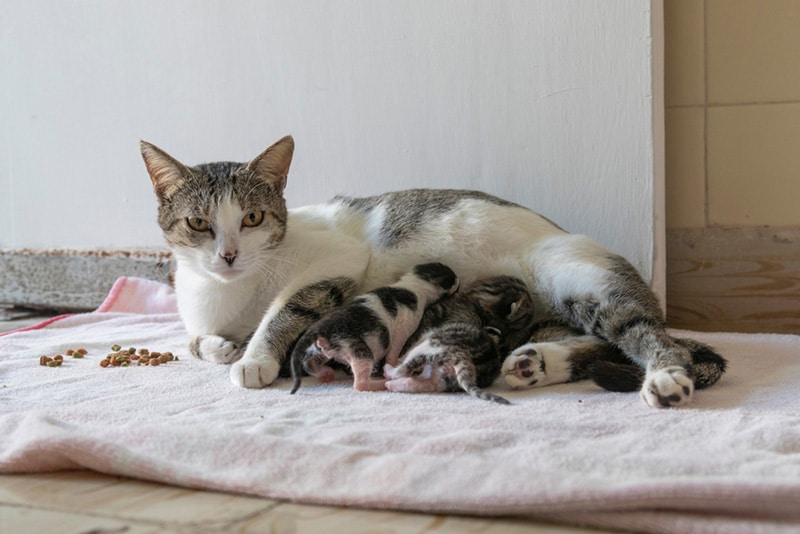
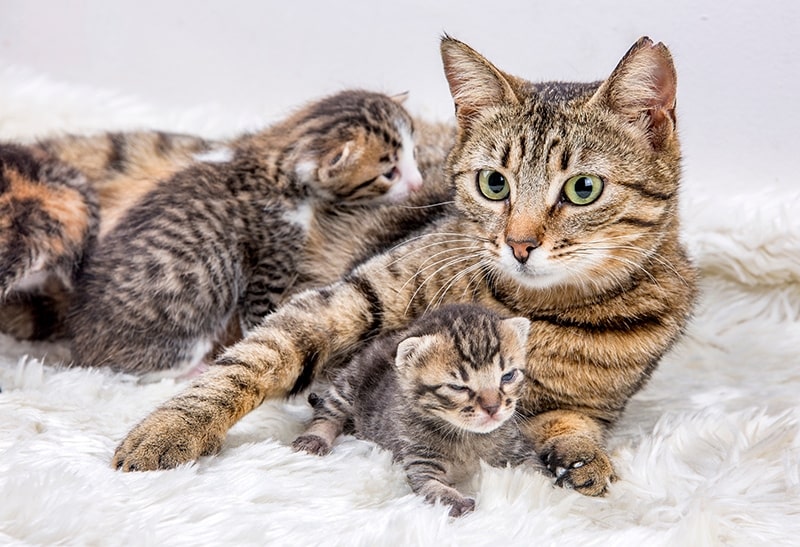
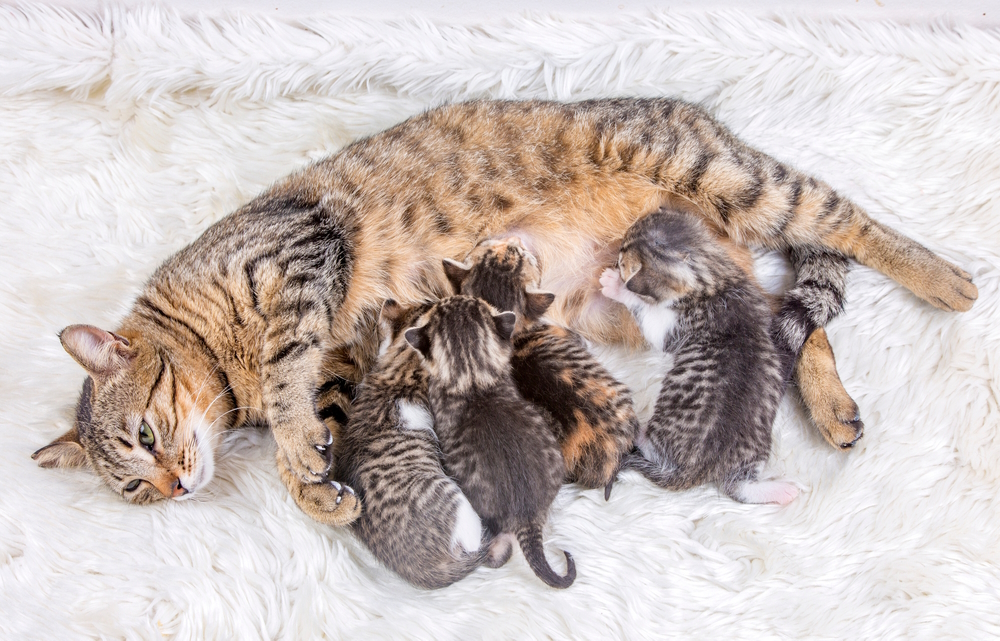
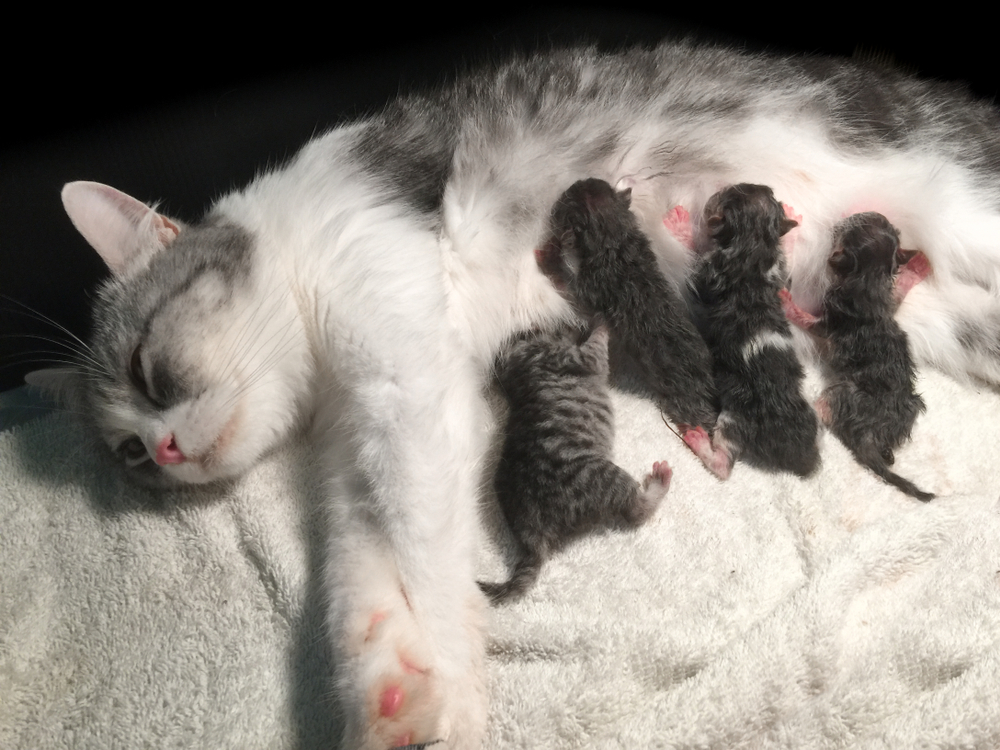
After your cat has birthed its kittens, it is a different story. Your feline will be exhausted and hungry; she’ll also need to stay close to the kittens to feed them and bond with them. So, let the mother and her kittens stay in the nesting area for as long as needed, and ensure your cat is fed with quality, high-calorie food. A high-calorie diet should be followed till nursing is finished.
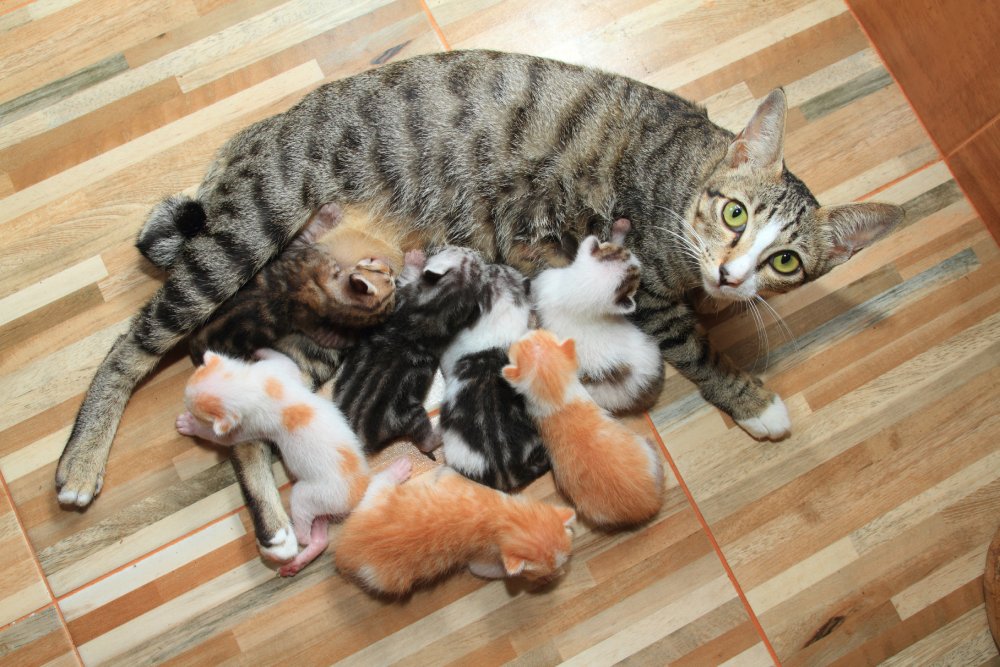
Speaking of nursing, kittens should be nursing every hour or two, but sometimes, the mother cannot produce enough milk or won’t let one or more of the kittens feed. If either of these occurs, you’ll need to contact your vet.
You must keep male cats in your home away from the mother during this time as well. Nursing cats can get pregnant again right away, which is something you want to avoid.
Conclusion
There’s a lot to know when it comes to feline pregnancy and how cats give birth! Felines aren’t pregnant for very long, 63 days, nor does birthing kittens take that long in the grand scheme of things, but it’s an intricate process. If your cat has recently become pregnant or is close to giving birth, you’ll now know what to look out for to ensure a healthy litter and mother. Then, sit back and enjoy your cat’s company and new kittens!
See also: Do Cats Bleed After Giving Birth?
Sources
Featured Image Credit: Bill Roque, Shutterstock

Expert cat care, straight to your inbox
Vet-reviewed advice, behavior tips, and the best of Catster. Free, and you can unsubscribe anytime.
By signing up, you agree to our Terms & Conditions and Privacy & Cookies Policy.
Misty Layne lives out in the woods in small-town Alabama with her two Siamese cats —Serafina and Jasper. She also has an array of stray cats, raccoons, and opossums who like to call her front porch home. When she’s not writing about animals, you’ll find her writing poetry, stories, and film reviews (cats, by far, her favorite writing topic, though!). In her free time, Misty enjoys chilling with her cats, playing piano, watching indie and foreign films, photographing abandoned places, and catching up on her never-ending TBR list.
Join the conversation
Ask a question, share your story, or send private feedback.