How to Tell If a Nursing Cat Is Pregnant Again? 7 Vet Reviewed Signs to Look For


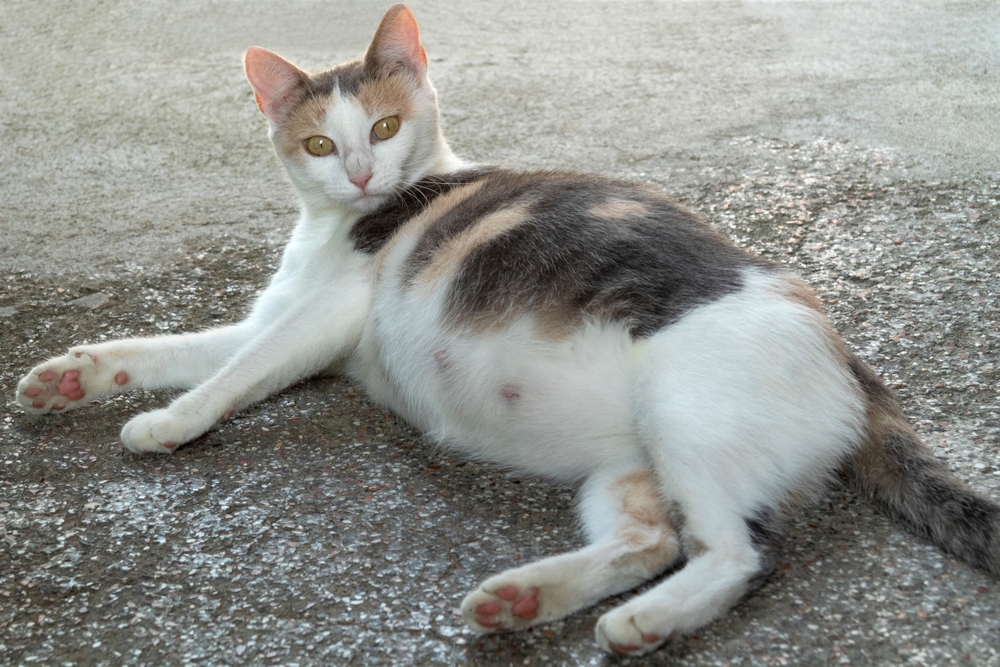
Felines are extremely fertile animals, with females able to experience heats every 2–3 weeks during the breeding season1. That adds up to multiple opportunities for your cat to get pregnant! What if your cat just had kittens, though; surely, she won’t go into heat and wind up pregnant again too soon, right?
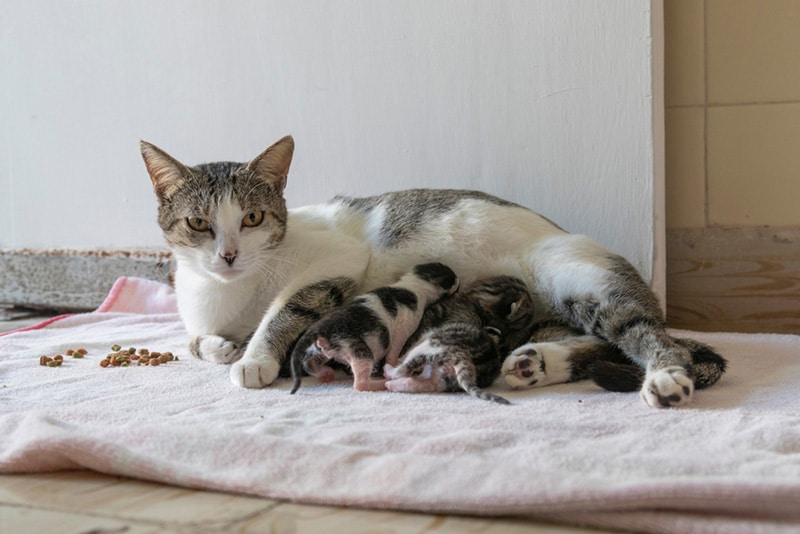
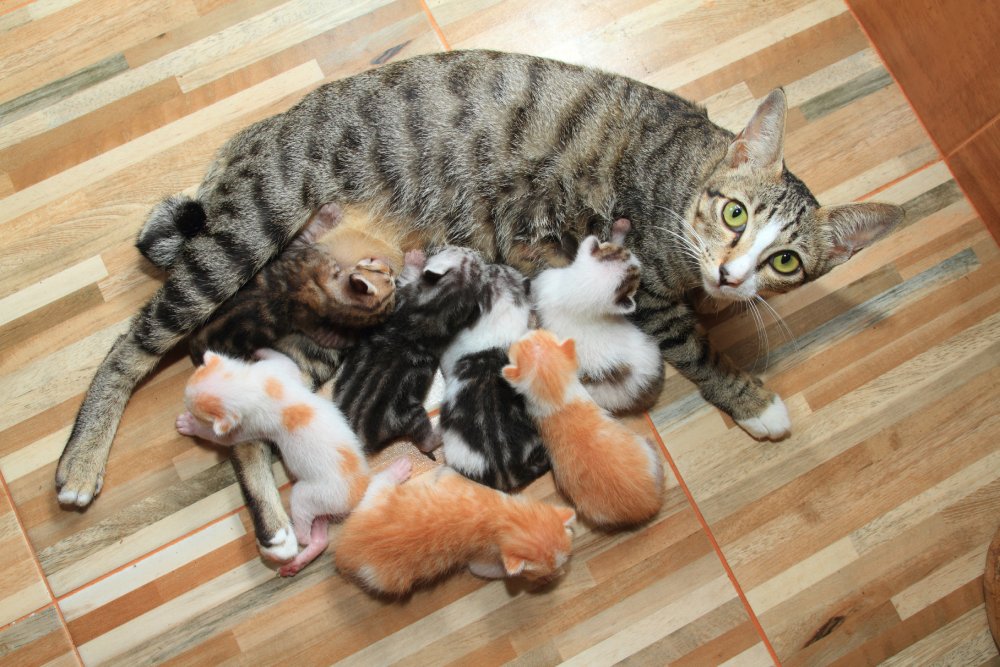
Wrong! Even if your feline companion has just had a litter, and even if she is still in the nursing stage, your cat can absolutely get pregnant again. Heats can occur within a couple of weeks after delivering a litter, so it isn’t uncommon for nursing cats to become pregnant2.
So, how can you tell if your nursing cat is pregnant again? There are a handful of signs you can look for that can tell you if your kitty might be expecting or not. Take a look below!

How to Tell If a Nursing Cat Is Pregnant Again

1. Appetite Changes
One way to figure out if your cat may be pregnant again is by paying attention to her appetite. Some felines will refuse to eat when pregnant, while others will eat more and more during the course of pregnancy. And some kitties will develop morning sickness early on (though this is rare), so if you notice your cat throwing up in the mornings and not eating as much as a result while nursing, that could be why.
2. Behavioral Changes
You can also look at your cat’s behavior to see if it’s changed recently. As with humans, pregnancy takes a toll on our feline friends, which can result in them sleeping more or not being motivated to move around much. Your cat may also become clingier while pregnant and want extra attention from you. Or your kitty may go the other way and become more aggressive than usual. These changes are minor ones, but if you notice a combination of them, it may be a sign of pregnancy.

3. Nipple Color
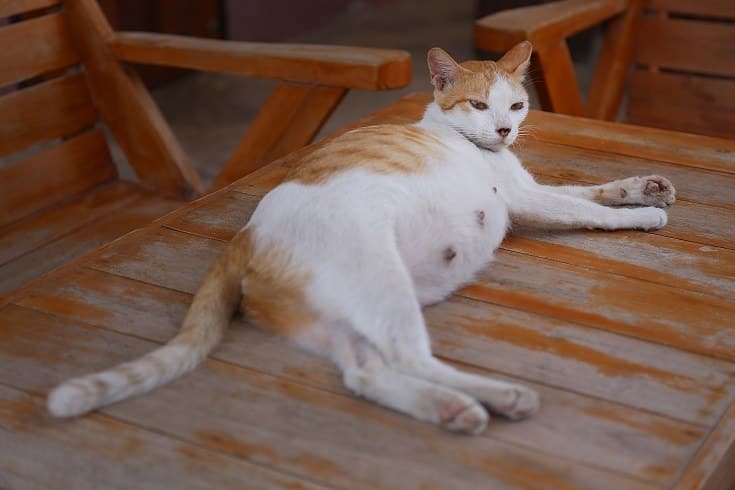
Your feline’s nipples will change a few times throughout pregnancy, but in the first couple of weeks, the biggest change will be the nipple becoming pinker in color and larger than normal. Since a nursing cat’s nipples are already swollen, the size of the nipple won’t be much help in determining pregnancy, but if the nipple is pinker than usual, your pet may be expecting again.
4. Distended Abdomen
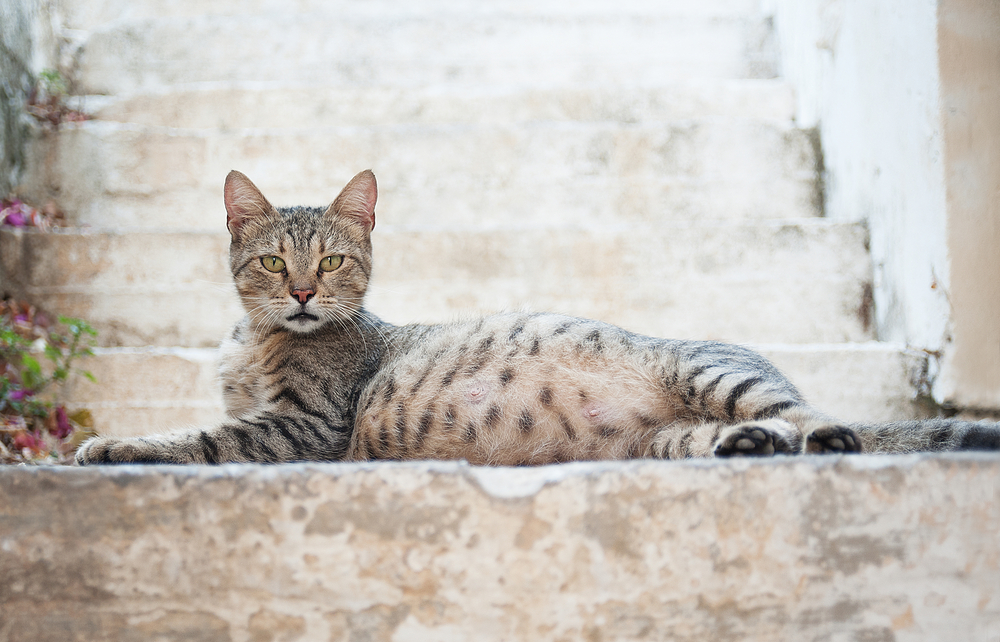
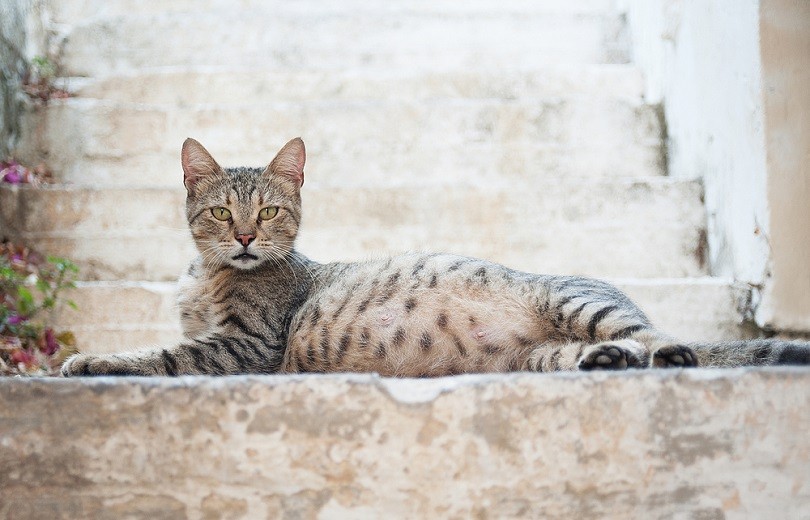
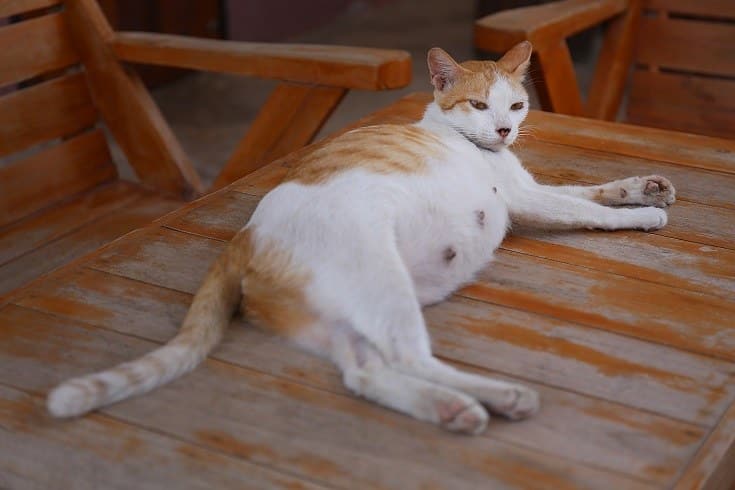
This sign of pregnancy won’t show up until 4–5 weeks, but a distended abdomen is a signal your cat may be expecting. By this point in the pregnancy, your cat’s upcoming kittens will have grown enough to extend the belly. Of course, it could simply be that your cat has put on weight since nursing, but you can try determining whether it’s weight gain or kittens with the next sign.
5. Weight Gain
This goes along with the distended abdomen and, while it could be a sign of pregnancy, may also just be a part of normal weight gain for nursing cats. But throughout pregnancy, a feline will gain 2–4 pounds (which doesn’t sound like a lot but is an amount that’s definitely noticeable on cats!). If you see that your pet has gained weight while nursing, that could indicate pregnancy.
6. By Feel
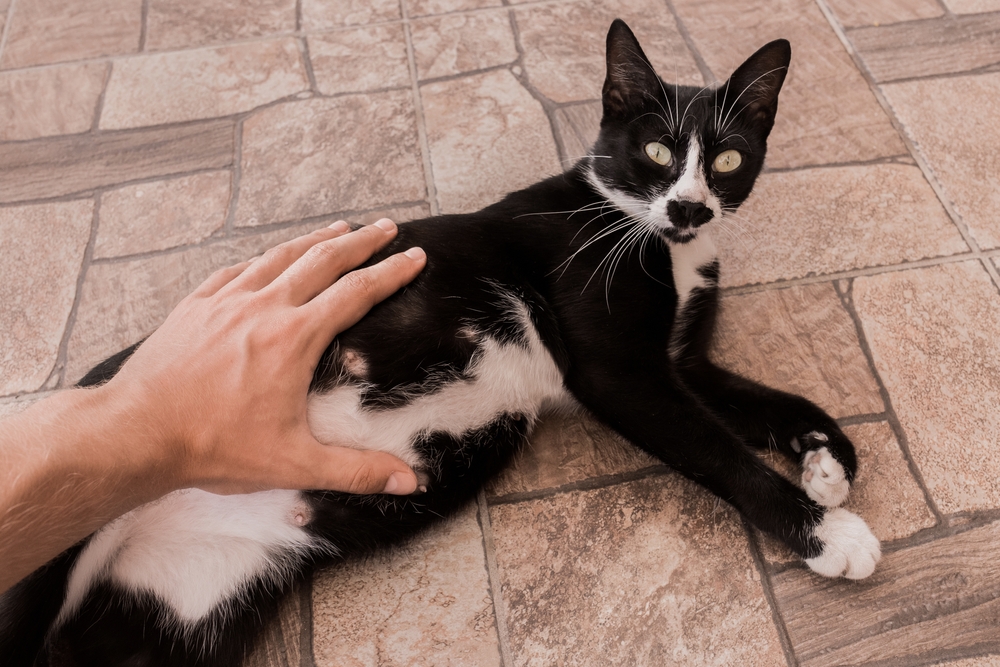
If your kitty has a distended abdomen, but you aren’t sure whether it’s pregnancy or simply weight gain, then a gentle palpation can be helpful. This is best done by your vet since not all cats enjoy having their abdomen palpated, and it is not an easy thing to do anyway. Your vet may feel around for any hardness that could indicate there is a fetus (or several). Of course, this isn’t the most accurate way to tell if your cat is pregnant, but it can be a good indication.
7. Ultrasound & X-Rays
Finally, if you suspect your nursing cat is pregnant again, the absolute best way to ascertain for sure is by taking her to the vet for an ultrasound or X-rays. An ultrasound can be done about 16 days after the start of a pregnancy, while X-rays can be done around 42 days. Ultrasonography is the preferred way to confirm a pregnancy since it can be done earlier in time and allows detection of fetal viability. However, X-rays are the best way to know the size of the litter.

Conclusion
Felines are incredibly fertile, so it isn’t uncommon for a nursing cat to become pregnant again quickly if she has the opportunity to mate with a mate cat. If you suspect your nursing cat may be pregnant, there are several signs you can look for that indicate she is expecting, such as weight gain, pink nipples, and appetite and behavioral changes. The best way to know for sure, though, is with a visit to the vet.
The best way to prevent multiple pregnancies in your female cat is, of course, by keeping them indoors while nursing and by spaying them when it’s the right time. Not only does this prevent hordes of kittens (cute as they may be), but it also offers your kitty a wealth of health benefits!
Featured Image Credit: ivona02, Shutterstock

Expert cat care, straight to your inbox
Vet-reviewed advice, behavior tips, and the best of Catster. Free, and you can unsubscribe anytime.
By signing up, you agree to our Terms & Conditions and Privacy & Cookies Policy.
Misty Layne lives out in the woods in small-town Alabama with her two Siamese cats —Serafina and Jasper. She also has an array of stray cats, raccoons, and opossums who like to call her front porch home. When she’s not writing about animals, you’ll find her writing poetry, stories, and film reviews (cats, by far, her favorite writing topic, though!). In her free time, Misty enjoys chilling with her cats, playing piano, watching indie and foreign films, photographing abandoned places, and catching up on her never-ending TBR list.
Join the conversation
Ask a question, share your story, or send private feedback.