Do Cats Bleed After Giving Birth? Vet-Approved Facts & FAQ

In this article
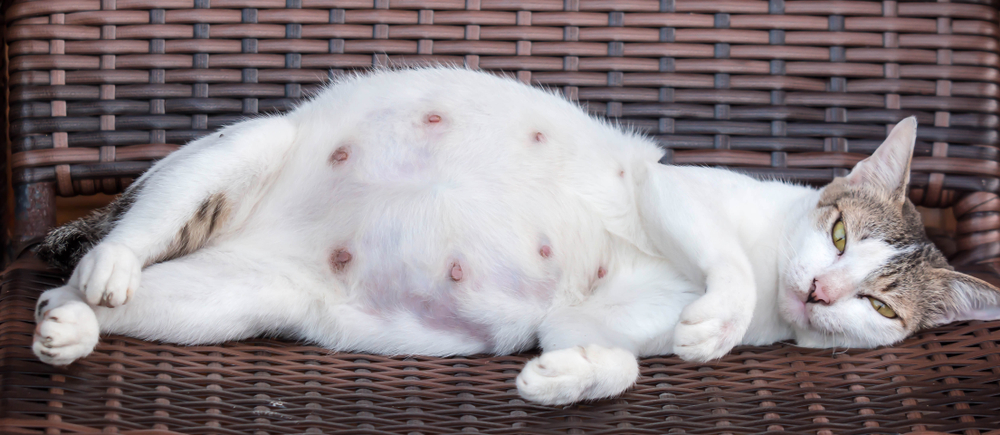
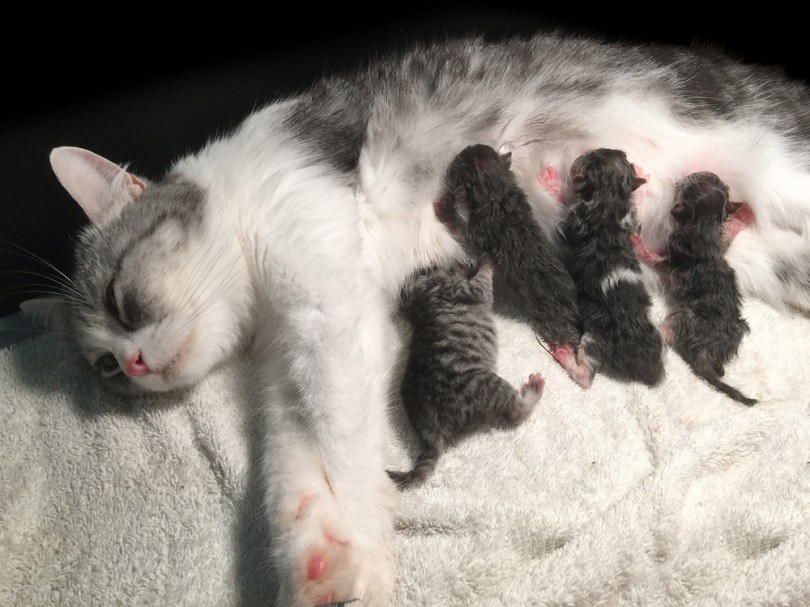
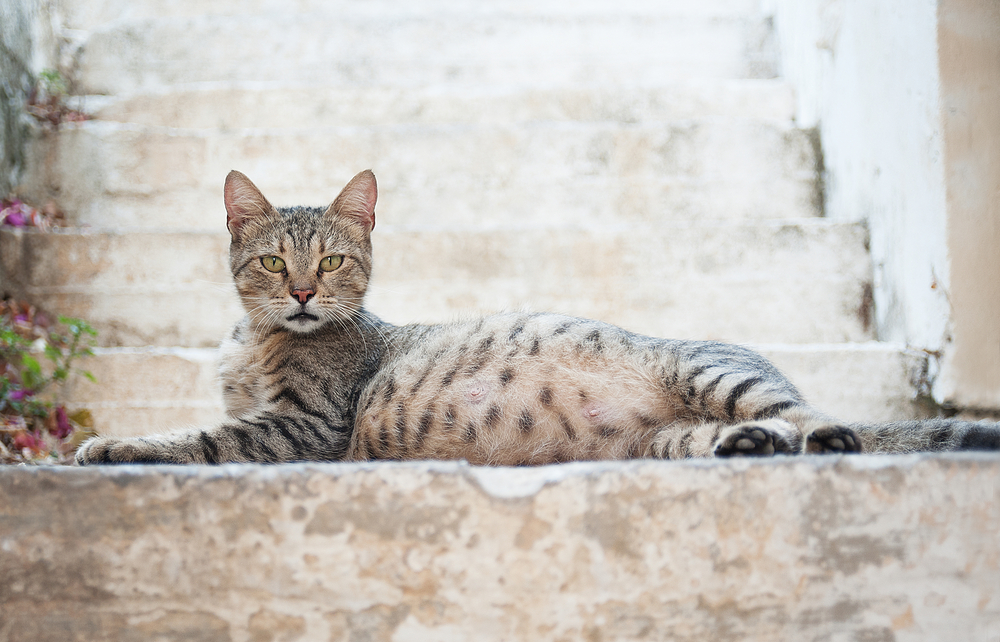
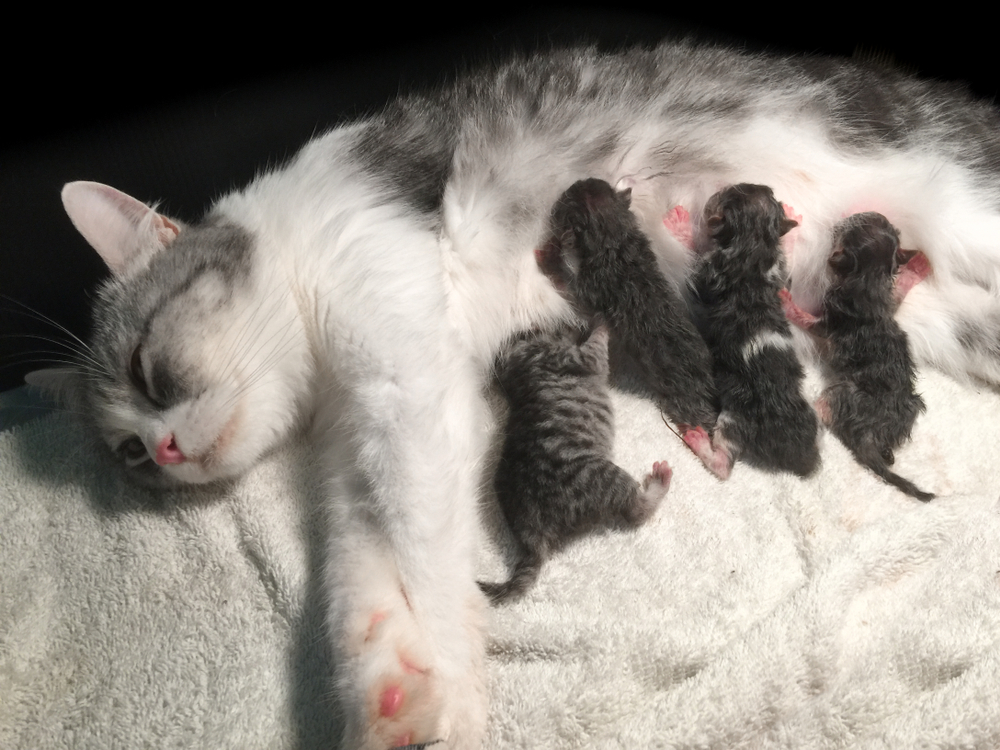
If you plan to breed your cat or they've accidentally become pregnant, you probably have a million questions about what comes next. How long a cat stays pregnant is a good one, but there are many more. One of the most commonly asked questions about cats is whether they bleed after giving birth. The answer is that cats do bleed after giving birth, usually for around 2 to 3 days. This bleeding is completely normal and seen in all female cats.
There are times when bleeding isn’t normal for a mother cat, however, and can be caused by health issues or postpartum complications. To find out about them and know what to expect when your cat is expecting, keep reading.

When Should You Worry That Your Cat Is Bleeding After Giving Birth?
It's normal for female cats to have a bloody or brownish discharge from their vaginal area for up to 3 days after giving birth. Other birthing fluids will also be seen, typically within a few days after your cat has had her kittens. These are normal also and will usually stop on their own. A little postpartum discharge consisting of a small spotting (called lochia) is normal. This can range from red to brownish in color and can last for up to three weeks, although it's usually a much shorter period.
Some abnormal situations will cause a cat to bleed after giving birth. They might have to do with the kittens being so large that they damage the mother cat’s birth canal during birth, but this is quite rare. If this happens, bleeding is likely due to the vaginal tear and resulting hemorrhaging (bleeding). If there is a foul-smelling, deep-red, or black-colored discharge, you should contact your vet immediately.
Abnormal reasons that a cat might bleed after giving birth include the following;
- Retention of fetal membranes
- Uterus infection, inflammation, or trauma
- Fluid build-up in the uterus
- An unborn kitten blocking the cat’s birth canal
If you see more than a small amount of blood and spotting after a few days have passed, it’s best to visit a veterinarian immediately and have your cat checked out. She might need to be treated for one of the problems listed, including surgery to repair a tear in her birth canal.
What Should You Do When Your Cat Is Bleeding After Giving Birth?
If your cat is bleeding slightly for a day or two after giving birth, this is considered completely normal, and there's nothing that you need to do. The discharge will turn more red-brown and eventually stop on its own. The bleeding won't be profuse if all is well but instead will be only a slight amount and mostly spotting.
Once 2 or 3 days have passed, if your cat is still passing discharge, a trip to your veterinarian is essential. You might also see other signs that something is wrong, including:
- Your cat stops eating or loses their appetite.
- Your cat starts vomiting or has diarrhea.
- Your cat might have a fever or a lower body temperature.
- Your cat doesn’t accept her kittens.
- Your cat’s mammary glands seem painful or red.
- Your cat hasn't had anything to drink or urinated in more than 24 hours.
Can an Infection Cause a Cat to Bleed After Giving Birth?
Cats are intelligent animals, and females will look for a clean place to give birth. Cats instinctively know that a dirty, germ-filled area can cause problems for them and their kittens. One of those problems is the risk of infection, which can be caused by several factors, including a dirty birthing area or giving birth to kittens outdoors.
An infection can cause your cat to have foul-smelling discharge, which is always abnormal. If your cat is not feeling well or their vaginal discharge is profuse or smelly, an infection might have developed, so having her treated immediately by a vet is critical.
Do Cats Bleed While Giving Birth?
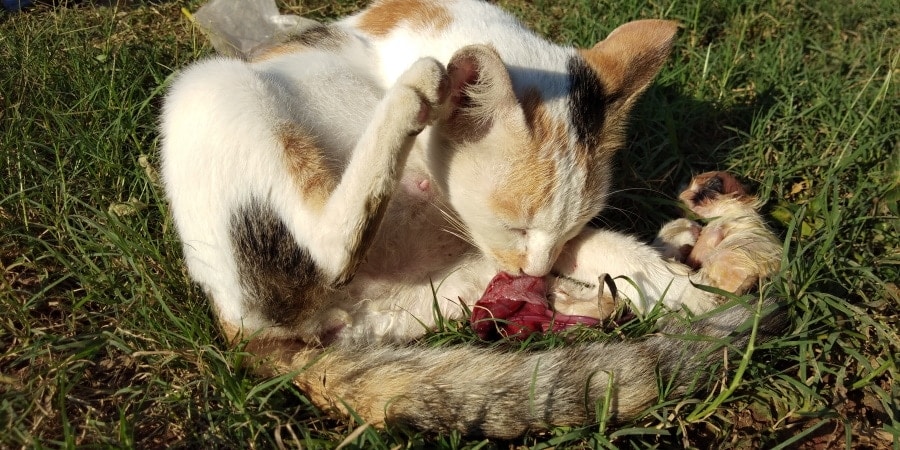
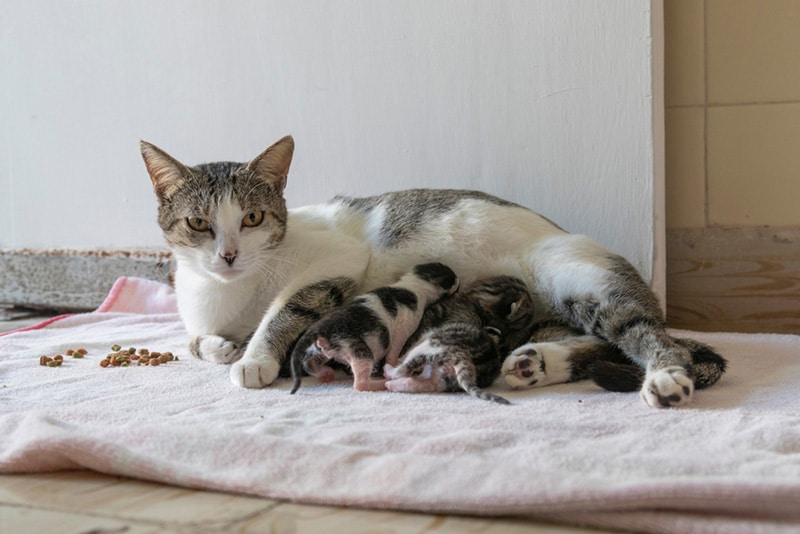
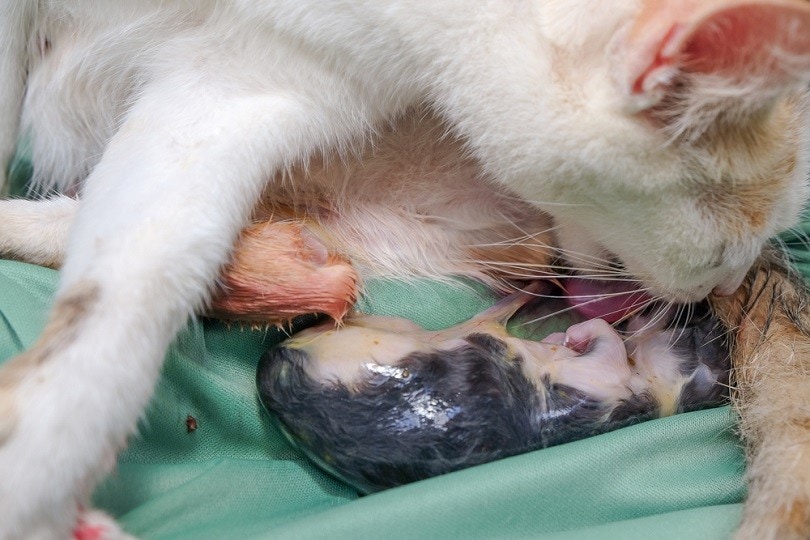
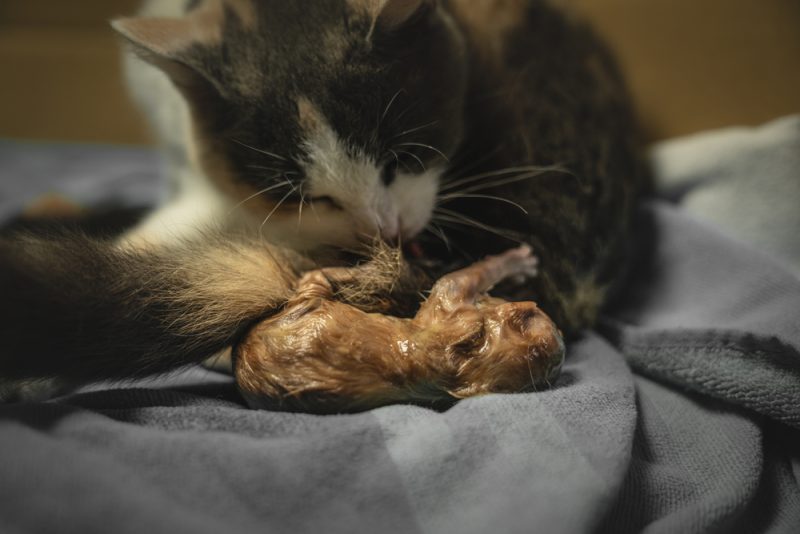
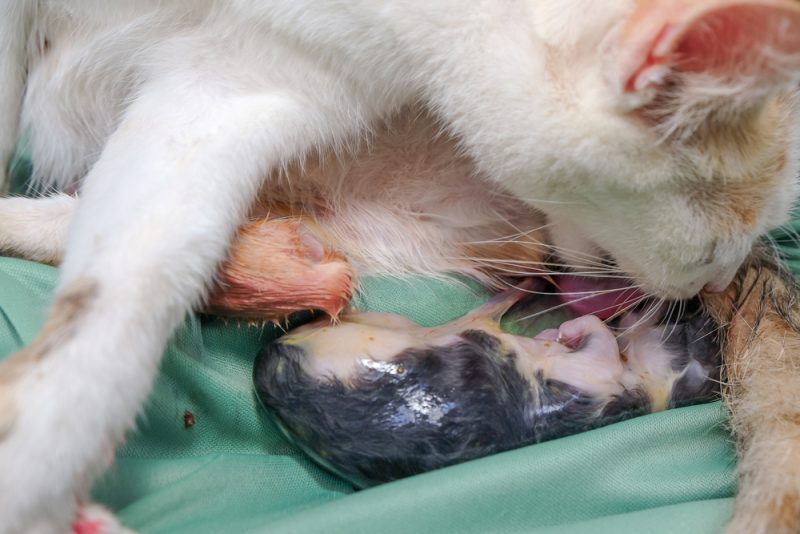
Kittens are born inside a thin sac, which needs to be torn open by the mother cat. She does this with her teeth and then uses them to cut each kitten’s umbilical cord. Some blood is normal during this process, but it doesn't mean your cat is bleeding. Once the fetal membranes have been removed (your cat may eat them) and the umbilical cord has been cut, the queen will lick her kittens clean.
Do Cats Bleed When They’re in Heat?
Unless something is wrong, cats do not bleed in heat. It is possible for queens to show a mild mucoid discharge, but it's rather unusual. In most cases, a cat in heat will let you know through several other signs, including exhibiting changes in their behavior, being more vocal, and trying to escape if they’re inside cats. If your indoor cat is in heat and escapes, the chance they will get pregnant is almost 100%.
Why Is My Cat Bleeding?
If your cat hasn’t recently given birth and you notice bleeding around her vaginal area, there could be several reasons for the issue. The most common include the following:
- There is trauma to your cat’s vaginal area
- Your cat has a urinary tract infection
- Your cat has pyometra (an infection in her uterus)
- Your cat has a tumor in her reproductive tract (ovaries, uterus, or vagina)
- Your cat has had a kitten die in her uterus (fetal death)
- Some other type of infection is affecting your cat’s vagina and/or uterus
What Is Pyometra in Cats?
One of the most common causes of cats bleeding from their vaginal area is pyometra. This condition, which can be quite severe, happens when your cat’s uterus develops an infection and fills with pus. The pus-filled uterus contains millions of bacteria, and these can spread throughout your cat’s body. The uterus can even rupture, which can cause severe problems and even death.
Pyometra typically affects older cats, but not exclusively. Some signs of the condition include bloody vaginal discharge, a loss of appetite, vomiting, and lethargy. Your cat might also have a fever and suffer from severe dehydration. In other words, if you believe your cat has pyometra, you should take them to a veterinarian immediately.
It should be noted that spaying a cat significantly reduces the risk of suffering from this condition. Spayed cats can develop a type of pyometra called “stump pyometra”, but this is not common at all.
Is It Normal For a Cat to Bleed From the Anal Area After Giving Birth?
Anal bleeding is not a normal part of a cat’s postpartum recovery and should never be overlooked. While it's completely normal for a mother cat to have some vaginal discharge after giving birth, as discussed earlier, any bleeding from the anus is considered abnormal and could indicate rectal or anal trauma or a serious medical issue. If you notice this sign, it’s important to contact your veterinarian immediately for a thorough evaluation and appropriate care.
Final Thoughts
Cats can bleed after giving birth, but usually only for 2 to 3 days before it stops on its own. Light spotting can be normal for up to 3 weeks. If your cat continues bleeding after this time, the bleeding is excessive, or has a foul-smelling discharge, you should consult with your veterinarian and schedule a visit for a check-up. Your queen may have problems with the retention of placental membranes and other tissues that need to be treated promptly.
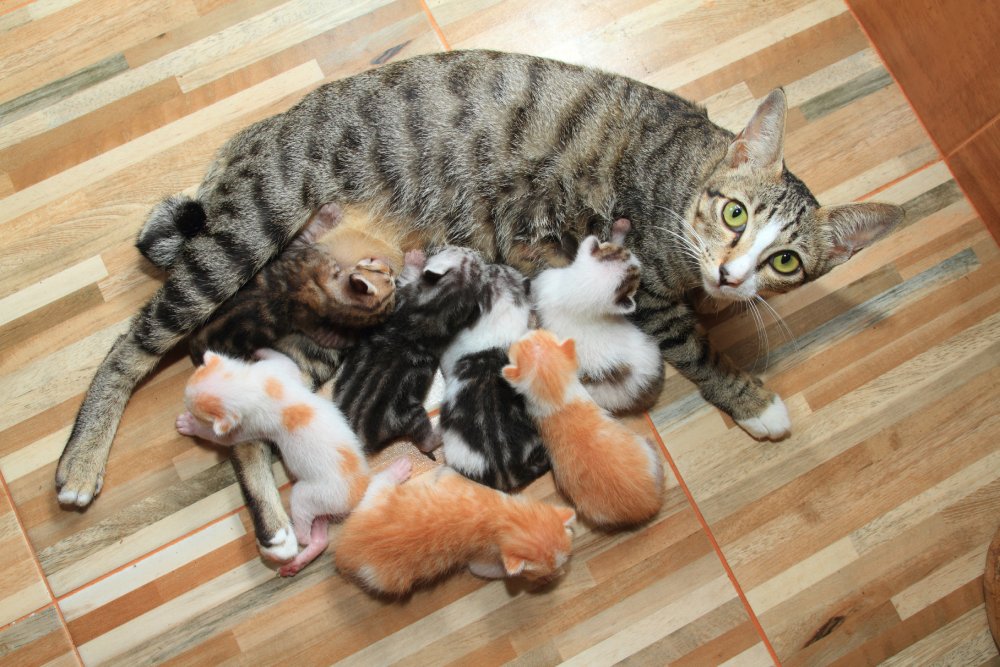
The good news is that, in most cases, your cat will only bleed a little bit after giving birth, and the bleeding will stop on its own. Mother Nature ensures that most female cats can make baby cats with very few problems or health issues.
Sources
Featured Image Credit: Azami Adiputera, Shutterstock

Expert cat care, straight to your inbox
Vet-reviewed advice, behavior tips, and the best of Catster. Free, and you can unsubscribe anytime.
By signing up, you agree to our Terms & Conditions and Privacy & Cookies Policy.
Gregory Iacono former chiropractor and self-taught writer. Greg has experience in a wide variety of subjects including video script. As a man of clinical experience, Greg has the ability to digest a complex subject and make it accessible to the reader. Greg enjoys traveling and spending time with his two daughters and son.
Join the conversation
Ask a question, share your story, or send private feedback.