Cat Reproduction & Mating: Vet-Approved Facts & Explanation


In this article
Cat breeders and veterinarians aren’t the only ones who need to know about the feline reproductive system and mating behaviors. While the average cat owner doesn’t have to be an expert, having general knowledge can help you track their health and take care of your cat better. Knowing what’s normal and what’s abnormal is essential in making good judgment calls on your cat’s well-being and getting them professional help when needed.
There’s a lot to know about cat reproduction and mating. So, we’ll go over the basic information that’s helpful for cat owners and answer common questions that people have about them.

When Do Cats Reach Sexual Maturity?

Cats reach sexual maturity at a relatively early age. They usually become sexually mature and are able to reproduce before they become a year old. Most cats go through puberty at around 6 months old, but it’s possible for some female cats to go through their first heat cycle as soon as 4 months old.
Anatomy of the Cat Reproductive System
Male and female cats have distinctive reproductive systems that function to produce eggs and sperm. While their reproductive systems share some similarities with human reproductive systems, you’ll notice a few significant differences in the stages of their reproductive cycles.
Male Cat Reproductive System
Here are the main parts of a male cat’s reproductive system:
- Testes
- Epididymis
- Bulbourethral Glands
- Prostate Gland
- Ductus Deferens
- Penis

Testes
The testes, or testicles, are situated in the scrotum and produce sperm. Testosterone is the hormone that influences sperm production, and it’s also produced in the testes.
Epididymis
The epididymis connects the testes to the ductus deferens. It’s a tube-like structure that plays a key role in sperm development, storage, and transportation. Sperm typically takes an extra 10 to 12 days to mature in the epididymis after being released from the testes.
Bulbourethral Glands
The bulbourethral glands, more commonly known as Cowper’s gland, are a pair of glands that produce mucus that helps sperm travel. They’re accessory glands that are located near the prostate gland.
Prostate Gland
Its main function is to produce the main fluid that makes up a seminal fluid. This fluid is mixed with fluids from other glands and sperm from the testicles to create semen.
Ductus Deferens
The ductus deferens, or vas deferens, is a continuation of the epididymis. It transports seminal fluid from the epididymis to the urethra.
Penis
A male cat’s penis has papillae protruding from its surface. The papillae are little spines that function to stimulate ovulation in female cats. They disappear after a cat gets neutered.

Female Cat Reproductive System
Here are the main parts of a female cat’s reproductive system:
- Ovaries
- Fallopian Tubes
- Uterus
- Cervix
- Vagina and Vulva
- Mammary Glands

Ovaries
The ovaries’ main function is to produce eggs and female sexual hormones, such as estrogen and progesterone. Estrogen aids in the development of eggs, while progesterone helps with getting the uterus ready for pregnancy.
Fallopian Tubes
The fallopian tubes, or oviducts, connect the ovaries and the uterus. It’s a passageway that transports fertilized eggs to the uterus.
Uterus
The uterus houses fertilized eggs and is the space where fetuses develop. It has three layers that function to protect the fetuses and help implant the placenta. They’re flexible and will expand as the fetuses grow, and they also contract when it’s time for the cat to give birth.
Cervix
The cervix connects the uterus to the vagina. It’s designed to prevent infections by staying closed. However, it will relax when a cat is ready to give birth.

Vagina and Vulva
The vagina is the passageway that sperm travel through, and it also provides safe passage for the kittens during birth. The vulva protects the vaginal opening.
Mammary Glands
Female cats have four pairs of mammary glands. They become active with pregnancy and work to produce milk for nursing kittens.
Feline Mating Season
Cats are polyestrous animals, which means that they go through multiple estrus cycles per year. The term “estrus” refers to a period of sexual receptivity and is also often referred to as a heat cycle or a mating cycle. On average, female cats can go through two to three heat cycles in one mating season and birth two to three litters of kittens per year.

Feline Breeding Behavior
In the northern hemisphere, it’s common for mating season to start in February and last through October. It seems that the increased length of daylight triggers estrous activity in cats. Female cats are ready to mate when they’re in the estrus stage of their heat cycle.
If a female cat in heat is near a male cat, the male cat will usually first take time to observe her behavior to determine if she’s ready to mate. If he sees her exhibiting mating behavior, he’ll start to approach her. The female cat will then get into the position of lordosis. She will lie down with her hindlimbs elevated and her tail up.
The male cat will then mount the female cat and will bite her neck to keep her in place. Once ejaculation occurs, he will release her and move away from her. This can last anywhere between 1 to 4 minutes.The female cat will usually exhibit a set of certain behaviors immediately afterward. She may roll around or rub herself on different objects. She can also lick the vulvar area. The male cat will typically stay nearby and observe her. Once she has settled down, the cats usually reengage and mate again, and cats can mate many times per day.
Male Cat Behavior During Mating Season
Male cats have an established territory that they possess. Once the mating season begins and female cats in his territory are showing signs of being in heat, he usually starts to behave differently.
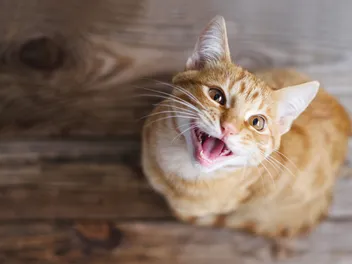
Male cat mating behavior consists of several activities. One of the most notable behavioral changes is the male cat mating call. This mating call is really loud and often sounds like the cat is yowling in pain.
Male cats can also start to increase urine marking and spraying to attract a mate. They often become restless and more active. It’s important to keep a close eye on pet cats during mating season because they’re much more likely to roam and escape from their homes to search for a mate.
Another thing you may notice from pet male cats is increased aggressiveness. They may pick fights with other cats or pets in the house as a means of protecting their territory.

Female Cat Behavior During Mating Season
Female cats can share certain behaviors that are similar to male cats when they’re in heat. Like male cats, they can become more vocal to attract a mate, become more active, and are likely to roam. Some female cats may urinate more frequently, and it’s believed that they do this to let male cats know that they’re ready to mate.
Female cats that are in heat often start to raise their hindquarters in the air and swish their tails from side to side. Some female cats may act more affectionate and attention-seeking. They might ask for more pets and will rub themselves against you. They can also have bursts of aggression, and it’s common for them to go back and forth between being affectionate and irritated.
It’s important to note that female cats go through menstruation cycles, but it’s not common for them to bleed. So, if you notice any spotting or bleeding, it’s best to contact a veterinarian right away. While light spotting may not pose a problem, bleeding can still indicate an underlying medical issue, like a urinary tract infection.
Is It Possible to Calm Down Cats While They’re in Heat?
Cat behavior during their mating season can test the patience of many cat owners. Your cat is likely to become louder and more demanding. Some cats also become more aggressive. You’ll have to keep a closer eye on your cat because they’ll try to escape and go outside to find a mate.
There are some things you can do to calm down a cat in heat. First, it’s important to keep male cats apart to prevent aggressive behaviors and fights. Some cats will appreciate having a heating pad or hot water bottle. Make sure to play with your cat to help them expend some of their energy. Some cats may also calm down if you give them catnip.
It’s important to remember that even if you do all these things, your cat may not calm down during the mating season. At the end of the day, these behaviors are normal, and your cat can’t help but engage in them. It’s important not to show frustration, anger, or annoyance toward your cat during mating season.
Spaying or neutering your cat can help reduce these behaviors, as cats no longer feel the need to mate. So, if you’re not planning to breed your cats, it’s best to have them spayed or neutered. Female Heat Cycle and Pregnancy
A female cat’s heat cycle from mating to birthing kittens consists of six stages:
- Proestrus
- Estrus
- Interestrus
- Diestrus
- Anestrus
- Gestation
The proestrus phase lasts between 1 to 2 days and is the period that prepares cats to go into the estrus stage. The estrus stage is more commonly known as when cats go into heat. You’ll notice behavioral changes in cats during this stage, and they’ll be receptive to mating. The estrus stage can last anywhere between 2 to 19 days.
If the female cat doesn’t mate, she’ll go into the interestrus stage, which can last between 13 to 18 days. After the end of this stage, she’ll go through another estrus stage. If a female cat does mate during the estrus stage, she’ll enter the diestrus stage. This stage occurs when the female cat has ovulated.

The anestrus stage simply refers to the timespan when cats are not going through a heat cycle. If a cat does enter the diestrus stage, she will then enter the gestation period. Gestation usually lasts between 63 to 65 days until the cat gives birth to her litter. Female cats can be ready to mate again 8 weeks after giving birth to kittens.
Conclusion
It’s generally recommended for pet cats to be neutered or spayed because of the challenges that come with cat mating seasons. These procedures also help reduce the stray cat population and overcrowding in animal shelters.
If you choose to care for cats that have not been spayed or neutered, it’s essential to understand the feline reproductive system and mating behaviors so that you’re prepared to act if something is wrong. Because a cat’s reproductive system plays a significant role in their health and well-being, make sure to contact a veterinarian if you notice anything strange or abnormal.
Sources
American Association of Feline Practitioners – Normal Feline Reproduction: The Tom
American Association of Feline Practitioners – Normal Feline Reproduction: The Queen
Merck Manual Veterinary Manual – Breeding and Reproduction of Cats
Merck Manual Veterinary Manual – The Gonads and Genital Tract of Cats
Featured Image Credit: Magui RF, Shutterstock
Expert cat care, straight to your inbox
News, insights, and useful advice, delivered to you.

No spam — unsubscribe anytime.
By signing up, you agree to our Terms & Conditions and Privacy & Cookies Policy.
How useful was this post?
Click a star to rate. You can leave written feedback afterwards. (We read all feedback.)
Jessica is a freelance writer who spends most of her day researching and writing while her fluffy Cavapoo, Nora, naps beside her. She loves and appreciates pets and animals because there’s so much to learn from them, and they do so much for people. As a dog owner, she understands the special connection that pet owners form with their pets. She loves sharing helpful information that people can use to better understand their pets. When she’s not writing, you can find her walking dogs, tending to her plant babies, or drinking her nth cup of coffee.