11 Snowshoe Cat Facts: Vet Reviewed Insights on Origin, Appearance & Traits


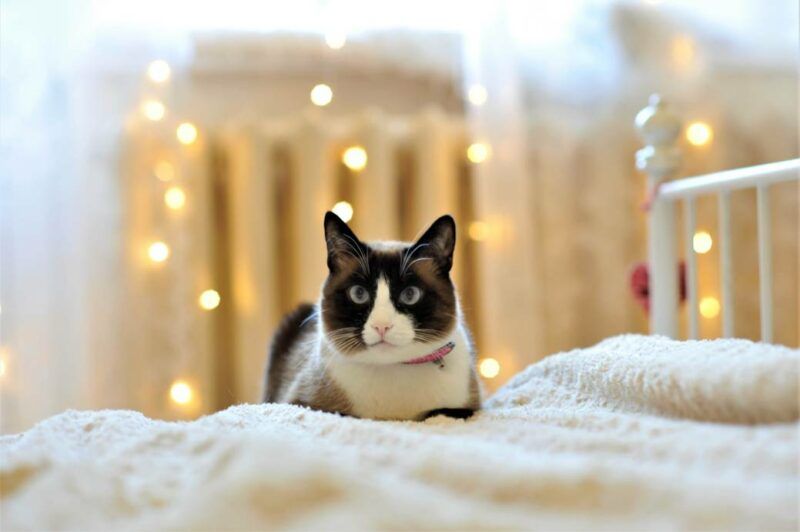
Snowshoe cats are a striking and relatively new breed that combines some of the best features from two or three different breeds. Snowshoes are still a very rare breed, but are becoming more popular, especially in the United States. They have a special face, a murky history, and some completely unique quirks. If you have never heard about the Snowshoe Cat, you are missing out. Here are 11 unusual facts about the breed that will deepen your understanding of them.

The 11 Unusual Snowshoe Cat Facts
1. Snowshoe Cats Were a Mistake
The first three Snowshoe cats were born from a Siamese mother. These three cats had the normal Siamese body markings but they had white feet and white socks, which immediately caught the attention of the owner, who was enamored with the look. They came out with white feet by accident and kicked off a whole new movement in the cat world.

2. Snowshoe Cats Were Originally a Crossbreed
Snowshoe cats are a mixture of two popular breeds; the American Shorthair and the Siamese. Both of these breeds are friendly, intelligent, playful, and beautiful, and the Snowshoe cat has inherited many of these desirable traits.
3. Snowshoe Cats Are Born White
Snowshoe Cats are almost always born white. Their coat colors begin to develop over the first three weeks of life. Snowshoes will not develop their full color for up to a year after birth. This is a strange characteristic that is inherited from their Siamese ancestors. If you are attempting to breed Snowshoe Cats and find that your kittens are white, you didn’t do anything wrong. This is completely normal.

4. Snowshoe Cats Always Have Blue Eyes
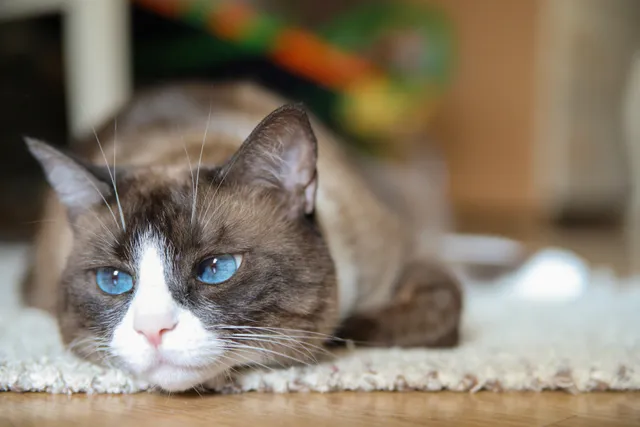
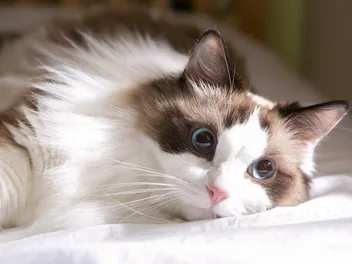
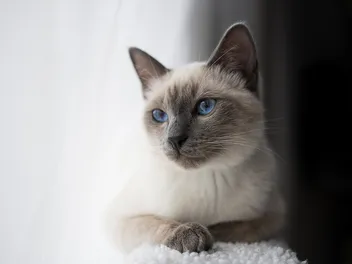
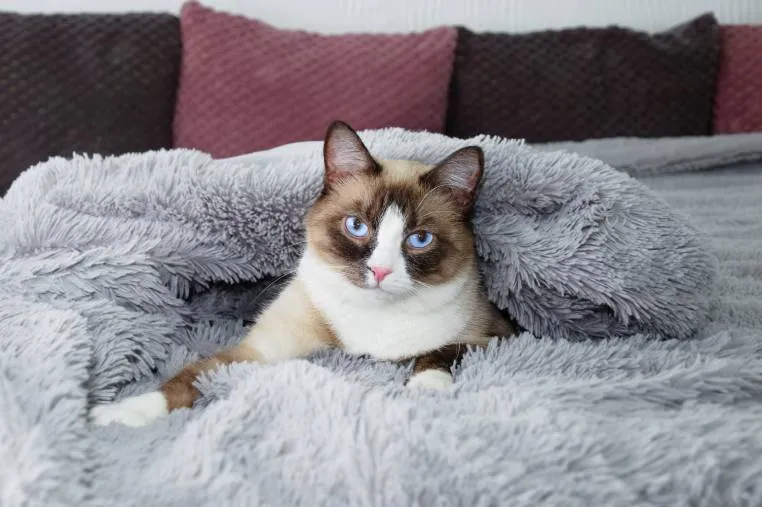
Another quirk of the breed is the fact that all Snowshoe Cats have blue, vibrant, and incredibly striking eyes. These eyes are one of the features that attract people to this breed. Recognized, breed-standard Snowshoe cats have these distinctive blue eyes. The genes that make a Snowshoe cat a Snowshoe cat are primarily recessive. Since blue eyes are a recessive gene, Snowshoes get this phenotype from a very specific genetic combination.
5. Snowshoe Cats Have Odd Shaped Eyes
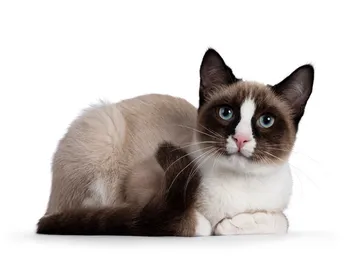
Snowshoe cats have walnut-shaped eyes. That means that their eyes are more rounded than those of other cats, including Siamese cats. Walnut-shaped eyes are a hallmark of Snowshoe conformation. The shape of the eyes paired with the color of the eyes is one of the best ways to tell if you are dealing with a legitimate Snowshoe cat and not another similar-looking breed.

6. The Name “Snowshoe” Comes from a Unique Marking
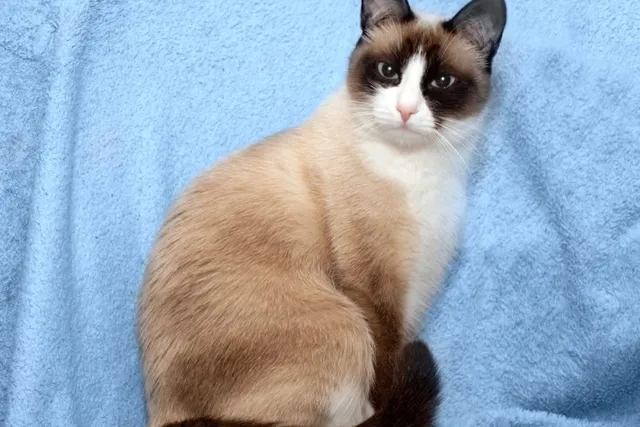
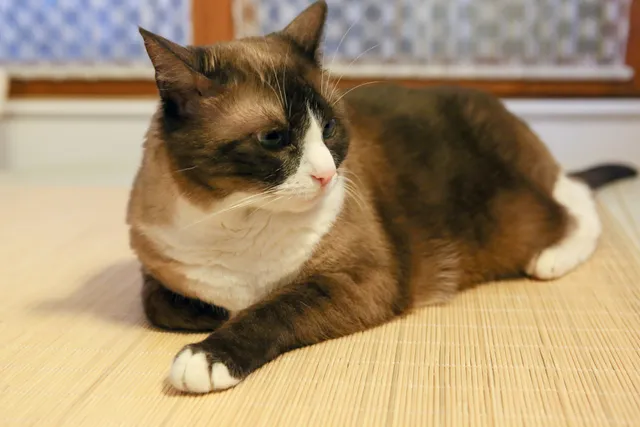
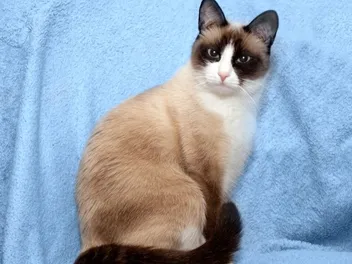
Snowshoe seems like an odd name for a cat breed. The name is derived from the white feet and white socks that all Snowshoes possess. The person who originally bred the first three modern Snowshoe cats gave them their name based on the markings on their feet. Since the feet are white as snow, these cats received the moniker "Snowshoe" cat.
7. This Breed Is Relatively New
Some cat breeds are exceptionally old, dating back to the Ancient Egyptians or Chinese. The Snowshoe cat, by comparison, is very young. The modern Snowshoe cat was originally bred in the 1960s in Philadelphia. The breeder’s name was Dorothy Hinds-Daugherty, and she was the one who named the Snowshoe cat breed and was the one who fell in love with their white feet.
For the first 10 years, there weren’t any registered breeders interested in breeding Snowshoe cats. That started to change in the 1980s when more than two dozen Snowshoe breeders popped up, prompting the breed to become registered. The cats didn’t start gaining real popularity until the 1990s. Today, Snowshoe cats are recognized by the American Cat Fanciers’ Association (ACFA) and The International Cat Association (TICA).

8. Their Exact History Isn’t Well Understood
Despite tracing their modern lineage back to a cat breeder in 1960s Philadelphia, the exact origins of the Snowshoe cat are unknown. There are pictures dating back much further than 1960, which show what look to be Snowshoe cats. There is a Victorian painting and an ancient Japanese silk screen that seem to show cats with all of the telltale markings of a Snowshoe. These could have been other breeds, like Siamese, that have specific recessive genes, but it highlights the fact that Dorothy Hinds-Daugherty might not have been the first person to unwittingly breed a Snowshoe Cat.
9. Snowshoe Cats Seem to Like Water
Unlike most cats, Snowshoes like the water. They will play in the water and, anecdotally, even go swimming. Most cats hate the water and will only go in if they are absolutely forced to. Of course, forcing a Snowshoe cat to go in or near water is unacceptable if they don’t want to. But Snowshoes might partake in some water fun on their own if given the opportunity.
10. Snowshoe Cats Typically Form a Single Bond
Snowshoe cats are very friendly, but they usually only form a single strong bond with their person. This is called a primary attachment. Once a Snowshoe cat bonds to you, they will follow you around and prefer to spend all of their time with you. Usually, once a bond is formed, Snowshoe cats won’t form another one, and they won’t switch bonds unless they are completely separated from their owner for a long period of time. Since Snowshoe cats are so social and form strong bonds, it is not recommended to leave them alone for long periods of time.
11. The Feet Aren’t Their Only Special Marking
Snowshoe cats got their name from their white feet, but they also have another distinctive fur marking. Snowshoes have an inverted white V between their striking blue eyes. This V is another hallmark of the breed that will only come in as the cat ages (remember, they are born almost entirely white).


Conclusion
These 11 facts highlight the unique features of the Snowshoe cat, including their muddled history, their breeding practices, special markings, and more. These factoids point out how unique Snowshoe cats truly are and highlight why they are gaining popularity. With their striking looks and charming personalities, we are sure that you’ll be seeing a lot more of this breed.
See Also:
Sources
Featured Image Credit: Misha Leng, Shutterstock
Expert cat care, straight to your inbox
News, insights, and useful advice, delivered to you.

No spam — unsubscribe anytime.
By signing up, you agree to our Terms & Conditions and Privacy & Cookies Policy.
How useful was this post?
Click a star to rate. You can leave written feedback afterwards. (We read all feedback.)
Grant is a freelance writer with years of experience writing about a diverse range of topics. He currently lives in his home state of Florida with his wife. His days are spent writing, raising a rambunctious son, and caring for eight animals (two horses, two donkeys, two goats, and two dogs). In his free time he enjoys slowly carving out a quaint hobby farm from the Southern scrub.