What Happens If You Neuter a Cat Too Early? Vet-Reviewed Facts & Advice



In this article
There are over 60 million homeless cats across the United States.1 For some, living outdoors is all that they’ve known, having been born to feral parents. For others, this way of life is something that they’ve had to navigate and adapt to after being abandoned by their owners or getting lost. These street cats rarely die of old age, but rather from diseases, injuries, and infections. As a responsible cat owner, you should neuter your cat.
Cats usually reach sexual maturity and can start to reproduce around 4 months of age. To prevent accidental pregnancies, it’s recommended that you neuter your cat around this time. Neutering before this age is common and safe, but it is important that your kitten is first vaccinated for their own protection and the protection of other pets.

Early Neutering Is a Common Procedure
Many animal shelters will neuter their kittens from 6 weeks of age, but some states require them to wait until the kitten is 2 months old and over 2 pounds in weight.
The reason that the surgery doesn’t occur earlier than 6–8 weeks of age isn’t due to a risk of neutering complications, but rather to ensure that they are fully immunized before undergoing surgery in an animal hospital that contains other pets. It’s important that your kitten is first vaccinated for their own protection and the protection of the other pets.
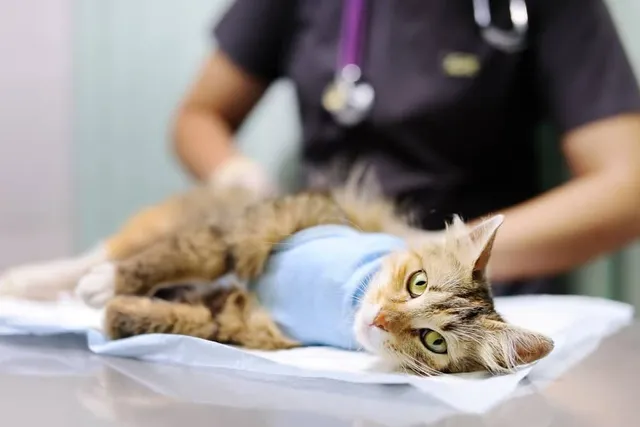
Another area of concern around neutering your kitten before 6 weeks of age is how their little bodies will handle the anesthesia and the factors surrounding surgery. Although modern anesthetic drugs are safe for kittens, there are risks of hypoglycemia and hypothermia.
Before surgery, your kitten won’t be able to eat for several hours, which can put them at risk for hypoglycemia. However, this risk can be reduced by minimizing the window between the kitten’s last meal and the surgery.
Hypothermia is another factor because a kitten’s tiny body can lose body heat quickly. However, their veterinarian can maintain their body temperature by using warming devices.

Myths Around Early Neutering
There are many misconceptions about neutering a cat too early, and many people have been told that cats do better if they’re neutered after their first litter of kittens or after their first heat. However, this only increases the chances of accidental pregnancy and contributes to feline overpopulation numbers.
Here are a few myths that you may have heard about early neutering. However, there is recent evidence to show that these concerns are likely unfounded.
Myths about early neutering
Although more research on this subject is needed, many vets are comfortable performing this surgery on kittens that are as young as 8 weeks of age. There has also been a study carried out on groups of kittens that were neutered at different ages, and the results showed that age didn’t have an effect on the cat’s behavior or development. In fact, there were more minor complications uncovered in the older neutered age group than in the youngest one.
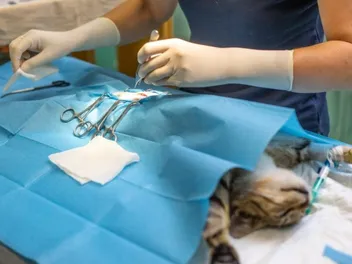
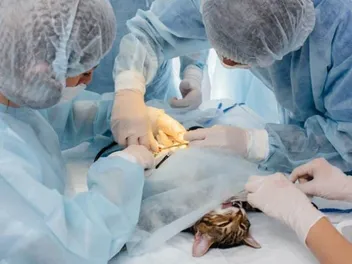
There are a few benefits to neutering kittens early as opposed to waiting until the standard age. Younger kittens tend to recover faster from the anesthesia and experience less trauma, and the surgery is often quicker because kittens are smaller and have less fat, making them easier to operate on.

Why People Neuter Their Cats at Different Ages
Although it is relatively safe to neuter your kitten from as early as 8 weeks of age, it is not always necessary, and most vets encourage owned cats to be neutered between 4 and 5 months.
Animal shelters commonly have their kittens neutered early so they’re suitable for adoption while they’re still young, as most people prefer adopting kittens over older cats. Some people prefer to get it done as early as possible because different cats reach sexual maturity at different ages, and they don’t want the risk of their kitten becoming pregnant.
However, most cats reach this stage at around 4 months of age, so as long as you have them neutered around this age, they’re unlikely to fall pregnant. Some vets are more in favor of waiting until this age because most kittens receive their last vaccination at around 16 weeks, becoming fully inoculated. These kittens also weigh more and have a lower risk of developing hypoglycemia or hypothermia.
The final decision is made between you and your vet. They will use their professional judgment and knowledge based on your kitten’s health and breed to determine the best time for your kitten to undergo the procedure.

The 3 Other Benefits of Neutering a Cat
Apart from adding to the number of unwanted kittens in the United States, neutering your cat will likely extend their lifespan. Here is why.
1. It Prevents Certain Cancers and Diseases
Neutering and spaying can reduce the risk of testicular cancer. It also reduces the possibility of prostate and uterine infections. These diseases can be life-threatening to your cat.
2. It Can Help Eliminate Bad Behavior
Male cats spray around your home to mark their territory. They feel the urge to do this because of their hormones. Female cats in heat can also be troublesome, as they become very vocal. They howl to get the attention of a mate and may even spray around your home to let males know where to find them. However, neutering your cat while they’re still young will prevent them from developing these behaviors.

3. It Can Reduce Injuries
Unaltered female and male cats tend to roam in an attempt to find a mate. This can cause them to become lost and puts them at risk of danger. Your house cat may not know how to navigate the world outside their home and can get hit by a car, attacked by a dog, injured from a fall, etc.
Unaltered males also tend to fight other cats over their territory, which puts them at risk of serious injuries and infections. Although neutering your cat might not eliminate these urges, it will reduce them.

Conclusion
Although there are a few risks around the surgery, neutering your kitten early isn’t harmful to them. Instead, it can protect your cat from roaming tendencies, diseases, cancers, danger, and problem behavior. There are many misconceptions about early neutering, and although more research is needed, there has been little evidence so far to back up these claims.
Instead, studies have shown that there is little difference in a cat’s long-term health if you neuter them at 8 weeks or wait until 4 months of age.
Sources
https://journals.sagepub.com/doi/full/10.1177/1098612X221128781
https://www.thesprucepets.com/early-spay-and-neuter-of-cats-552482
https://todaysveterinarypractice.com/preventive-medicine/optimal-age-spay-neuter-cat/
https://www.avma.org/resources/pet-owners/petcare/spaying-and-neutering
https://pets.webmd.com/cats/guide/spaying-or-neutering-your-cat-faq
https://www.humanesociety.org/resources/why-you-should-spayneuter-your-pet
Featured Image Credit: BadPixma, Shutterstock
Expert cat care, straight to your inbox
News, insights, and useful advice, delivered to you.

No spam — unsubscribe anytime.
By signing up, you agree to our Terms & Conditions and Privacy & Cookies Policy.
How useful was this post?
Click a star to rate. You can leave written feedback afterwards. (We read all feedback.)
Keri-Beth is a freelance writer from South Africa who loves writing about cats. She's very passionate about pet care and has spent quite a bit of time volunteering at animal shelters. Keri-Beth currently has two dogs: Benji, the Golden Cocker Spaniel, and Gracie, the Boerboel.
Keri-Beth's favorite hobbies include photography and camping. She lives with her husband, who is a professional drummer.