15 Types of Cat Furs: Colors, Patterns & Markings (With Pictures)


In this article
Felines have coats of fur that come in a variety of different colors, patterns, and markings. If you’re thinking about adding a new kitty to your household for the first time, you might wonder what type of fur your new pet ought to have. Should you pick short and smooth or long and thick? Learning more about the different types of cat furs can help you decide. Here are the 15 types of cat furs that you should know about.

The 4 Types of Cat Hair
Cats have four different types of hair on their bodies: down, guard, awn, and vibrissae. Read on to learn about each and how they serve felines overall.
1. Down Hair
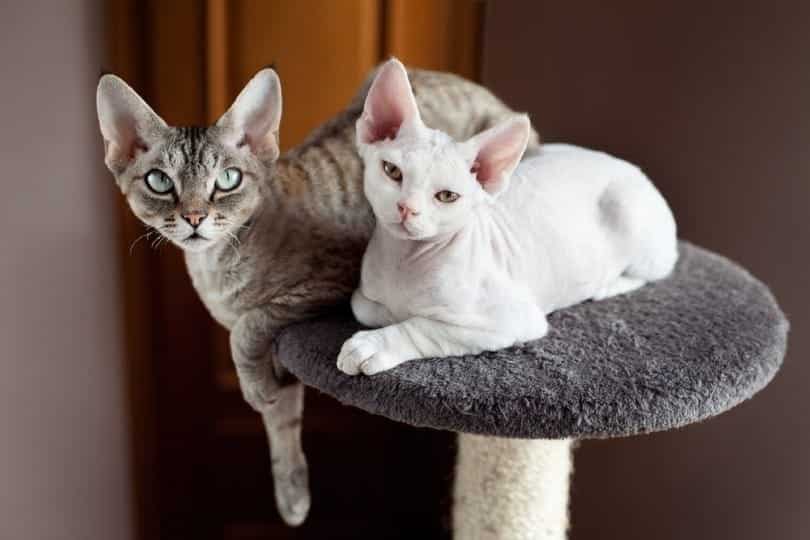
A cat’s down hair is soft, silky, and thick. It serves to insulate the body and help maintain safe body temperatures whether it’s warm or chilly. This hair sits against the skin and is often referred to as the undercoat. Not all cats have down hair, though, and some cats—like the Devon Rex—have fur that is mostly down hair.
2. Guard Hair
The coat that sits on top of the down hair is called guard hair. It is typically longer and coarser than down hair and is designed to protect cats from the outdoor elements. It repels water and helps keep mud and debris from getting embedded in the undercoat. The guard hairs display the color and pattern of the overall coat.
3. Awn Hair
The awn hair on a cat serves as a protector of the down hair and helps fill out the guard hair to create the thick, soft cat coat that we love to pet. Awn hair is coarse and typically has tips that are darker in color than the rest of the hair. On many cats, the awn hair makes up most of the visible coat, as it is more abundant than guard hair.
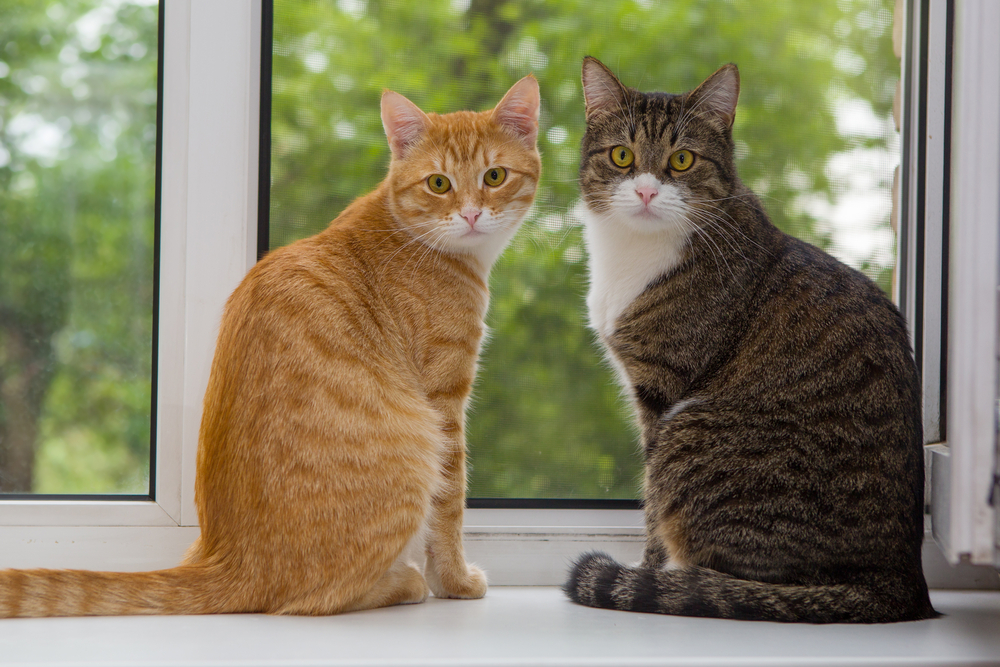
4. Vibrissae
Whiskers are made up of tactile hairs called vibrissae. They’re incredibly thick, which is why whiskers stand out instead of fold down. Not only does vibrissae make up a cat’s face whiskers, but it also grows above the eyes and along the outer sides of the legs.
Looking for a versatile cat brush for any coat type? Check out our top cat brush options here.
The 5 Types of Cat Coats

In addition to having multiple types of hair on the body, a cat may develop one of four different types of coats. Let’s explore these here.
5. Long Coat

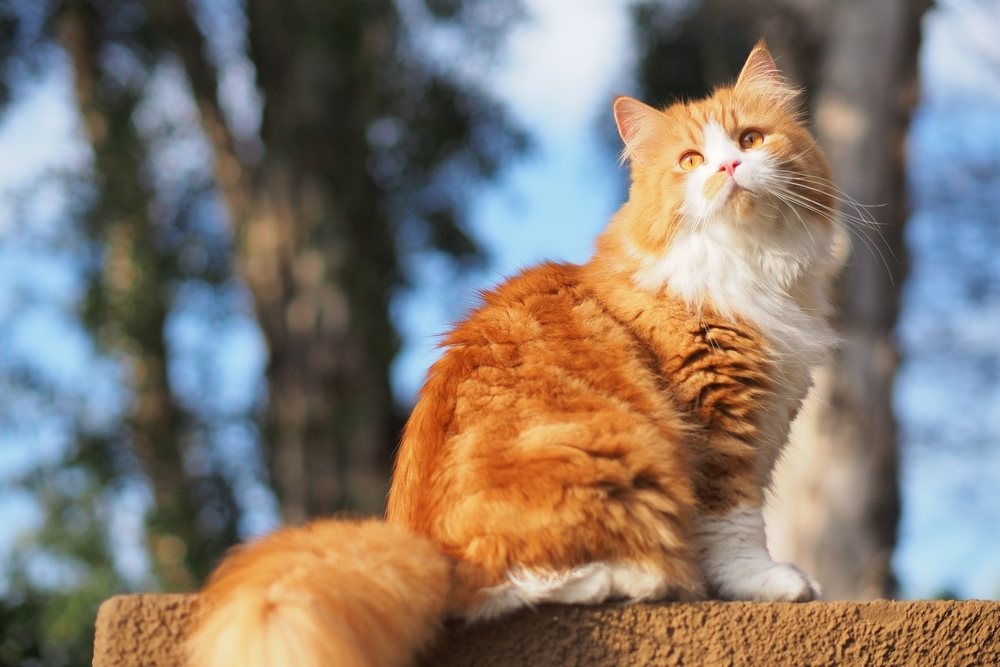
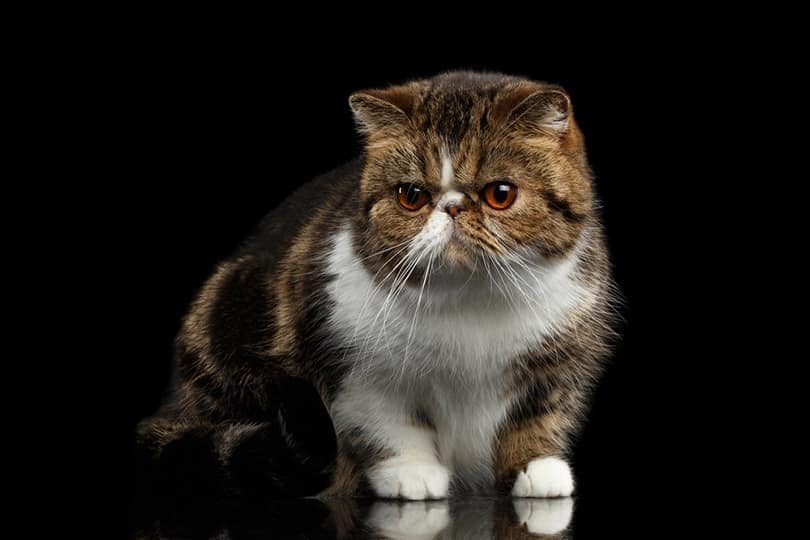
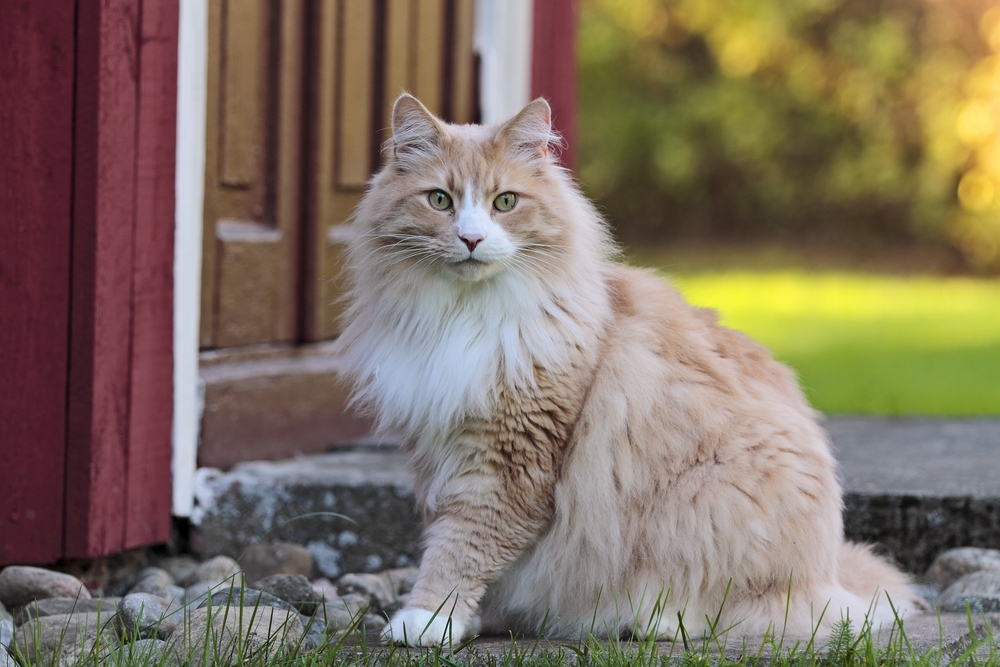
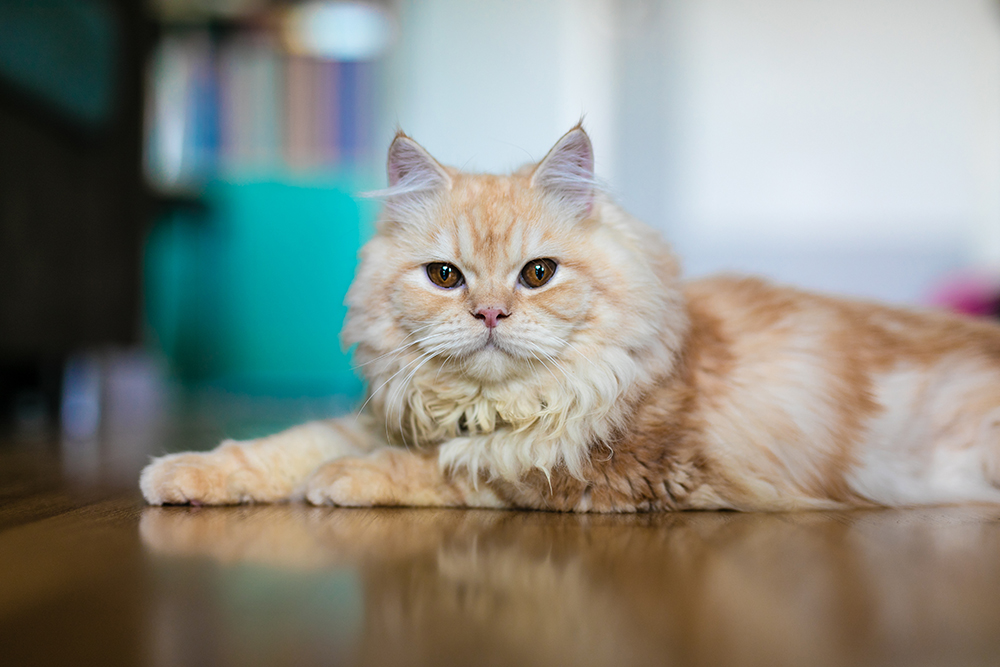
Many breeds, like the Persian, have long-haired coats that range in length, with the average being between 2 and 5 inches, give or take. While long hair is luxurious and beautiful, it can also easily tangle and even get matted if not properly cared for. Making time for daily brushing is a necessity for owners of long-haired cats.
6. Short Coat

Short cat hair is generally less than 2 inches in length and is easier to take care of. Unlike long hair, it doesn't get tangles, and there is a lower risk of matting. Brushing is typically not necessary more than once a week to remove dead hair and keep the coat looking shiny and supple.
7. Curly Coat

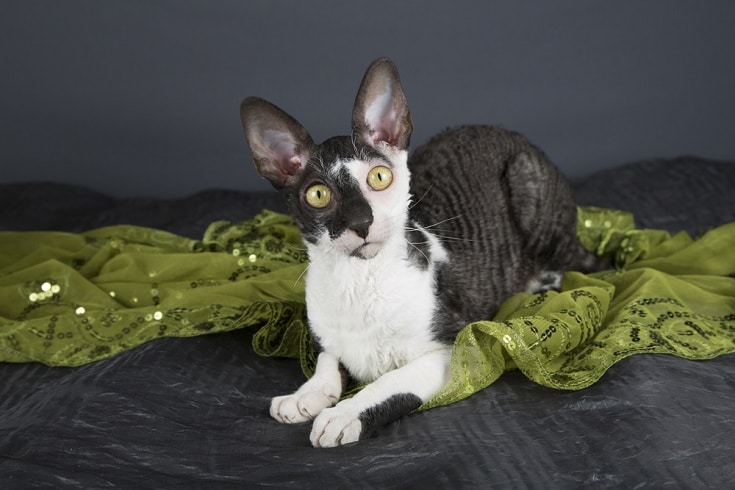
Cats can have curly hair due to an inherited genetic mutation. It’s called the Rex mutation and it changes the structure of the hair to create a soft, curly texture. Breeders purposefully maintain the genetic mutation to ensure that the affected cats, including the Devon Rex, always have the curly hair that they are known for.
8. Straight Coat

Most cats have straight coats, and this is what most people think of when they picture a feline. A cat’s straight hair can be long, short, thick, or thin. It might feel silky or smooth to the touch. The one constant is that it’s simply straight.
9. Hairless

All cats have some hair, but some breeds look bald because their sparse hair is extremely fine and short. Some people compare the feel of a hairless cat to that of suede. These cats don’t do well in cold climates because they have no extra hair to keep them warm or help regulate their body temperature. Therefore, they tend to enjoy cuddling up with blankets, pillows, and people.
The 6 Cat Coat Patterns
A cat may take on a few different coat patterns, and they all have unique characteristics. The following are six patterns to be aware of.
10. Solid

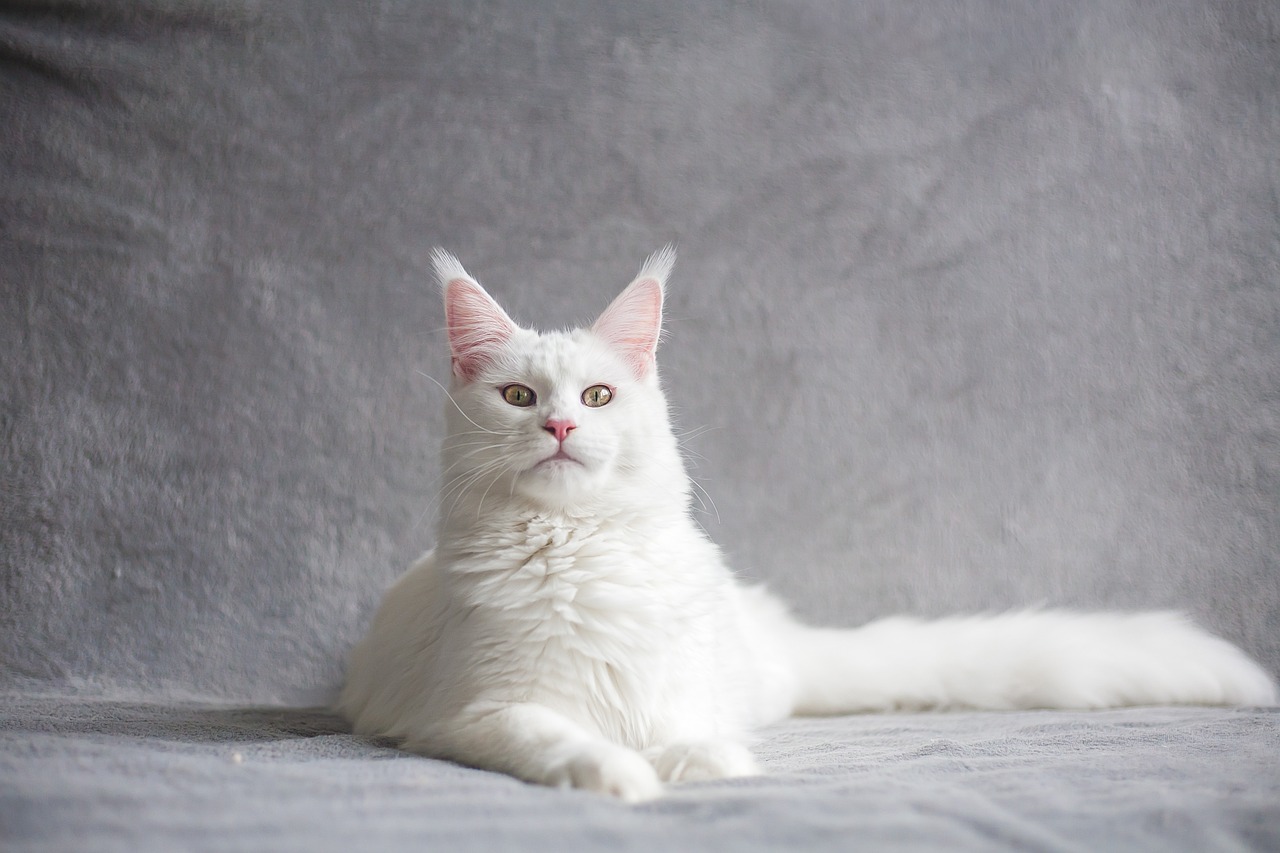
A cat with a solid coat pattern has just one color all over their body, which can be rare because many cats at least have a marking or two on them, if not a pattern that encompasses the entire coat. Solid cats come in many colors, such as white, black, cream, red, and blue (gray).
11. Bicolor

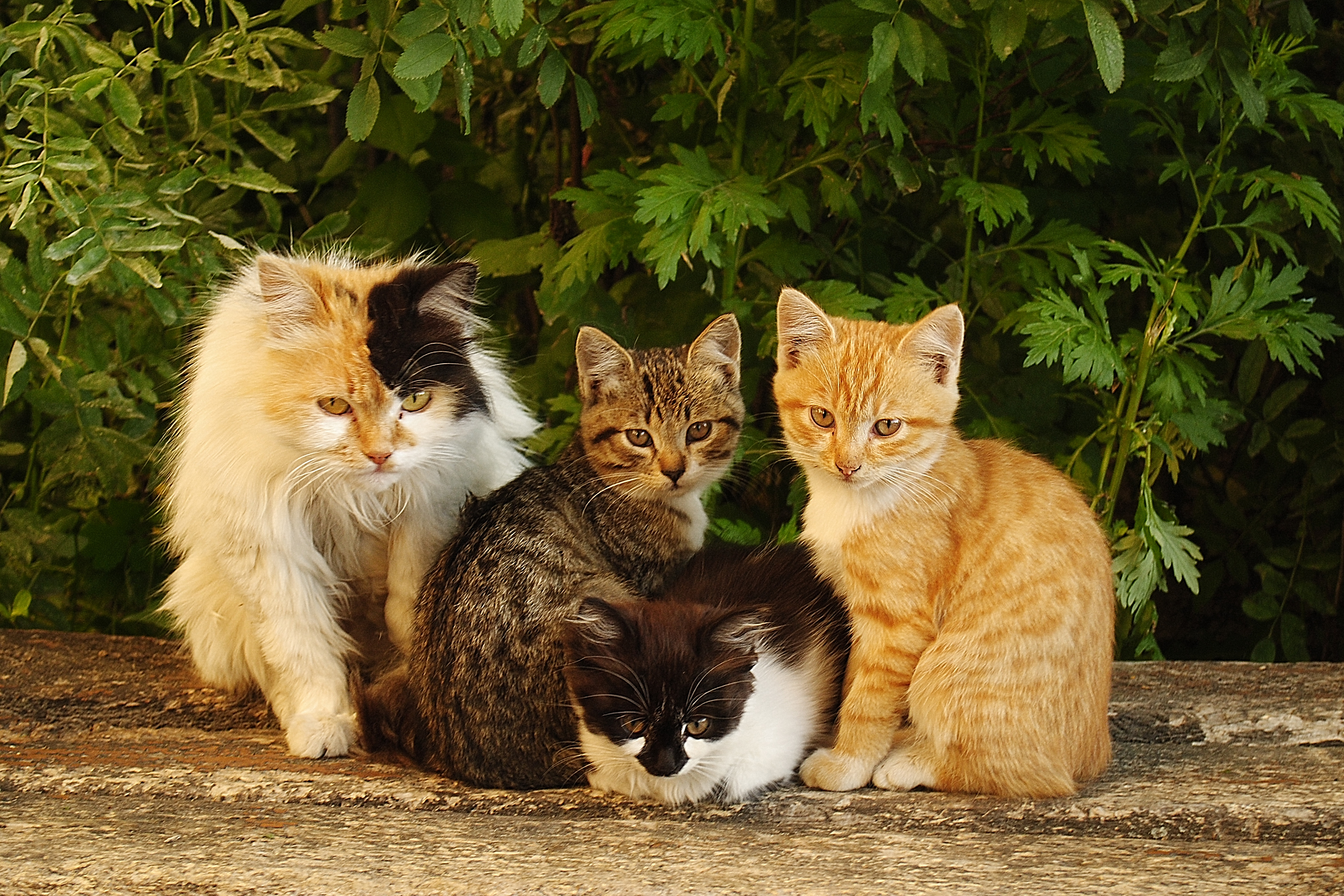
Cats with bicolor coat patterns display white coloring mixed with one other color. Many mixed breeds have a bicolor coat variation and as you can imagine there are many different variations. An example is a coat that’s mostly one color but has white markings on the chest, head, and legs. However, the markings can be displayed anywhere. The designation is two different colors coming together to make a bicolor coat pattern.
12. Tabby

One of the most common coat types for cats is tabby. This pattern is made up of four different varieties: ticked, blotched, mackerel, and spotted. A mackerel tabby has dark-colored stripes running lengthwise along their body and head. They also typically have an undercoat that is lighter in color. The blotched tabby displays a combination of blotching, swirling, and striping patterns on the body, and the spotted tabby has different colored spots throughout their coat. The ticked tabby has lighter shades of color at the base of the coat and darker shades at the tips.
13. Calico

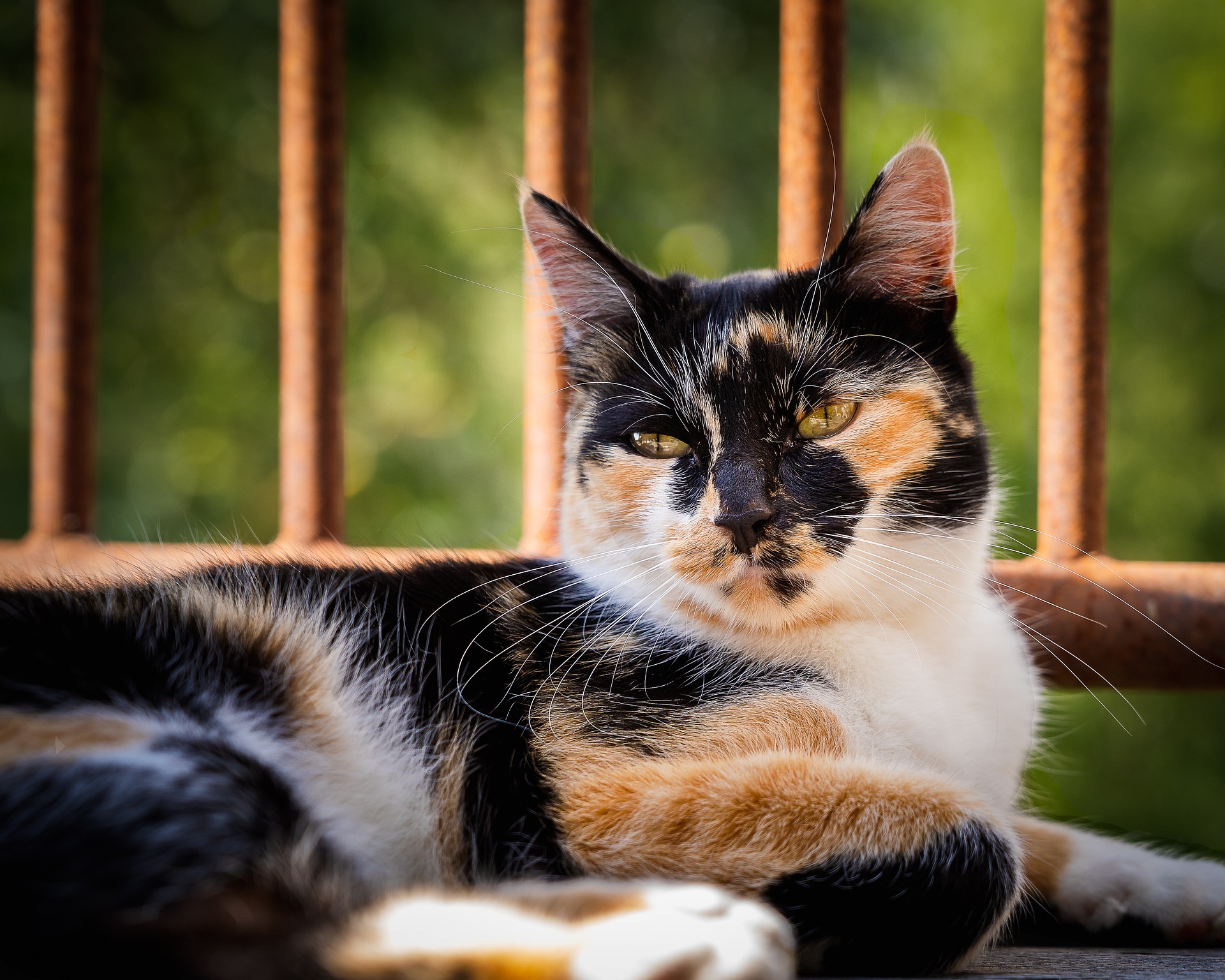
Calico cats have coats that display three different colors, typically black, orange, and white. However, other color variations are possible, including cream, brown, gray, and red. The amount of white in the pattern can vary, but it is usually quite pronounced. The actual pattern of a calico coat can greatly differ from cat to cat and is always unique.
14. Tortoiseshell

Tortoiseshell cats have coat patterns made up of black and red or orange hair. Some also feature diluted colors like cream. Like calicos, most tortoiseshells are usually female because they have the chromosomes to produce black and orange simultaneously due to the X chromosome. Females have XX chromosomes, while males are XY. Therefore, males only have one X chromosome to work with, and they can typically only produce black or red/orange (and not both).
15. Colorpoint

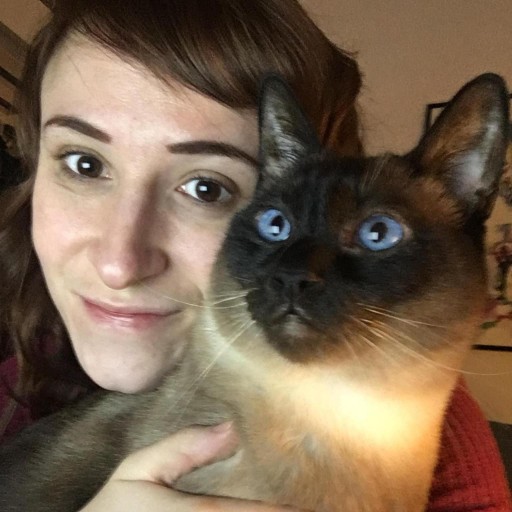
Think of a Siamese cat when visualizing a feline with colorpoint markings. The body is light in color, but the hair is much darker around the face and ears, on the tail and paws, and sometimes on their bellies. This rare cat coat pattern is usually seen only in certain purebred cats, like the Himalayan and Ragdoll.
Conclusion
Cat fur comes in all kinds of different colors and patterns. Hopefully, you now have a better idea of what those options are and whether you'd prefer a short-haired, long-haired, or curly-haired cat.
Sources
Featured Image Credit: MirasWonderland, Shutterstock

Expert cat care, straight to your inbox
Vet-reviewed advice, behavior tips, and the best of Catster. Free, and you can unsubscribe anytime.
By signing up, you agree to our Terms & Conditions and Privacy & Cookies Policy.
Rachael has been a freelance writer since 2000, in which time she has had an opportunity to research and write about many different topics while working to master the art of fusing high-quality content with effective content marketing strategies. She is an artist at heart and loves to read, paint, and make jewelry in her spare time. As a vegan, Rachael is obsessed with helping animals in need both in her community and anywhere in the world where she feels she can make a difference. Animals also happen to be her favorite topic to write about! She lives off the grid in Hawaii with her husband, her garden, and her rescue animals including 5 dogs, a cat, a goat, and dozens of chickens.
Join the conversation
Ask a question, share your story, or send private feedback.