Why Is My Cat Sneezing? 8 Vet-Approved Reasons Behind the Behavior


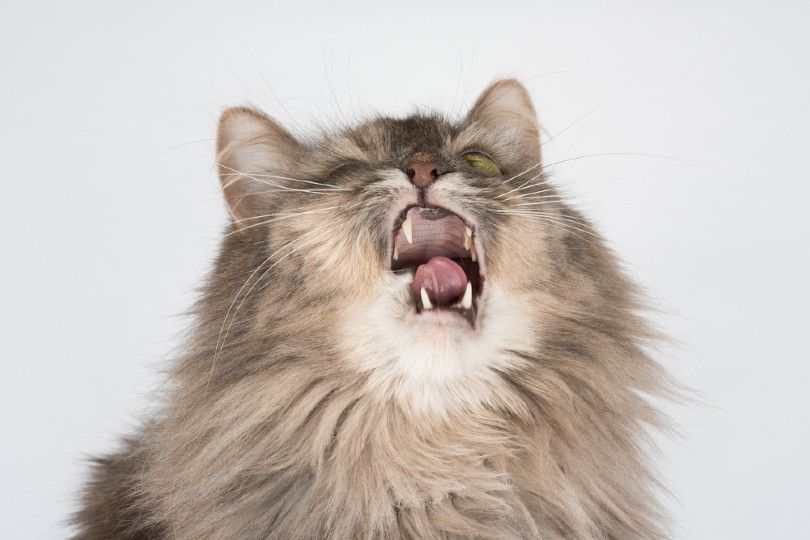
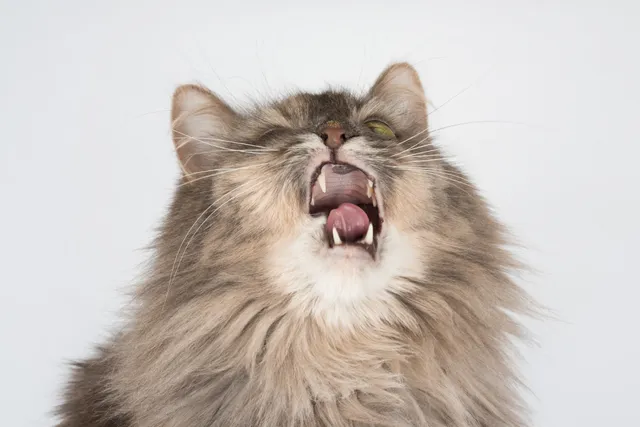
Cats do all sorts of weird things. They’ll run around the house at 2 a.m., chasing nothing in particular. They’ll stop right in the middle of licking themselves, leaving that one leg stuck straight in the air. Sometimes they’ll sneeze—frequently.
While we might not be able to help you with the running around or leg-in-the-air things, we can shed some light on why your kitty suddenly starts achoo-ing all over the place. It may be nothing to worry about, but in some cases, it could be the harbinger of something serious, so don’t ignore it.

The 8 Possible Reasons Why Your Cat Sneezes
1. A Tickle in Their Nose
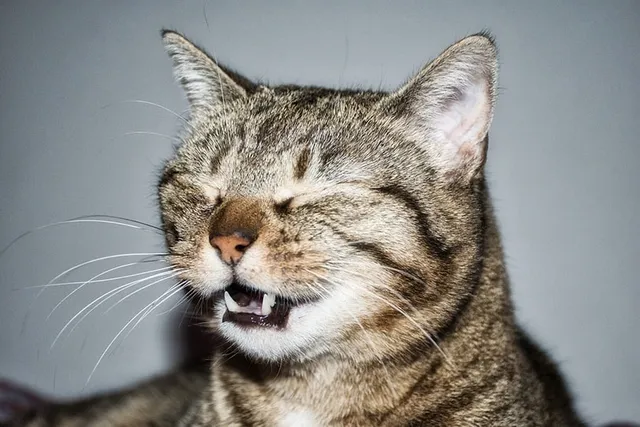
Like you, sometimes cats get something up their nose. Whether it’s a bit of dust, their own fur, or nothing identifiable at all, they may start sneezing to try to dislodge the offending particle.
Your cat may undergo a series of violent sneezes as they try to scratch the itch inside their noses, but once they’ve cleared out their nostrils, the sneezing should stop. There’s nothing to worry about in this case, although you might interpret it as a passive-aggressive criticism of your housekeeping skills.

2. Allergies
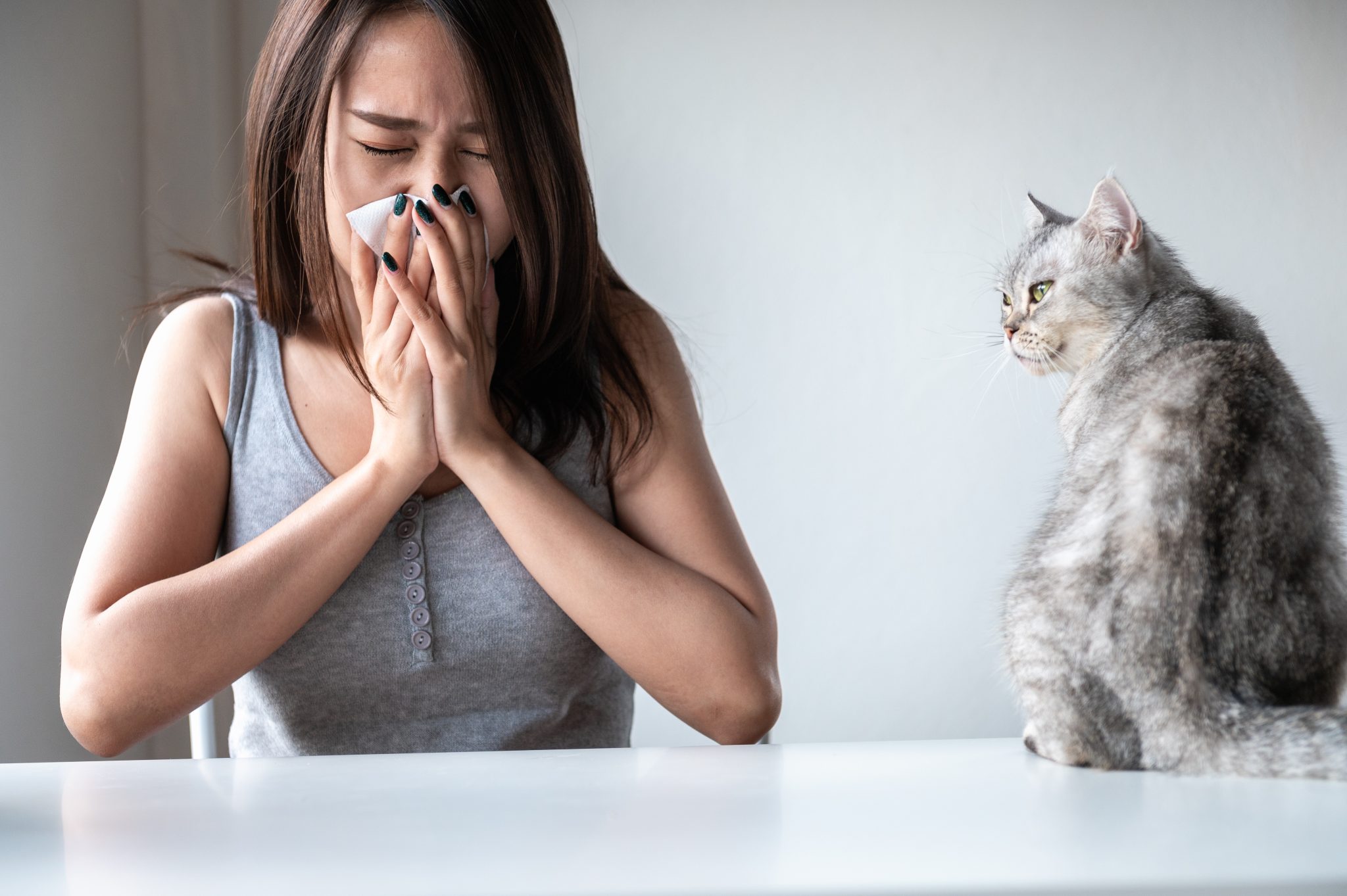
Some cats are allergic to substances in the air, like pollen. This doesn’t happen as often as it does in people, but it does happen, so it’s worth checking out.
If you notice that your cat tends to sneeze more at one time of the year than others, it may be due to pollinating plants that are in season. Speak to your vet about this, as there are several diagnostic tests and treatment options available if your cat has environmental allergies, also referred to as atopy. This may also cause signs of skin irritation, alongside the upper respiratory signs, and will make your cat uncomfortable. Your vet will first rule out other causes of sneezing, getting down to atopy often as a diagnosis of exclusion.
It is possible to identify the various types of pollen that are irritating your cat’s respiratory tract by allergy testing performed by a dermatologist.
3. Chemical Irritants
You may have various chemicals in and around your house that your cat finds irritating. These can include cleaners, paints, cigarette smoke, and pesticides, but also less obvious ones like scented candles and various diffusers. Your cat will usually develop an aversion to the offending odor on their own, but they still may sneeze if they come in contact with it. When it comes to candles, their scent may also lead to coughing in cats suffering from asthma or chronic bronchitis, and these should be avoided.
If you can identify the offending irritant, you should move it out of your cat’s reach and swap it out for a cat-friendly, organic option.

4. Foreign Bodies in the Nasal Passage
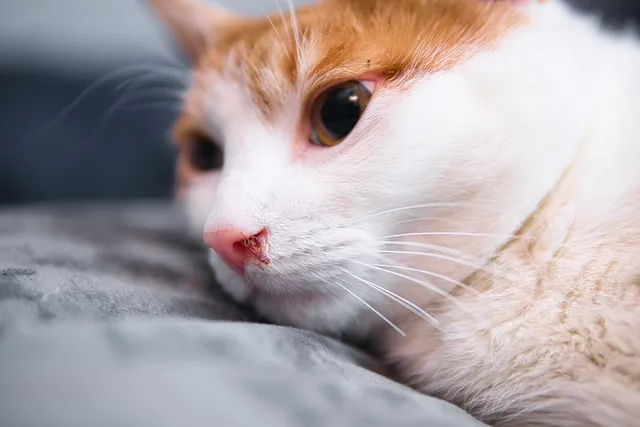
This is similar to having a tickle in the nose, except some foreign bodies are quite large and can be problematic, causing more damage than just a tickle, such as a blade of grass. Your cat will likely sneeze until the foreign substance is ejected, but if they can’t dislodge it, it could cause irritation, nose bleeds, and an infection, usually with one-sided nasal discharge.
In some cases, you may be able to see the object that’s causing all the trouble, but don’t try to remove it yourself. Instead, take your cat to the vet for professional assistance. But many foreign bodies are out of sight and sometimes even get dislodged at the back of the cat’s throat in their nasopharynx. Your cat may also swallow exaggeratedly, cough, retch, or sneeze. Your vet can remove this material by examining the cat’s nasopharynx under sedation and by flushing their nostrils if the foreign body is still stuck there.
5. Vaccines
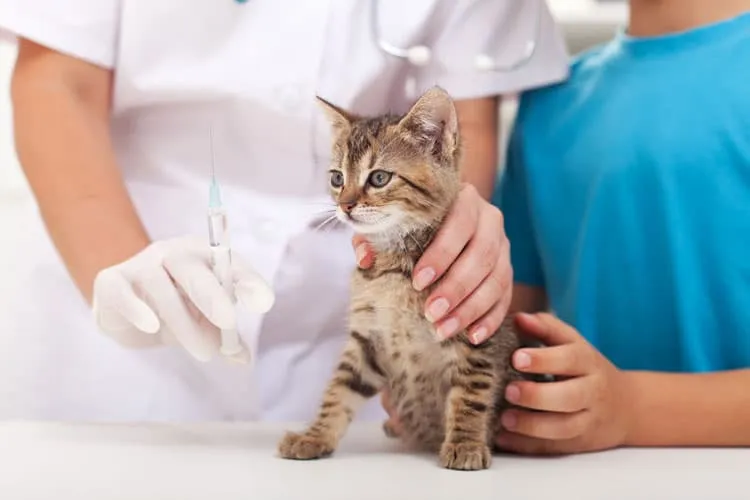
Some vaccines, particularly those that guard against respiratory infections, can cause sneezing in the first few days after they’re given. Your vet should give you information on any vaccine your cat gets, and sneezing might be listed among the possible side effects.
Sneezing caused by vaccines should clear itself up after a few days, and you shouldn’t need to do anything about it. If it doesn’t clear up or your cat seems lethargic and refuses their food, speak to your vet about it.
6. Respiratory Infections
This is where we start to get into the worrisome possibilities. Many respiratory infections list sneezing as one of the signs, so your cat might have a cold or something more sinister that’s making their nose explode.
These infections can be viral, bacterial, or fungal, so your vet will need to examine them to determine what course of action you need to take and what treatment your cat requires. If your cat has discharge from their eyes or nose, isn’t eating, or seems sick in general, you should take them in for a checkup. Some of the common respiratory illnesses in cats are caused by feline herpesvirus, feline calicivirus, Chlamydophila felis, Bordetella, and other pathogens.
Besides respiratory signs and conjunctivitis, some cats may also develop ulcers in their mouth or back of the throat, more severe ocular infections and corneal ulcers, or even progress to pneumonia if not treated promptly.
7. Dental Disease
Some dental conditions, like root infections, can cause inflammation that irritates the nasal lining. They can also allow bacteria to penetrate your cat’s sinuses, potentially leading to respiratory infection.
Dental disease is common in cats, especially middle-aged and older ones, and will always require a vet’s intervention. Don’t drag your feet either, as teeth problems only get worse if left untreated and could cause other issues, like problems with the heart, liver, or kidneys.

8. Neoplasia and Nasal Polyps
Nasal cancer or neoplasia, commonly lymphoma in cats, is marked by the presence of a tumor inside the nasal cavity. It’s fairly rare in cats, but it can be quite painful and locally invasive, causing swelling, distortion of the nose, and destruction of the bone and other tissues, with sneezing being one of the more benign side effects.
Unfortunately, by the time the signs of the tumor become visible, the cancer is usually quite advanced and has likely spread to other parts of the body, including local lymph nodes. The prognosis is poor for cats with neoplasia, but the sooner the problem is spotted, the better your pet’s chances may be. Your vet will recommend performing x-rays and sometimes even a CT scan of your cat’s nose in order to determine the extent of the tumor. Some types of neoplasia may be treated with chemotherapy, and sampling the tumor will help to reach the final diagnosis.
On the other hand, nasal polyps are benign, fleshy structures that are more common in younger than older cats, and it still isn’t fully understood why they occur in the nose or nasopharynx of some cats. Possibly, there is a genetic component or an underlying infection. They are diagnosed similarly to nasal neoplasia and can be surgically removed, but sometimes they may grow back.

When to Worry About Your Cat’s Sneezing
If the sneezing isn’t accompanied by any other signs and clears up on its own after a short while, there’s likely nothing to worry about. You should keep an eye on your cat for a few days just in case, but they’ll most likely be fine.
If you notice any of the following signs, though, a trip to the vet is in order:
Even if your cat is sick, the most likely culprit is a simple cold that should clear up in a few days, possibly with the help of antibiotics. That’s for your vet to decide, though, so don’t wait too long to take them in.

How to Stop Your Cat’s Sneezing
If your cat’s sneezing is becoming frequent, they should be checked out by your vet in order to identify the reason behind it. In some cases, your cat may need further investigations or symptomatic treatment to keep the sneezing under control.
If it’s due to a certain smell or odor, you can switch out which chemicals you use around the house. You should be able to find a variety of cat-friendly products that are both effective and unlikely to offend and that generally minimize the use of cleaners in the area your cat visits most.
You may want to check your cat’s litter box too. Some litters produce more dust than others, and your cat might be inhaling specks of dirt every time they use the bathroom. If you notice them sneezing after using the box, a change in litter might be in order.
Beyond that, you should try to stay on top of your cat’s health as best you can. Make sure they get all necessary vaccines on time, and don’t be afraid to take them to the vet if you think that the sneezing is a sign of something serious. It’s better to be wrong than to have a potentially serious or worsening health issue go unaddressed.
Final Thoughts - Keep an Eye on Your Sneezing Cat
All cats sneeze at one time or another, and in many cases, it’s nothing to worry about. However, if it persists or becomes frequent, and with a little bit of amateur detective work with the help of your veterinarian, you should be able to pinpoint the cause of the sneezing and take action to address it.
If your cat is displaying any other signs of illness, such as reduced appetite, lethargy, nasal or ocular discharge, or anything else that concerns you, it’s important to get them checked by the vet so they can have appropriate and prompt treatment. If the sneezing resolves on its own, then it’s likely a minor irritation and nothing to worry about.
Sources
Featured Image Credit: ZlataMarka, Shutterstock
Expert cat care, straight to your inbox
News, insights, and useful advice, delivered to you.

No spam — unsubscribe anytime.
By signing up, you agree to our Terms & Conditions and Privacy & Cookies Policy.
How useful was this post?
Click a star to rate. You can leave written feedback afterwards. (We read all feedback.)
Quincy never intended to be a cat person. He grew up around dogs, and when his wife brought home a kitten one day, he told her she had one week to find it a new home. That week turned into 10 years (his wife moves very slowly), and that kitten turned into three (they got two more, the kitten didn't self-replicate). After a decade of sharing his home with three cats, one horrifying realization finally set in: oh God, he's a cat person now, isn't he???