Get

In Your Inbox

Catster is reader-supported. When you buy via links on our site, we may earn an affiliate commission at no cost to you. Learn more.

How Far Can a Male Cat Smell a Female Cat in Heat? Vet-Approved Facts & FAQs

Share

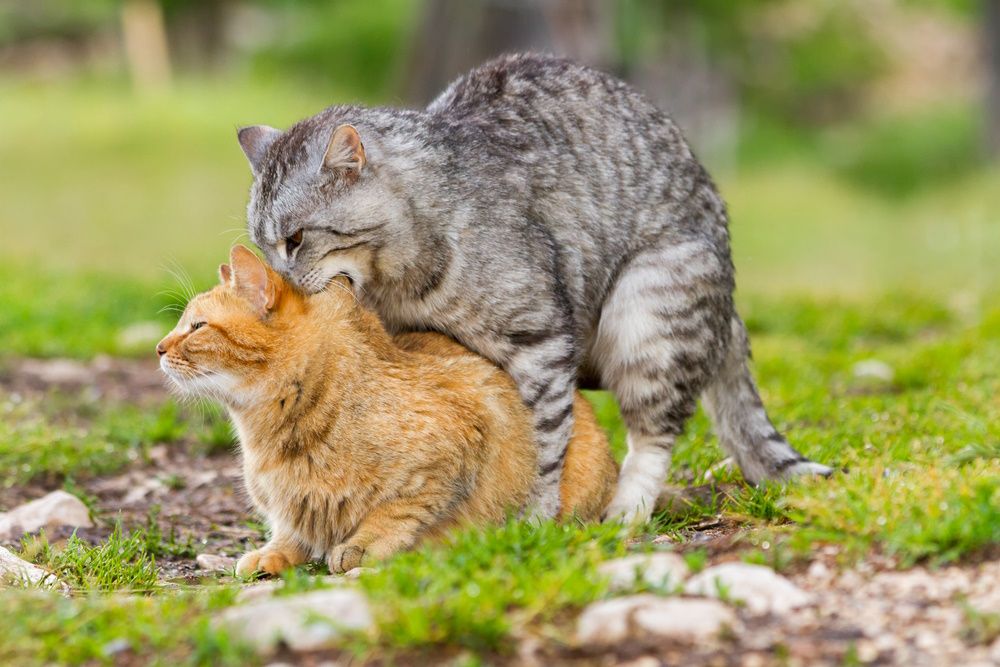
domestics-cats-mating

If you’ve noticed your male cat being more than eager to get outside lately, yowling at the door, and being quite the nuisance, it could be because he smells a female cat in heat.

Your male can smell a female cat in heat from almost a mile away due to the pheromones the female puts off during her cycle. We’ve got you covered if you’re trying to keep your male cat from getting outside to find the female in heat. We’ll talk about everything from how to tell when a cat is in heat to how to keep your cat safe during this time, so join us.

divider 2 cats

How to Tell Your Feline Is in Heat

If you have a female cat, you’ll need to know the signs that the cat is going into heat or is already there. The most noticeable sign is your female becoming overly affectionate, especially if the cat is usually a loner who doesn’t want much attention. If your cat suddenly wants all of your attention, she might be in heat. This isn’t the only sign to look for, however.

The other signs include the following:

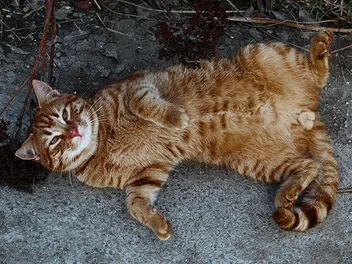
  • Rubbing her back and rolling around on the floor
  • Loud vocalizing
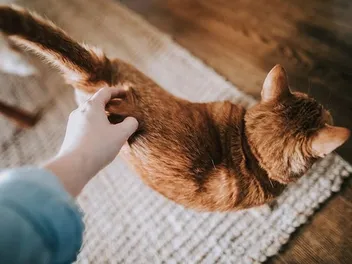
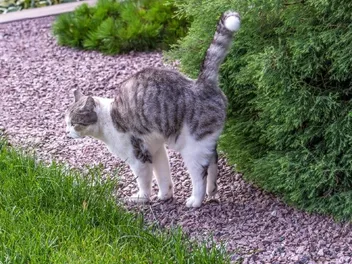
  • Arching her back and placing her hindquarters up
  • Urine marking
  • Discomfort and frustration

How Far Can Your Male Sense a Female in Heat?

As previously stated, a male cat can sense a female in heat about a mile away. While you may think it’s safe to keep your male cat in the yard so that he can’t track down the female, it’s not. If your male can’t get the female, she’ll sniff out the territorial markings left by your cat and come to him instead.

Trying to get out and get to a female cat could be very dangerous for your male, especially if you live in a high-traffic area. The best way to stop your male cat from escaping to find the female he can smell in heat is to neuter him. This will greatly increase your cat’s quality of life and safety.

The Benefits of Neutering Your Male Cat

Many pet owners don’t realize the benefits of neutering their male cats. They feel that it’s only necessary to spay a female cat, as she’s the one who can get pregnant and produce kittens. However, there are quite a few benefits to neutering your male cat.

  • Eliminates or reduces the chances of your male marking and spraying his territory
  • Reduces the chance of your cat becoming injured or lost when he escapes looking for a female
  • Reduces the chances of your cat getting into fights
  • Reduces the population of unwanted kittens
  • Can decrease aggressive behavior
  • Helps your cat to live a longer, healthier life
  • Reduces the risk of testicular cancer
  • Reduces the risk of prostate issues

These are only a few benefits of neutering your male cat. There’s also the benefit of doing your part to help the strays forced into shelters and often put to sleep because of overcrowding.

If you like to talk with a vet to clear out any other doubts you might have regarding this topic, you can consult one online.

Tips for Keeping Your Male Cat Safe

If your male cat gets out and can find the female he smells in heat, you have to worry that he will become lost or worse before he can make it safely home.

The best thing to do is keep your male inside, whether neutered or not, so he can’t roam. Neutering a cat cuts down on the need to roam. It helps to know that a female cat goes into heat every 14 to 21 days and stays in heat for around 7 days but can be in heat anywhere from 2 to 19 days. If the female mates, the heat will pass between 24 and 48 hours. It’s best to get your female or male cats fixed as soon as they are old enough.

Cat Heat Cycle
You are free to use this image but we do require you to link back to Catster.com for credit

divider 2 cats

Final Thoughts

A male cat can smell a female cat in heat for around one mile. That also means a male will try to escape and head out to find the female. This could lead to your cat being in danger, as he could get struck by a car, hurt in some way, or lost and be unable to find his way home.

While it’s best to have your male cat neutered when he’s old enough, keeping him inside is still a good idea if there’s a female cat in heat in the area. Spaying and neutering benefits cats’ health, reduces the community’s population of stray cats and reduces the chances that your cat will escape your home.

See Also:


Featured Image Credit: Neonci, Shutterstock

Want content like this delivered to you?

Sign Up For Our Newsletter

News, insights, expert advice, and everything cat

* By submitting, you agree to our Terms & Conditions and Privacy & Cookies Policy.


How useful was this post?

Click on a star to rate (you can leave written feedback after clicking submit)

Help us improve Catster for pet parents!

Your feedback really matters.

What did you like about this post? Also how can we improve it?

Join the conversation

Leave a Reply

You’re very welcome to leave a comment or question. Please know that all comments must meet our community guidelines, and your email address will NOT be published. Let’s have a positive and constructive conversation.


Catster's Digital Magazine is Back!

Vet-approved health & behavior advice

Real cat stories & community features

Chatting About the Importance of Spaying/Neutering, Cat Retail Shopping Ban & Red-Level Storms | Chatty Cattys, Episode 30

In this episode of Catster’s Chatty Cattys podcast, Nicole and Dr. Karyn are celebrating a major legal win for pets before diving into...

Is Your Cat Happy? Here’s How You Can Tell

Cats have a reputation for being indifferent, even inscrutable. But despite their seemingly ambivalent appearance, cats experience many emotions, including happiness, and they...

Human Brains Age Like Cats – New Study Debunks the 7-Year Rule

If you’ve ever caught your senior cat staring blankly at a wall, wandering the halls at 3 am, calling out for no clear...

Chatting with Devin About Here! Have a Kitten, Fostering, & Why Two Are Better Than One | Chatty Cattys, Episode 29

In this episode of Catster’s Chatty Cattys podcast, Nicole & Dr. Karyn sit down with Devin, the founder and one-woman show behind “Here...

More related

Tactical Cat Harnesses: How They Work, Vet-Reviewed Pros, Cons & FAQ

Tactical cat harnesses have grown in popularity over the years as they’ve been advertised to be able to keep up with active and...

150+ Harry Potter Inspired Cat Names: Ideas for Magical & Intriguing Cats

Welcoming a new cat into your home can feel like a magical time until it’s time to choose a name for your feline...

4 Types of Cat Grass: Vet-Reviewed Growing Tips & What to Avoid

It’s not every cat’s favorite treat, but many cats love snacking on fresh grass. Fresh grass is an important source of fiber for...

Can a Q-Tip Help a Cat in Heat? (Vet Answer)

Cats that have not been spayed cycle through a fertile period every 14–21 days during the breeding season.1 This is called being “in...

Keep reading

Can Cats Eat Lima Beans? Vet-Reviewed Precautions & Health Guidelines

Beans are a popular staple throughout the world, used in many dishes, and enjoyed for their flavor and high protein content. While the most popular beans tend to be black beans, soybeans, and pinto beans, other beans do exist and...

Can Cats Eat Lima Beans

Is My Cat Fat or Pregnant? 4 Vet-Approved Signs to Look For

You might have started to notice that your female cat is looking a little plumper than she usually does. It might immediately make you think that you need to start cutting back on her treats, or you could be facing...

Pregnant White Cat

Is Peppermint Oil Safe for Cats? Vet-Reviewed Facts & FAQ

Cats are incredibly explorative and curious animals, often found rummaging through forgotten corners of your home for a new adventure. If you have essential oils around your home, you may have noticed your cat taking an interest in them. However,...

Catster_Is Peppermint Oil Safe for Cats

Does Boric Acid Kill Fleas on Cats? Vet-Reviewed Use & Safety Guide

Having fleas on your pet and in your home is a terrible nuisance. Not only do they cause skin irritation for your pets, but they can also lead to other, more serious health problems. There’s also considerable aggravation when it...

boric acid powder in spoon with boric cream and drops bottle

Laser Declawing Your Cat – Vet-Reviewed Facts & Considerations

Veterinary professionals and reputable veterinary and animal welfare organizations, such as the American Veterinary Medical Association and the American Society for the Prevention of Cruelty to Animals, have released statements against cat declawing if done for the purpose of managing...

paw with long and sharp claws_RJ22_shutterstock

Nutrisca Cat Food Review of 2026: Recalls, Pros & Cons

Review Summary Your cat food choice is one of the most important decisions you will need to make concerning your pet, but with so many choices available, it can be difficult to know which brands are healthy and tasty. Nutrisca...

Nutrisca Cat Food Review

How Many Nipples Do Cats Have? Vet-Reviewed Facts & FAQ

If you’ve ever seen a pregnant cat nursing, you know that there are plenty of feeding stations to go around. Both male and female cats have nipples on their belly, arranged in two parallel rows. But the number of nipples...

A pregnant mother cat while resting on a wooden chair showing its tummy and nipples

Do Cats Get Lonely When You Go on Vacation? Vet-Verified Facts & Info

It can be easy to buy into the idea that cats are antisocial, aloof creatures. After all, most cats spend a good part of their time alone, whether under your bed, in a closet, or in some other hiding spot....

Man checking flight details at the airport

Love Cats? So Do We! Join the Catster Community

Stay informed with expert pet care insights delivered straight to your inbox! Discover professional guidance on animal behavior, feeding tips, trusted product picks, and much more.


Sign up for the Catster Email Newsletter

Stay informed with expert pet care insights delivered straight to your inbox! Discover professional guidance on animal behavior, feeding tips, trusted product picks, and much more.