Cat Ear Language: What Feline Body Language Can Tell You (With Examples)


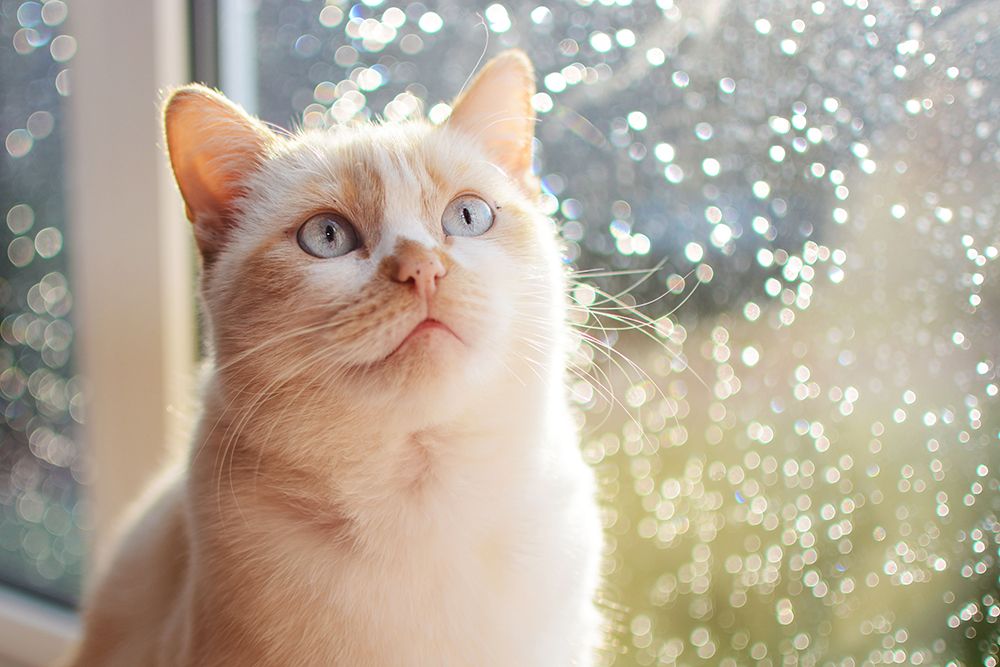
If you’ve ever spent any time observing your cat’s ears, you’ll already know that you can detect your cat’s feelings by how their ears are positioned. Cats can express many emotions and different moods through their ears, and when taken in combination with their eyes, body, and tail language, these can tell you about what your cat might be thinking.
Paying careful attention to your cat’s ear language can help you work out how they’re feeling at any given point. This can give you a clue that your cat’s fun play session might be about to turn rough or that they’re not feeling 100% healthy.
Sometimes, it is tricky to work out exactly what our cats thinking. Start paying attention to your cat’s subtle ear language, and you’ll soon find that you can gain a deeper understanding of your furry friend.

Cat Ear Language
1. Neutral
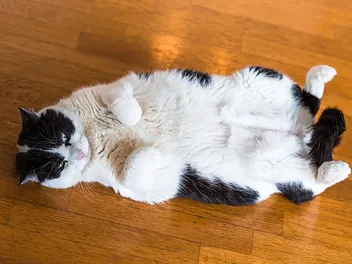
This is the “default” ear position when your cat is just going along with their everyday life. If you see your cat with a neutral ear position, then you can be confident that they’re feeling relaxed and content. Cats will often have this ear position when they’re relaxing on the couch with their owners, wandering around the house looking for a comfortable place to sleep, or simply staring into space.

2. Straight-up, facing forward
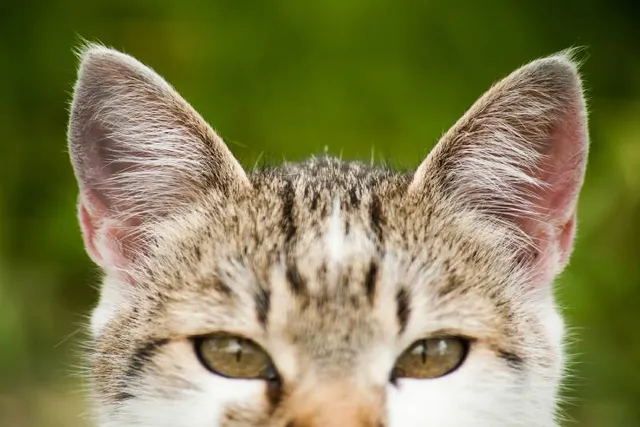
This ear position is a definite indicator that your cat is alert and focused on something that’s caught their interest. Their ears will be facing the direction of the sound that they’re trying to zone in on. While your cat’s ears will usually be facing forward, your cat can move their ears independently, so you may see their ears facing in different directions!
If your cat has their ears up and forward, you can assume that they’re alert and paying attention to their surroundings. This is a great time to initiate playtime with your cats, so go and grab their toys and test out their hunting instincts. Alert cats that love to pay attention to their surroundings will be seen demonstrating this ear language more often than a laidback cat that prefers to spend more time sleeping than patrolling!

3. Twitching
Why do cats twitch their ears? If you see your cat’s ears twitching, they may be getting ready to pounce on something. This ear language will often follow the straight-up and facing-forward position if your cat decides that whatever they’ve been watching is worth chasing. While they’re twitching their ears, you may also see your cat wiggling their bottom and lowering their bodies as they prepare to pounce on whatever has caught their attention.
When a cat is demonstrating this ear language, it may indicate some nervousness and uncertainty. One exception is ear twitching when it’s not accompanied by playful or stalking behavior. This may indicate something irritating their ears, such as a flying insect, mites, or an ear infection. Why do cats twitch their ears?
Your cat’s ears might also twitch while they’re sleeping. It can sometimes be tempting to make your cat’s ears twitch by tickling them, but this is actually annoying for your cat to put up with!
4. Low and facing sideways
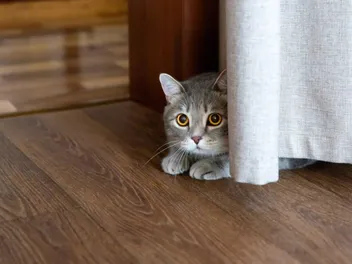
This ear position is sometimes called “airplane ears.” A cat with their ears low and sideways may be nervous, frightened, or preparing to flee from something that’s alarmed them. While a cat with their ears in this position may need reassurance, they may not appreciate being picked up or fussed over. They may have heard a noise that spooked them or seen a strange cat approaching the house.
Don’t be surprised if your cat runs off to hide under the bed or in a space where they feel safe. As long as they’re not otherwise unwell, it’s best to leave them to their own devices until they decide to leave their hiding spot — probably around when you get their next meal ready!
5. Low and laid flat
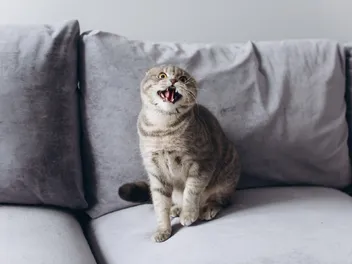
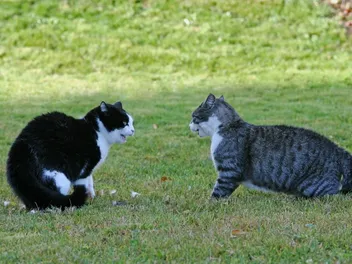
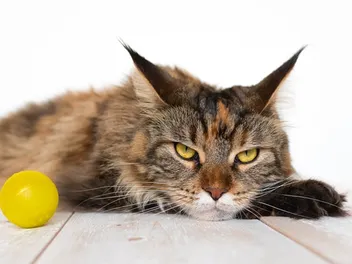
This ear language gives a clear signal to “back off.” A cat may use this ear language to warn another cat away from their favorite toy, and it can often be seen displayed between two cats that are engaging in play fighting that turns aggressive. Ears low and back will be used as warning signals that claws and teeth may soon be deployed!
Cats will also use this cat ear language to let a human family member know that playtime is over and it’s time to step away. So, if your cat uses this ear position while you are playing, gently step away and give your cat some space. Lower cats ears meaning to go away.

Conclusion
It is incredible how expressive cats' ears are and what they communicate to us. Have you seen your cat adjust their ears outside of the neutral position? If so, now you have some more knowledge about what your cat's ear language means, as well as how to help them if they are feeling a little bit stressed.
See Also:
Featured Photo Credit: Laralou Photography, Shutterstock
Expert cat care, straight to your inbox
News, insights, and useful advice, delivered to you.

No spam — unsubscribe anytime.
By signing up, you agree to our Terms & Conditions and Privacy & Cookies Policy.
How useful was this post?
Click a star to rate. You can leave written feedback afterwards. (We read all feedback.)
Emma is a freelance writer, specializing in writing about pets, outdoor pursuits, and the environment. Originally from the UK, she has lived in Costa Rica and New Zealand before moving to a smallholding in Spain with her husband, their 4-year-old daughter, and their dogs, cats, horses, and poultry. When she's not writing, Emma can be found taking her dogs for walks in the rolling fields around their home...and usually, at least some of the cats come along, too! Emma is passionate about rescuing animals and providing them with a new life after being abandoned or abused. As well as their own four rescue dogs, she also fosters dogs for re-homing, providing them with love and training while searching for their forever homes.