Ask Dr. Paola - Milk, Introductions & Humping (March 3, 2025)

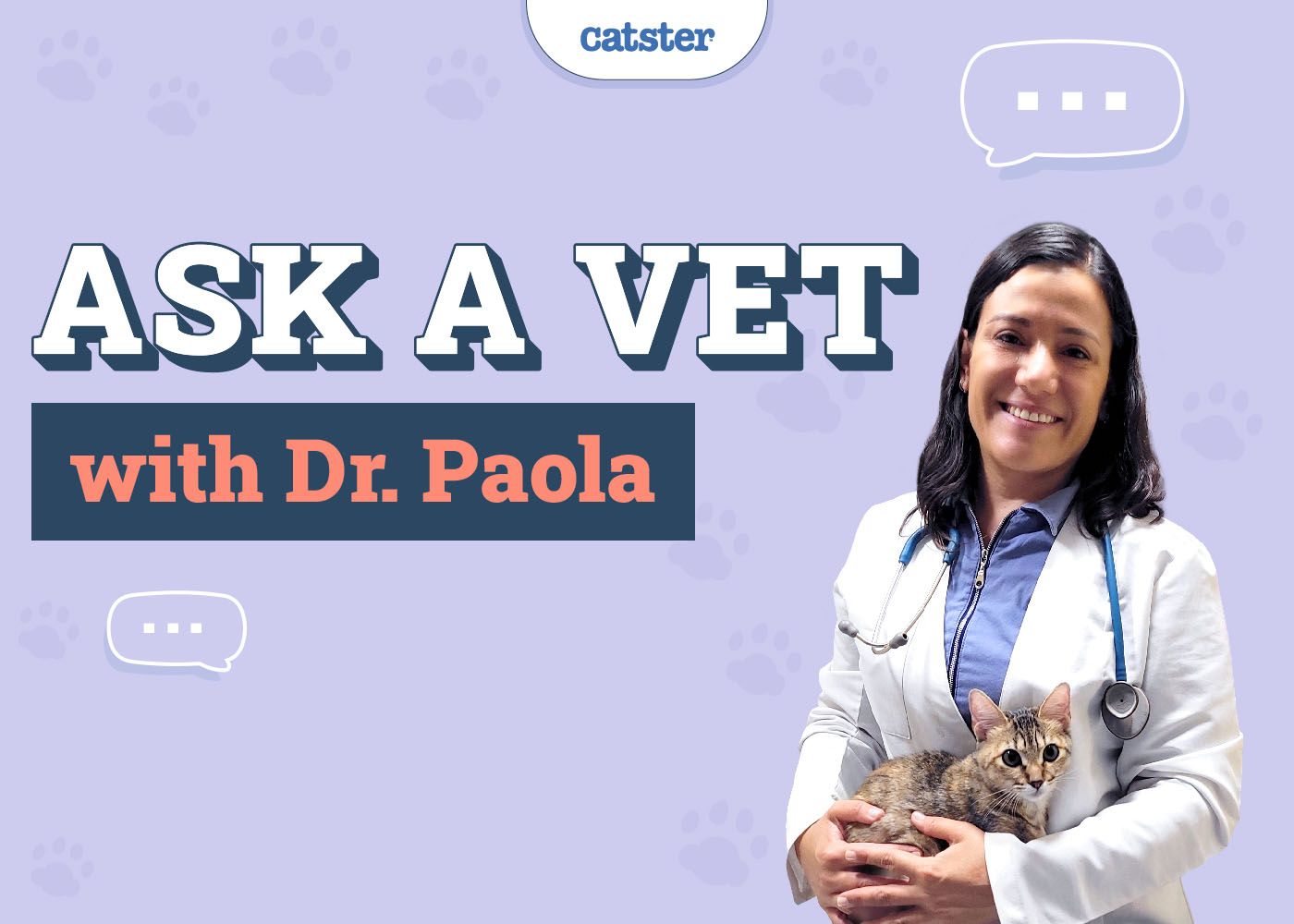
Welcome to our "Ask Dr. Paola" series, where every Monday we bring expert advice straight from Dr. Paola Cuevas (MVZ) to help our readers better understand their cat's health and well-being.
Whether you're a new pet parent or a seasoned cat lover, Dr. Paola is here to provide answers to your most pressing questions. From nutrition tips and preventive care to troubleshooting common behavioral issues, Dr. Paola is ready to offer insights that will keep your kitty happy, healthy, and feline fine. Stay tuned for expert guidance on a range of topics that matter most to you and your cat, so you can make informed decisions and provide the best possible care for your furry companion.
Have a question? Send it in here!

Help! My Cat Loves Milk!
“Dear Dr. Paola,
I have a male cat called Sasja, 2½ years old. He likes milk very much. Is giving cats milk, even in small quantities, always harmful to cats?" - Christian
Dear Christian,
It’s lovely to hear about Sasja’s fondness for milk, but unfortunately, milk isn’t the best choice for most adult cats. While kittens produce enough lactase—the enzyme needed to break down lactose in milk—this ability often declines as they grow. Many adult cats struggle to digest dairy properly, like humans with lactose intolerance. Even small amounts can lead to digestive upset, causing loose stools, gas, or stomach discomfort.
If Sasja enjoys the taste of milk, you might consider lactose-free cat milk, which is specifically formulated to be safe for feline digestion. Alternatively, if he simply enjoys the routine of a special treat, you can offer small amounts of water-diluted goat milk or a cat-friendly broth instead. This way, he can still have a comforting treat without the potential tummy troubles.
Kind regards and best wishes,
Dr. Paola


Help! I Need Introduction Tips!
"Hi Dr. Paola,
I brought an 8-week-old kitten home and we also have two 12-year-old cats in the house. What are your best introduction tips and how do we know when it’s safe to let them interact freely? Thank you so very much!" - Chad
Hi Chad. Bringing a new kitten into a home with senior cats requires patience and a thoughtful introduction process to ensure a smooth transition. The best advice I can give you is not to rush it. Cats are territorial, and sudden introductions can create stress and tension. Instead of rushing, give your older cats time to adjust by setting up a separate space for the kitten, complete with food, water, a litter box, and safe hiding spots. This allows your resident cats to become familiar with the kitten’s scent without feeling immediately threatened. It also allows the kitten to settle into the new environment and feel more calm and secure.
You can speed up scent exchange by swapping bedding between them and using a soft cloth to rub one cat, and then the other, so they start associating each other's scent with something familiar.
Once the scent introduction phase goes smoothly, allow brief, supervised visual meetings through a baby gate or cracked door. During these first introductions, it is clue to watch their body language closely. Signs like flattened ears, raised fur, hissing, or growling indicate unease or tension, while relaxed postures and curiosity suggest they are adjusting well. If you see signs of positive body language, go ahead and give them a yummy treat; do not give one if tension is in the air. If things are going well you can gradually progress to short, supervised interactions in a neutral space, and continue using positive reinforcement such as treats or gentle praise to create positive associations. It is very important to give them time and avoid forcing interactions. You must also ensure your senior cats have safe escape routes if they feel overwhelmed.
I can not stress enough the importance of observation; you’ll know it’s safe to let them interact freely when their encounters remain calm—meaning no aggressive chasing, swatting with claws extended, or prolonged growling. Some hissing or brief corrections from the older cats are normal as they establish boundaries, but it should not escalate into prolonged hostility.
Keep in mind that since your older cat is likely to have different energy levels than the kitten, you must ensure they have high perches or quiet retreat areas where they can relax undisturbed. With patience and careful monitoring, most cats adjust over time, but it’s always important to go at their pace, give them some private space, and do the work to reinforce positive associations in order to maintain a harmonious household. I wish you good luck,
Dr. Paola


Help! My Cat Appears to Be Humping?
“My 13.5-year-old neutered cat, Tuffy, has developed an unusual habit over the past few years. When kneading a soft microfiber blanket, he gradually enters a trance-like state and begins rhythmic movements resembling humping, though no direct contact or fluid discharge occurs. He stops either on his own or when gently interrupted, after which he immediately licks himself, seemingly to reduce discomfort rather than for further stimulation. No medical issues have been found during regular veterinary consultations. Tuffy has been well-socialized with other cats and remains active and healthy. Could this be a self-soothing behavior, a learned habit, or something else entirely?" – Ben
Hi Ben! Tuffy’s behavior, while unusual, is not entirely uncommon in neutered male cats. Kneading is a deeply ingrained kitten behavior associated with nursing, and many cats continue doing it into adulthood as a self-soothing mechanism. The trance-like state suggests he is highly focused and relaxed, much like how some cats suckle on fabric or toys. The humping motion layered onto this ritual might be a learned or compulsive behavior that developed over time, possibly reinforced by the pleasurable sensation of kneading a soft surface. By the way, have you read about Olga’s Toy Trance? Tuffy is not the only one with a comfort blanket.
Even though Tuffy was neutered as a kitten, a cat’s brain still retains some instinctual behaviors related to mating. Some neutered males continue to show mounting or thrusting behaviors, especially when they’re particularly content or overstimulated. It’s interesting that he doesn’t seek out other objects or engage in this behavior outside of his kneading sessions, suggesting it’s more of a comfort-driven habit rather than a hormonally driven one. His post-kneading licking might simply be a way to settle down after an episode rather than a sign of discomfort or irritation.
Since this has been happening for years and there are no accompanying medical concerns, it’s likely a harmless, self-soothing behavior. However, if you ever notice changes such as excessive licking, swelling, difficulty urinating, or signs of discomfort, a veterinary check-up would be a good idea to rule out urinary or penile issues. If this behavior ever starts interfering with his daily life or becomes obsessive, a teletriage veterinary service could help assess whether intervention is needed. You could book a call with one of our experienced veterinarians at PangoVet if you have more questions or want some support. But as it stands, it sounds like Tuffy has simply found his very personal way to unwind!
I hope this helps,
Dr. Paola
This article is a part of our weekly Ask Dr. Paola series
Expert cat care, straight to your inbox
News, insights, and useful advice, delivered to you.

No spam — unsubscribe anytime.
By signing up, you agree to our Terms & Conditions and Privacy & Cookies Policy.
How useful was this post?
Click a star to rate. You can leave written feedback afterwards. (We read all feedback.)
Dr. Paola Cuevas MVZ (Veterinarian)
Dr. Paola Cuevas is the Senior In-House Veterinarian at Pangolia, the parent company of Catster. She has over 18 years of experience as a veterinarian and animal behaviorist. Paola's focus is on preventive medicine and animal welfare. Paola has a large range of skills in from diagnostic imaging to nutrition and clinical pathology. Paola enjoys sharing her extensive knowledge of animal training with our Catster readers and is always happy to answer reader questions as our in-house veterinarian.