Get

In Your Inbox

Catster is reader-supported. When you buy via links on our site, we may earn an affiliate commission at no cost to you. Learn more.

Are Cats Lactose Intolerant? Vet-Reviewed Facts & FAQ

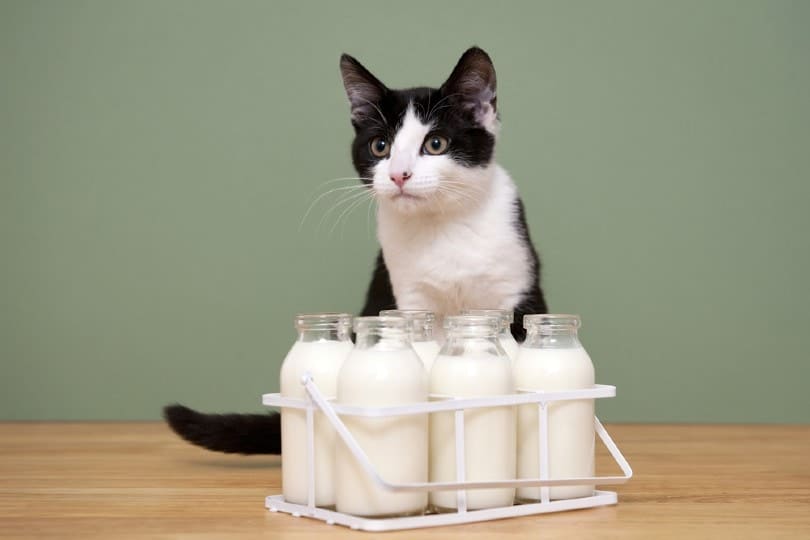
A cat with milk bottles

Cats are infamous for their love for milk. However, it turns out that cats might be lactose intolerant. But how true is that claim?

Unfortunately, it is true: Most cats are lactose intolerant. Lactose intolerance is the inability to digest the primary sugar in milk and other dairy substances, such as cheese.

Lactose-intolerant cats suffer from stomach cramps, among a host of other digestive issues, when they ingest dairy products. The vast majority of cats are lactose intolerant.

divider cat faces oct 2024

Why Are Cats Lactose Intolerant?

cat on a wooden table_HartmutStein, Pixabay
Photo Credit: HartmutStein, Pixabay

Lactose is the primary carbohydrate in milk. It is a disaccharide sugar consisting of glucose and galactose and is found in all types of milk in varying percentages.

Like all other baby mammals, kittens are born with the innate ability to process lactose, thanks to the enzyme lactase. This enzyme splits lactose into simple sugars, allowing kittens to digest milk without any trouble. It is crucial for kittens to have this ability since they are completely dependent on their mama’s milk for survival during the first few weeks of their lives.

As with all other mammals, cats lose the ability to break down lactose as they grow older because their bodies produce less and less of the lactase enzyme over time. By the time kittens are 6 months old, they usually have all but lost the ability to break down lactose. Once the body stops producing the enzyme lactase, it stops for good.

When a lactose-intolerant cat drinks milk, the unprocessed lactose draws lots of water into the digestive tract, and the cat’s gut bacteria begin to ferment the undigested sugars. That is what causes signs of an upset stomach, including bloating, cramping, gas, and diarrhea, within 8—12 hours of drinking milk.

Note that lactose intolerance is not a type of food allergy. With food allergies, the cat’s immune system views the substance as a foreign material, prompting an attack. That reaction becomes more severe with each repeated exposure to the allergen.

However, with lactose intolerance, the signs only last as long as lactose remains in the system, ceasing when the sugar is expelled from the cat’s body.

divider cat paws oct 2024

Can Kittens Ingest Dairy?

little kitten sitting by a bowl of milk
Image Credit: Impact Photography, Shutterstock

As mentioned, kittens produce the enzyme lactase to digest the lactose in their mother’s milk. Does it mean that it is okay for them to drink cow’s milk or ingest other types of dairy products?

The answer is no. Cow’s milk, as well as other dairy products, can still harm a kitten. Lactose appears in varying percentages in different types of milk. Also, the nutritional profile of each species’ milk is very different. A kitten’s digestive tract is designed to process cat milk, not any other milk. As such, avoid feeding cow’s milk and dairy products to your kitty.

divider cat paw scratch oct 2024

Conclusion

Many cats love the taste of milk and dairy products for some reason and will consume them without a second thought. But these furballs are usually lactose intolerant, and their bodies will not tolerate milk. Therefore, keep it away from them.


Featured Image Credit: Ben Queenborough, Shutterstock

Want content like this delivered to you?

Sign Up For Our Newsletter

News, insights, expert advice, and everything cat

* By submitting, you agree to our Terms & Conditions and Privacy & Cookies Policy.

How useful was this post?

Click on a star to rate (you can leave written feedback after clicking submit)

Help us improve Catster for pet parents!

Your feedback really matters.

What did you like about this post? Also how can we improve it?

Join the conversation

Leave a Reply

You’re very welcome to leave a comment or question. Please know that all comments must meet our community guidelines, and your email address will NOT be published. Let’s have a positive and constructive conversation.

Talk With A Vet Online

Peace of mind,
anywhere, anytime

Affordable vet advice

Why Are Cats Scared of Vacuums? 5 Vet-Reviewed Reasons & Desensitization Tips

If your poor cat runs away in terror at the mere sight of the vacuum cleaner, know that you are not the only...

How to Sedate a Cat for Grooming: 3 Vet-Approved Methods

Some cats do not like being groomed, but if they’re long-haired or unable to groom themselves for any reason, grooming is a necessity....

Asian Cat: Info, Pictures, Temperament & Care Guide

Asian cats are a small group of breeds that are a lot like the Burmese cat, except they come in a wide range...

Can You Keep a Cat Outdoors Safely? Vet-Reviewed Safety Tips & Precautions

As cat parents, we must keep our pets healthy and safe. Much goes into caring for a cat, but one of the most...

More related

24 Types of Ragdoll Cat Colors & Patterns (With Pictures)

Ragdoll cats have so much going for them, including a relaxed and affectionate nature. Their striking blue eyes and soft, medium-length coat make...

Zen Clipper Cat Nail Trimmer (2025 Review)

Review Summary Nail trimming is an essential part of cat ownership to keep your kitty’s nails in tip-top shape while also protecting your...

How Do Cats Squeeze into Small Spaces? The Surprising Details!

You may have come across a video of a cute kitty sleeping peacefully in a small glass vase or somehow sneaking under a...

9 Best Kitten Harnesses in 2025 – Reviews & Top Picks

Kittenhood is the best time to begin training a cat to walk on a leash, but to do that, you need a harness...

Keep reading

What Causes Mouth Ulcers in Cats? Our Vet Explains Signs, Causes & Prevention

Mouth ulcers in cats are spots in a cat’s mouth that can cause them to drool and not eat and intensify their bad breath. But there’s more to this condition in cats than just those signs. In fact, mouth ulcers...

veterinarian checks mouth of the maine coon cat

5 Natural Home Remedies For Ear Mites in Cats (Vet-Verified)

If you’re a long-time cat owner, chances are you’ve had a run-in or two with cat ear mites. Ear mites are very common in cats, and they’re usually accompanied by itching and scratching, clear discomfort or inflammation around your cat’s...

woman-cleaning-cat-ear

Can Cats Eat Carrots? Vet-Reviewed Nutritional Facts & FAQ

Carrots are a common ingredient in most kitchens and can be enjoyed cooked or raw. They are also a common ingredient in dog food and some cat food formulas. But what about your cat? Yes, cats can enjoy carrots as...

Can Cats Eat Carrots

Dave’s Cat Food Review of 2025: Recalls, Pros & Cons

Review Summary There’s been a big push lately away from cat foods made with cheap ingredients and far too many fillers. Many cat owners are searching for healthier alternatives for their beloved pets. Some people even serve meals they prepare...

Dave's Cat Food Review

Why Do Cats Curl Their Paws? Vet-Verified Reasons, Facts & FAQ

Cats have many adorable habits, one of which is their tendency to curl their paws underneath them and sit in a “loaf” shape. While we rarely think much of the sitting position—other than how cute it is—a cat will curl...

cat folding his paw while sleeping

Does Heat Kill Fleas on Cats? Here’s What Science Says

If your cat has fleas, they can be a nuisance and are incredibly difficult to get rid of without flea treatments. But these treatments can be expensive, so many pet owners are left wondering how to treat fleas on their...

Cat with fleas

How to Make an Indoor Cat an Outdoor Cat Safely (10 Vet-Reviewed Tips)

One of the most common questions cat parents have is whether cats should be kept indoors or allowed to roam freely outdoors. Many veterinarians and organizations are in agreement that cats should not be allowed to roam freely due to...

Walking with cat on a leash kuril bobtail

How to Calm an Angry Cat: 7 Vet-Approved Steps & Tips

Cats can experience a wide range of emotions, anger included. Although they might not experience anger the same way we do, there’s no doubt that felines can get angry from time to time. Anger is not an ideal experience for...

owner petting a hissing angry tabby cat