Get

In Your Inbox

Catster is reader-supported. When you buy via links on our site, we may earn an affiliate commission at no cost to you. Learn more.

How Much Hissing Is Normal When Introducing Cats? What to Tolerate & Guide (Vet-Reviewed)


Share

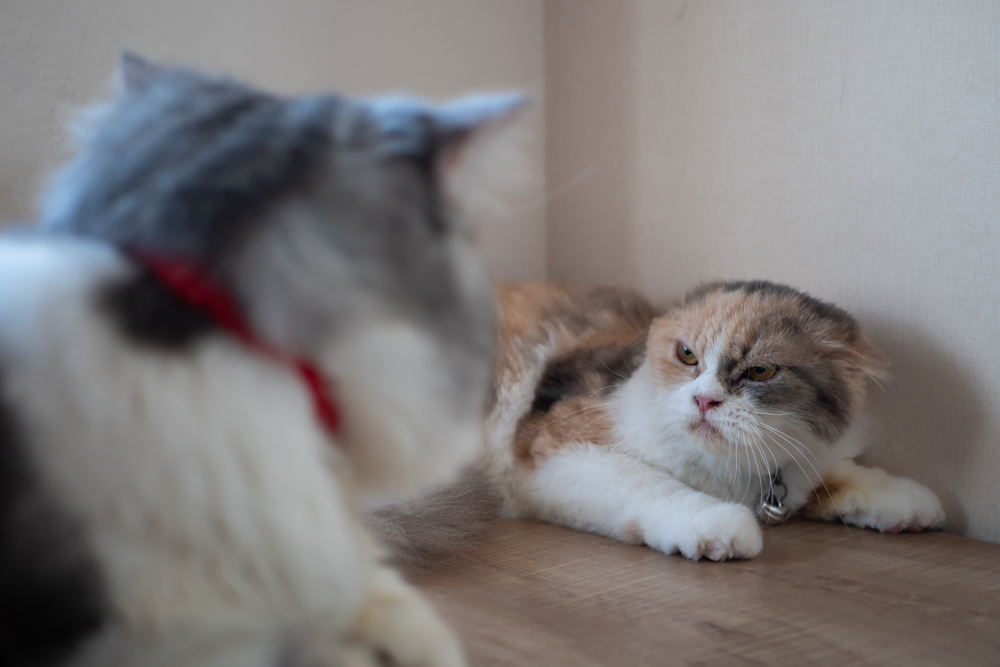
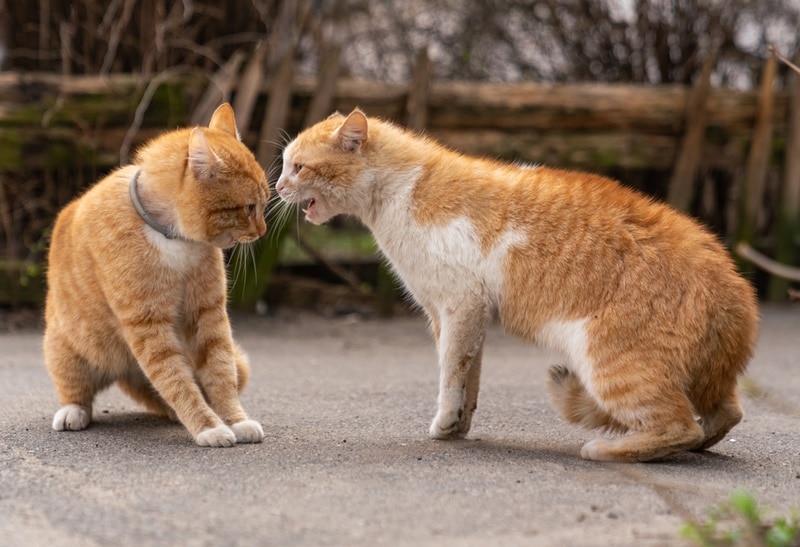
Angry cat hisses to another cat

Welcoming a new kitty to the family is exciting for the humans in the household. The other resident cats? Maybe not so much. While some cats get along instantly, others need some time to warm up to one another.

It’s entirely normal for your cats to hiss when they first meet and even for days following. While most people consider hissing to be a sign of aggression, it’s actually just another form of communication your cats have with one another (and with their humans).

While hissing is pretty standard for cats when exposed to something (or someone) new, you’re probably wondering how much you should tolerate. Read on to learn more about why cats hiss in the first place and what you can do to help your pets become comfortable with each other.

divider 3 paws

How Much Hissing Should Be Expected When Introducing Cats?

As mentioned in our introduction, hissing is entirely normal behavior to notice in both your new kitty and the resident cats in your home. Your cats may hiss or even swat at each other for several weeks until they’ve had the time to really get to know one another.

Hissing on its own isn’t aggressive, but it can be your pet’s way of laying the ground rules for  this new animal taking up their space. Think of hisses as a defensive gesture, as cats feeling threatened in some way are more likely to hiss. It’s your cat’s way of expressing discomfort, fear, or stress. Hissing on its own isn’t usually cause for action, but if aggressive behaviors or postures accompany your cat’s hisses, you’ll need to carefully intervene. Growling, hair standing on end, tense muscles, and pinned ears may all indicate aggressive behavior.
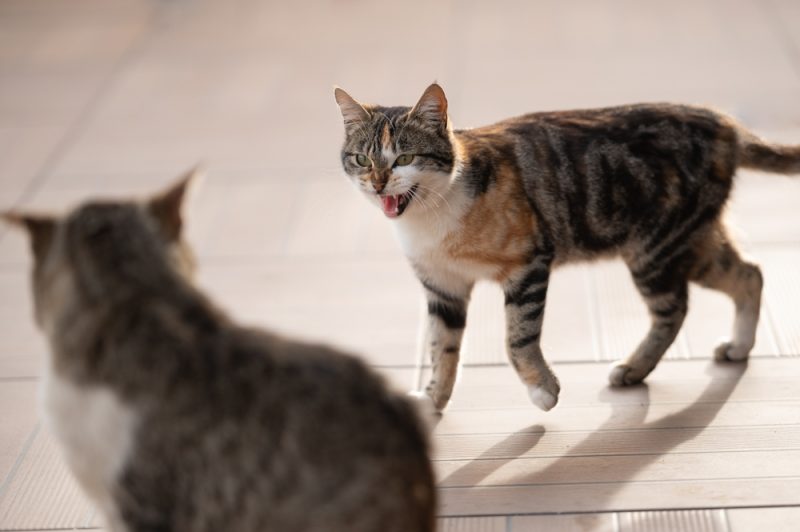
Young cat hisses on another big cat
Image Credit: Ilyas Kalimullin, Shutterstock

divider 1 paws

Why Do New Cats Hiss at Each Other?

1. Their Routine Is Disrupted

Whether you realize it or not, your resident cats are absolutely creatures of habit. They don’t typically like change and can feel very anxious, stressed out, and confused when new additions are brought into the home. Your resident cats may need a little more attention than usual when you get a new pet.


2. They Feel Trapped

If you’re rushing to introduce your resident cats to your new fur baby, you may inadvertently be making both parties feel trapped. Your resident cats need time to get used to the idea of sharing their space with another being, while your new kitty is likely already feeling stressed from being placed in a new home. If you’re forcing your pets to meet when stress is already high, it can make your pets more prone to hissing and even aggressive behaviors.

When introducing your pets, be sure never to block the exit so they know they can leave and go to their safe space without intrusion. Also, give them time to come to each other rather than you pushing them together. Allowing them to interact on their own time may help smooth the process.
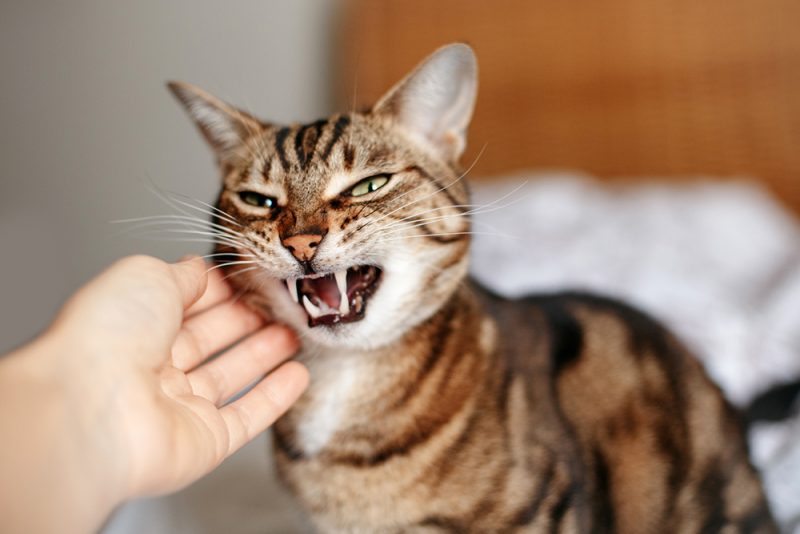
person petting a hissing cat
Image Credit: Anna Kraynova, Shutterstock

3. They Feel Their Space Is Being Encroached Upon

Another potential reason your resident cat is hissing is that they feel their space is being encroached upon. They have, after all, had your home to themselves for their entire life, so it makes sense why they’d be reluctant to share their things with your new pet.

Hissing can be an effective way to establish or reinforce the social hierarchy among the cats in your home. Dominant cats will sometimes hiss to assert their position over others. Other territorial behaviors dominant cats engage in include hoarding toys, scratching objects to mark their territory, urine spraying, growling, and instigating fights.


4. They’re Setting Boundaries

Cats are notoriously territorial and will sometimes hiss at one another as a way to establish boundaries and to establish their authority. A hiss is a fast and effective tool your resident cat can use to tell the newcomer to stop trespassing.
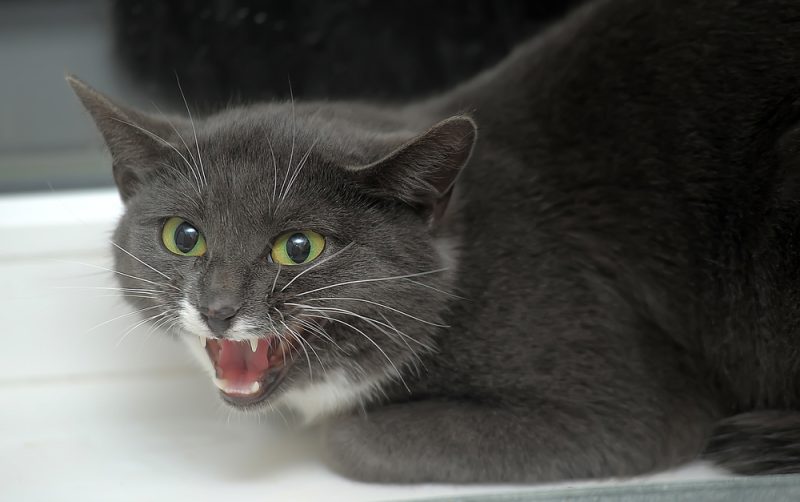
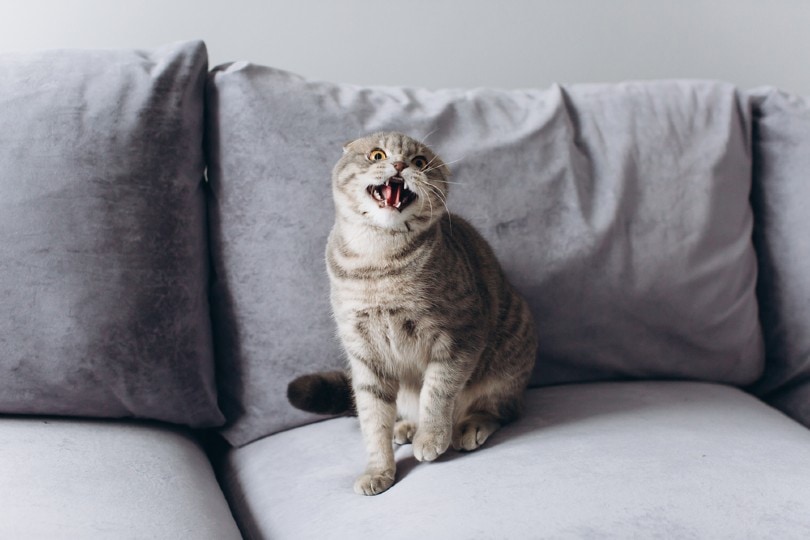
cat hissing
Image Credit: Anna Krivitskaya, Shutterstock

divider 3 paws

What Should I Do if My Cats Are Hissing at Each Other?

There are some other things you can do if the hissing isn’t dissipating as quickly as you’d like it to.

Sit It Out

Since hissing on its own is just a form of communication, you don’t need to do anything—at least not right away. If the hissing is constant and doesn’t die down after a few minutes, separate the cats and give them time to calm down. Of course, if aggressive behaviors or postures accompany the hisses, you’ll need to intervene as soon as possible to prevent a fight.

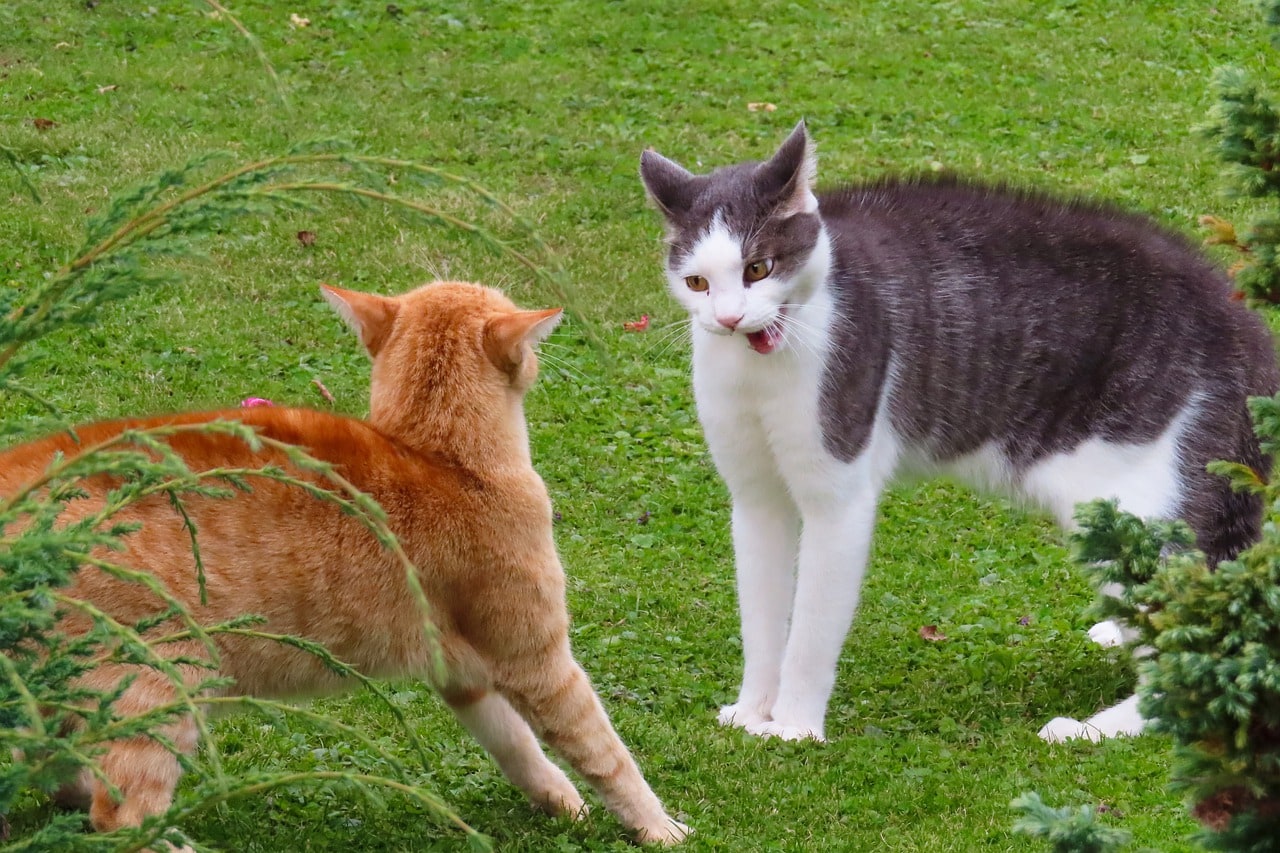
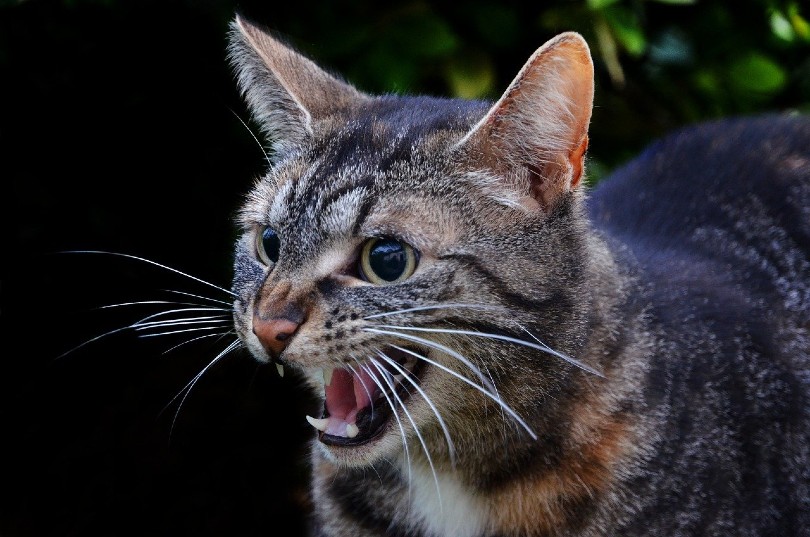
angry cat hissing
Image Credit: Fang_Y_M , Pixabay

Introduce Them Slowly

Introductions need to be done very slowly and deliberately. There is a process for introducing cats to one another, and if you rush it, you’re potentially putting your pets at risk as they may be more likely to be aggressive with one another.

The cat showing the most fear and mistrust should set the pace for the introduction. Remember that the process can be long, depending on your pet’s personality. It can take several days, weeks, or even months for your cats to learn to live harmoniously alongside one another.

Don’t Be Afraid to Do Reintroductions

If you’ve rushed the introductory period and now your cats are hissing at each other all day long or even fighting, it’s okay to separate them and begin the whole process all over again.
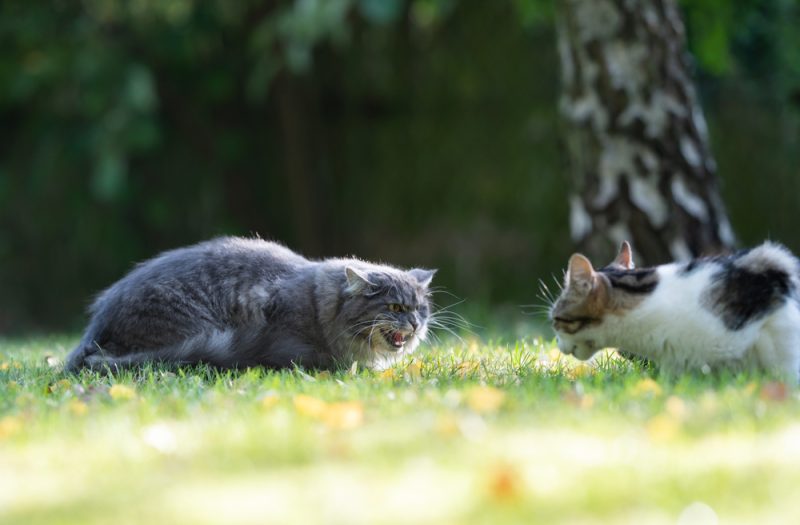
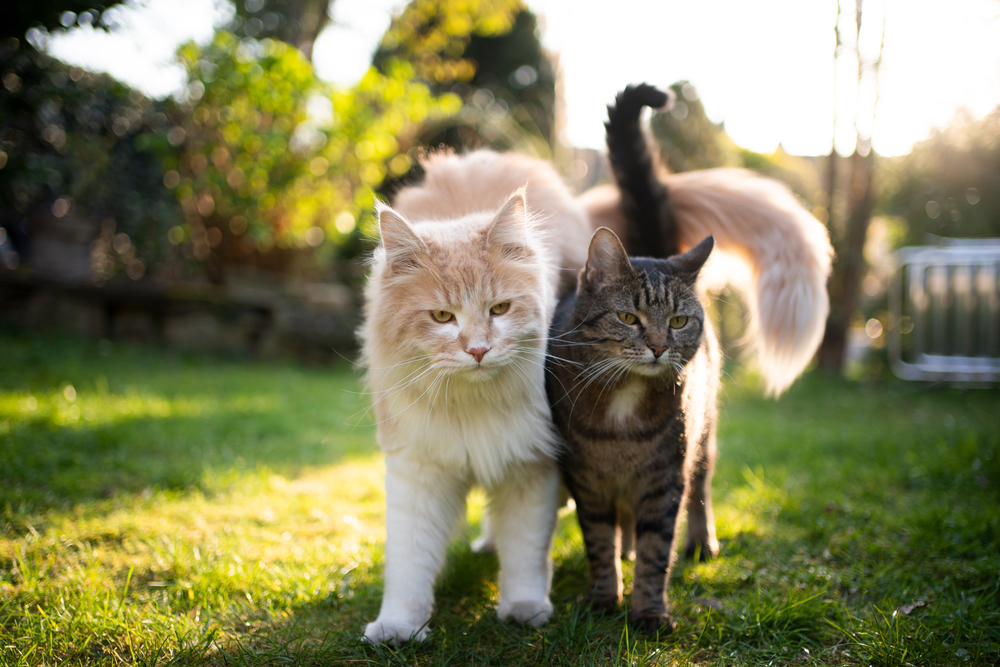
maine coon cat hissing at another cat outdoors in garden
Image Credit: Nils Jacobi, Shutterstock

Provide Enough Resources

Aggression and hissing can sometimes result from your cat’s feeling they have to share their resources. For this reason, you must ensure each of your pets has access to their own things. Each should have their own litter box, plus one. So, if you have three cats, you’ll need four litter boxes. They should also each have their own food bowl. Make sure you have enough toys, scratching posts, and sleeping spots to go around, too.

divider 3 paws

Final Thoughts

If you’re in the midst of the introductory process, pulling out your hair, and wondering, how long can the hissing actually last, know this is likely to be just a short blip in the lives of your kitties. Hissing is an entirely normal response in cats, especially when they’re put into a new or stressful situation. When you’re bringing a new cat into your home, you’re inevitably placing stress on both your new pet and the resident cats, so some degree of hissing should be expected until they get to know one another.

Your cats need time to become accustomed to these living conditions. This is why it’s so important to introduce a new cat very slowly and deliberately. Let your kitties set the pace for the introductions, and never rush the process.


Featured Image Credit: Gurkan Ergun, Shutterstock

Want content like this delivered to you?

Sign Up For Our Newsletter

News, insights, expert advice, and everything cat

* By submitting, you agree to our Terms & Conditions and Privacy & Cookies Policy.


How useful was this post?

Click on a star to rate (you can leave written feedback after clicking submit)

Help us improve Catster for pet parents!

Your feedback really matters.

What did you like about this post? Also how can we improve it?

Join the conversation

2 Responses

  1. It's been 6 yrs and they still hiss at each other. For the most part they (2 females, older one was resident, younger was a rescue) have learned to live (or tolerate) each other without major issues. But certain situations will start the hissing match that very seldomly ends with a whao-whap if I am unable to intervene in time. The hiss will always occur if the they have to cross the others path or anytime they are within 2 ft of each other. And 90% of the time it's started by the resident cat. Frequently, when the realization is made there's going to be a close proximity situation, one or the other will run past stopping only when a 3ft or more space has been achieved between them. My guess, this is done to prevent the hiss all together. They will not seek attention at the same time and will not cozy up next to any human/other animals at the same time. When I first brought the rescue home I kept her in my room for the first 4 days with her own litter box and food bowls. I tried my best to introduce them slowly by taking the blankets/towel that the other had been using and laying out on the floor somewhere so that it could be well sniffed and investigated. Then after several days I let her out of the room but under careful supervision and allowed them to slowly build their own courage to sniff one another or interact. Which initially brought on the hiss from the resident cat, which I expected. However, If it's been 6 yrs and they still hiss at each other is it safe to say this behavior will never stop? I see disappointment in the rescue cat occasionally as it appears she would really like to have a friend and maybe even a playmate with the resident cat. But it's made very clear by the resident cat that this will never happen.

    1. Hi Danelle Reed, yes it sounds like you tried a good socializing method. Some cats just never grow close to each other, cats have a territorial nature and some of them prefer to be solitary, while some can socialize with others, some will barely tolerate each other.

Leave a Reply

You’re very welcome to leave a comment or question. Please know that all comments must meet our community guidelines, and your email address will NOT be published. Let’s have a positive and constructive conversation.


Catster's Digital Magazine is Back!

Vet-approved health & behavior advice

Real cat stories & community features

Chatting About Big Cat Tourism, Lion Hunting, and Learning From Our Mistakes | Chatty Cattys, Episode 26

In this episode of Catster’s Chatty Cattys podcast, Nicole and Dr. Karyn dive into the dark side of big cat tourism and the...

Why Cats Sit by the Door (But Don’t Go Through It)

Door-sitting is one of those quirky little habits that almost every cat owner experiences at some point. You know how it goes: a...

Six Legs Are Better Than Three – How A Tripod Dog and Kitten Found Friendship Through Recovery

Sometimes the most meaningful friendships begin in the most unexpected places. At a Maryland veterinary hospital operated by Last Chance Animal Rescue, two...

The Original Space Invaders – Why Zero Respect for Personal Boundaries Is a Good Thing

Cats have a reputation for being independent, and in many ways they are. But anyone who has tried to work at a laptop...

More related

Medical Cannabis for Cats: Usage, Safety & FAQ

Medical cannabis has garnered significant attention and momentum in the human medical field. In people, it has been used to treat chronic pain,...

How to Safely Burn Incense Around Cats: 3 Vet-Approved Tips

Incense is a plant material that gives off certain scents when burned, and it’s been around for centuries. People use it for multiple...

Are Savannah Cats Legal in the U.S.? 2026 Info Guide

The Savannah cat was developed by breeding the domestic cat with the wild African Serval cat to create a half-wild, half-domestic cat that...

My Cat Is Not Eating But Acting Normal, What’s Wrong? 7 Vet-Reviewed Issues

It is understandable to feel worried if your cat is not eating much but acting normal. Although cats can be finicky about mealtimes...

Keep reading

Are Hyacinths Poisonous to Cats? Vet-Approved Safety Guide

Hyacinths are beautiful, colorful plants that bloom once a year in mid-spring. They are known as “nature’s perfume” because of the intoxicating smell they emit, and they add plenty of color to any landscape. These plants bloom in an array...

Catster_Are Hyacinths Poisonous to Cats

Why Do Cats Like the Beach? 3 Fun Reasons & Things to Consider

Why do dogs get all the credit for being fun to take on vacation? Your cat is also ready for an adventure! Granted, it takes preparation and a few safety precautions, but there’s no reason that your feline friend can’t...

Cat on the ocean beach during the day in Railay beach Thailand

Why Do Cats Arch Their Back? 5 Vet-Verified Reasons for this Behavior

Cats have limber bodies and can squeeze through the smallest gaps. They can also arch their back in ways that seem impossible, but have you ever wondered why cats arch their backs? Is there a particular reason for the behavior?...

siamese cat arch his back

Under the Sun Cat Food Review of 2026: Recalls, Pros & Cons

Review Summary Under the Sun cat food is produced by parent company Canidae. As one of the largest natural cat food brands, it’s focused on producing grain-free recipes containing no corn, wheat, and soy. Its balanced recipes contain a blend...

Under the Sun Review

Low Blood Pressure in Cats: Our Vet Explains the Signs, Causes, Treatments & FAQ

Low blood pressure occurs less commonly in cats than high blood pressure does. Causes may include blood loss, severe infection, heart disease, or even side effects from medications. Cats with low blood pressure may have pale gums, weakness, behavioral changes,...

domestic striped kitten with a sad face feels sick

Why Do Cats Like to Cuddle? 5 Vet-Verified Reasons

There’s arguably nothing better than a warm cat cuddling on your lap while you relax on the sofa. While cats have a reputation for being rather aloof and independent creatures—and some are somewhat deserving of that reputation—many cats defy the...

senior woman cuddling her cat

How to Tell if Your Cat Has a Double Coat: 4 Vet-Approved Tips to Help You Know

Our feline friends come in a dazzling array of coat types, colors, and patterns: long-haired, short-haired, or hairless. To keep your cat’s fur healthy and tangle-free, you’ll need the appropriate grooming tools, which differ based on what kind of coat...

persian cat lying on couch

Can Cats Eat Mushrooms? Vet-Verified Facts, Risks & FAQ

If you’re cooking a delicious mushroom risotto, you might be surprised to find your cat brushing up against your legs and showing interest in your vegetarian dinner. You might even be tempted to give your cat a piece of mushroom,...

Can Cats Eat Mushrooms

Love Cats? So Do We! Join the Catster Community

Stay informed with expert pet care insights delivered straight to your inbox! Discover professional guidance on animal behavior, feeding tips, trusted product picks, and much more.


Sign up for the Catster Email Newsletter

Stay informed with expert pet care insights delivered straight to your inbox! Discover professional guidance on animal behavior, feeding tips, trusted product picks, and much more.