Cat Fighting Sounds: With Videos & Body Signals (Vet-Verified)


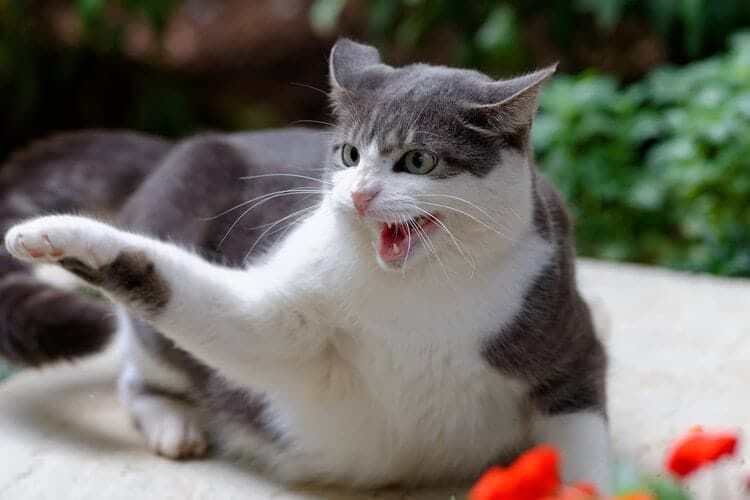
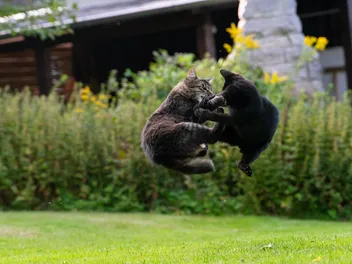
When cats play, it can seem like they’re fighting, but when they’re actually fighting, it can lead to big problems. So, how can you tell the difference, and what does real fighting sound and look like? It’s a lot to sort through, but we’ve highlighted all the basics for you below. Not only that, but we came up with some tips you should follow if your cats are fighting with each other so that you can get the situation under control as soon as possible.

The Cat Fighting Sounds
1. Listen for Vocalizations
| What to Watch For | Hissing, growling, or yowling |
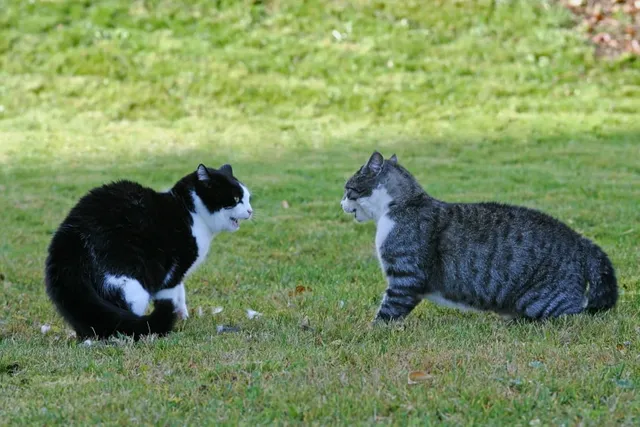
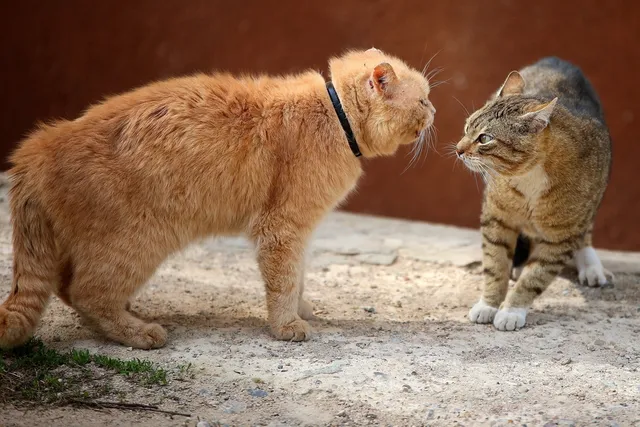
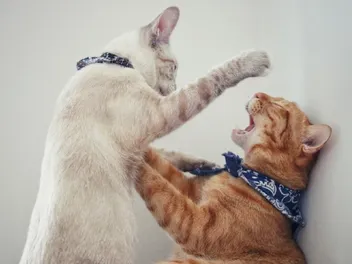
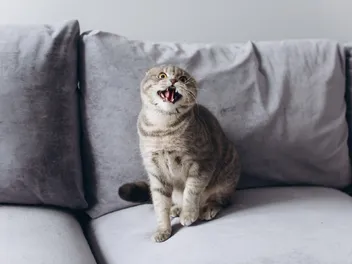
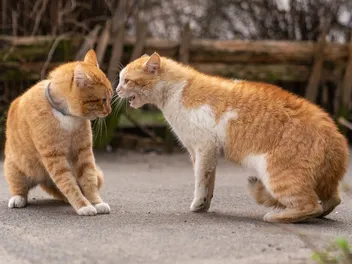
You know how your cat sounds when they’re meowing at you for attention, but if their vocalizations toward each other are sounding more aggressive, it’s likely a problem. Listen specifically for hissing, growling, or yowling. If you hear these sounds, you need to investigate further and separate your cats.
2. The Claws Are Out

| What to Watch For | Claws are out, may swipe with their claws |
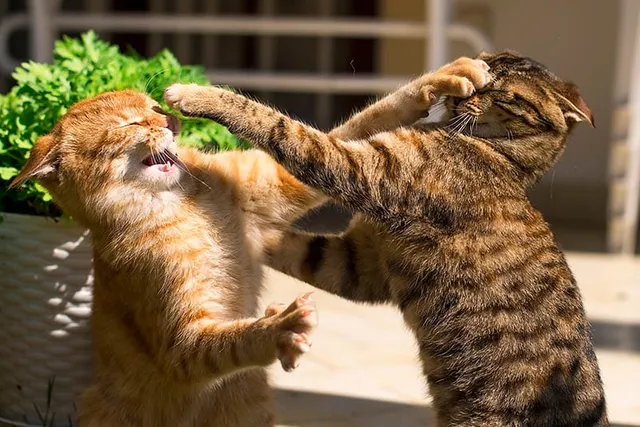
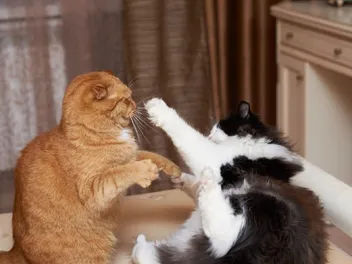
When cats are playing, they’ll often bat at each other but won’t pull their claws out. Claws can quickly hurt the other cat, and it’s their best defense when a real fight is happening. If you see your cat’s claws out when they’re fighting, you need to intervene right away before they hurt each other.
Body Signals
3. Check the Intensity

| What to Watch For | How constant/intense the fighting or vocalizations are |
When cats are playing with each other, it doesn’t have quite the same intensity as when they’re fighting. Fighting cats don’t take as many breaks and go after each other a lot more, and there’s really no stop in the vocalizations. This is a problem, and you need to separate the two if this behavior continues.
4. Are They Taking Turns?

| What to Watch For | Whether they go back and forth |
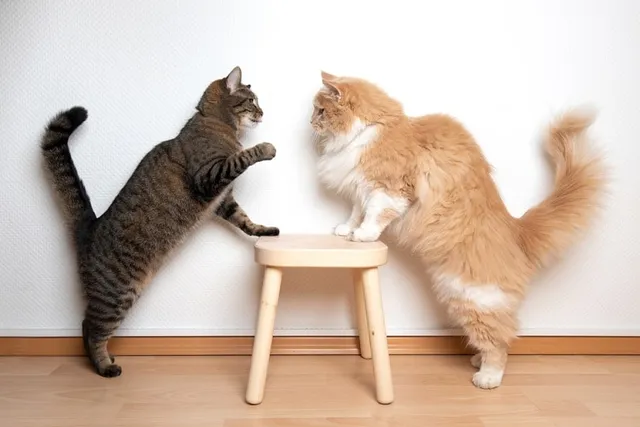
When cats play with each other, they give the other cat time to get their swats and play in as well. When they’re fighting for real, they’re not worried about letting the other cat play at all, and because of this, things can be a lot more one-sided. Taking turns is usually a sign of play, but if it’s non-stop from one side, it could be a problem.
5. Look at the Ears

| What to Watch For | If the ears are down flat and pinned back |
A cat’s ears are a great way to tell how they’re feeling. When a cat’s ears are straight up or slightly pointed forward, it means they’re having a good time and want to play. However, if you look at their ears and they lay them down flat, it means they’re angry and ready to fight.
6. Watch Their Tails

| What to Watch For | Tails low to the ground or going back and forth |
Just like their ears can tell you how they’re feeling, a cat’s tail can too. A tail that is up high means they’re having fun and playing, while a tail closer to the ground is a sure sign they’re not messing around. Moreover, if the tail is up and going back and forth lazily, you don’t need to worry about it, but more aggressive swishing back and forth means they’re not happy.
What to Do if Your Cats Are Fighting
If you find that your cats are fighting each other instead of just playing, it’s not a behavior you want to ignore. While fighting between cats isn’t always the easiest thing to address, there are a few things you can do.
While your cats might not become best friends, you should be able to get them to tolerate each other a bit more and have them live in the same home without any serious altercations.
Distract Them
You don’t want to get in the middle of two cats fighting, so distracting them is the next best option. You can often break their concentration with a loud noise or sudden movement.
Don’t Punish Them
When you see cats fighting with each other, it’s tempting to jump right in and start yelling at them to stop. But while this might seem like the right thing to do, it just ramps up tensions and makes your cat even more uncomfortable. Stay positive throughout it all while redirecting them to a more positive behavior. Do not punish your cats for their behavior, as this could make the aggression or fearful behaviors worse.

Provide Enough & Separate Resources
Even cats that get along may have problems when there are limited resources. Providing each cat with their own litter boxes, feeding bowls, water bowls, toys, scratchers, hiding spots, beds and other resources goes a long way in reducing tensions.
Try Using Pheromone Sprays
Some vets suggest using pheromone sprays or diffusers to reduce signs of conflict between cats, as these mimic the natural cat appeasing pheromone and have a calming effect in the home.
Before offering any new product to your cat, we recommend you consult a veterinarian for the best advice on which would be the best treatment for your kitten.
Reinforce Good Behavior
Positive reinforcement is the best way to get your cats to behave how you want them to. Whenever the two are kind to each other or getting along, a couple of treats, rubs, and encouraging words can help encourage them to keep it up.
Conclusion
You don’t want to have a pair of cats constantly going after each other, but now that you know how to tell the difference between the two and what to do if they’re really fighting, you can get it under control once and for all. Early intervention is critical, so try to slowly introduce your cats from day one to make them as comfortable around each other as possible.
Featured Image Credit: Alen Marchant, Shutterstock
Expert cat care, straight to your inbox
News, insights, and useful advice, delivered to you.

No spam — unsubscribe anytime.
By signing up, you agree to our Terms & Conditions and Privacy & Cookies Policy.
How useful was this post?
Click a star to rate. You can leave written feedback afterwards. (We read all feedback.)
Adam is a seasoned freelance writer and passionate animal lover who has dedicated years to rescuing countless animals. With a decade of experience as a freelance writer and an even longer history of animal rescue, he has honed his skills in both fields. Adam is also a proud father of three and thrives on challenges and new adventures.