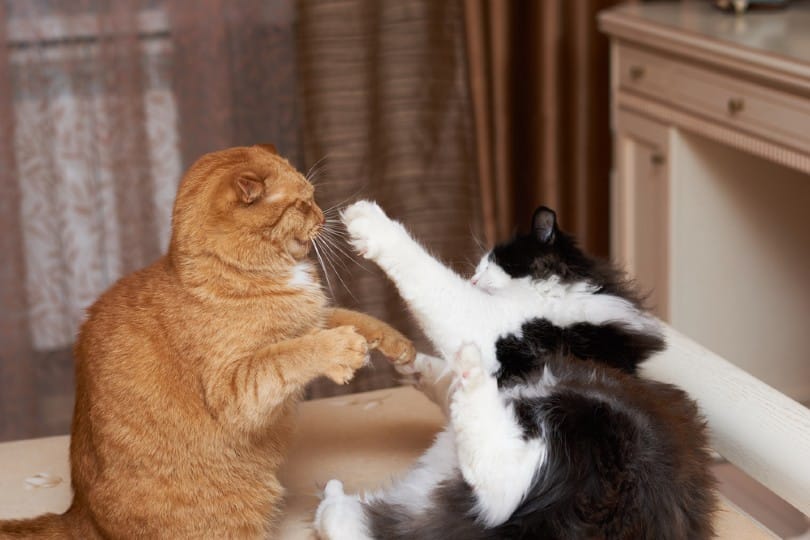
How to Get Cats to Get Along: 9 Tips & Tricks



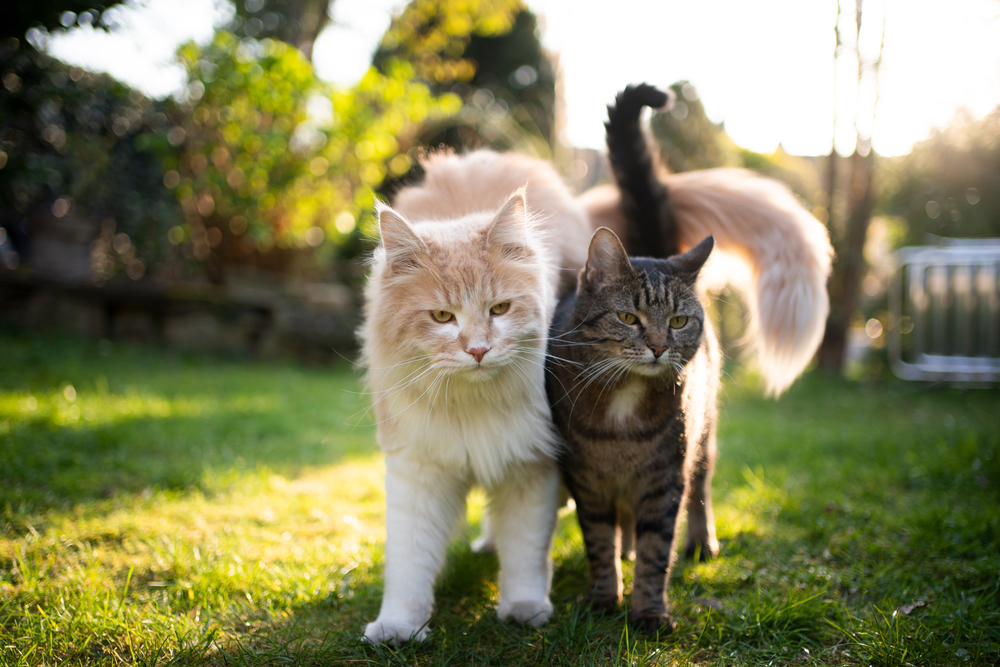
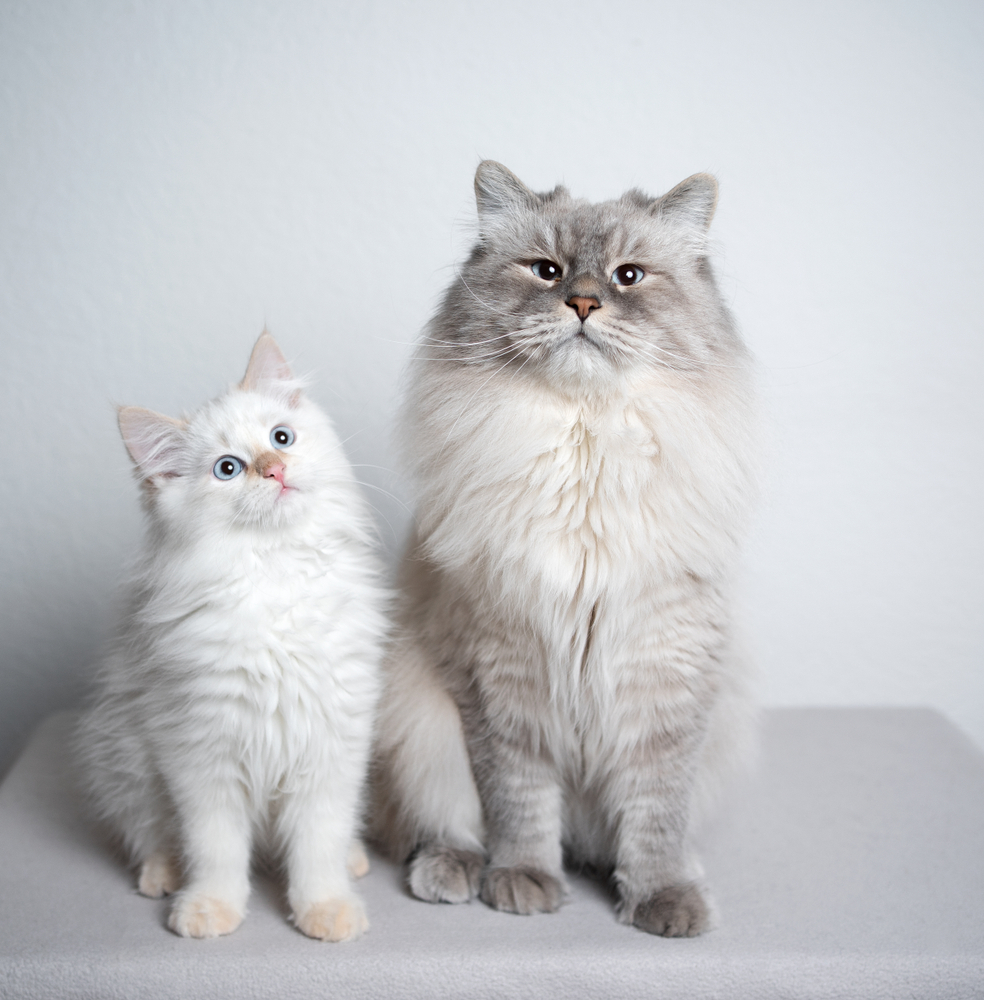
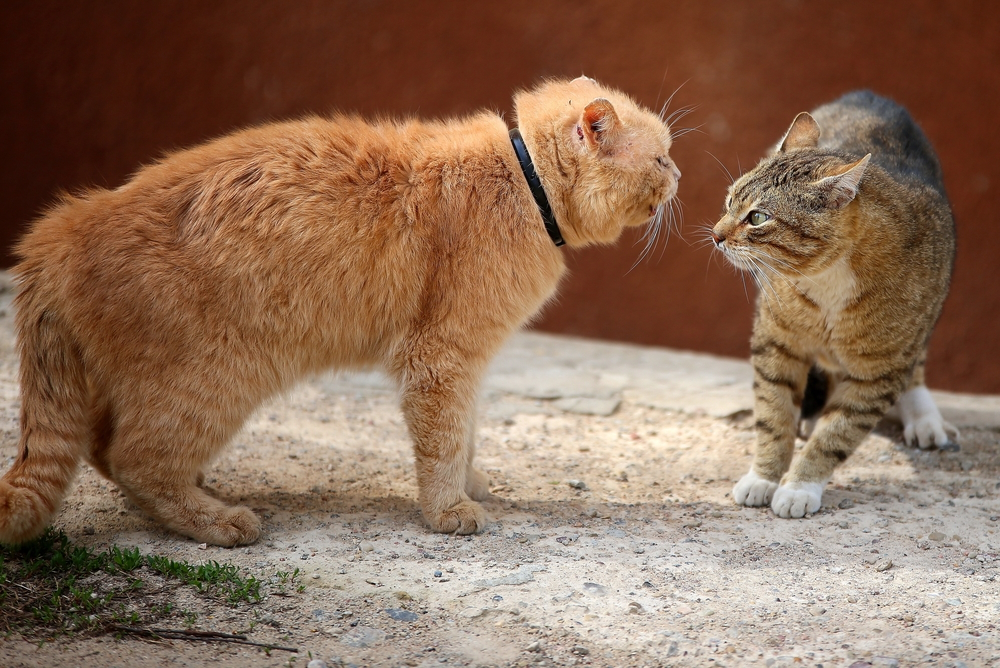
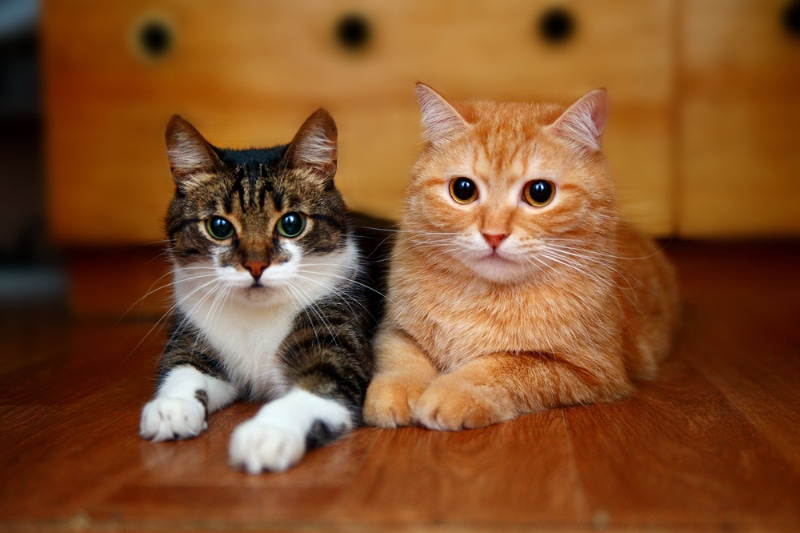
Getting a new cat seems like a great idea. You'll have a new pet to love and care for, and your current kitty will have a new friend to nap and play with. However, some cats don't get along. Instead of playing, they might growl, hiss, crawl, and bite each other.
It can be discouraging for any cat owner, but it's normal for two cats not to get along the first time. Some friendships take time to build. Thankfully, you can take steps to get your cats to get along. Below, we'll discuss nine tips and tricks to help your cats get along, but first, we'll examine several reasons why cats fight each other.

Why Cats Fight Each Other
There are several reasons cats exhibit aggressive behavior towards other cats. They include the following:
Lack of Socialization
A cat raised alone without interacting with other felines may not get along with others. Isolation makes it impossible for them to develop social skills, and they may react unexpectedly after being introduced to other cats for the first time.
Defending their Territory
Cats are territorial creatures that mark their territories by leaving their scent on objects and humans. Hence, aren't happy when other felines invade their space, especially if they perceive them as a threat.

Personality Differences
Unfortunately, cats don't get to choose their housemates, and humans are not usually the best matchmakers. Your new cat might be energetic and playful, but your other cat is calm and independent. Their clashing personalities can result in conflicts if they're not introduced properly.
Protecting Kittens
The mother will growl, hiss, chase after, and try to scratch or bite a feline intruder. Luckily, this motherly aggression usually declines when the kittens reach the weaning stage.

The 9 Tips to Get Your Cats to Get Along
Now you know some of the reasons why your cats may not be getting along. Consider the following tips to build a healthy relationship between the felines.
1. Introduce Them Gradually
Many conflicts between cats are a result of inadequate introductions. Although it is hard to correct learned behavior, reintroductions can also work for cats who have never gotten along. The best way to introduce or reintroduce the cats is very gradually, through stages.
First, keep the cats in separate rooms for several days or weeks. That way, they can hear and smell each other without interacting physically. Once they are used to their spaces, you can start introducing their scents to each other. You can switch out a blanket or toy the other cat has used. With this strategy, you are creating a communal scent.
Next, try feeding or playing with them while they're close to the door separating them. The idea is for them to associate the other's presence with positive feelings. If both cats seem calm while near each other behind a closed door, you can take things up a notch by letting them see each other without allowing a physical interaction.
Lastly, let them spend time together without barriers. Of course, you need to be present during the first meetings to supervise the interaction. Repeat until you can leave them alone unsupervised.

2. Utilize Rewards and Treats
Positive reinforcement is the best way to correct behavior, and you can provide treats whenever they interact calmly and peacefully. If you do it enough times, your kitties will start associating the rewards with being calm and relaxed around each other.
However, be careful not to give them treats or rewards when the cats get aggressive. It can reinforce the negative behavior just as it does the positive.
3. Have Separate Resources
To avoid competition, ensure enough resources are available by having multiple food bowls, litter boxes, beds, toys, and scratching posts in different spots around your home. Don't allow the new cat to use the same resources as the other cat if they seem territorial or aggressive.
If possible, have one extra for each cat in the household and ensure they can easily access it. This is essential concerning litter boxes. You must make special arrangements to avoid conflicts if you have more than two cats.
Space is another potential cause of conflict. You can avoid that by ensuring there is plenty to accommodate all cats. There should also be enough climbing, perching, and hiding spots in case a cat needs alone time.
Cats can compete for your attention, and you must treat them equally. If one sits on your lap or sleeps on your bed, the other cat must enjoy the same privileges. It can be tempting to shower the new cat with affection to make them feel welcome, but you should try to treat them as you do your other cat.

4. Stop Them From Fighting
Never let the cats fight since scratching and biting could lead to injuries. Break them up whenever they display aggressive behavior by distracting them with loud noises or sudden movements. You should not get in the middle of two fighting cats.
It is advisable not to try picking them up while they are in an aggressive state. The cats can easily redirect their aggressiveness toward you by biting or scratching, so it is better to let them calm down first.
5. Identify the Cause of Conflict
As stated above, cats may not get along for several reasons. Knowing specifically why the cats behave aggressively towards each other is another step in preventing future conflicts. You can do it through careful observation.
Some causes, like maternal and territorial aggression, can quickly be resolved or prevented by implementing changes. But others, like personality differences and lack of socialization, require more time and effort.
Cats are intriguing animals who sometimes have odd interests and indulge in unusual behavior. Understanding them might be tough but providing a toy that fosters their instinctual needs and curiosities is simple.The Hepper Hi-Lo Cat Scratcher encourages playtime and offers a cat-appropriate place to scratch.

- Premium Materials - Hepper's cardboard scratcher is made with dense, B-flute cardboard, and a metal core. Encased in a 1/2" plywood frame with gloss coating. Stable and beautiful, use after use
- High, Low and Lower - A single cat scratch pad won't keep your cat engaged. 3 unique positions keeps them coming back, and back, and back again. Finally, something to get them away from the couch!
- Activates Muscles - The Hi Lo isn't just a cat nail file to stop the chief cat couch scratcher. The deep cat scratcher wave encourages maximum musculoskeletal activation for a healthier workout
It’s unique 3-position design and cardboard scratch pad allow your cat to explore different levels, improves their health, satisfies natural feline impulses, and deters your cat from delving into places they should not. Show your cat how much you love and appreciate their quirks by gifting them the Hepper Hi-Lo Cat Scratcher.
At Catster, we’ve admired Hepper for many years, and decided to take a controlling ownership interest, so that we could benefit from the outstanding designs of this cool cat company!
6. Consider Spaying and Neutering
Spayed and neutered cats are less likely to engage in aggressive behavior than intact felines. Therefore, spaying and neutering your pets can make it easier for them to get along. Intact males will fight with other males for territorial dominance and females. Neutering is the only way to reduce these vicious fights.
Females also assert dominance over their counterparts in the household. They can get aggressive when pregnant or nursing and will attack other female and male cats while trying to protect their litter from harm.
Spayed cats have fewer hormones influencing their behavior and are easier to get along with. Eliminating their ability to get pregnant also prevents future maternal aggressiveness.
7. Use Pheromone Products
Using pheromones to aid the introduction process can help since stress can hinder the cats from getting along. Synthetic pheromone products mimic a cat's natural pheromones and can diffuse the tension while you acquaint the felines.
A 2019 study showed that the Feliway Friends diffuser reduced stress and anxiety in housemate cats. There are no known side effects.

8. Be Patient
If you are lucky, some cats might hit it off immediately, but most relationships don't start that way. For most cats, making new friends can take several months. Therefore, exercising patience is crucial.
The long wait can be frustrating, but it's worth it when you see your cats playing and getting along. You might feel tempted to yell at or punish the cats when they fight, but punishing lousy behavior will only stress the felines and increase their hostility toward each other.
9. Visit a Vet
Sometimes, aggressive behavior is a sign that your cat might be sick, especially if the behavior change occurs suddenly without a logical explanation. You know your kitty best. Therefore, taking the cat to the vet is advisable if you suspect the aggressive behavior results from a medical issue. If you're unsure, watch out for other unusual signs, such as a lack of appetite.

Final Thoughts
Making unrelated cats get along is no mean feat, but it's not impossible if you employ the right strategy. Consider the tips we have outlined above. Most importantly, it requires patience since training cats to get along can take time.
Sometimes, it can take days if you're lucky, but you might be forced to work on it for months without getting positive results. Seeking professional guidance from a certified animal behaviorist might be helpful if your cats cannot get along, regardless of what you do.
See Also:
Is It Normal For Well-Adjusted Cats To Get Into Fights? Vet-Approved Reasons & Solutions
When To Give Up on Cats Getting Along? Facts & Tips to Introduce Them Safely
Sources
Featured Image Credit: JumpStory

Expert cat care, straight to your inbox
Vet-reviewed advice, behavior tips, and the best of Catster. Free, and you can unsubscribe anytime.
By signing up, you agree to our Terms & Conditions and Privacy & Cookies Policy.
Christian started writing for a local newspaper as a teenager, and he's been involved in the publishing industry for most of his adult life. Combining his love of writing with a passion for animals, he is currently the Director of Editorial at Pangolia and the Editor-in-Chief at Catster.
Christian lives in the Philippines with his wife, son, and four rescue cats: Trixie, Chloe, Sparky, and Chopper.
Join the conversation
Ask a question, share your story, or send private feedback.