How to Get Your Cat into a Carrier: Vet-Verified Tips & Step-by-Step Guide

Having to take your cat anywhere in a carrier can be challenging. After all, cats are not dogs and are not coerced into a carrier as easily. In fact, if your kitty has claws, the event can turn into a stressful and potentially harmful situation, complete with hisses and growls. That said, how do you get your cat into a carrier safely and as stress-free as possible?
In this post, we’ll discuss how to get your cat into a carrier as safely and efficiently as possible to avoid a stressful situation.

Before You Start
Before you can get your cat into a carrier, you must first acclimate your cat to the carrier in the first place. For starters, if you keep your cat carrier out of sight unless you need to bust it out for a vet visit, your cat will likely become anxious at the sight of the carrier. Think of it this way: if the only time your cat sees the carrier means going to the vet or some other undesirable place, your cat will already be hesitant before you even start to get them inside.
For best results, you can acclimate your cat to the carrier to ease stress by following these steps; however, give it at least 2 weeks to put these steps into place before attempting to put your cat inside the carrier.
1. Keep the Carrier in Plain Sight
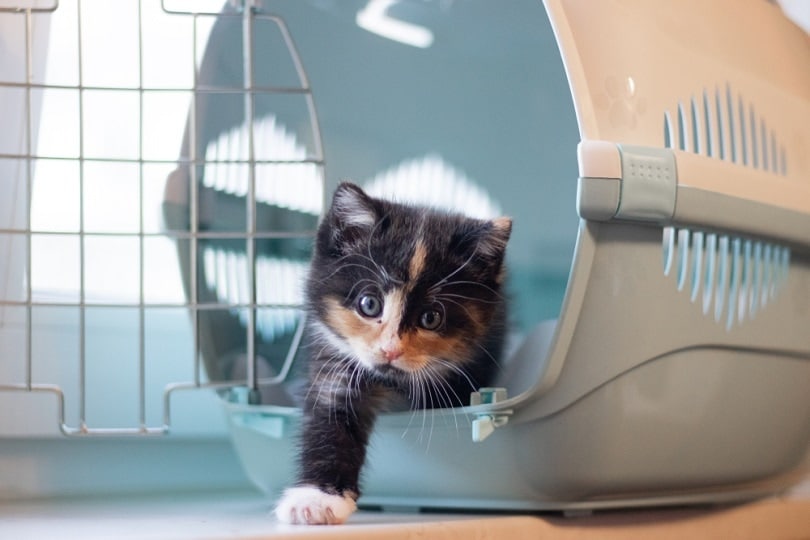
Place the carrier in a room where your cat will see it and where it's within reach of your kitty. Leave the door open.

2. Make the Carrier More Inviting
You want your cat to be comfy while in the crate, and one way to achieve this is by placing a familiar blanket or towel inside to entice them to go in. You can also use pheromone sprays such as Feliway calming spray to help your cat calm down and feel more relaxed.
3. Grab Toys/Favorites
Placing your cat’s favorite toys and/or treats inside will add even more comfort for your cat. If your cat’s favorite items are inside, they’ll be more prone to checking out the carrier.

4. Place Food Dishes Inside
Try putting your cat’s food and water bowls beside the carrier. As your cat gets more and more comfortable, try placing the dishes inside. If your cat goes inside with any of these tips, don’t close the door; getting your cat familiar with the carrier is the goal.
A Step-By-Step Guide for How to Get Your Cat into a Carrier
After you’ve put the above tips into play and feel your cat is ready for the next step, you can move forward.
1. Start the Process Early
One mistake some cat owners make is not getting their cat into the carrier soon enough. For example, if you have a vet appointment at 2:00 p.m. and your cat is putting up a fight, you may not make the appointment on time. You don’t want to leave your cat in the carrier longer than needed, but it’s best to give yourself an extra 10 or 15 minutes before leaving.

2. Use a Calming Pheromone Spray
A handy little trick is to spray the carrier with a synthetic pheromone spray at least 15 minutes before placing your cat inside. You can also spray a blanket with it and place the blanket inside. Using a pheromone spray will help keep your kitty calm during the process. You want to put a blanket or towel inside for added comfort anyway, and spraying these items with the spray can help tremendously.
3. Remain Calm
Cats can detect our moods, and if you’re nervous and stressed out, your cat will sense this and become nervous and stressed out as well. Using a pheromone spray will help create a calm environment for your cat, which, in turn, can ease your stress while attempting to place your cat inside the carrier.

4. Limit the Space
If you attempt to get your cat into the crate in a large room, you’re giving them plenty of opportunity to run and hide from you, which can turn into a nightmare scenario with your cat hiding under the bed, growling, and hissing when you try to grab them.
Try a smaller room, like the bathroom or laundry room, to place your cat inside the carrier. That way, they won’t have places to hide from you, making the task a little easier. Move quietly and calmly toward your cat and ensure you have treats or catnip on hand.
5. Put Your Cat in Head Last
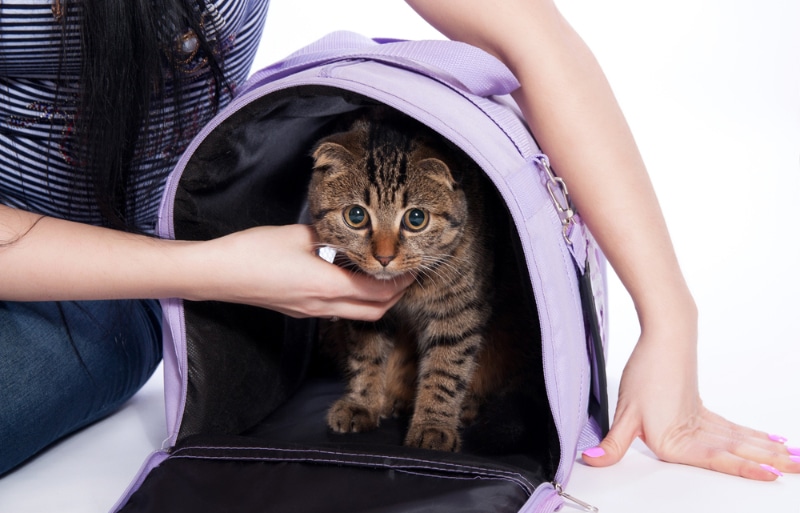
If your cat isn’t overly stressed, placing them in the carrier bottom-first can make things easier. Make sure the carrier door is open and ready. Gently pick up your cat with both hands—one supporting the chest just in front of the front legs, and the other under the belly, securing the back legs. Without using force, lower the hind end and body into the carrier first, then gently guide the head in, giving a light push on the front legs if needed. Once your cat is fully inside, calmly close the door.

6. If Your Cat Is Too Stressed, Try the Head-First Method
If your cat resists going in bottom first, try the head-first method. Position yourself so your arm is facing the carrier opening, and gently but firmly guide your cat in head first. Keep your movements calm and confident, and avoid forcing them if they struggle — a short break can help them relax before trying again.
7. Place the Carrier Vertically
You can also try to stand the carrier upright or vertically with the door open. Next, place your cat inside with the back legs entering first. This maneuver prevents your cat from seeing what’s happening, and they won’t be as reluctant.

8. Cover Your Cat With a Towel
Covering your cat with a towel also prevents your cat from seeing, which can take the stress out of the situation. Wrap your cat with the towel (not too firmly) to constrict them. Once the towel is securely wrapped around your cat, place them inside. This trick works exceptionally well with the carrier placed vertically, so you can put your cat inside quickly without them knowing what's happening.
How to Choose the Right Carrier for Your Cat
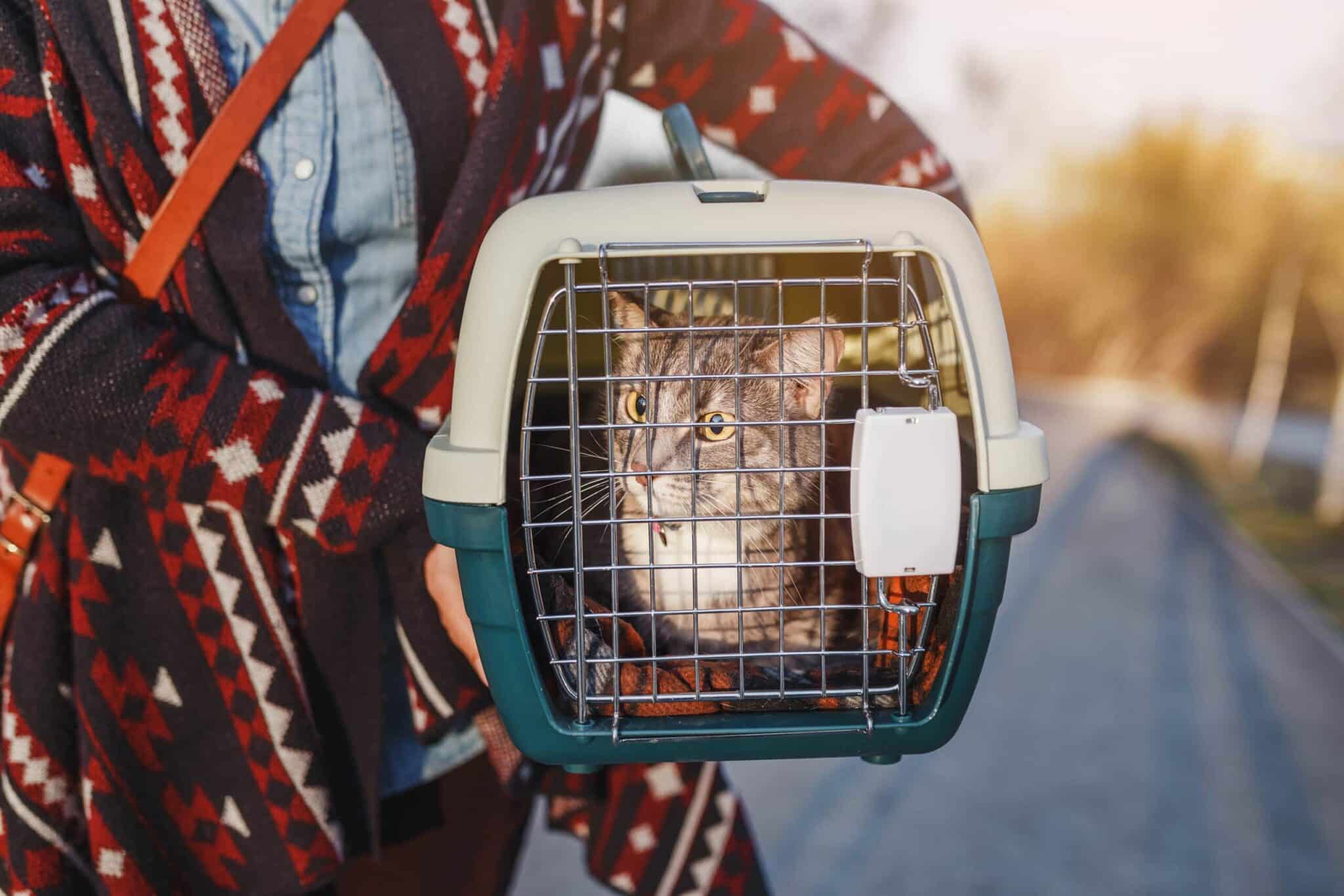
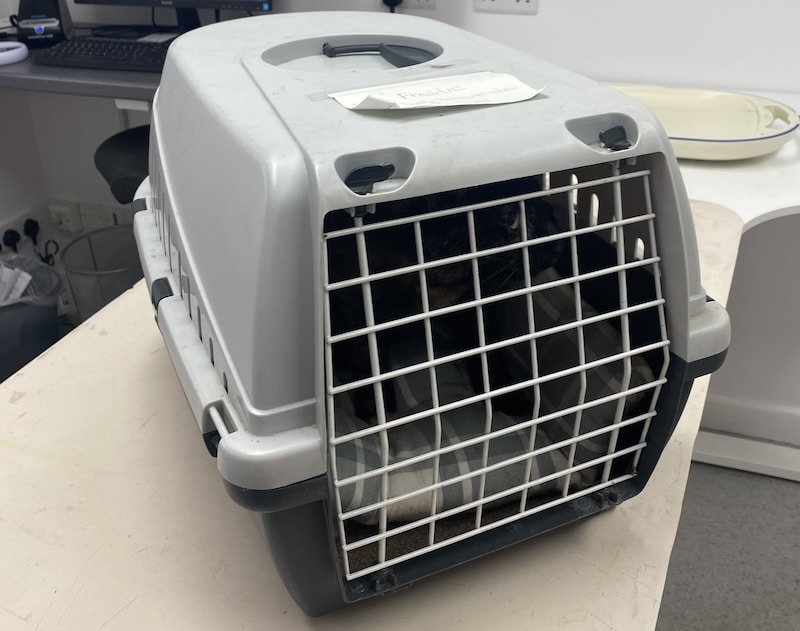
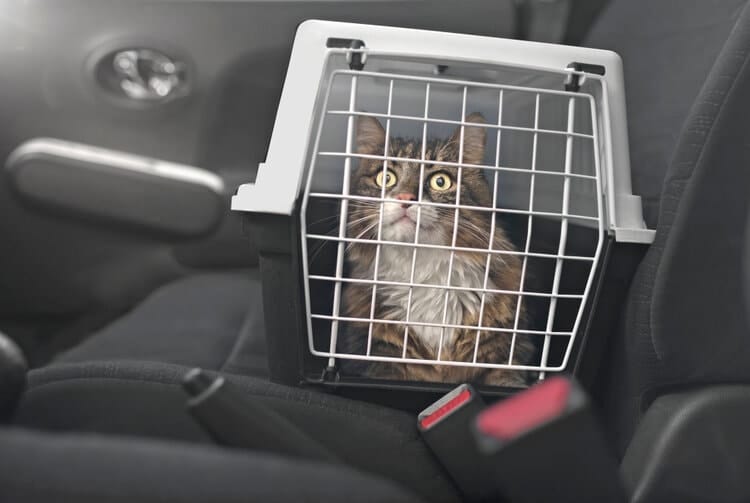
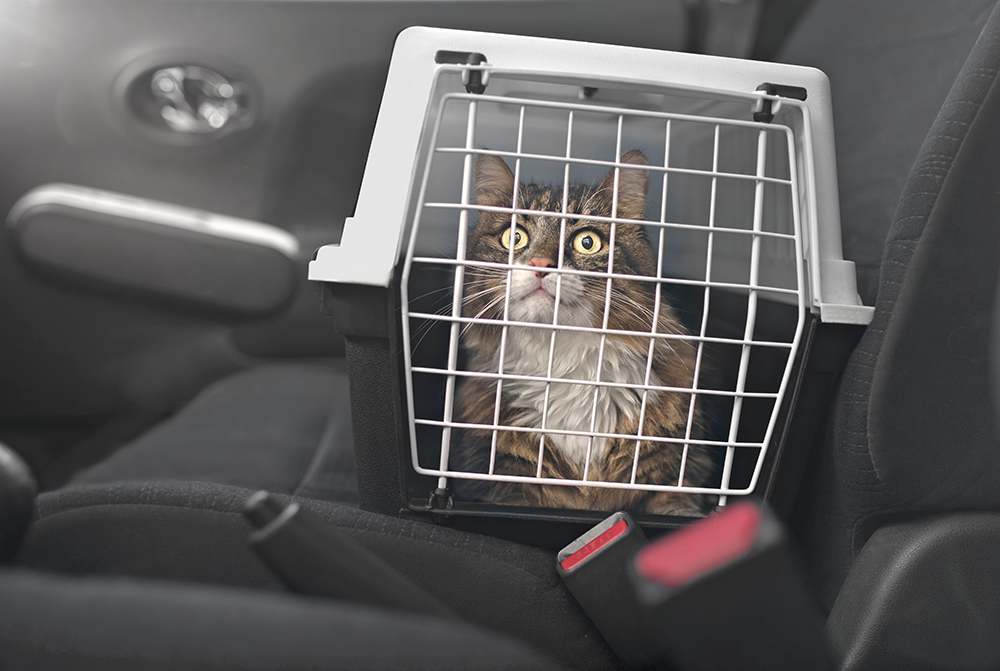
Choosing the correct carrier for your individual cat plays a vital role in your cat’s comfort. You need a carrier that is safe for everyone, including your veterinarian. That said, carriers that open from the top are excellent options for getting your cat out. Look for carriers that have access on the top as well as the side to give you a couple of options for removing them.
Your cat should also have enough room to turn around comfortably. If your cat cannot turn around or is cramped inside, the carrier is not big enough.
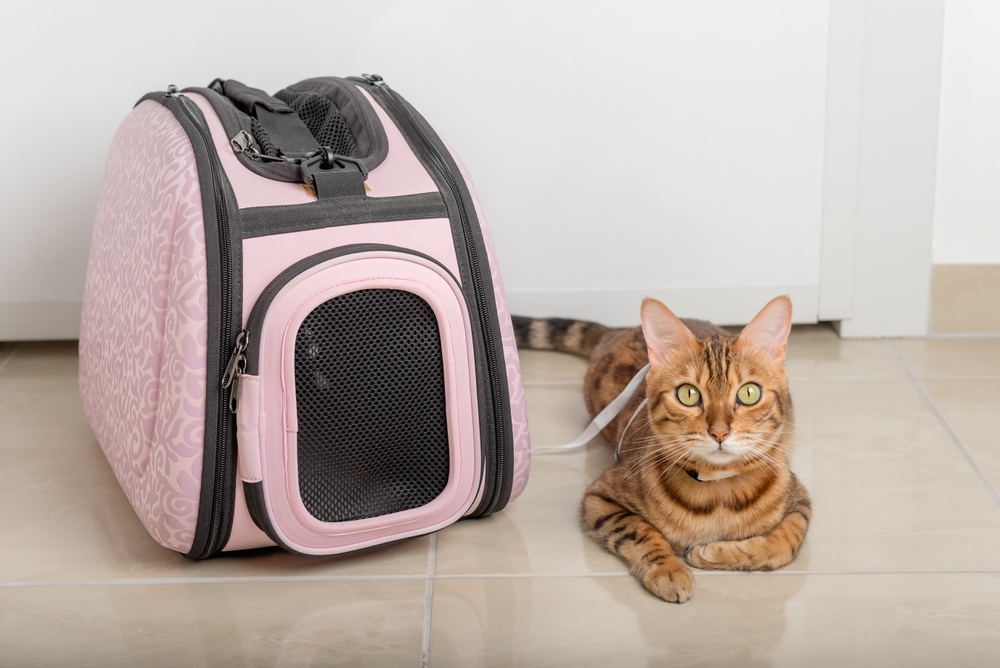
Your cat should have plenty of ventilation while in the carrier. Most carriers are made of polyester or mesh material, or you can opt for a plastic carrier. However, carriers made of polyester or mesh will be cozier for your cat, but most cats prefer hard plastic because it gives them a more secure feel. Soft carriers are collapsible and easier to carry than hard plastic carriers, but if you’re flying with your cat, opt for a soft carrier. However, ensure the carrier is airline-approved.
You can even buy carriers with straps, much like a backpack. The most important thing is to ensure there is plenty of ventilation, your cat is comfortably secure, can turn around inside, can stand up, and there are easy access points to get your cat out.

Final Thoughts
Getting your cat inside a carrier can be a daunting task, but it’s necessary for trips to the vet or traveling with your cat. The most important point to remember is to acclimate your cat to the carrier before attempting to get them inside. It may take a couple of weeks for your cat to seem comfortable in the carrier’s presence, but once they’re used to seeing the carrier, there is a greater chance of having a stress-free event of getting them inside.
Ensure you buy the correct size crate for your cat so that they’re comfortable, and don’t forget to entice them with treats and their favorite toys.
See also:
Sources
https://www.catster.com/lifestyle/how-to-get-your-cat-into-a-carrier
https://www.hillspet.com/cat-care/routine-care/getting-a-cat-in-her-carrier?lightboxfired=true#
https://catinaflat.com/blog/how-to-get-your-cat-into-a-carrier
https://thevetdesk.com/pet-lifestyle/cats/best-cat-carriers-for-nervous-cats/
https://veterinarypartner.vin.com/default.aspx?pid=19239&id=9135575
https://www.bluecross.org.uk/advice/cat/how-to-put-your-cat-into-a-carrier
Featured Image Credit: JullyFotos, Shutterstock

Expert cat care, straight to your inbox
Vet-reviewed advice, behavior tips, and the best of Catster. Free, and you can unsubscribe anytime.
By signing up, you agree to our Terms & Conditions and Privacy & Cookies Policy.
Rachel Giordano is a Pensacola, Florida-based musician and writer. She lives with her partner and their two dogs, Sophie, a Boston Terrier, and Aero, a Border Collie/Sheltie mix. Rachel holds a Bachelor of Arts degree in communication and loves writing about all types of cat breeds. When she’s not writing about cats, she loves to write suspense/thriller novels. A musician by night and writer by day, she enjoys sharing her knowledge of the needs and requirements of our furry friends.
Join the conversation
Ask a question, share your story, or send private feedback.